

In Zone C of Elyse Island, the red-tiled roofs, cream-colored walls, and sun-drenched balconies have been completed in a cohesive manner. The rest the entire interior space serves as a blank canvas for the homeowner. Consequently, designing the interior of an Elyse Island Mediterranean-style villa is not about choosing a new aesthetic, but rather continuing the narrative established by the exterior, ensuring that the same spirit resonates the moment one steps through the door.
The following article explores the key elements that define Mediterranean-style interiors, how to integrate them into each room of an Elyse Island villa, the necessary adjustments for the specific climate of an island in the middle of the Dong Nai River, and practical insights from 3A Signature based on a completed Mediterranean interior project.
What Is the Mediterranean Villa Interior Design at Elyse Island?
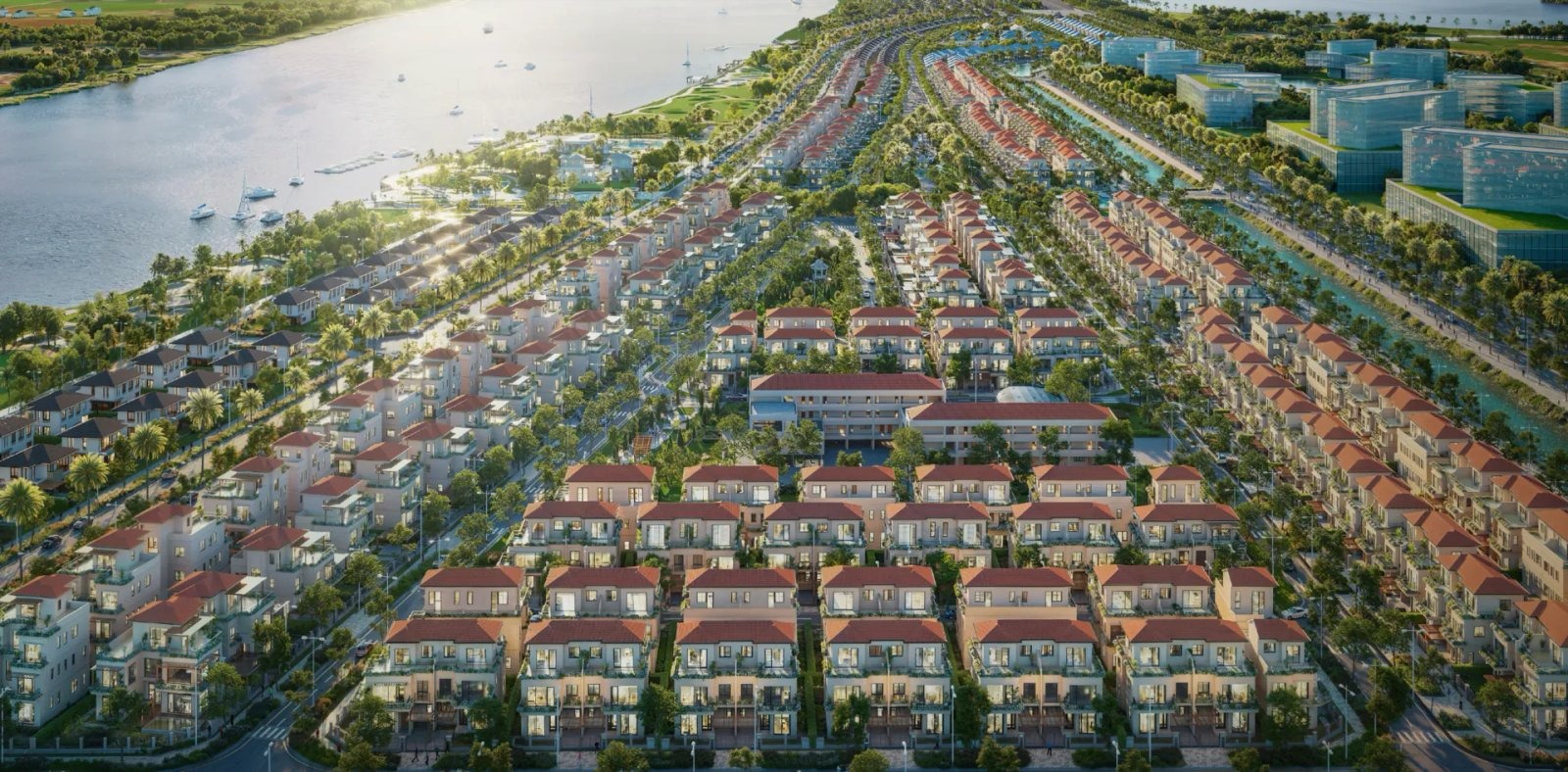
The Mediterranean villa interior design at Elyse Island involves planning the layout and selecting colors, materials, lighting, and furnishings for the villa’s interior delivered in a “shell” (unfinished) state to ensure that the indoor space remains consistent with the Mediterranean architectural language established on the exterior. Zone C of Elyse Island comprises 132 villas featuring Mediterranean-style architecture; each unit comes with a fully completed exterior, while the interior is left unfinished, allowing homeowners to complete the space according to their own preferences.
How Does the Exterior of Zone C Shape Its Interior Design?
The exterior of Zone C establishes a warm color palette and an orientation toward the outdoors; therefore, the interior design should align with this aesthetic rather than contrast with it. The villas in Zone C feature red-tiled roofs, cream and beige walls, wrought-iron balcony railings, flower trellises, and front verandas all set amidst lush greenery and internal water features, near a riverside park stretching over one kilometer.
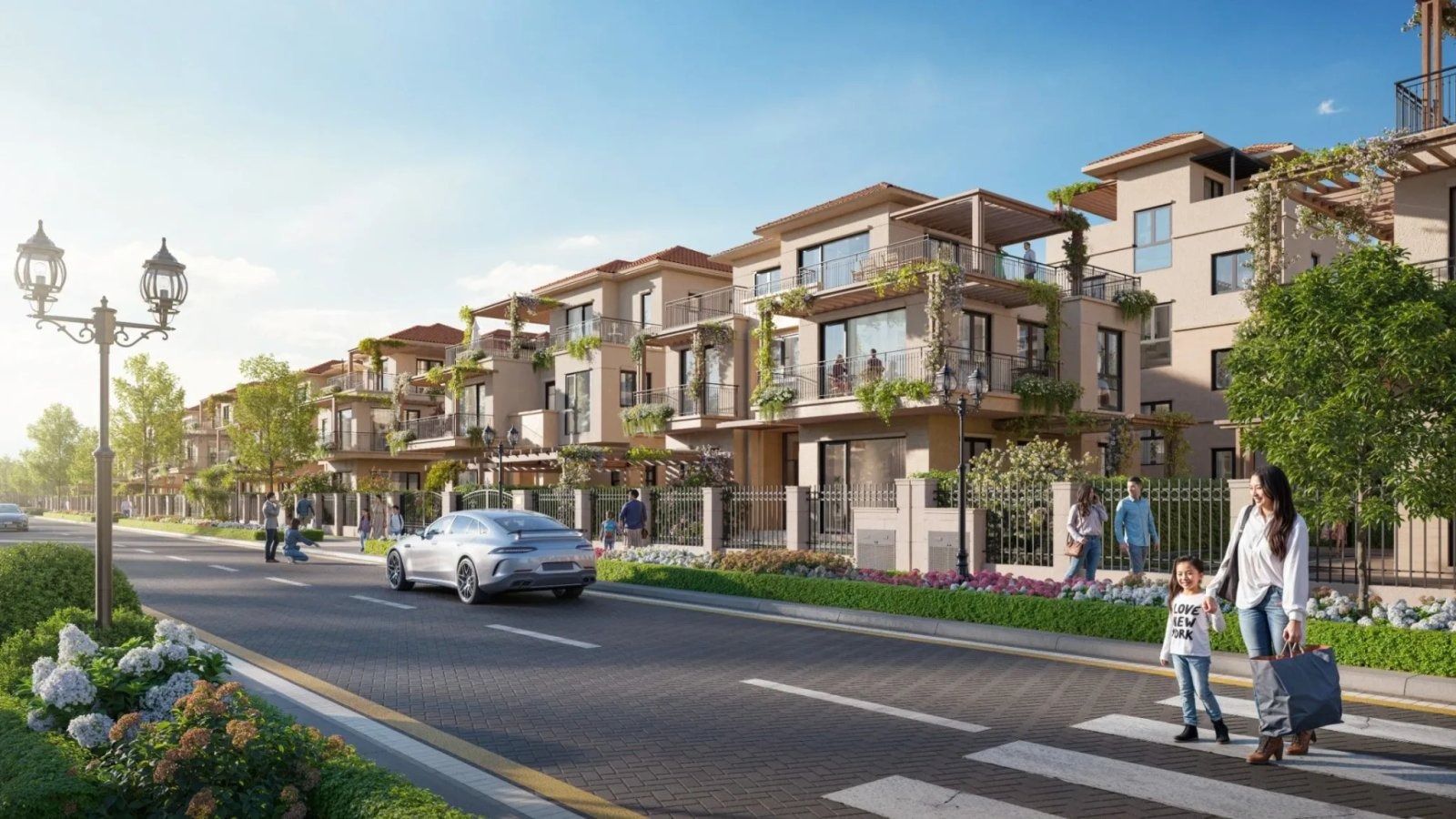
Each of these details can be “translated” into the interior spaces. The terracotta hue of the roof tiles, for instance, could reappear in the kitchen floor tiles, on the veranda, or through a few potted plants incorporated in subtle doses to add warmth without becoming overwhelming. Given the cream and beige tones of the exterior walls, a cream-white palette is recommended for common interior areas; this ensures a seamless transition between the indoors and outdoors, while avoiding dark-colored walls in the living or dining rooms.
Finally, the presence of lush greenery, internal water features, and the Dong Nai River makes blue an ideal accent color. Furthermore, the layout should be designed to frame views from the primary rooms toward the gardens or the river. Details regarding the scale and location of each sub-zone can be found in the article covering the Elyse Island sub-zones.
5 Elements Defining Mediterranean-Style Interiors
Mediterranean-style interiors are characterized by five key elements: a color palette inspired by the sea and sun, natural materials, soft curves, structured ceilings, and spaces that open toward the outdoors. Originating in the coastal regions of Southern Europe areas defined by a dry, sunny climate this style requires careful adaptation when applied to a humid, tropical island setting like Dai Phuoc.
1. A Color Palette of Sea and Sun
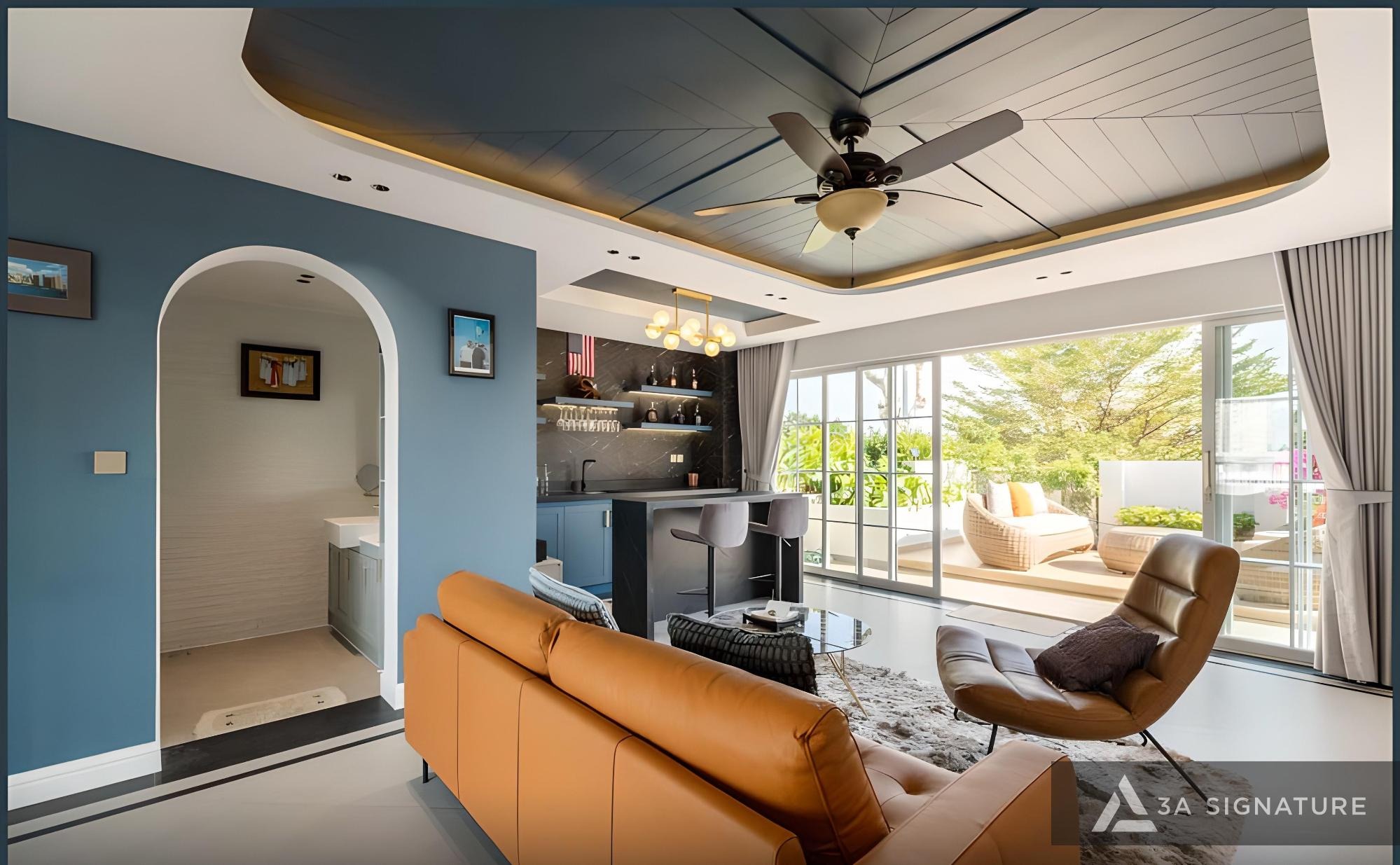
White, cream, shades of blue (including cobalt), terracotta, and sunny yellow are hallmark colors of this style. For the Elyse Island villas, white and cream should serve as the primary backdrop, covering the majority of the space. Accents of blue applied to cabinetry, doors, or decorative tilework should be used judiciously to ensure the interior remains warm and visually harmonious rather than cold or cluttered.
2. Natural Materials
Raw wood, stone, handcrafted tiles, plaster, rattan, bamboo, and linen contribute to a signature rustic aesthetic. In a humid environment, it is essential to use kiln-dried wood, stone treated with a waterproof sealant, and anti-mold paint replacing traditional, porous plaster, which tends to trap moisture.
3. Soft Curves
Arched doorways, recessed wall niches, built-in shelving, and rounded corners help soften the architectural forms. Arches should be positioned at transitional points between spaces or within wall niches, with proportions precisely calculated based on the ceiling height of each floor.
4. Structured Ceilings
Exposed wooden beams, coffered ceilings, or vaulted ceilings transform the ceiling into an integral part of the overall design narrative. For villas handed over in a “bare-shell” (unfinished) state, a practical solution is to install faux-timber beams which can also conceal lighting, recessed air-conditioning units, and ceiling fans rather than adding heavy, solid-wood beams that would place unnecessary strain on the existing structure.
5. Opening Up to the Outdoors
Large doors, verandas, courtyards, and al fresco dining are the cornerstones of the Mediterranean lifestyle. At Elyse Island, expansive glass doors should be paired with double-layered curtains and awnings to provide shade from the afternoon sun; furthermore, the design should prioritize cross-ventilation rather than relying on a fully enclosed space that requires air conditioning to run all day.
Interior Design by Space
In the interior design of the Elyse Island Mediterranean-style villa, each room requires a different “dosage” of the Mediterranean aesthetic: bold in common areas to create a striking impression, subtle in bedrooms to foster rest, and functional in kitchens and bathrooms spaces frequently exposed to water and moisture.
The Foyer and Living Room: Where the Mediterranean Spirit Shines Brightest
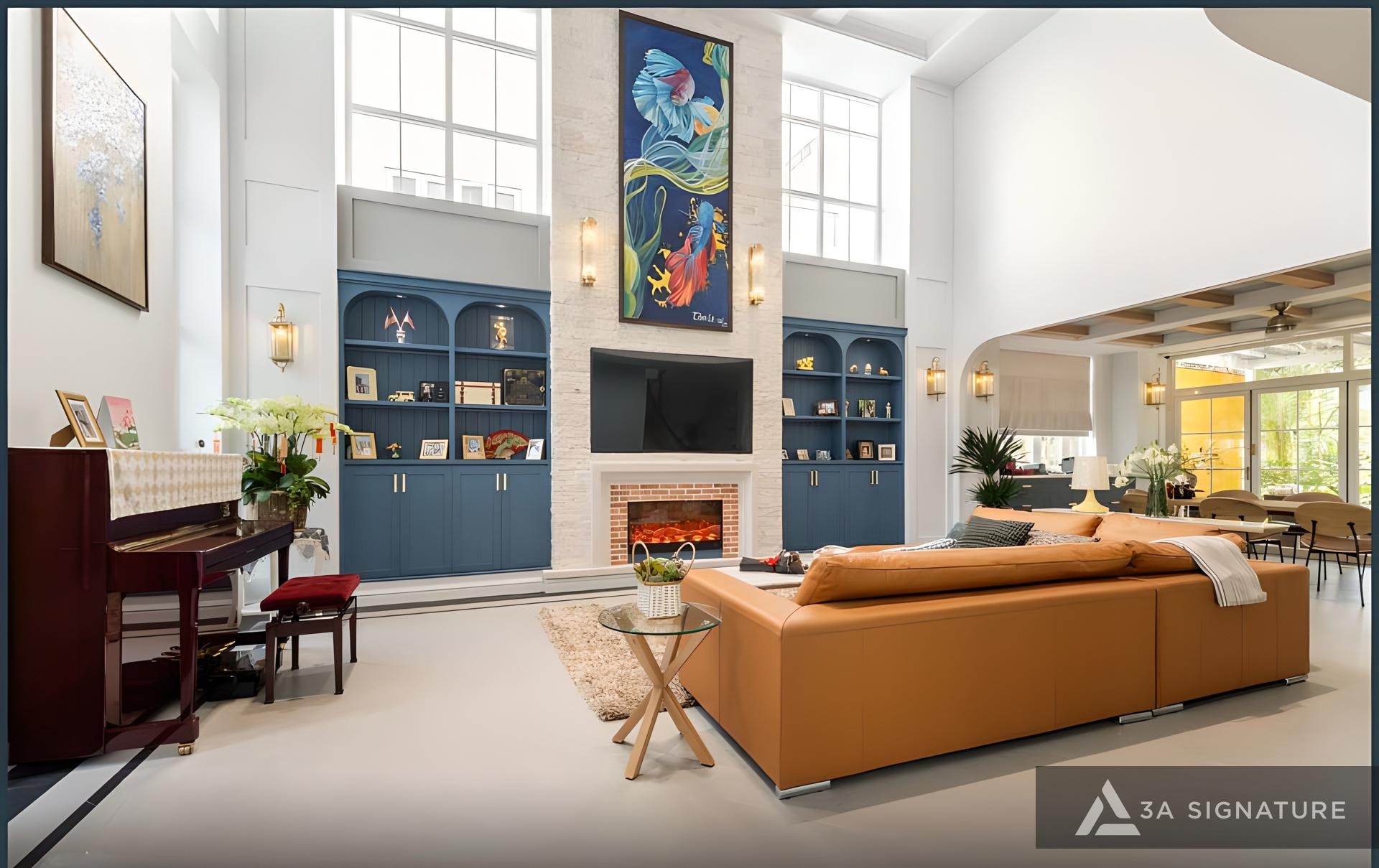
The living room is the showcase for the most exquisite details: an arched shelving unit painted in blue, a decorative fireplace, or a stone-clad feature wall serving as a focal point, complemented by high ceilings and expansive glass doors. For furniture, opt for pieces in tan leather, wood, or linen to evoke warmth, while natural-fiber rugs help soften the overall aesthetic. In the Elyse Island villa, the living room should open toward the front courtyard or the river, featuring double-layered curtains to manage the afternoon sunlight.
Kitchen and Dining Area: The Large Dining Table as the Heart of the Home
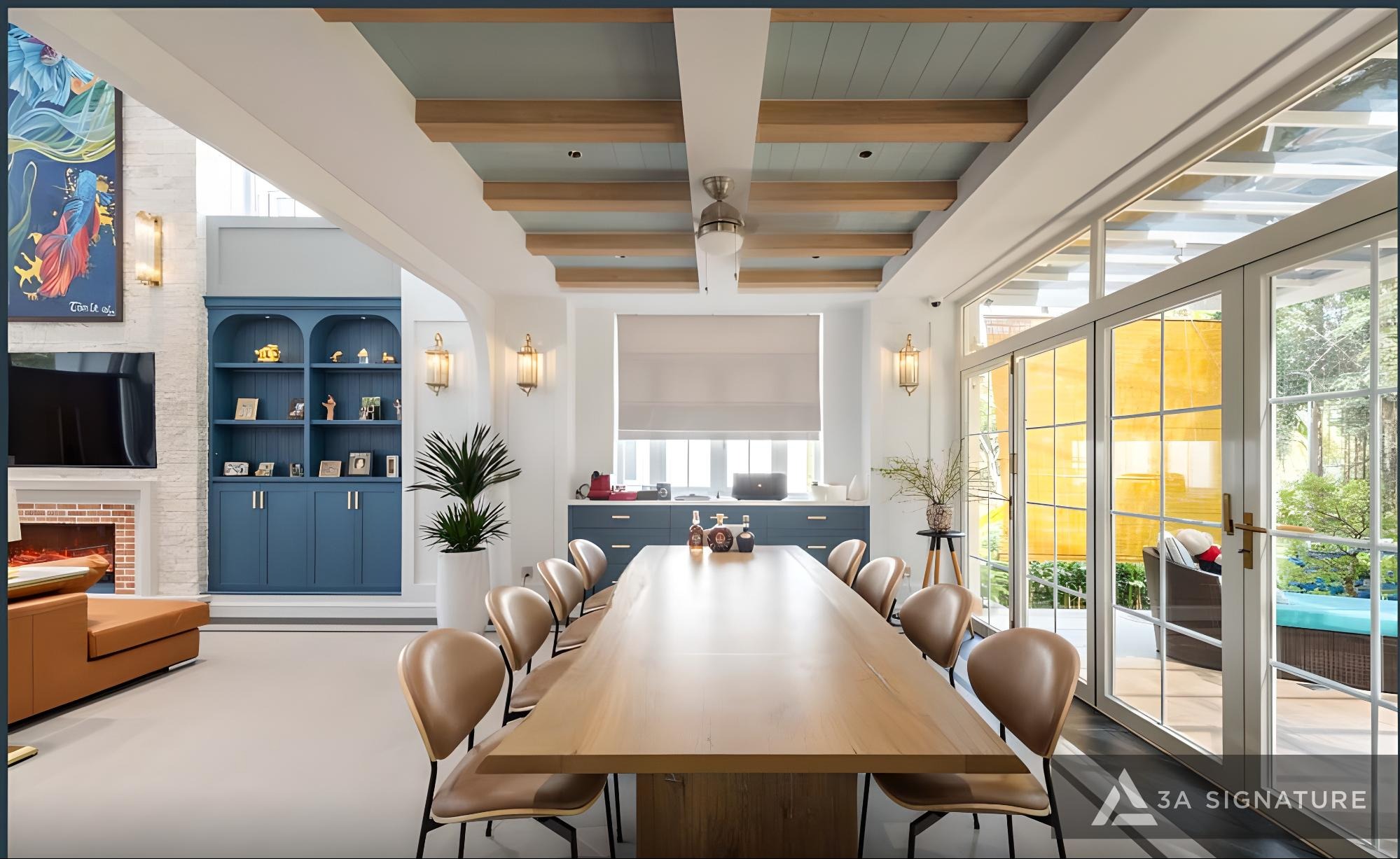
In the Mediterranean lifestyle, mealtime is when the whole family gathers; consequently, a large wooden dining table often serves as the centerpiece of the ground floor. For the kitchen cabinetry, consider shades of blue paired with light-colored stone countertops and brass-toned metal hardware.
A ceiling featuring exposed wooden beams above the dining area adds a sense of warmth and rhythmic visual interest. The kitchen should ideally connect to a rear patio, facilitating seamless transitions for outdoor dining. In humid climates, it is essential to use water-resistant cabinetry, non-porous stone surfaces, and a kitchen ventilation system that effectively extracts odors to the outdoors.
The Bedroom: Restrained for Rest
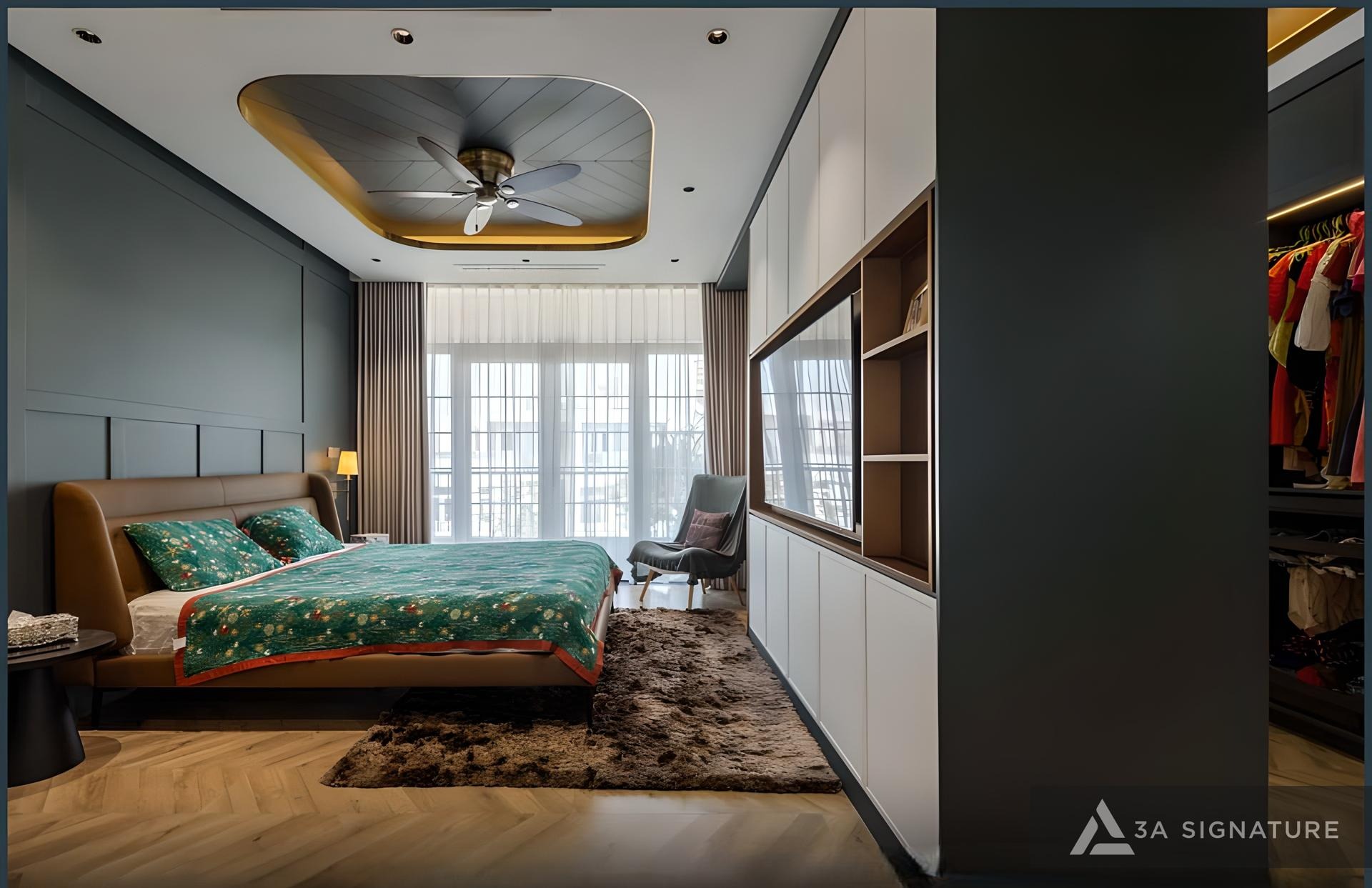
A bedroom requires only a few Mediterranean touches: a leather-upholstered or wooden headboard, subtly curved ceiling moldings, warm-toned bedside lighting, and linen bedding. The color palette can be more subdued than in the rest of the home to promote better sleep think moss green or slate blue paired with wooden flooring. Built-in wardrobes should feature ventilation gaps to prevent moisture buildup, while rooms facing west or overlooking a river should be equipped with multi-layered blackout curtains.
Bathroom: Handcrafted Tiles and Thorough Waterproofing
The bathroom is an ideal space to showcase handcrafted tiles, patterned tiles, or tiles in shades of sea blue. However, floor tiles must have a slip-resistant, textured surface; the entire floor and the base of the walls must be waterproofed prior to tiling; and the bathroom should be equipped with an exhaust fan. Details such as mirrors with slender iron frames, wall sconces, and stone washbasins serve as subtle accents that maintain the overall aesthetic theme.
Common Living Areas, Home Offices, and the Top-Floor Pavilion (Tum)
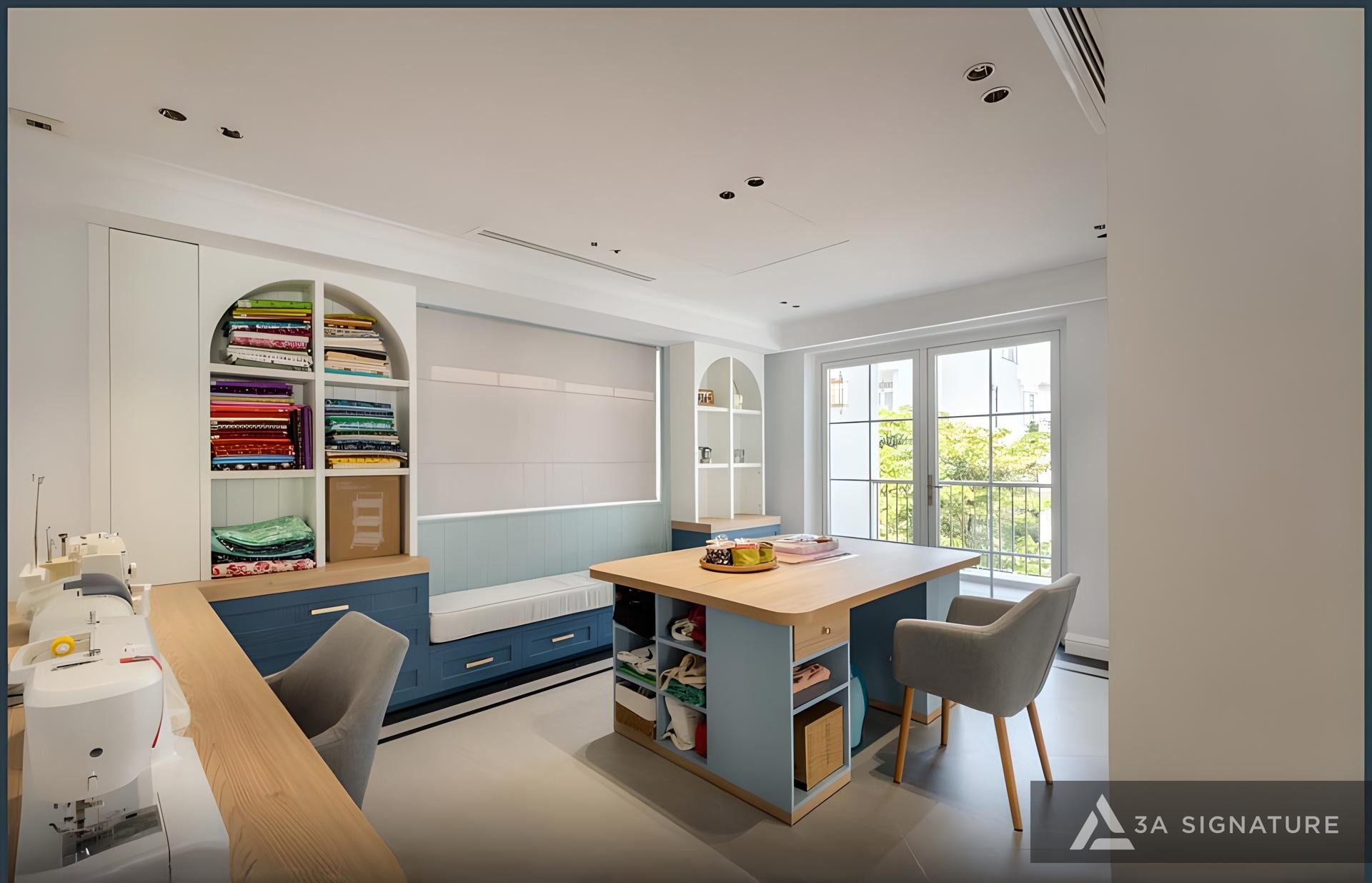
In these auxiliary spaces, one can incorporate features like arched wall niches, window seats with built-in storage, and large wooden tables suitable for the whole family. In the case of Grand Villas that include a top-floor pavilion, this area can serve as a living space overlooking the river or a relaxation room opening onto a terrace though it is essential to ensure proper roof insulation against heat and thorough floor waterproofing from the very beginning.
Verandas and Gardens: Outdoor Living Spaces
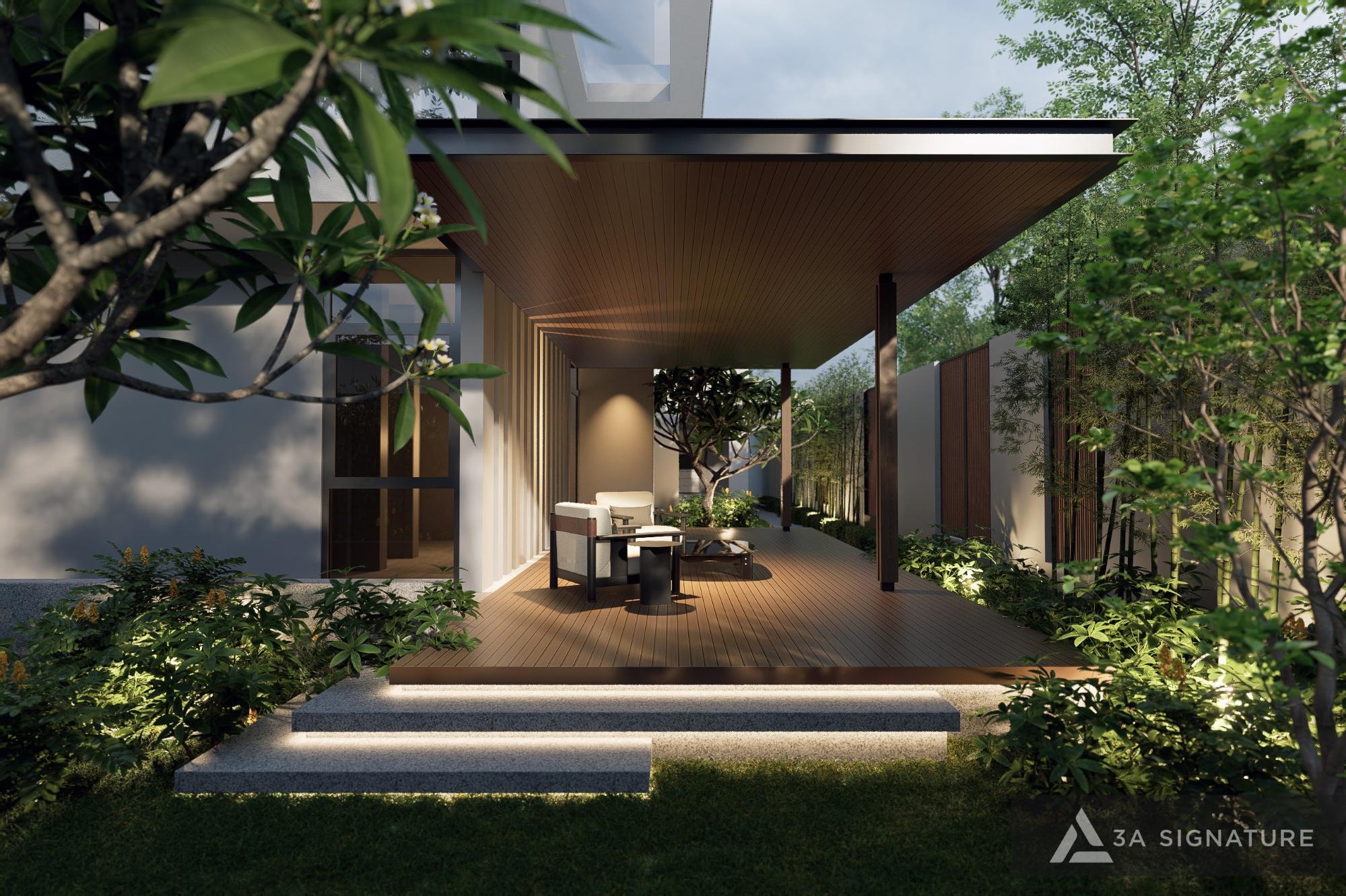
A covered veranda featuring timber decking or stone paving, rattan furniture, and native plants transforms an outdoor area into a space for daily living. On Dai Phuoc Island, it is best to select weather-resistant outdoor materials, moisture-tolerant plants, and waterproof landscape lighting, rather than attempting to replicate a Mediterranean aesthetic with olive trees or lavender, which are better suited to arid climates.
Design Suggestions by Villa Type in Zone C
While all share a Mediterranean spirit, each villa type in Zone C calls for a distinct design approach, tailored to its specific land area, grounds, and views.
Garden Villas (88 units) are semi-detached villas with land areas ranging from 200 to 247.5 m². Spanning three floors, they feature both front and back yards. For this type, a creamy-white base palette helps create a sense of spaciousness. Touches of blue can be incorporated into kitchen cabinetry or arched shelving units, while large glass doors opening onto the backyard invite natural light and greenery into the home.
Park Villas (22 units) are detached villas with land areas between 399.8 and 511.1 m², situated near the internal park. Their generous grounds allow the living and dining areas to open directly toward the garden. They feature expansive, covered terraces, with a multi-layered garden design that creates a seamless transition from the interior to the outdoors.
Grand Villas (22 units) offer land areas ranging from 408.9 to 475.4 m². These three-story residences complete with an additional rooftop level (attic floor) are oriented toward the Dong Nai River. For this premium category, common areas and the master bedroom should be positioned to face the river, with shades of blue serving as accent tones.
The rooftop level can be transformed into a private space for the family to enjoy the river views. Please note that specific land areas may vary depending on the individual plot location and the terms stipulated in the sales contract.
Mediterranean Interior Materials for Riverside Homes
The most significant difference between a Mediterranean-style villa in Europe and one on Dai Phuoc Island is the level of humidity. While the Dong Nai River, which surrounds the island, provides a cool breeze, it also leads to high humidity during the rainy season. Consequently, when designing the interiors for Mediterranean-style villas on Elyse Island, the selection of materials must prioritize moisture resistance over aesthetics.
Natural wood used for flooring, cabinetry, and decorative beams is prone to warping and mold when humidity levels fluctuate. Therefore, it is essential to use kiln-dried timber, apply protective sealants, incorporate ventilation gaps for built-in cabinetry, and utilize lightweight, faux-beam alternatives for decorative ceiling elements. Rough-textured plaster or decorative paint finishes can easily trap dust and moisture, leading to discoloration; instead, anti-mold paints with a subtle matte finish offer a more durable solution.
Natural stone can absorb water and develop stains in “wet” areas (such as bathrooms or kitchens); surfaces should be treated with a waterproof sealant, and textured, non-slip finishes should be selected for flooring. While handcrafted or patterned tiles are visually appealing, the grout lines are susceptible to staining. To mitigate this, the substrate must be waterproofed prior to tiling, and waterproof grout should be used, with careful attention paid to the layout and alignment during installation.
Wrought iron and brass-toned metal elements on verandas and balconies are prone to rust; therefore, powder-coated finishes or corrosion-resistant metals are preferred. Fabrics like linen, as well as rattan or bamboo furniture placed near outdoor openings, are highly susceptible to mold. Fabrics should be treated with moisture-resistant coatings, while any rattan-style furniture intended for outdoor use should be crafted from synthetic, weather-resistant materials.
The process by which 3A selects and approves materials for a riverside villa on Dai Phuoc Island itself is documented in the article on material selection for the Lumina Retreat Villa.
5 Common Mistakes When Designing Mediterranean-Style Interiors
The most frequent error is attempting to replicate a Mediterranean look directly from a reference image without considering the actual climate or the dimensions of the home. Here are the five most common mistakes:
- An overabundance of white and blue: Saturating a space with these two colors reminiscent of a Santorini postcard can make the interior feel cold, glaring, and quickly dated. Blue should be used sparingly, as an accent.
- Heavy, “faux-antique” elements: Incorporating excessive decorative molding, crystal chandeliers, or ornate carvings shifts the aesthetic toward Neoclassical. The true spirit of the Mediterranean style is rustic and airy.
- Disproportionate arches: Plaster arches that are too low or too thick relative to the ceiling height disrupt the balance. These must be calculated during the design phase rather than added as an afterthought.
- Moisture-unsuitable materials: Selecting wood, plaster, or fabrics based solely on their appearance without accounting for local humidity often leads to warping, swelling, or mold growth after just a few rainy seasons.
- Closing off the space: Using too many partitions or heavy curtains defeats the core essence of the style, which is rooted in an open, indoor-outdoor connection.
3A Signature and T-Villa: A Completed Mediterranean-Style Interior Project
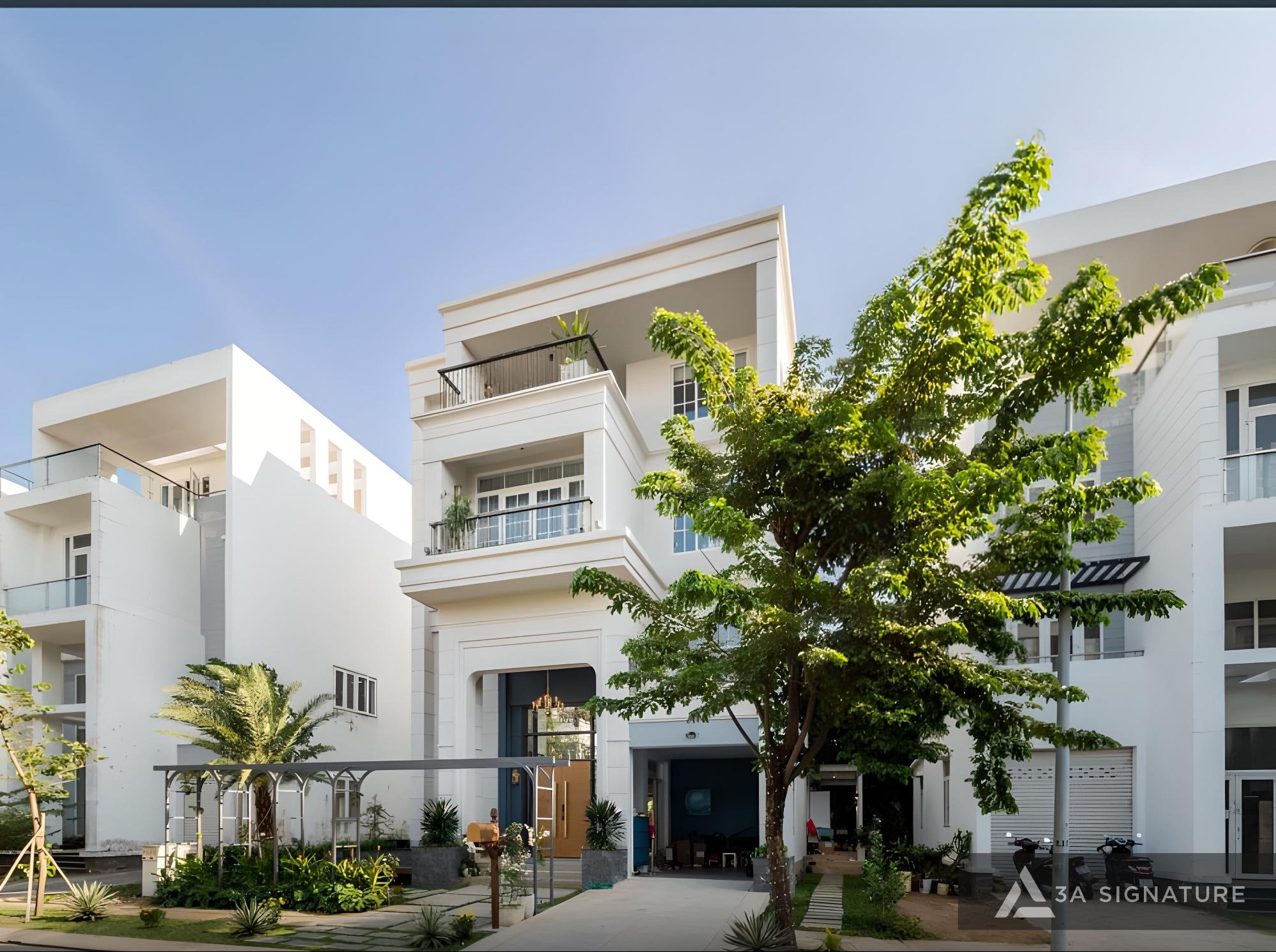
3A Signature has designed and executed the interior for T-Villa, a Mediterranean-style villa located in Thu Duc, Ho Chi Minh City. Spanning a construction area of 395m² and featuring three floors plus a rooftop level, the residence was designed to accommodate a three-generation family. As this was a renovation project, the team was tasked with infusing a Mediterranean aesthetic into an existing structural framework a challenge similar to the one encountered with the “bare-shell” villas at Elyse Island.
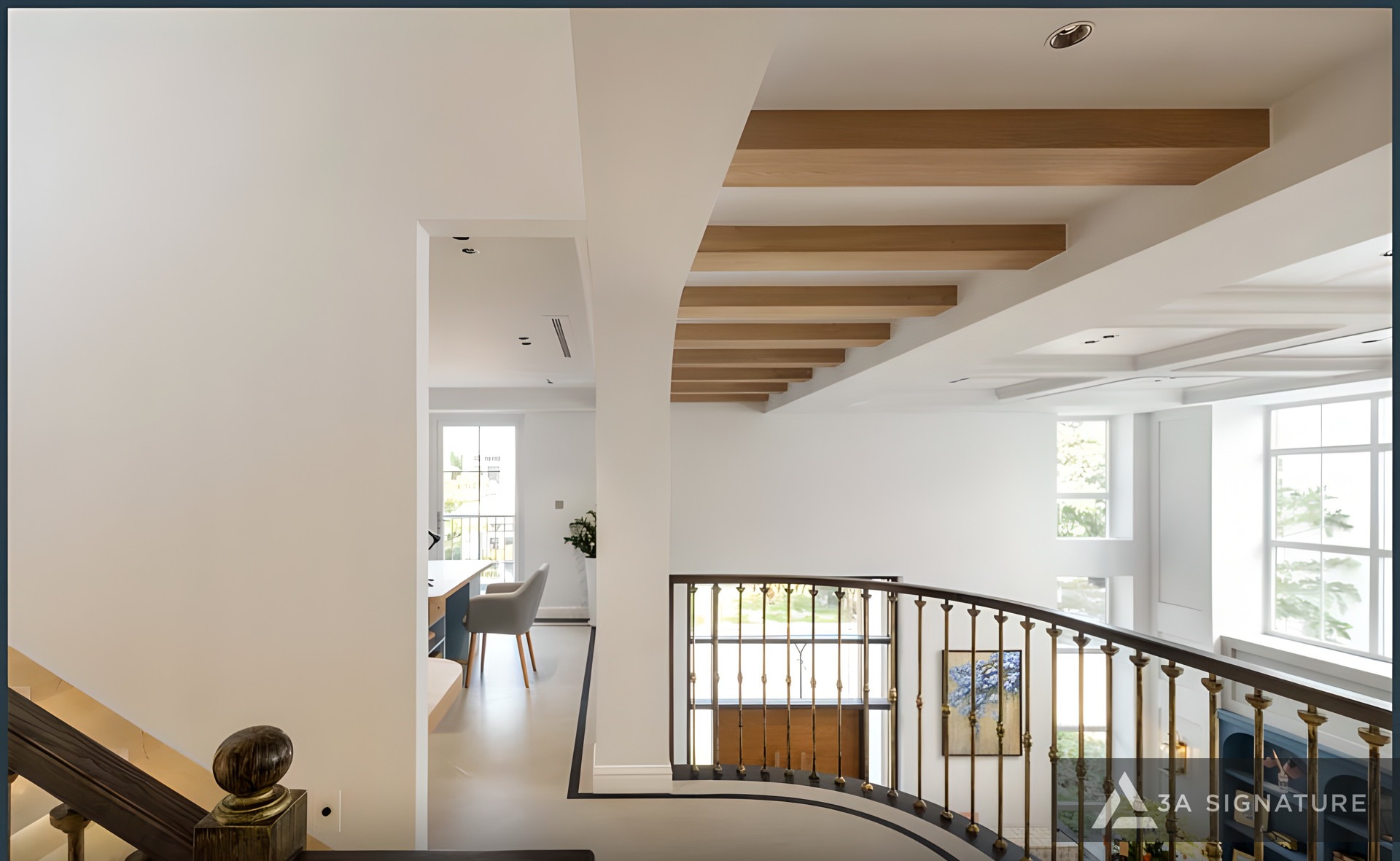
The interior of T-Villa features a color palette of cobalt blue and cream white, incorporating natural wood, tiles, and split-face stone. Architectural accents include arched transitions and ceilings with faux wooden beams; the blue-toned kitchen opens out to a rear garden, while the bathroom adopts a sea-blue theme.
The functional layout is clearly defined: the ground floor houses a garage, living room, kitchen, and dining area; the mezzanine contains a common living space, a bedroom, and a BBQ terrace; the second floor is dedicated to bedrooms; and the third floor features an altar room, an entertainment room, and a garden terrace. The images of the living room, kitchen, bedrooms, hallways, and study included in this article are actual photographs taken at T-Villa.
Also located on Dai Phuoc Island, the Lumina Retreat Villa at SwanBay designed and currently under construction by 3A Signature addresses the same environmental factors found on Elyse Island, such as river breezes, high humidity, and intense afternoon sunlight. Key considerations for construction on the island are outlined in a separate advisory article on design for Dai Phuoc Island.
The interior design for the Elyse Island Mediterranean-style villa follows 3A’s 10-step villa design process and comprehensive interior design-and-build workflow. This includes understanding client needs, defining material and color palettes, creating 3D visualizations for each room, preparing technical documentation, and executing bespoke interior fit-outs following the handover of the property.
Frequently Asked Questions About Mediterranean-Style Villa Interior Design at Elyse Island
Which Elyse Island Villas Feature a Mediterranean Style?
Zone C at Elyse Island comprises 132 villas with Mediterranean-inspired architecture, situated along the frontage of the Dong Nai River. Zone B consists of 201 villas designed in a Southern European style; given the shared climatic origins, many of the same interior design principles can be applied.
What Are the Key Characteristics of Mediterranean-Style Interiors?
Mediterranean-style interiors are defined by five primary features: a color palette of creamy white, ocean blue, and terracotta; natural materials such as wood, stone, handcrafted tiles, and linen; arched forms and curved wall niches; exposed wooden ceiling beams; and spaces that open out onto terraces and gardens.
Is the Mediterranean Style Suitable for the Climate of Dai Phuoc Island?
Yes, provided it is adapted. The emphasis on inviting sunlight and breezes while opening up to the outdoors aligns well with a tropical climate; however, materials must be moisture-resistant, glass doors may require shading from the afternoon sun, and outdoor landscaping should feature native plant species rather than those suited to arid climates.
Can the Exterior Be Modified to Align with the Interior Design?
The exteriors of the Elyse Island villas are finished in a uniform manner, consistent with the master plan for the entire development. Therefore, it is recommended that the interior design complement the existing exterior rather than altering it. Any additions such as patio covers or sun-shading louvers must be reviewed against the Management Board’s regulations before being incorporated into the design plans.
When Should Interior Design Begin?
Ideally, the process should begin before the handover of the property. Concepts, color palettes, material selections, and interior renderings can be developed based on the provided architectural documentation. Once the property is handed over, the design team will conduct an on-site survey to account for any discrepancies before construction begins.
Has 3A Signature Previously Worked on Mediterranean-Style Interior Projects?
Yes, we have. 3A Signature designed and completed the construction of T-Villa in Thu Duc, Ho Chi Minh City a three-story Mediterranean-style villa featuring an additional rooftop level, with an interior palette of cobalt blue and creamy white, arched transitions, and ceilings accented with faux wooden beams.
Conclusion
The interior design for the Elyse Island Mediterranean-style villa continues the architectural language established by the exterior of Zone C: a palette of creamy white, aquatic blue, the warmth of wood and terracotta, soft arched forms, and spaces that open out toward the gardens and the river. The essence of a home that remains beautiful over time lies not in an abundance of details, but in restraint and the ability to withstand the climate of an island set amidst a river.
When the color palette, materials, and functionality are carefully considered and planned well before move-in, a Mediterranean-style interior becomes a way of life far more than just a collection of beautiful photographs. Contact 3A Signature to consult with our architects on a Mediterranean interior design solution for your Elyse Island villa.
3A Signature – Craft Your Tropical Villa.
Explore more:
- Elyse Island Subdivisions
- Turnkey Interior Design and Construction Services for Villas
- Completed Projects