


There’s a material that once covered the walls, steps, and verandas of Saigon in the 1970s, then quietly gave way to ceramic tiles and paint. In recent years, it has returned to the most meticulously designed projects, cherished by architects as an irreplaceable aesthetic. So what is washed stone, and why is this seemingly outdated material reappearing in modern villas? The answer lies in its timeless values: rusticity, durability, and a feeling of closeness to nature.
What is Washed Stone and Why Is It Called That?
Simply put, washed stone is a mixture of cement (usually white cement), fine sand, and small stones such as crushed stone, pomegranate seeds, or gravel. This mixture is applied to the surface of walls, floors, or steps like a regular finishing mortar.
What gives it its name lies in the final step: when the mortar has just started to set, the worker sprays water on it and gently scrubs with a brush, washing away the outermost layer of cement mortar to reveal the stones underneath. The finished surface is therefore not perfectly smooth but slightly rough, dotted with natural stones, each section of the wall a unique and non-repeating picture.
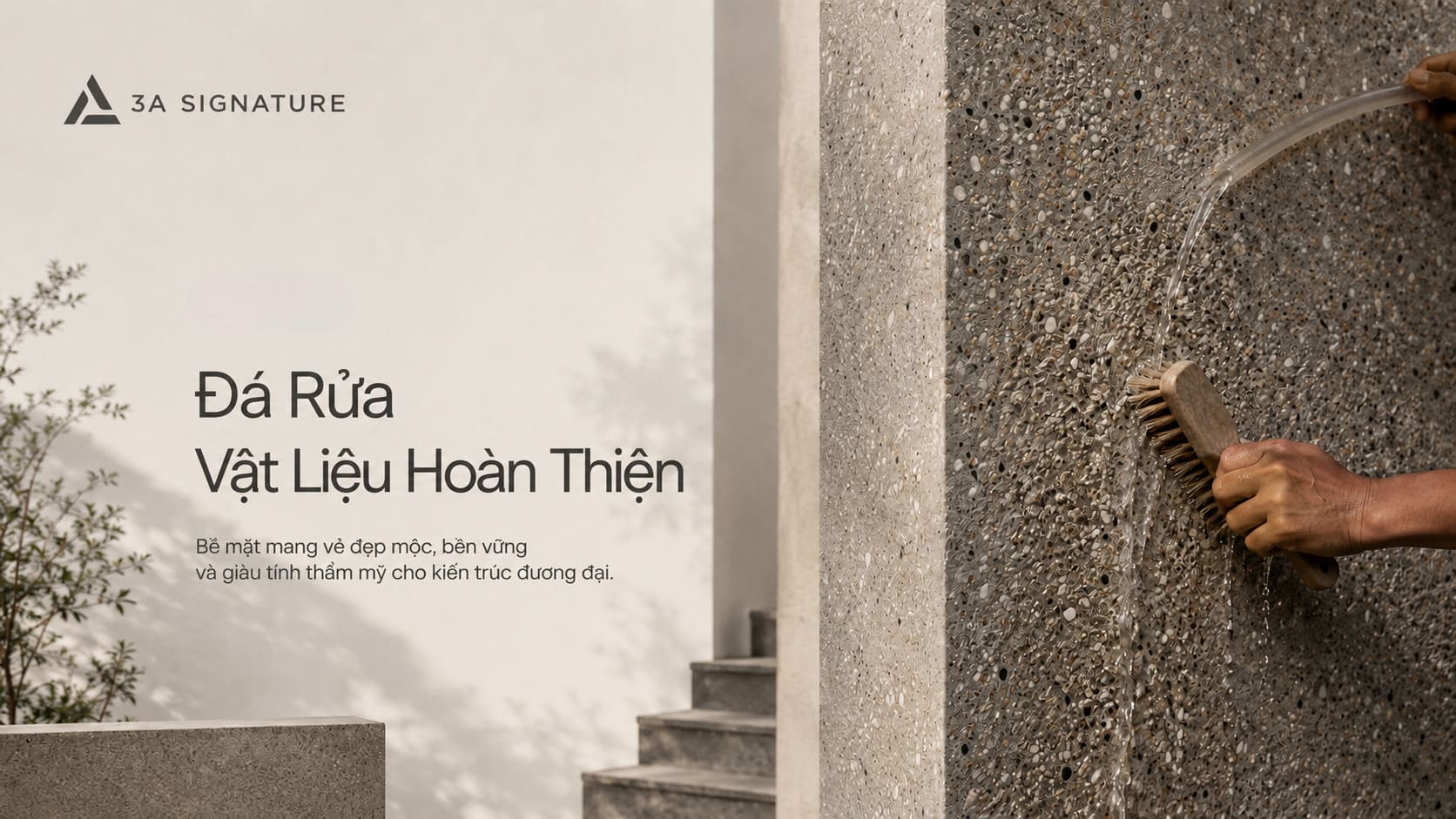
In Vietnam, this material is associated with the urban memories of the South from the 1960s to the mid-1980s, present on the facades, staircases, and fences of a generation of buildings. After a long absence, washed stone is making a comeback in contemporary architecture as a choice that is both nostalgic and sustainable.
What’s So Special About Washed Stone?
The return of washed stone isn’t just a matter of nostalgia. It stems from its very real practical value that few other finishing materials can match:
- Low maintenance costs: Almost no periodic painting or repairs are needed; only cleaning and a protective coating are required periodically.
- Superior durability: Because it’s concrete-based, the washed stone surface doesn’t peel like paint or tile, and its lifespan can be measured in decades if installed correctly.
- Natural slip resistance: The textured surface with exposed stone core provides excellent friction even when wet, ideal for areas around swimming pools, gardens, and outdoor walkways.
- Adaptability to tropical climates: It withstands sun and rain well, doesn’t fade like paint, and develops a deeper look over time.
- Unlimited customization: Changing the stone color, grain size, and density creates a completely unique surface unlike any other project.
Things Homeowners Need to Consider Before Choosing Exposed Stone
The integrity of a professional lies in speaking both sides. Exposed stone is not a panacea, and there are limitations homeowners should be aware of before making a decision:
- Rough surface attracts dust: in areas less washed by rain, the surface needs to be cleaned regularly to prevent moss and mold, especially on shaded walls.
- High dependence on skill: the stone exposure process determines the overall aesthetics. Exposing the stone too early will wash away the mortar, exposing it too late will result in uneven stone exposure. Inexperienced teams can easily produce a patchy surface.
- Difficult to repair localized damage: if a section of exposed stone is damaged, patching it will almost certainly result in a color mismatch with the original, so quality must be right from the start.
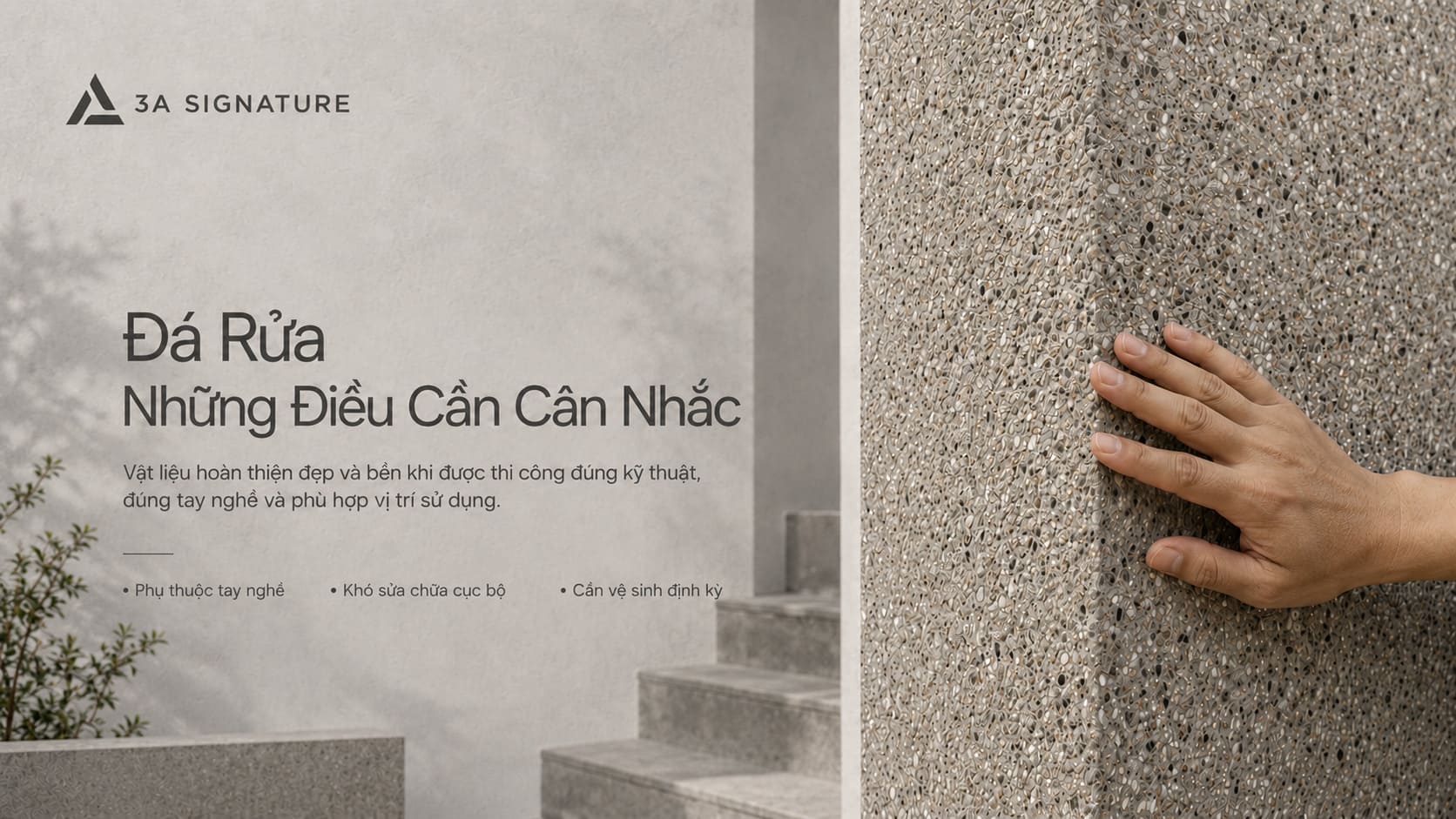
These limitations explain why, with the same washed stone material, some structures remain beautiful and durable for decades, while others deteriorate after only a few rainy seasons. The difference lies not in the material itself, but in the builders.
Washed Stone in Modern Tropical Villas: Rustic Quality in the Right Place
From an architect’s perspective, the greatest value of washed stone lies not in its durability or cost, but in its texture. In the Modern Tropical style, where natural wood, rough stone, and polished concrete tell a story of material authenticity, washed stone is a perfectly harmonious piece: rustic but not rustic, nostalgic but not outdated.
In a villa, washed stone is most beautifully showcased in transitional areas between indoor and outdoor spaces: garden paths, patio steps, poolside areas requiring high friction, fence walls, or landscaped walls that catch the afternoon sun. As light glides across the rough surface, each tiny stone particle casts a subtle shadow, bringing the wall to life at different times of the day—something a smooth, painted wall could never achieve.
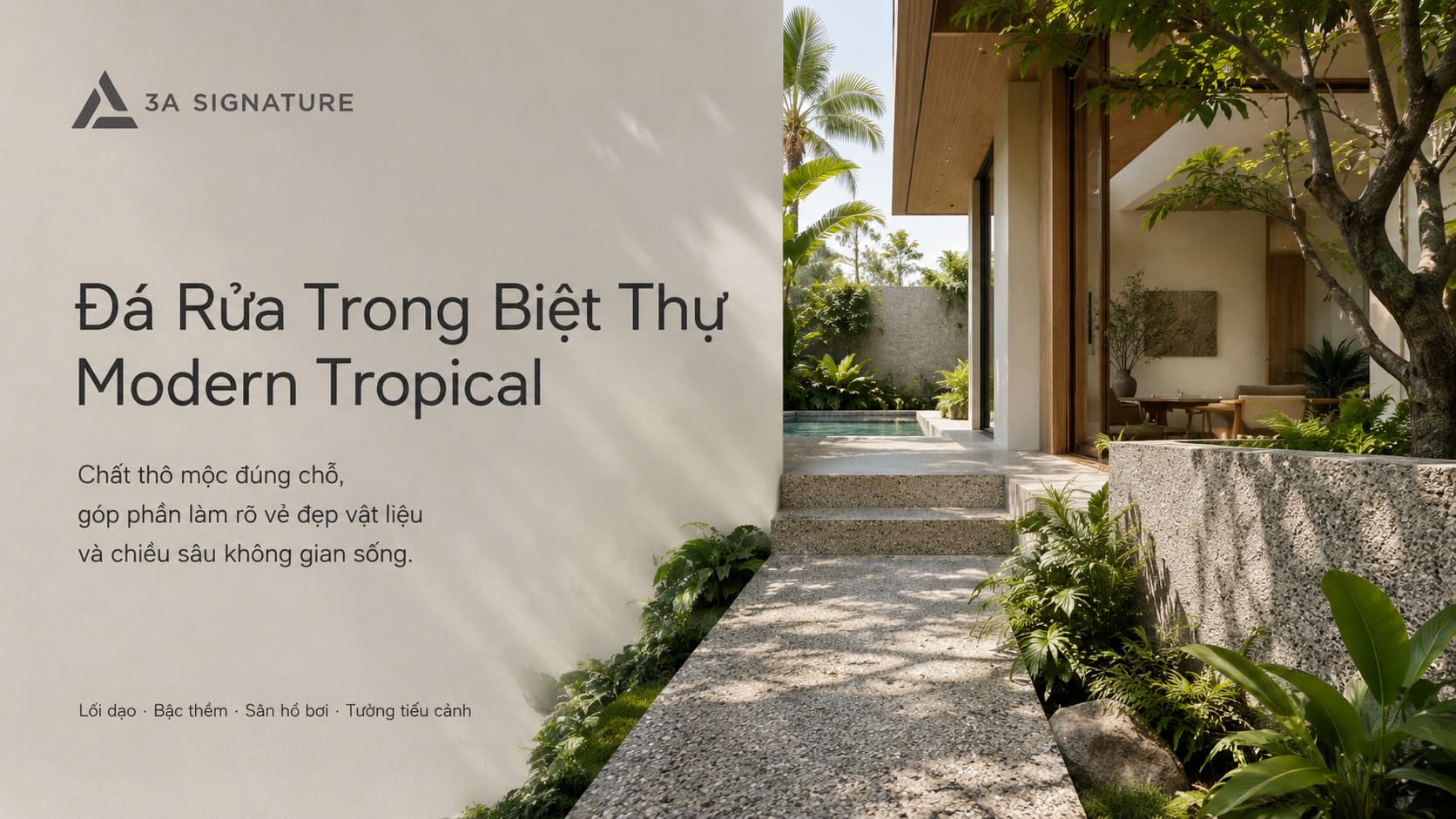
At 3A Signature, washed stone is viewed within the overall philosophy of sustainable materials: prioritizing genuine materials that adapt to tropical climates and become more beautiful over time. And because the aesthetics of washed stone depend almost entirely on craftsmanship, this aspect is always tightly controlled in villa construction services with supervision from both architects and engineers, from selecting stone size and color matching to the timing of washing to expose the aggregate.
When and When Not to Use Washed Stone
Washed stone is a good choice for outdoor surfaces that are durable, non-slip, and have a rich texture: gardens, walkways, steps, pool areas, fences, or facade accents. It’s especially suitable if the project aims for a tropical, rustic feel or evokes a sense of nostalgia for Vietnamese architecture from previous decades.
Other options should be considered when a smooth, easy-to-clean surface is needed, such as interior floors in living rooms or kitchens, or when the project follows a minimalist modern style with perfectly smooth surfaces. In those cases, polished concrete or large slabs of natural stone would be more appropriate. Regardless of the choice, the prerequisite remains a construction team that understands the materials.
Frequently Asked Questions About Washed Stone
Are washed stone and washed gravel different?
Essentially, they are finished using the same method, differing only in the aggregate: washed stone uses finely crushed stone such as crushed stone or pomegranate seeds, while washed gravel uses natural round pebbles. Washed gravel provides a softer surface, while washed stone gives a more angular and rustic feel.
How long does a washed stone surface last?
If installed correctly and with a suitable protective coating, a washed stone surface can last for decades without peeling. Many structures from the 1970s to the present day still retain their original surface.
Can washed stone be used in swimming pool areas?
This is one of the most ideal locations for washed stone due to its natural anti-slip properties when wet. However, it is necessary to choose the appropriate aggregate size for a comfortable barefoot feel and apply a protective coating to prevent moss growth in areas that are frequently damp.
What factors determine the cost of washing stone installation?
Costs depend on the type and color of aggregate, area, surface complexity, and the skill of the craftsman. Rare natural colored stones and vertical wall sections with curved details will have higher unit prices than regular flat floor surfaces.
An Old Material for New Living Spaces
Understanding what washed stone is is also understanding a part of the philosophy of tropical architecture: beauty lies not in the polished surface, but in the real material placed in the right place and becoming more beautiful over time. If homeowners are considering incorporating washed stone into their garden, walkways, or accent walls, please contact 3A Signature via hotline 0965 880 168 to receive advice from our architects on a suitable material combination for the overall design.