

There is a question the 3A Signature architectural team frequently encounters during the design consultation phase: “Can I install an elevator after the house is built?”
The honest answer is: it is possible but it would be a real shame.
A villa with an elevator properly integrated from the start is vastly different from a home where an elevator is “tacked on” later. It differs in terms of space, proportions, and atmosphere and, more importantly, in the story the home tells to those who live within it.
Villa Elevators: From Convenience to a Philosophy of Living
A decade ago, residential elevators were considered a luxury features found only in sprawling villas or the estates of the elite. That landscape has since changed completely.
Today, a villa equipped with an elevator is no longer a symbol of ostentation. Instead, it reflects a homeowner with a long-term vision someone who understands that a home should not merely serve current needs but also support the family across generations and through the various stages of life.
For a multi-generational family grandparents, parents, and children living together in a three- or four-story home, the staircase can eventually become a barrier. It might not happen today or even next year, but there will inevitably come a time when the grandparents can no longer comfortably climb the stairs. At that point, a home without an elevator effectively splits the living space in two.
This is precisely why, during the design consultation process, 3A Signature always asks this question early on: “Does your family include elderly members, or do you plan to live with your parents in the future?” The answer shapes the entire floor plan layout.
The Most Common Mistake When Considering Villa Elevators
Through years of designing and constructing villas across Ho Chi Minh City, Dong Nai, Binh Duong, and Ba Ria – Vung Tau, the 3A Signature team has observed that most homeowners make the same mistake: viewing the elevator as a standalone feature unrelated to the overall architecture.
The consequences? The elevator gets tucked into whatever corner happens to be free. The elevator shaft obstructs natural airflow. Hallway spaces on each floor become cramped due to a lack of foresight. And sometimes, the elevator’s placement violates feng shui principles that are particularly important to the homeowner issues that could have been entirely avoided with proper planning from the initial design stage.

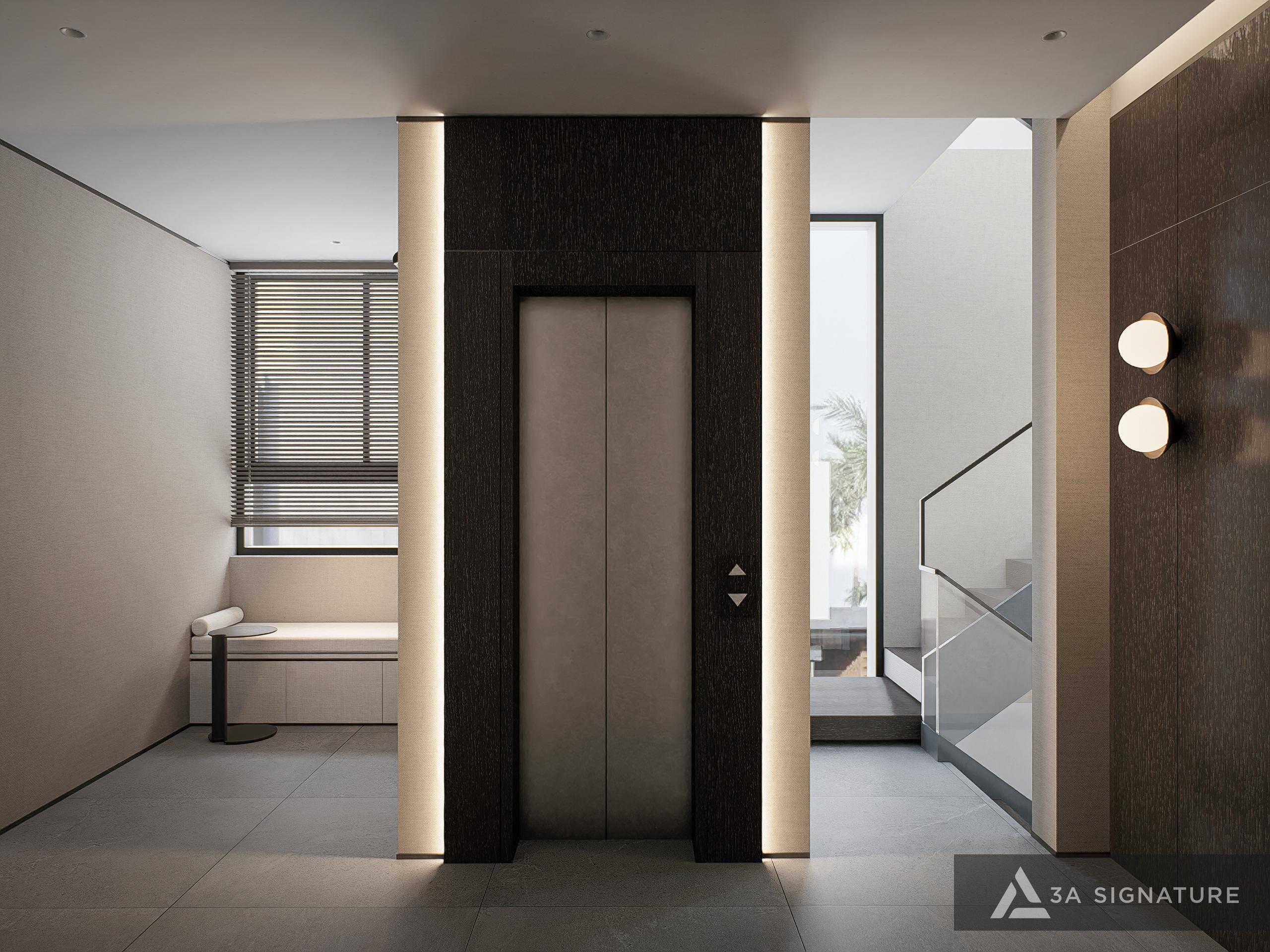
Conversely, when an elevator is integrated during the architectural design phase, it becomes a natural part of the home. The shaft is positioned within the circulation core, avoiding encroachment on living areas. Elevator lobbies on each floor offer ample waiting space, natural light, and good ventilation. Furthermore, the elevator cabin if chosen correctly serves as an aesthetic highlight rather than an unsightly “metal box” awkwardly placed in the middle of the house.
How 3A Signature Approaches Villa Elevators
At 3A Signature, an elevator is not viewed merely as a separate technical component, but as an architectural element that shapes the living space.
Placement is determined by actual circulation patterns rather than just leftover floor area. In 3A Signature’s Tropical Modern villas, the vertical circulation axis comprising both the staircase and the elevator is typically positioned at the home’s core or center. This optimizes access from every functional room while ensuring the uninterrupted flow of natural air, which is the soul of tropical architecture.
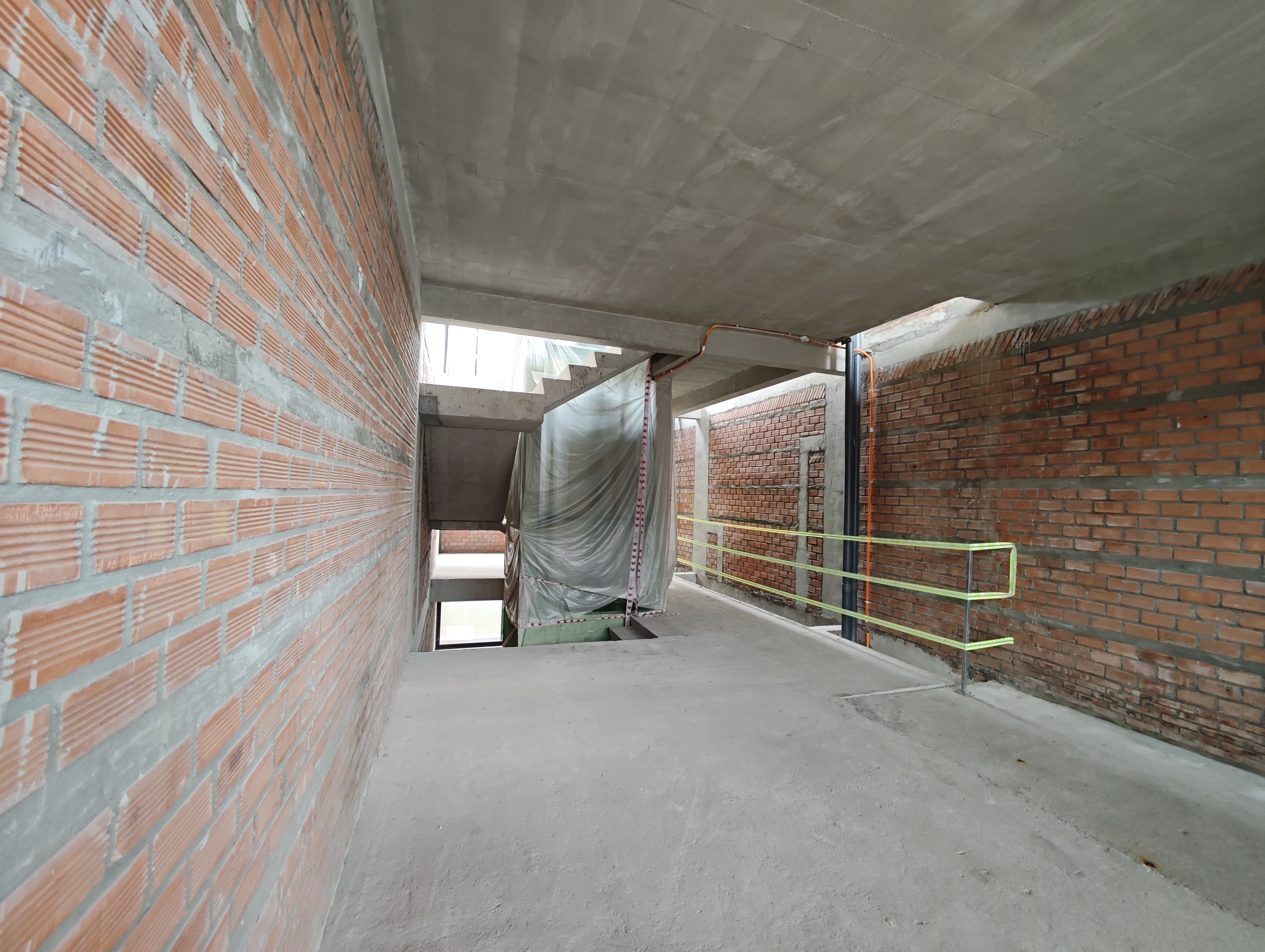
Elevator shaft specifications are calculated in tandem with the structural design from the very beginning. The elevator pit and overhead clearance (headroom) are technical elements that cannot be altered once the structural shell is complete. 3A Signature coordinates with structural engineers and elevator suppliers during the design drafting stage to ensure there are no “surprises” during construction.
The elevator cabin is an integral part of the interior design language. For Tropical Modern villa projects, 3A Signature prioritizes elevator models featuring glass or wood-clad cabins; these choices harmonize with the brand’s signature monochrome palette (Onyx, Platinum, White) while allowing natural light to permeate the elevator shaft. Light is not limited to windows or skylights it can also “flow” through the transparent glass cabin as the elevator moves between floors.
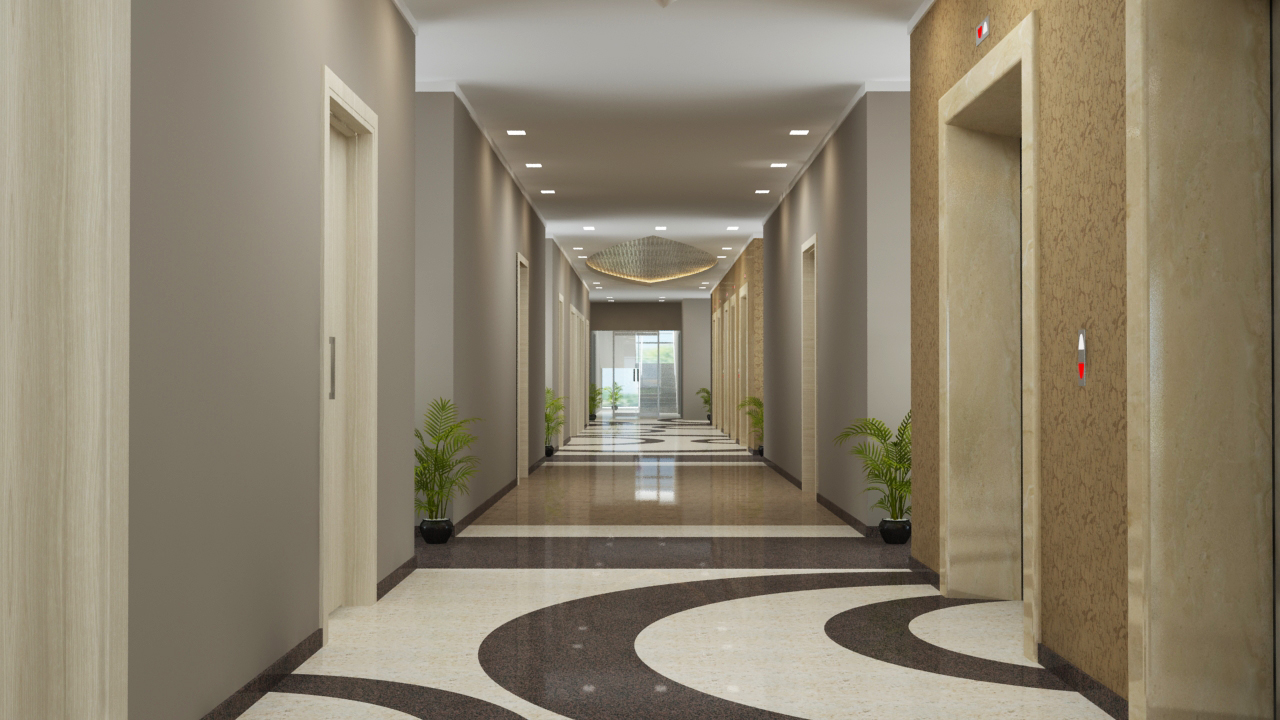
The elevator lobby on each level is designed as a transitional space neither a dark, narrow corridor nor a wasted “dead zone.” Every elevator stop marks a moment of transition between the “chapters” of the home, and 3A Signature imbues these moments with depth: they are well-lit, spacious enough to accommodate a potted plant or a small art piece, and airy enough to ensure the movement feels open rather than confined.
For Whom Is a Villa with an Elevator Suitable?
3A Signature strongly recommends that homeowners prioritize integrating an elevator during the design phase in the following scenarios:
Multi-generational households. When grandparents, parents, and children live together in a home spanning three or more floors, an elevator represents more than just a convenience; it is a genuine gesture of respect for every family member at every stage of life.
Villas with three or more floors and a large floor area. When the total usable area exceeds 300m², moving between floors multiple times a day such as traveling from the kitchen to the bedroom or from the rooftop terrace to the garage can become exhausting if one relies solely on stairs.
Homeowners who view their property as a long-term asset. Market research on luxury real estate indicates that villas featuring well-designed elevators command significantly higher value than comparable properties without them particularly when it comes to renting or reselling.
Homeowners or family members with mobility issues. A home elevator offers more than just comfort; in some cases, it is essential for enabling elderly family members or those with limited mobility to access the entire living space independently and safely.
What 3A Signature Wants Homeowners to Know
A villa elevator isn’t beautiful simply because it is expensive or comes from a famous brand. Its beauty lies in its suitability how well it harmonizes with the space, the architectural style, and the lifestyle of the family living there.
This harmony is only possible when the elevator is considered from the very first sketch not after the walls are built and the floors are poured, only for the homeowner to realize something important was overlooked.
If you are currently in the conceptual phase of your villa project whether you have just acquired the land, are weighing layout options, or are comparing design concepts now is the ideal time to discuss the elevator. The goal isn’t to select a brand yet, but to determine where it will fit within your home.
The 3A Signature team of architects is ready to partner with you from this stage onward.
3A Signature – Craft Your Tropical Villa.