

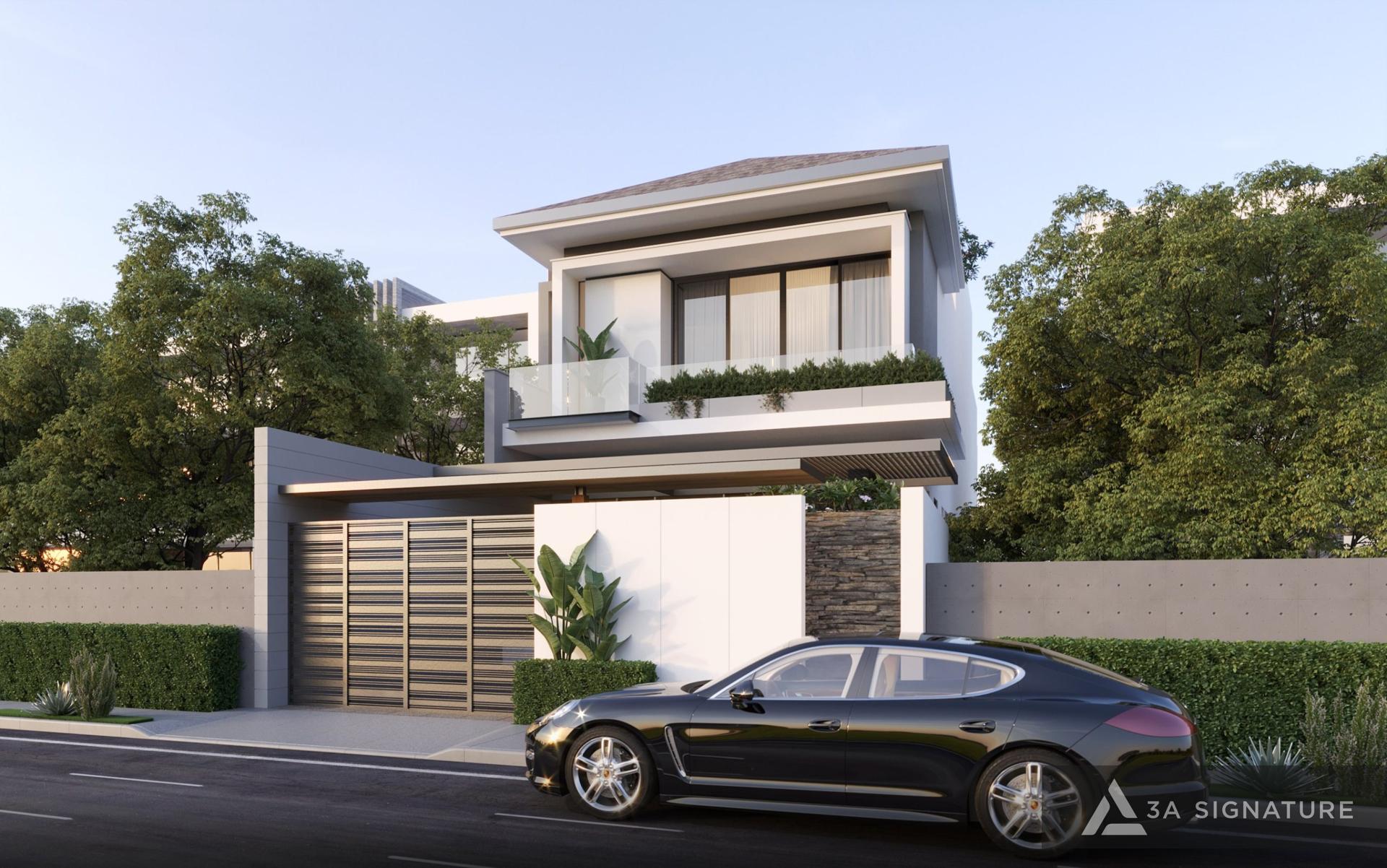
There are homes where, the moment you step onto the veranda, you feel a sense of relief. The overhanging roof softens the sunlight, a breeze weaves through the shuttered doors, and the cool, patterned cement tiles soothe your feet. No one tells you to relax your body simply does it on its own.
This is what the Indochine style achieved nearly a century ago, and what it continues to achieve today. It has endured not merely because of its nostalgic beauty, but because it is perfectly attuned to the climate.
This article is not a mere collection of design samples. It presents the perspective of the 3A Signature team on the Indochine style: what it encompasses, how it differs from Neoclassicism, and how one can design an Indochine-style villa without it becoming a carbon copy of the past.
What Is Indochine?
The Indochine (Indochina) style emerged during the period when French architecture was introduced to Vietnam. Architects of the time quickly realized that transplanting European prototypes directly into a hot, humid climate was impractical. They retained French architectural elements such as arches, columns, and balanced proportions but adapted them with indigenous solutions, including extended tiled roofs, deep verandas, wooden shutters, and locally sourced fired bricks.
Consequently, Indochine is a hybrid style, born from the need for comfortable living in a tropical climate rather than from a mere desire for decoration. Understanding this distinction helps you differentiate authentic Indochine architecture from buildings that simply feature Indochinese-style motifs applied to their facades.

5 Defining Elements of an Authentic Indochine-Style Villa
- A blended color palette and pattern repertoire. The aesthetic features hues such as ochre yellow, celadon green, teak brown, cream, and ivory white, accented by carefully curated geometric motifs or traditional “four seasons” (tứ quý) patterns.
- Sloped, extended roof systems. The roof acts as an “umbrella” for the house, providing shade from the sun and facilitating rapid rainwater runoff. Terracotta tiles or traditional âm dương (yin-yang) tiles offer superior thermal insulation compared to many modern materials.
- Spacious verandas. Typically 2–3 meters deep, these verandas wrap around the structure or span its facade. They serve as a thermal buffer, preventing harsh sunlight from penetrating directly into the living areas.
- Tall louvered shutters. Often 2.5–3 meters in height, these doors and windows feature angled wooden slats that allow for airflow while blocking sunlight and ensuring privacy a passive “air-conditioning” system characteristic of the Indochine style.
- Natural tropical materials. The design incorporates teak wood, fired brick, stone, patinated copper, and encaustic cement tiles. Encaustic tiles are not only aesthetically pleasing but also cool to the touch, durable, and imbued with a sense of timelessness.
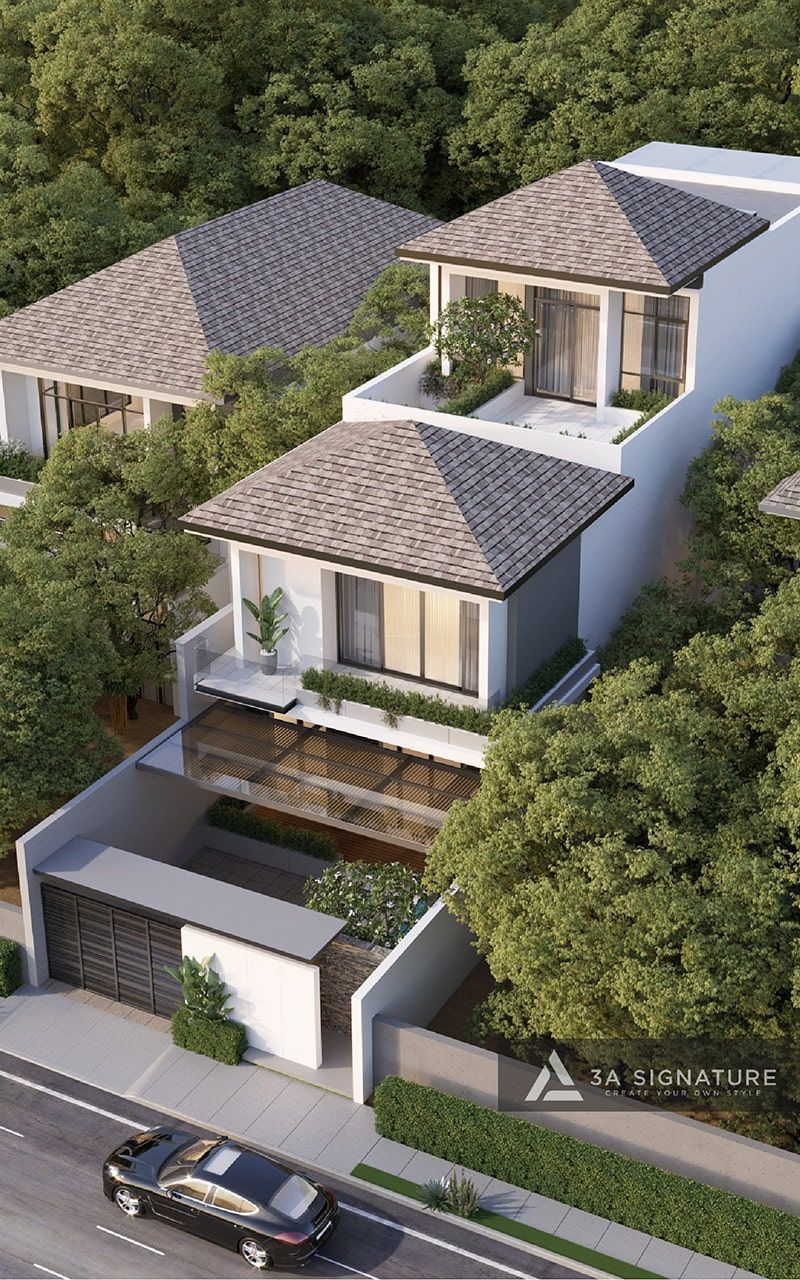
Looking at these five elements, you can see that four of them serve as climate solutions. The only purely aesthetic element is the pattern which is also the one most prone to being overused.
How Does the Indochine Style Differ from Neoclassical?
These two styles are often confused because both feature arches, columns, and pitched roofs. However, they follow two opposing directions:
| Indochine | Tân cổ điển | |
| The origins of thought | Adaptation to a tropical climate | Celebrating the European archetype |
| Key features | Deep verandas, shutters, patterned cement tiles, wood | Plaster moldings, pilasters, crystal chandeliers |
| Layout | Airy, opening out to a veranda and garden | Strict symmetry, emphasizing grandeur. |
| Feeling | Warm, rustic, relaxed | Imposing and dignified |
Homeowners who choose the neoclassical style often want a home that makes an impression. Those who opt for the Indochine style typically seek a home that is comfortable to live in.
Three Approaches to the Indochine Style: Which One Should You Choose?
“Pure” Indochine faithfully recreates the architectural spirit of the early 20th-century colonial era, featuring elements such as slate roof tiles, ochre-yellow walls, teak shutters, and patterned cement floor tiles throughout. This style is ideal for homeowners with a penchant for nostalgia and a substantial budget for authentic materials.
“Tropical” Indochine retains the signature roof tiles, verandas, and shutters, while opening up the living space toward gardens, water features, and lush tropical vegetation. It evokes the feeling of a “resort-style” home and is well-suited for expansive plots of land, particularly those located along riverfronts.

Contemporary Indochine style strips away superfluous details. It retains key proportions, materials, and specific accents such as patterned cement tiles in the foyer, arched sightlines, and shutters on sun-facing facades while keeping the rest minimalist. This approach is increasingly favored by young homeowners, as it avoids a “heavy” aesthetic while still maintaining a distinct cultural identity.
4 Common Mistakes When Designing Indochine-Style Villas
Relying on decorative motifs rather than structural elements. A facade might feature patterned cement tiles and faux arches, yet lack deep verandas or genuine natural ventilation. The house may look “Indochine” in style, but it remains uncomfortably hot because the most essential functional aspects have been overlooked.
Overloading a space with too many details. Combining patterned cement tiles, dark wood, brass accents, lacquer paintings, and vintage ceiling fans all in one room creates a heavy, dark, and cluttered atmosphere. The beauty of the Indochine style lies in restraint.
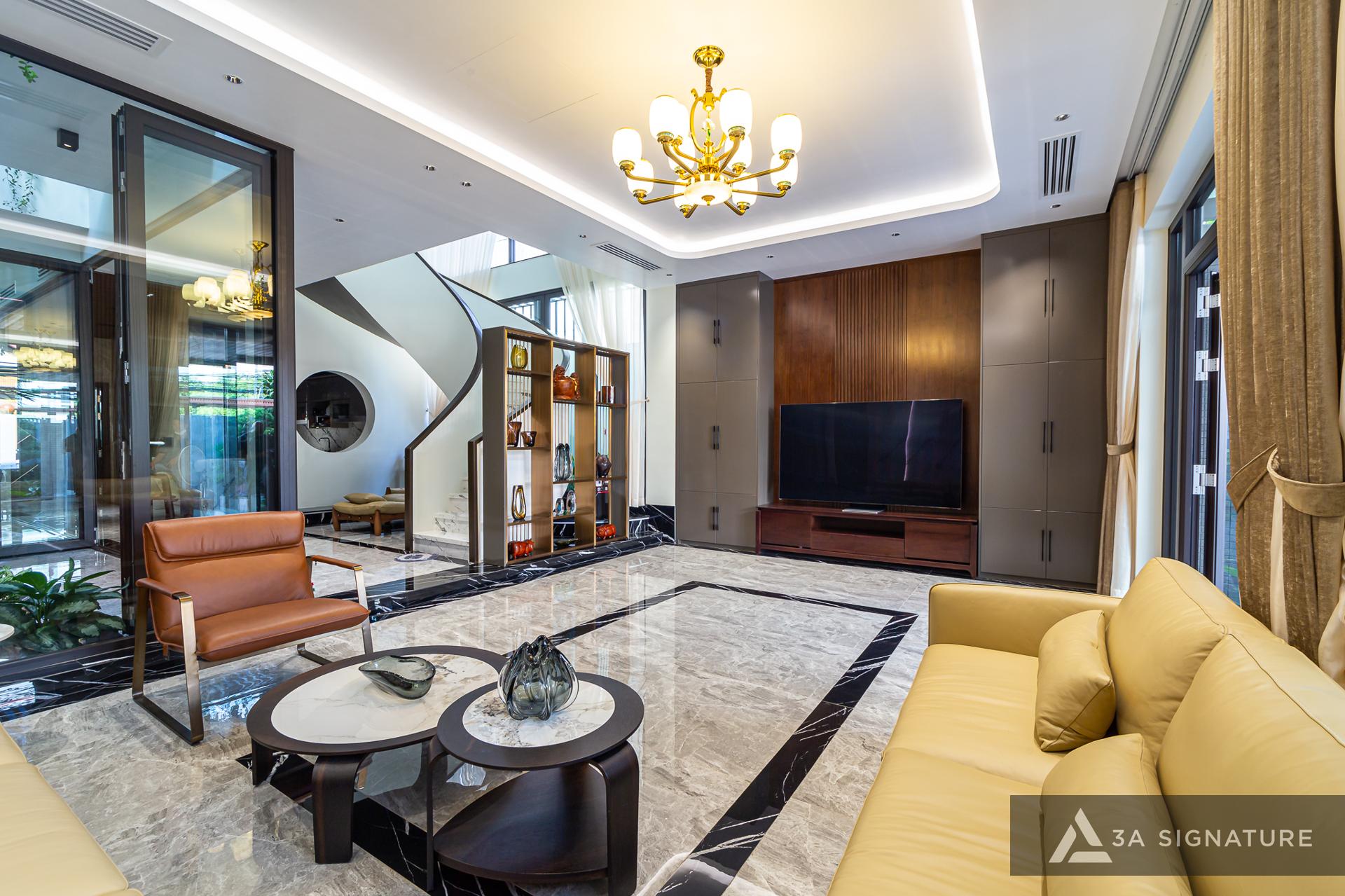
Using imitation materials in the wrong places such as engineered wood for outdoor cladding, patterned tiles designed to mimic traditional encaustic tiles, or paint meant to look like copper is a mistake. In a humid climate, these materials deteriorate rapidly, quickly revealing their lack of authenticity.
Another issue arises when the house and the garden follow conflicting styles. For instance, pairing Indochine-style architecture with a completely different landscape design shatters the overall cohesion. An Indochine-style home requires a tropical garden, and this must be integrated from the very first design draft.
How 3A Signature Approaches the Indochine Style
3A Signature specializes in the “Modern Tropical” aesthetic. Within this framework, we offer the Indochine style as one of several design directions alongside options like “Minimal Luxury” or “Modern Resort” for our clients. These philosophies share a common foundation: they both take the local climate as the starting point for design.
Consequently, when a client requests an Indochine-style home, we begin by addressing three key questions:
- From which direction does the plot receive sunlight and wind? The answer determines the depth of the roof overhangs, the placement of verandas, and the positioning of shutters.
- To what extent should the Indochine aesthetic be expressed—boldly or with greater subtlety? This helps us decide between an “Indochine Tropical” or “Modern Indochine” approach, and informs which materials should be used in their authentic form versus where they might be applied more restrainedly.
- Do the landscape and the interior speak the same language? Elements such as verandas, water features, tropical vegetation, patterned cement tiles, and wood are all considered in tandem, ensuring a seamless transition from the exterior to the interior of the home.
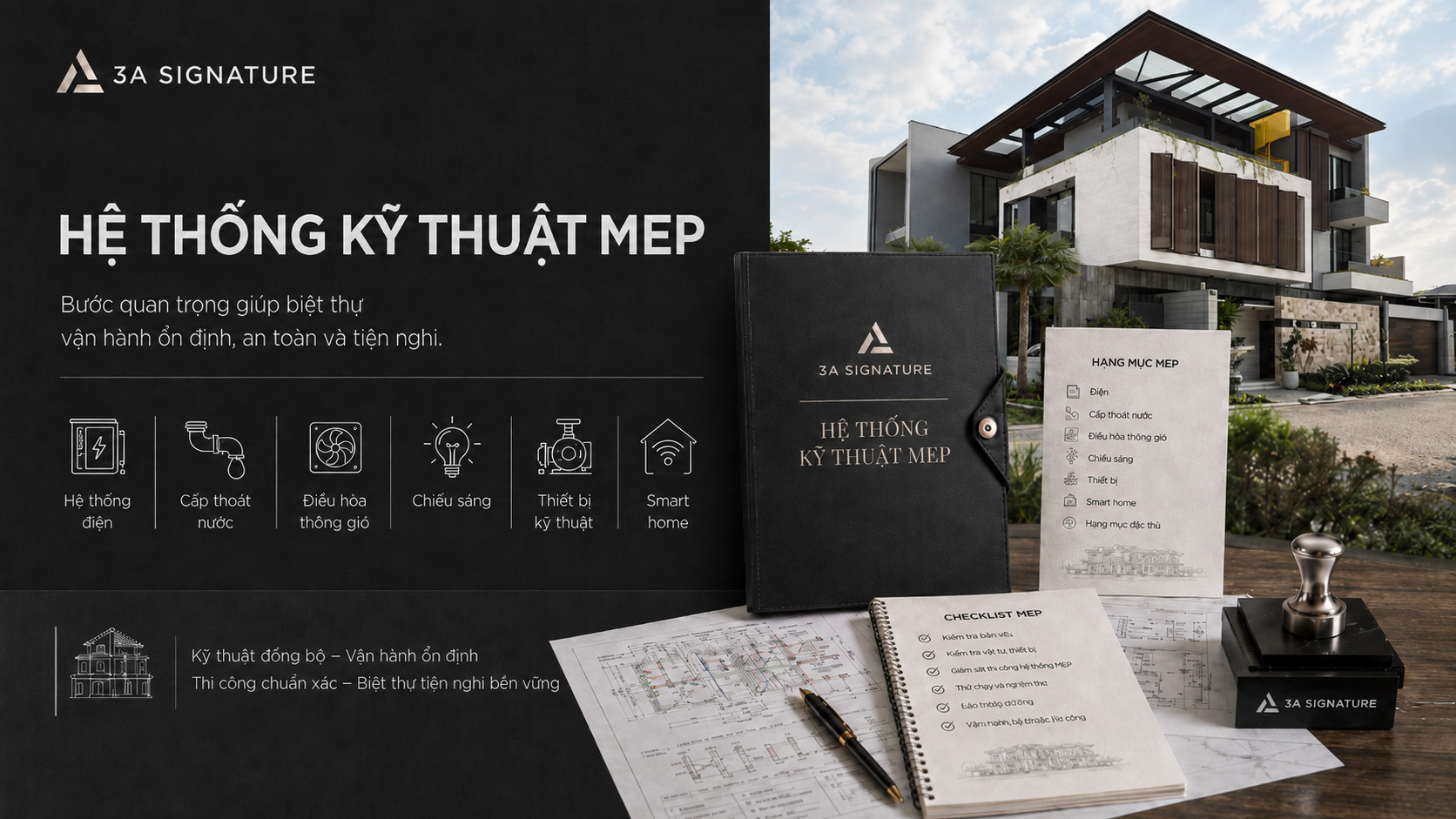
For the drawings, we provide a complete set of documentation covering architecture, structural engineering, and MEP (mechanical, electrical, and plumbing) systems along with a detailed list of materials specifying their exact types. Since the Indochine style relies heavily on natural materials, an “equivalent” substitute on paper often results in a noticeably different home once construction is complete.
Before Choosing Indochine, Ask Yourself:
- Are you drawn to the Indochine style for the lifestyle it evokes, or simply because of a few attractive images?
- Are you prepared to invest in authentic materials for key elements, or are you looking to cut costs with imitations?
- Does your plot of land offer enough space for a veranda and a garden essential features for this style to truly shine?
If the answer to all three questions is “yes,” then Indochine is a style well worth considering. If you’re still unsure, the “Modern Indochine” approach often serves as a comfortable, well-balanced alternative.

A Beautiful Home Knows Where It Belongs
The Indochine style has endured for nearly a century—not merely out of a sense of nostalgia, but because it creates homes that are cool, airy, and perfectly attuned to the Vietnamese way of life. When executed correctly, it does not grow old; rather, it matures gracefully over time.
If you are considering an Indochine-style villa, or if you would like to determine the ideal orientation for your plot of land, the team at 3A Signature is ready to guide you from the very beginning.
3A Signature – Craft Your Tropical Villa.