

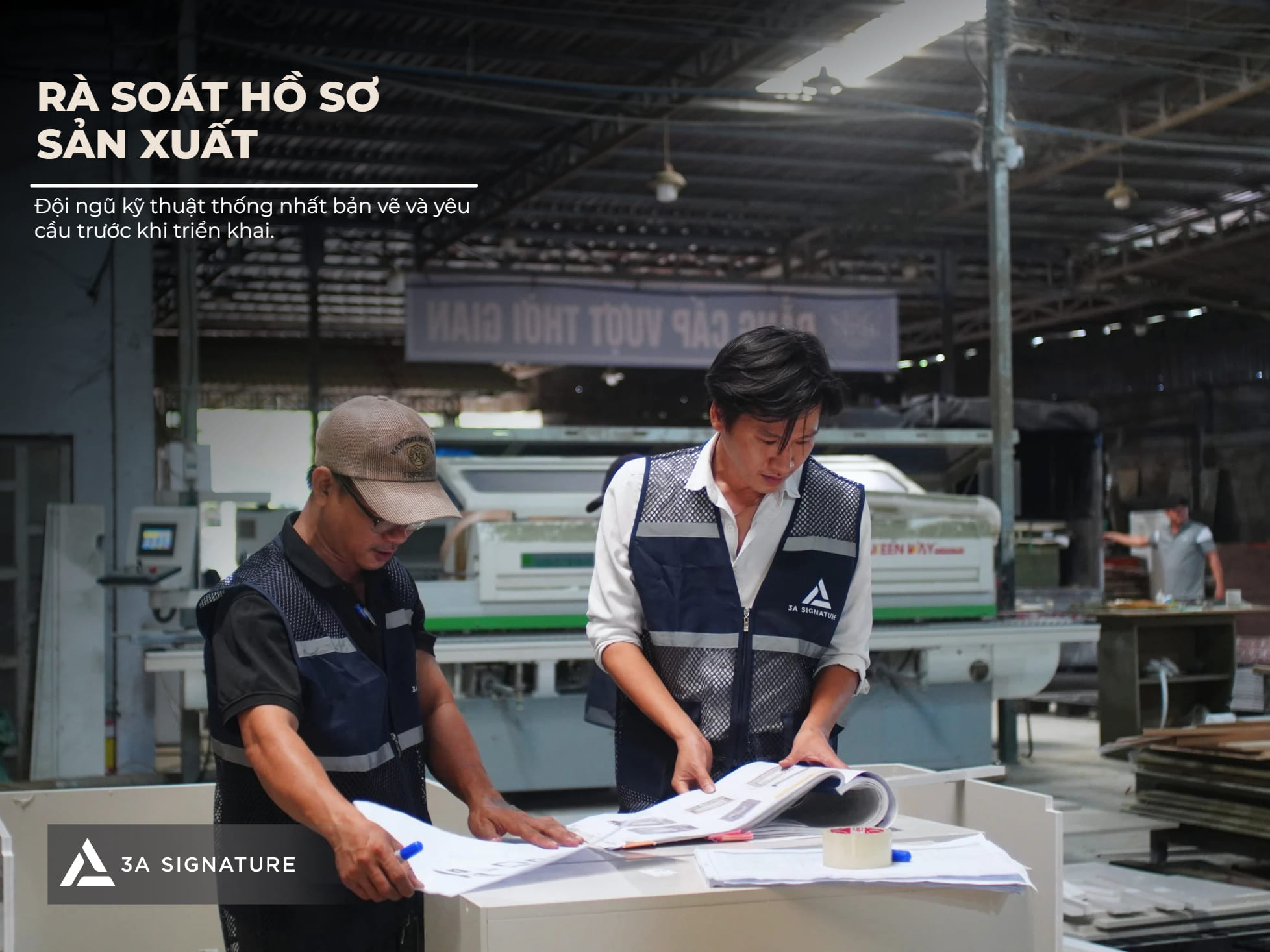
Before interior components are transported to the project site, conducting inspections at the workshop is a crucial step for 3A Signature to verify production specifications, component dimensions, squareness, surface finishes, and packaging methods. This inspection phase helps minimize discrepancies during actual installation, particularly for large cabinetry systems and interior elements requiring a high degree of uniformity.
Workshop Inspection: A Crucial Pre-Installation Quality Control Step
In villa interior construction, the quality of the finished product on-site depends not only on installation craftsmanship but also begins with the manufacturing process at the workshop. Every element whether it is a cabinetry system, wall paneling, door, storage unit, or decorative detail must be transformed from design drawings into actual components that meet precise specifications regarding dimensions, materials, and finish requirements.
Therefore, 3A Signature conducts a workshop inspection before transporting products to the project site. At the workshop, the technical team reviews drawings, cross-references production specifications, inspects fabricated components, and evaluates surface finishes. This process enables the early detection of discrepancies that could impact installation, allowing for immediate rectification at the workshop rather than dealing with issues on-site.
Reviewing Production Documentation Before Implementation
The first step in inspecting interior fabrication at the workshop is reviewing the production documentation. During this stage, the technical team aligns on drawings, component lists, product codes, material specifications, installation locations, and finishing requirements before conducting a physical inspection of the products.
The production documentation must be cross-referenced with the approved design to ensure that components are being fabricated in accordance with the original specifications. For large cabinetry systems, the inspection covers not only overall dimensions but also individual compartments, shelves, drill-hole locations, technical clearances, handles, hinges, drawer slides, and details related to integrated hardware or appliances.
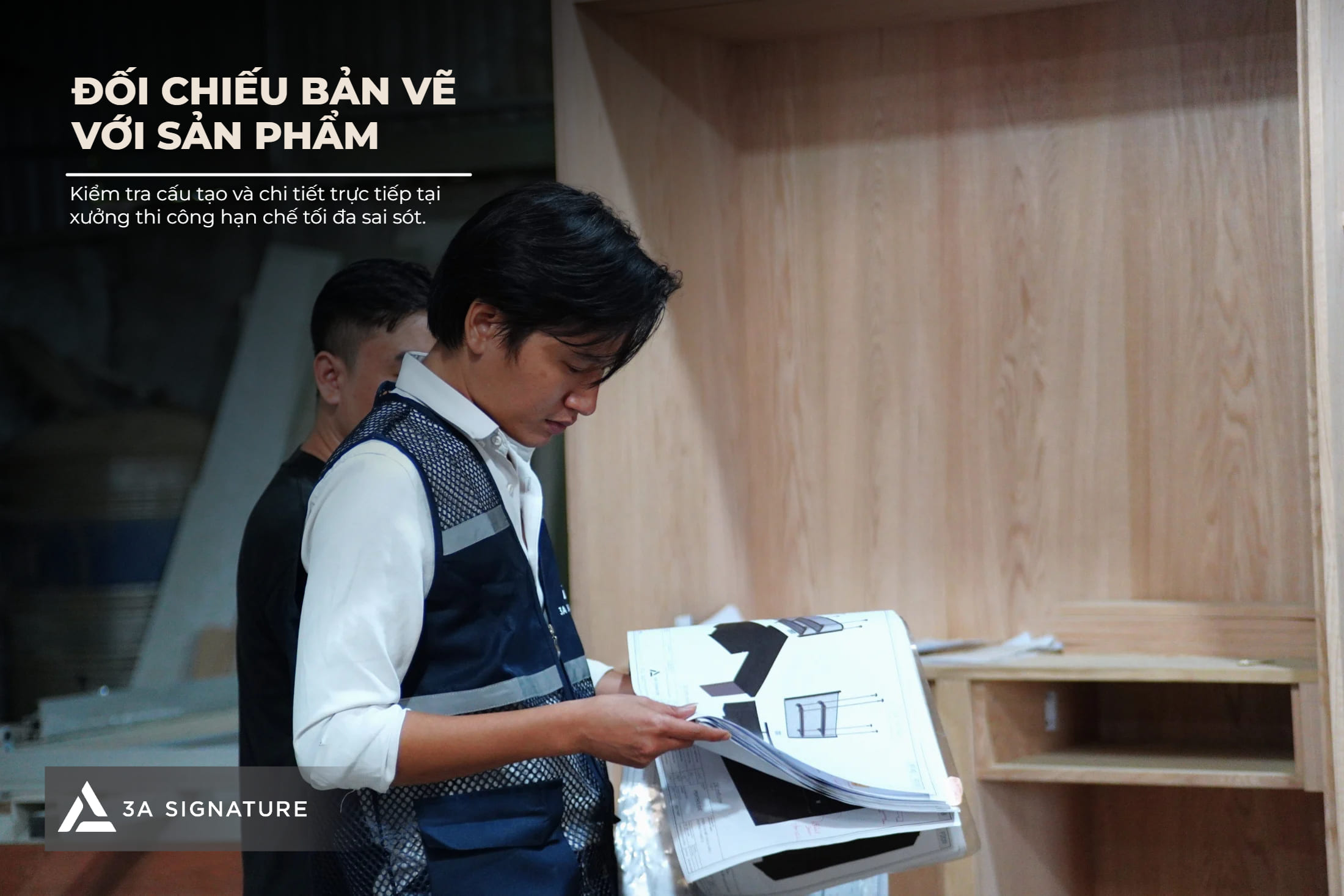
At 3A Signature, this process is carried out directly between the technical team and the production workshop. On-site communication ensures a clearer understanding of requirements regarding materials, construction, and assembly methods, thereby minimizing the risk of each party interpreting the documentation differently.
Cross-Referencing Drawings with the Actual Product
After reviewing the documentation, the technical team cross-references the drawings with the fabricated product. This is a crucial step in the workshop inspection of interior components, as drawings only hold true value when accurately translated into actual physical elements.
Specific details inspected include overall dimensions height, width, and depth as well as compartment layout, material thickness, and connection points. For custom-designed cabinetry, even a minor dimensional discrepancy can compromise the fit during on-site installation, particularly in areas involving walls, ceilings, floors, or pre-installed utility systems.
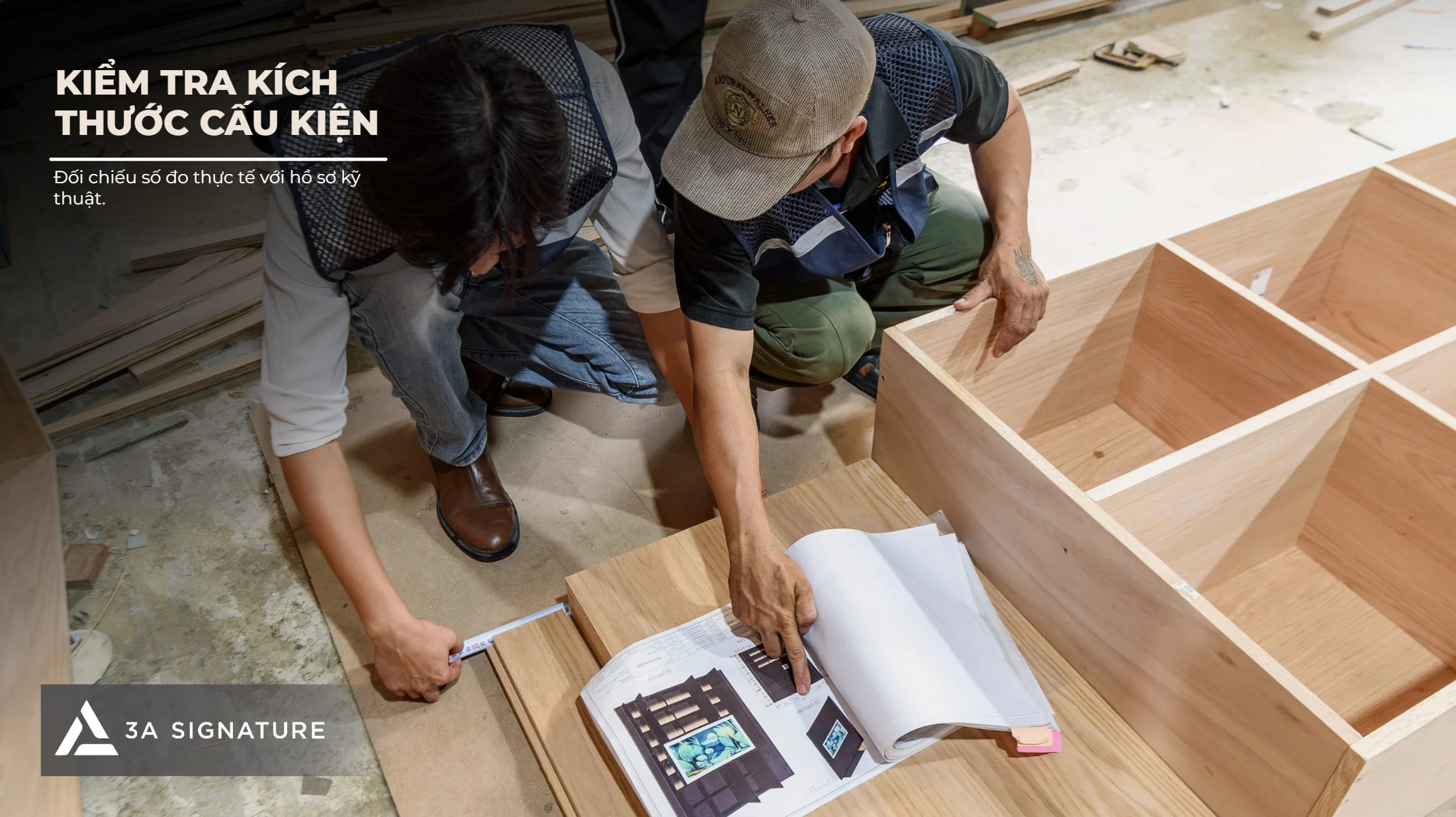
Beyond dimensions, the 3A Signature team also evaluates the alignment between the product and its intended functionality. Cabinet compartments must be properly proportioned, accessory placement must suit operational workflows, and spaces for electrical appliances or lighting must be prepared in accordance with technical specifications.
Custom CNC Machining and Cutting Path Control
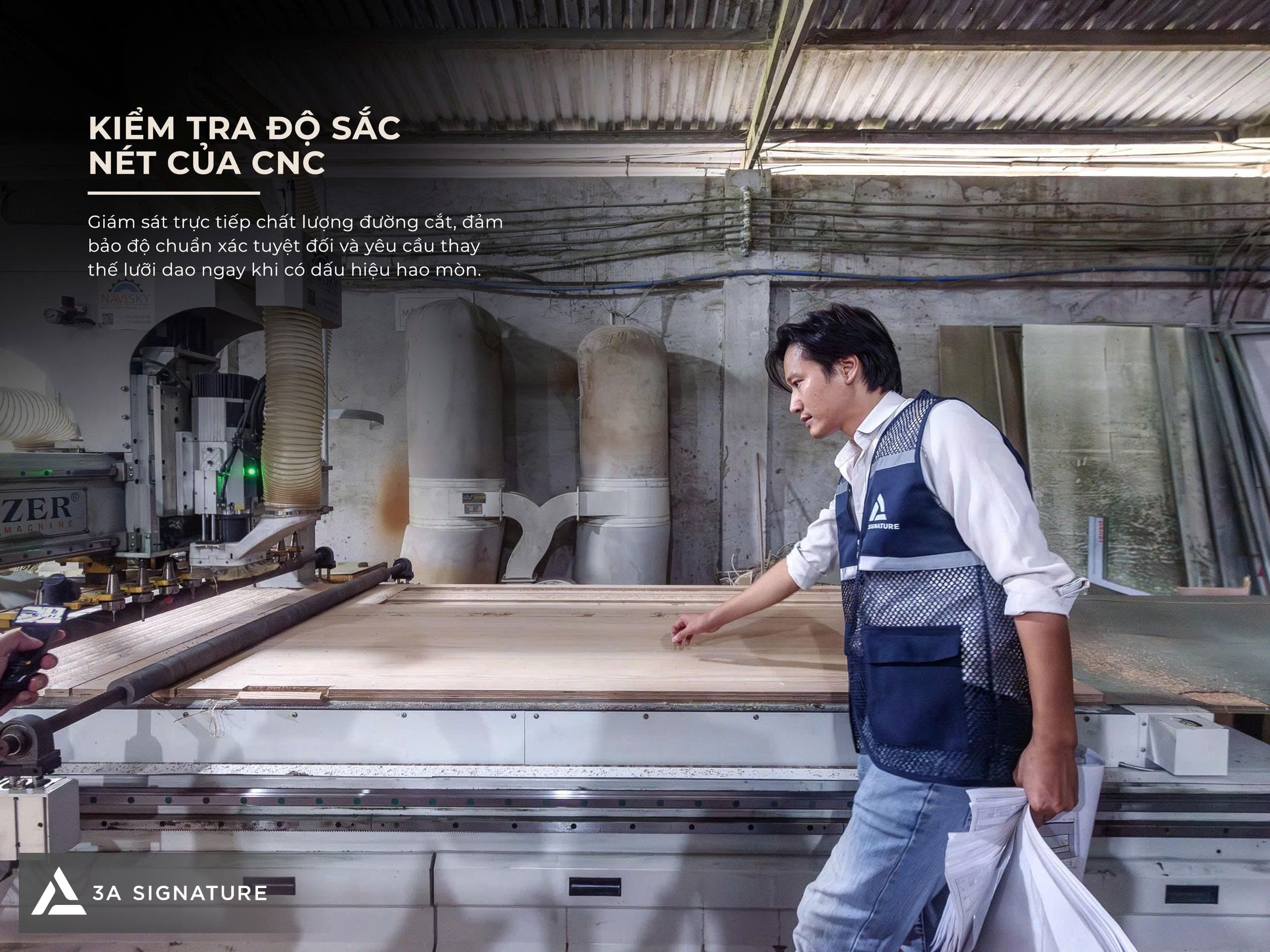
CNC machining shapes interior components according to production specifications. For parts requiring high repeatability—or those featuring grooves, drilled holes, and contoured cuts—CNC technology ensures more consistent profile control compared to purely manual methods.
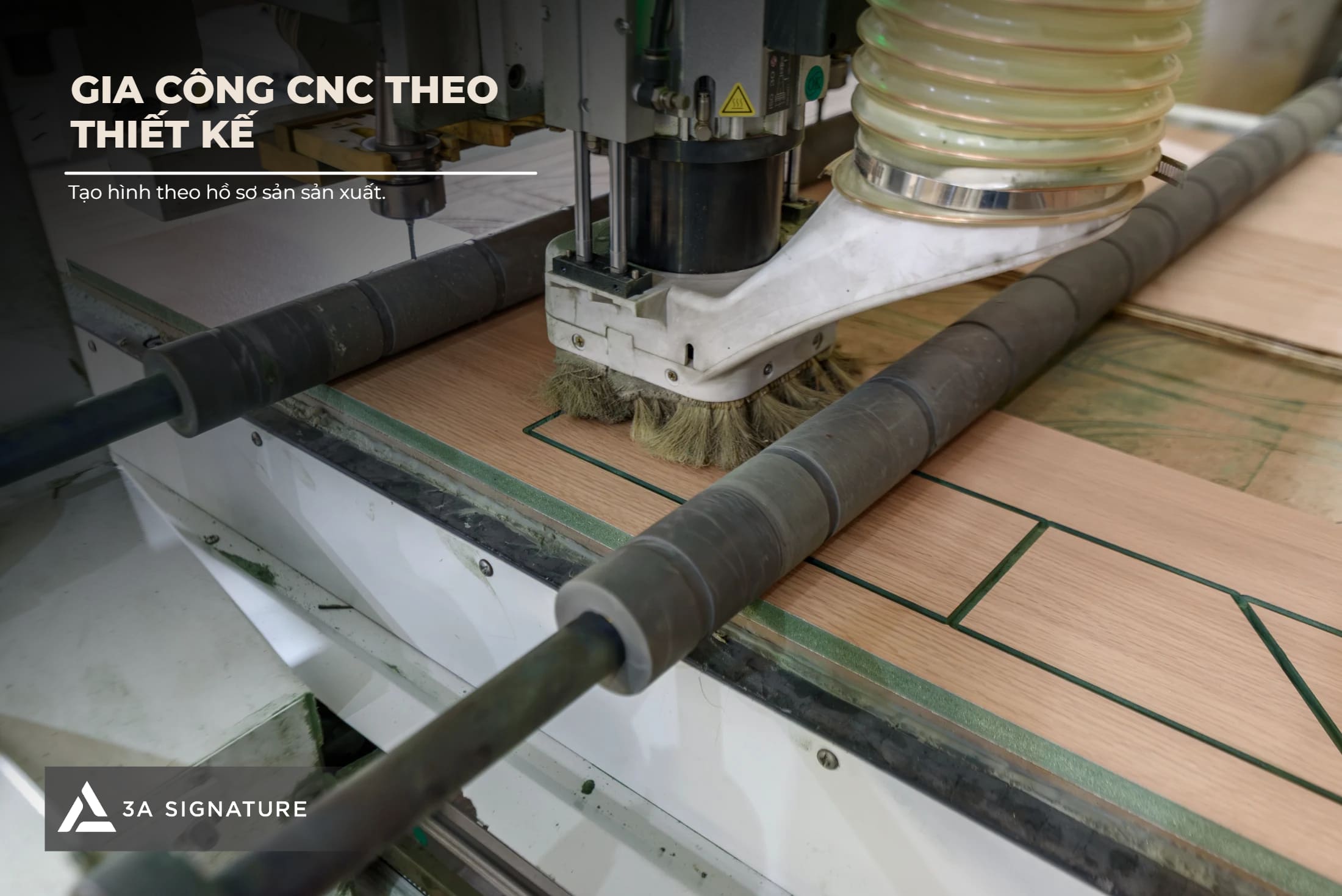
During the inspection of interior components at the workshop, the technical team must evaluate the quality of cuts, the sharpness of details, the accuracy of drill-hole locations, and overall adherence to the design drawings. Substandard cuts can compromise the assembly process, the tightness of joints, or the quality of the final finish.
CNC inspections also facilitate the early detection of issues such as incorrect part codes, wrong milling directions, or misaligned grooves. For systems involving wall paneling, decorative cabinetry, or modular interior assemblies, the precision of individual components determines the seamlessness of the finished installation.
Trial Assembly and Connection Inspection
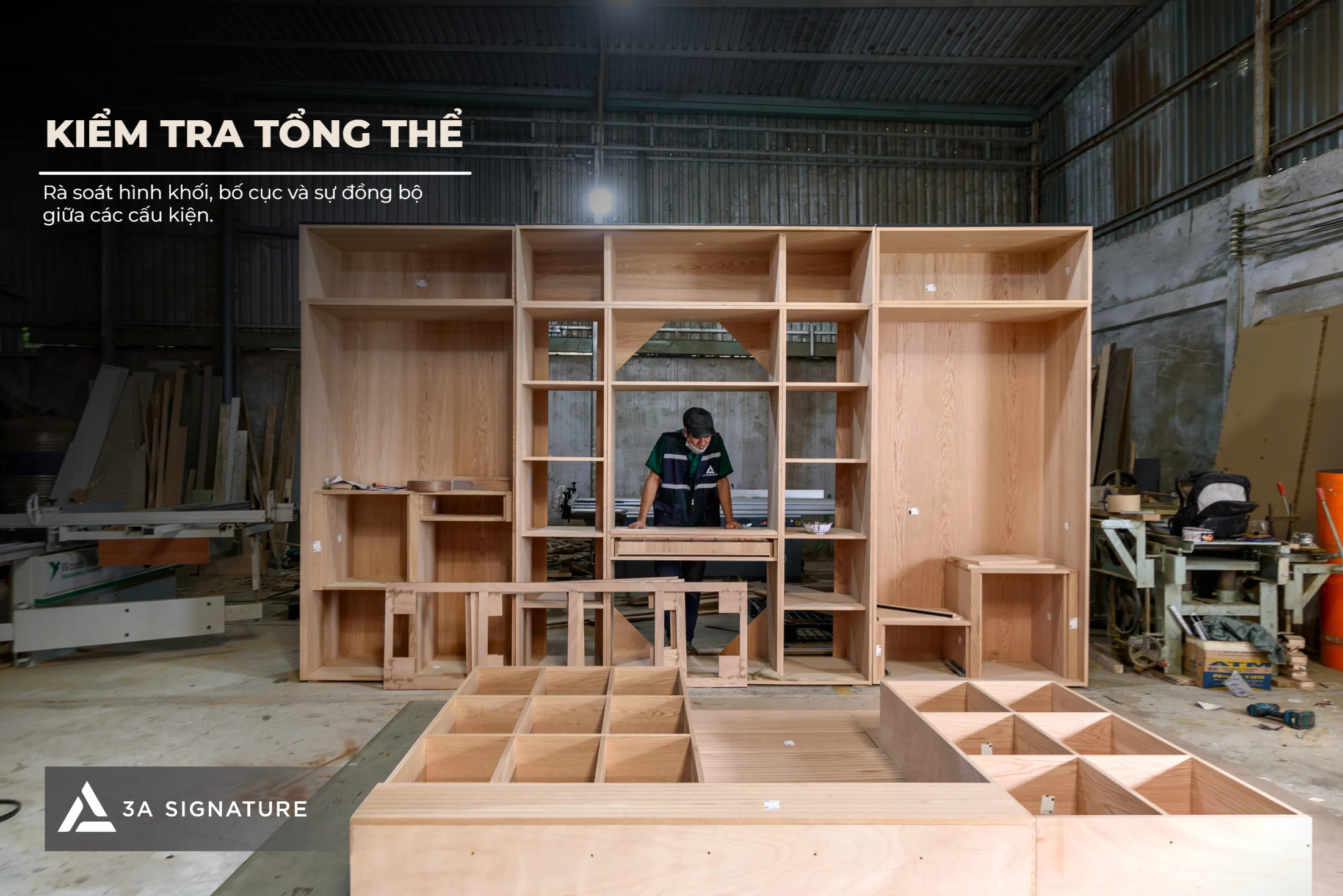
Following fabrication, the components undergo trial assembly at the workshop to verify connections and overall geometry. This is a crucial step prior to packaging, as many defects only become apparent when the parts are fitted together.
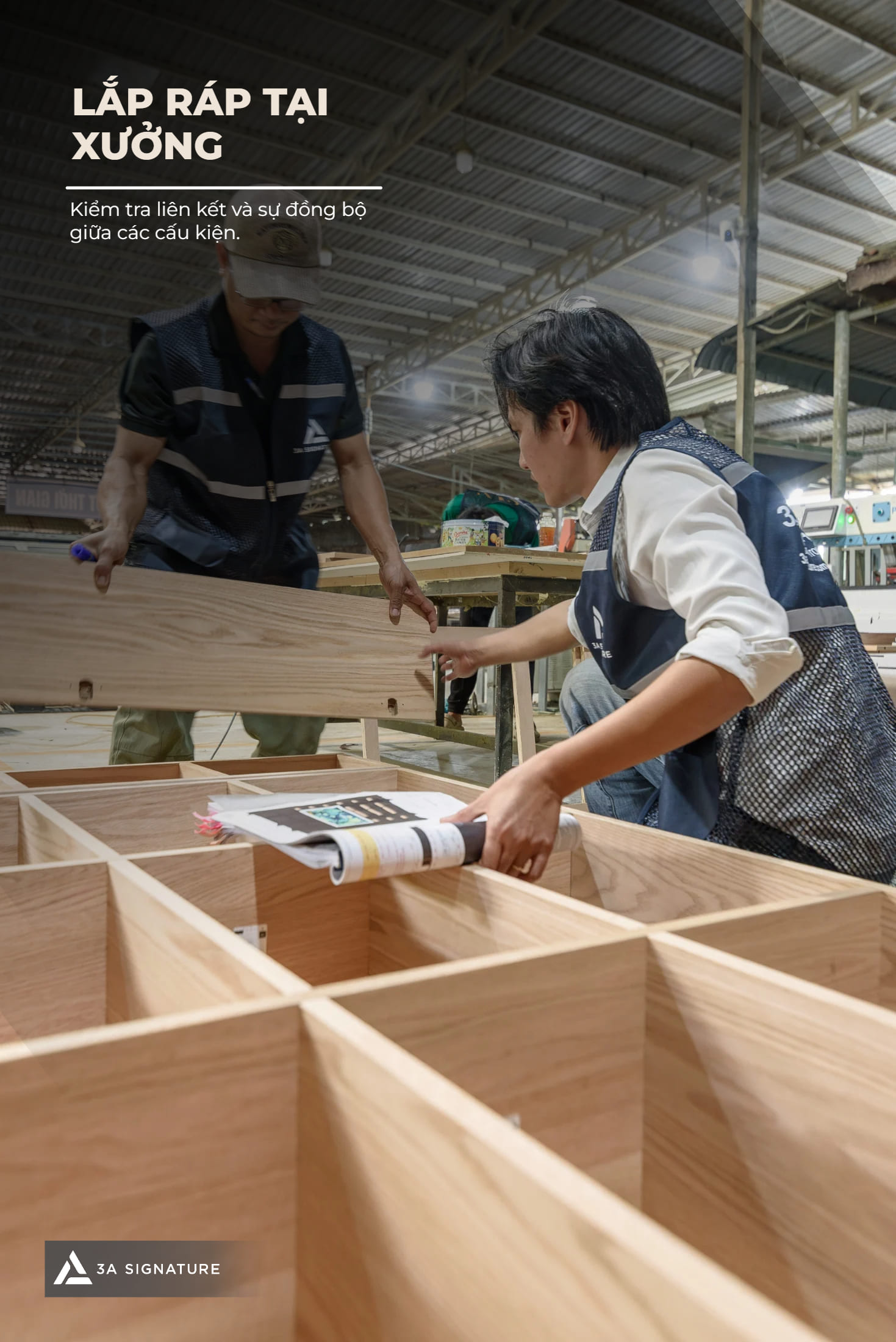
During the workshop inspection of interior components, the 3A Signature team verifies the tightness of joints, the structural integrity of connections, the uniformity of compartments, and the feasibility of the assembly sequence. For large cabinetry systems, trial assembly helps identify areas that might be difficult to handle during on-site installation, allowing for adjustments to the modular breakdown or the addition of identification markers.
Trial assembly also serves as a basis for evaluating the overall layout. A compliant cabinetry system requires not only precise component dimensions but also harmonious proportions, clearly defined compartment lines, and visual coherence across vertical and horizontal elements, drawers, doors, and shelves.
Inspection of Dimensions, Squareness, and Surface Finish
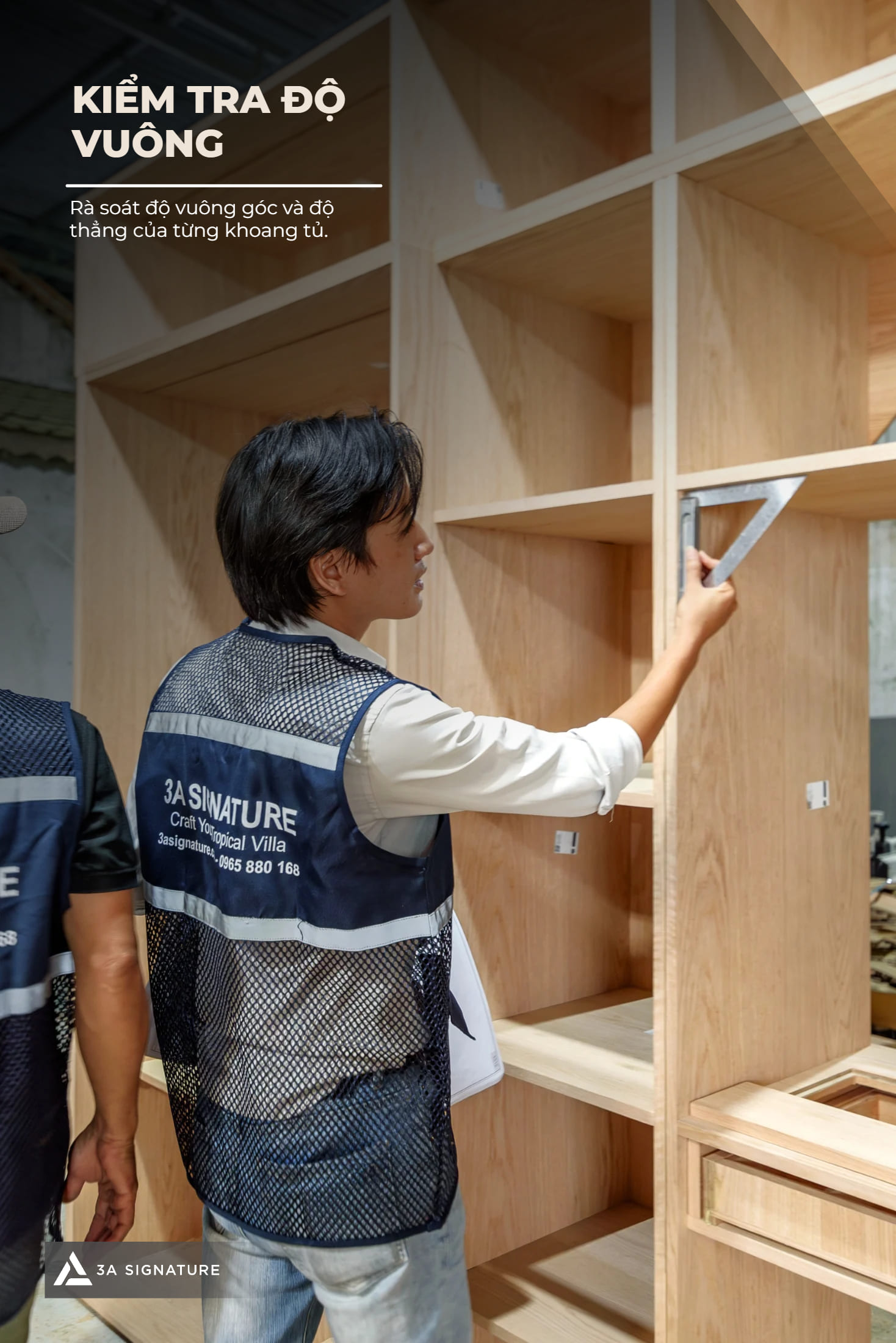
At the finished product stage, the technical team verifies actual dimensions, squareness, straightness, and surface finish. This step directly impacts the aesthetic appeal and the quality of on-site installation.
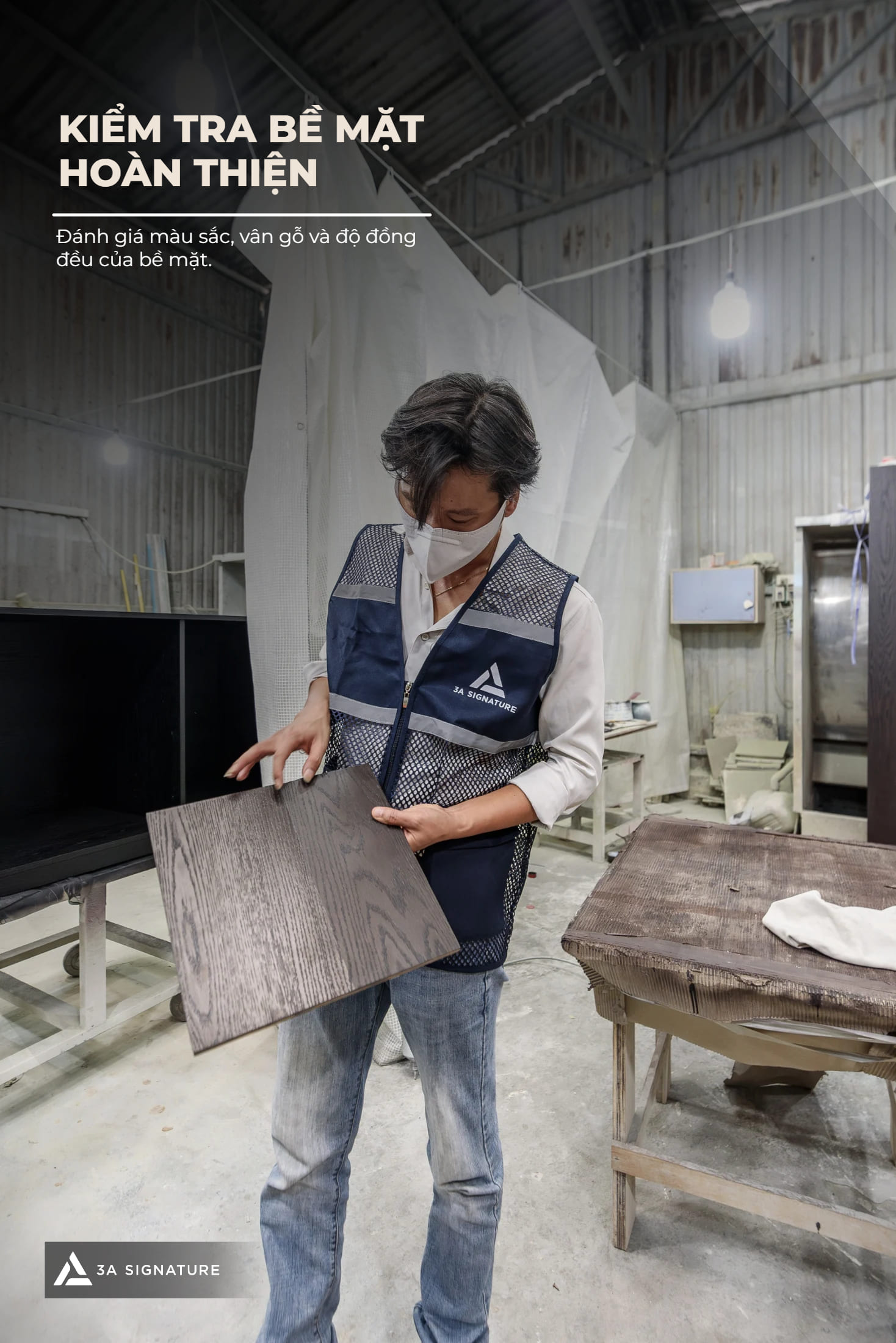
During the workshop inspection of interior components, dimensions are cross-checked using measuring tools, squares, and technical specifications. Cabinet compartments are inspected for squareness to prevent issues such as misaligned doors, uneven gaps, or unstable hardware operation. Large-surface components are also checked for flatness, wood grain, color, and consistency across panels.
The surface finish is the part of the product that customers see and interact with daily. Therefore, elements such as paint color, wood grain, edge banding, rounded edges, joinery grooves, and surface coatings must be inspected before the product leaves the workshop. Addressing color discrepancies or surface defects at the workshop is far more manageable than dealing with them after the product has been delivered to the project site.
Label Code Verification, Packaging, and Dispatch
Prior to shipment, each component must undergo verification of its label code, specifications, and corresponding installation location. This step enables the on-site construction team to easily identify products, organize them by area, and carry out installation in the correct sequence.
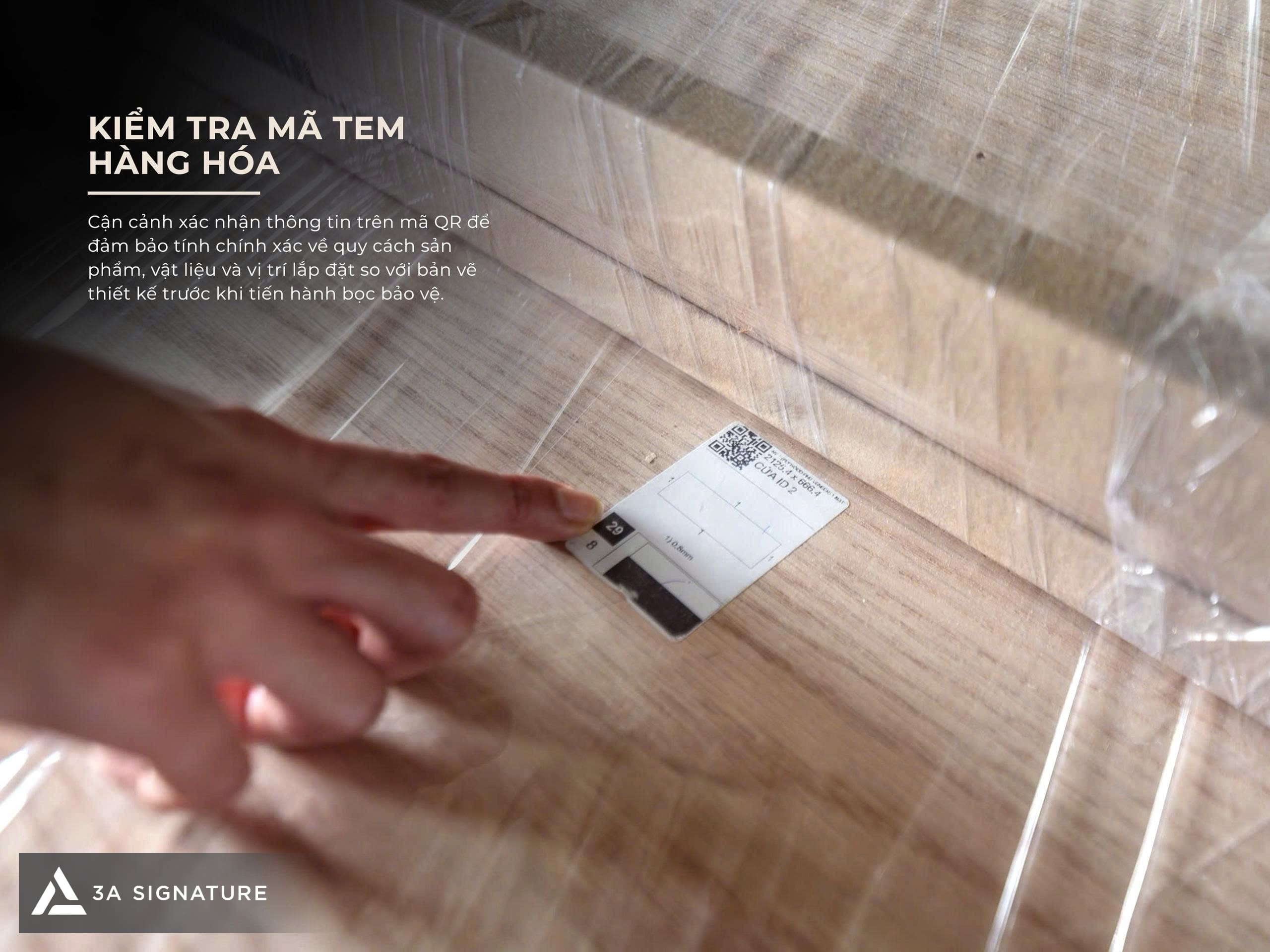
During the workshop inspection of the interior components, the technical team verifies item codes, cross-checks the parts list, and confirms quantities prior to packaging. Finished surfaces must be carefully protected to prevent scratches or impact damage during transport.
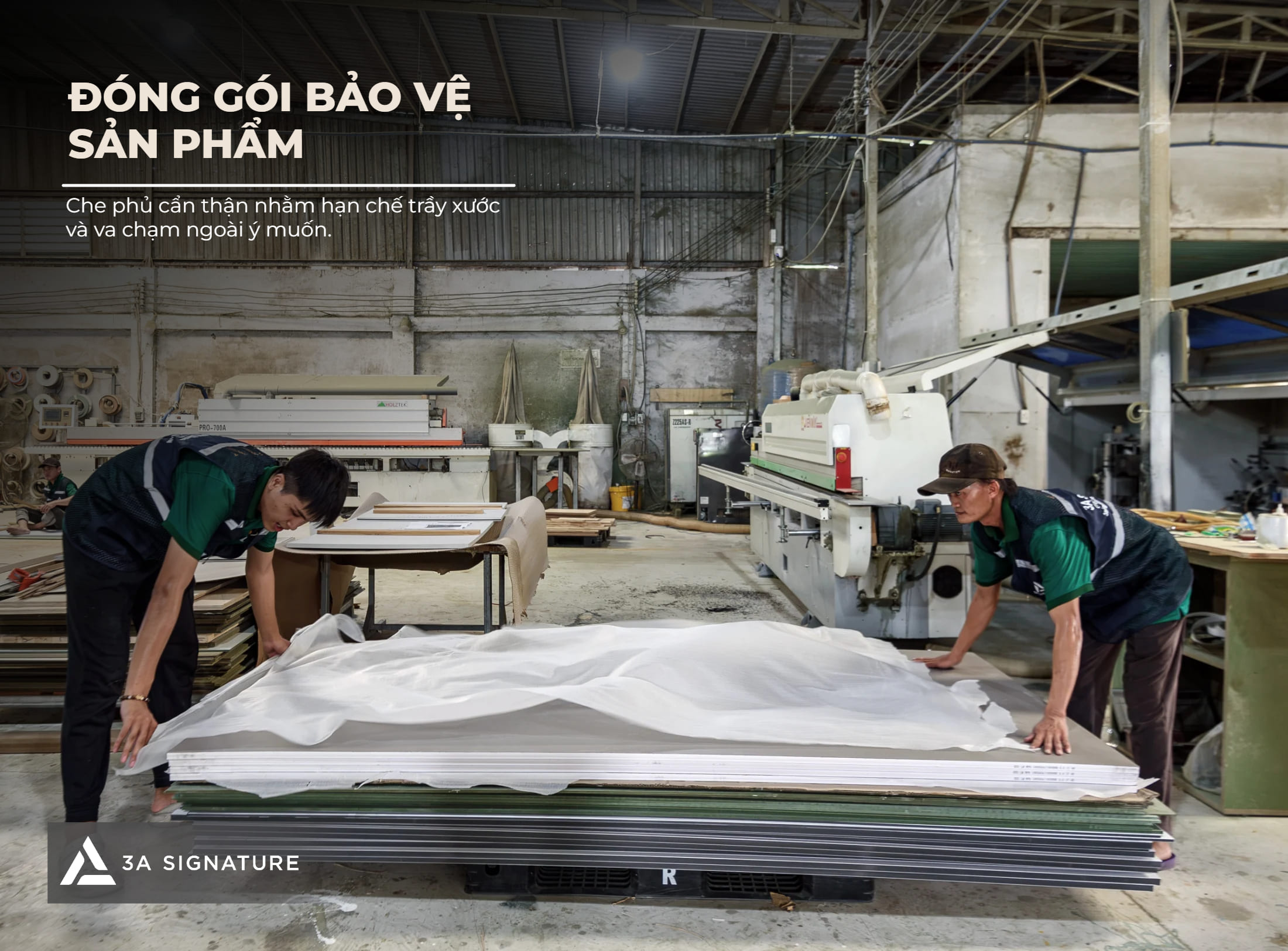
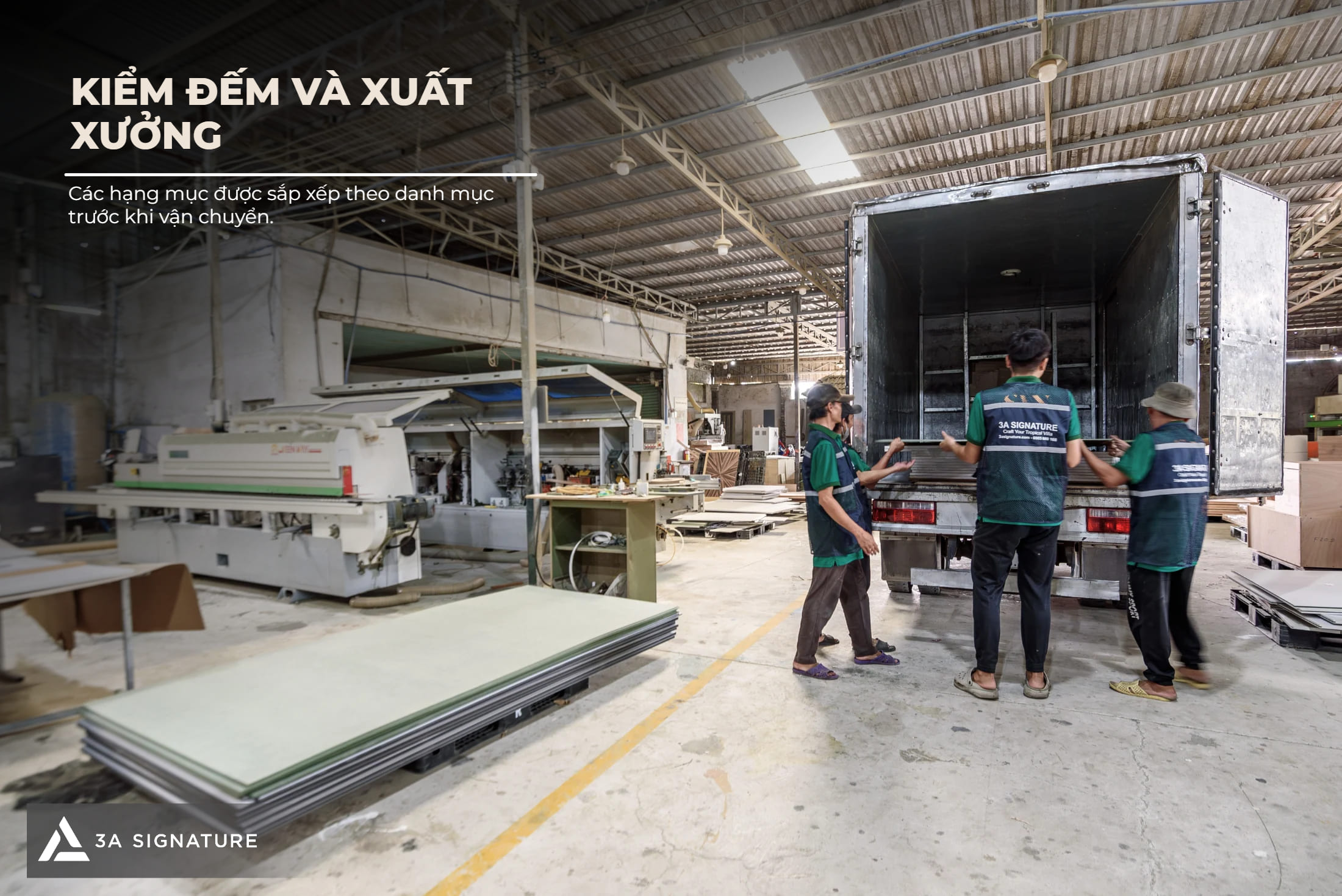
For large-sized products, the packaging plan must account for orientation, lifting and handling points, and transport conditions to the project site. Vulnerable areas such as edges, corners, and surfaces finished with paint, veneer, or glass require enhanced protection. Finally, all items are tallied and organized according to the inventory list prior to dispatch.
Conclusion
Inspecting interior fabrication at the workshop is a critical control step in 3A Signature’s design-and-build process. From production documentation, CNC machining, and trial assembly to dimensional checks, surface evaluation, and final packaging, every stage helps minimize discrepancies before the product reaches the project site.
For 3A Signature, interior quality does not begin at the installation phase; rather, it is established through rigorous quality control right at the workshop. This ensures that interior components arrive at the site ready for seamless installation, fully aligned with the design and the high finishing standards required for each villa project.