

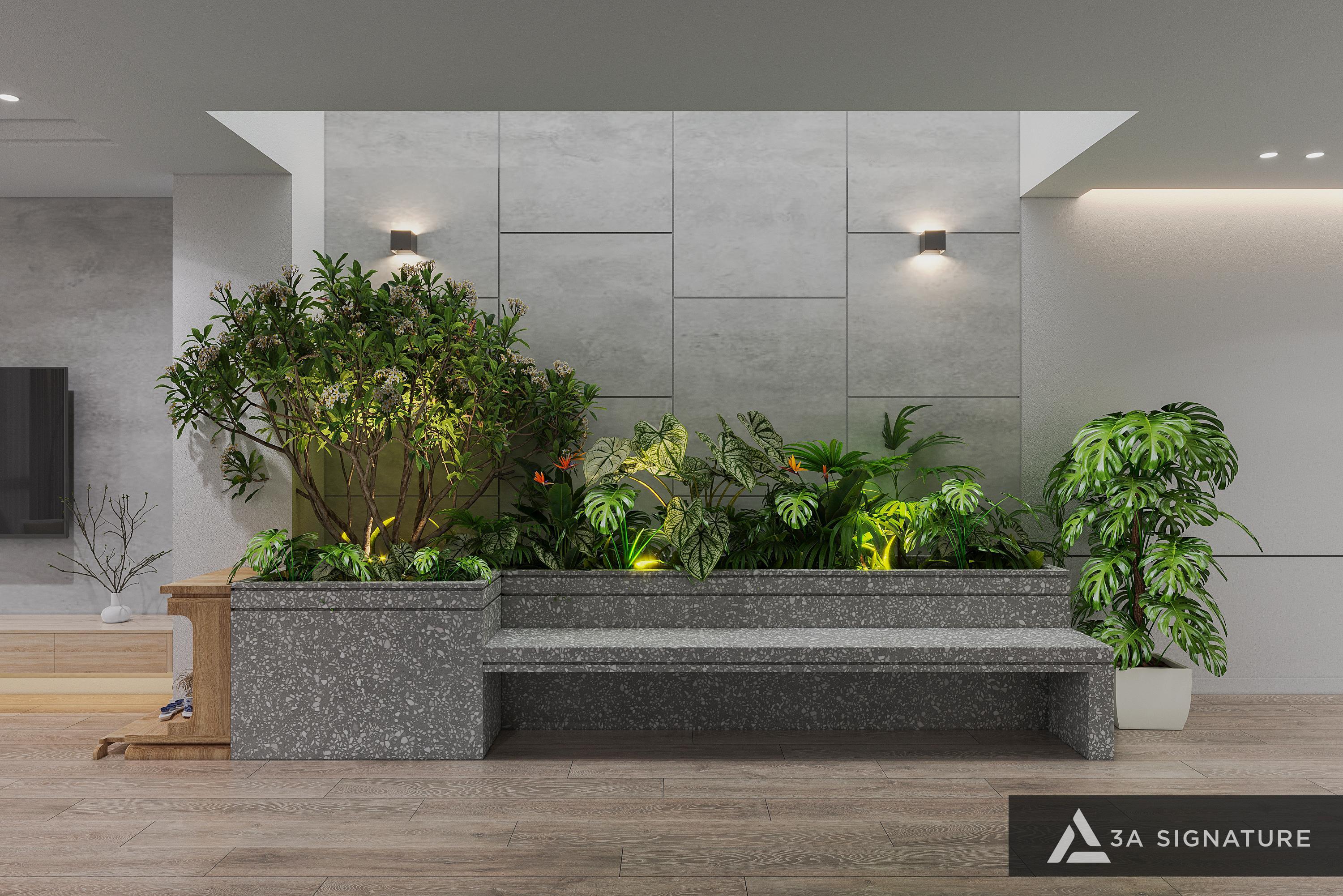
In modern villa architecture, the main entrance hall is not only a reception area but also a crucial transitional space connecting all the functional areas of the house. A properly designed hall will create a strong first impression, while subtly guiding emotions, light, and movement.
The Role of the Main Entrance Hall in Modern Villa Architecture
In villa design, the main entrance hall is considered the “interchange center” between living spaces. It connects the living room, dining room, staircase, and even the common living area, creating a coherent traffic axis for the entire house.
Unlike other functional areas, the main entrance hall often has high symbolic value. Upon entering through the main door, the main entrance hall is where the first impression of the homeowner’s lifestyle is formed.
A well-designed lobby fulfills three important tasks:
- Orienting traffic flow within the house
- Creating an aesthetic focal point for the space
- Connecting light and materials between areas
Therefore, in high-end villa projects, the entrance hall area is always meticulously invested in terms of materials, lighting, and spatial proportions.
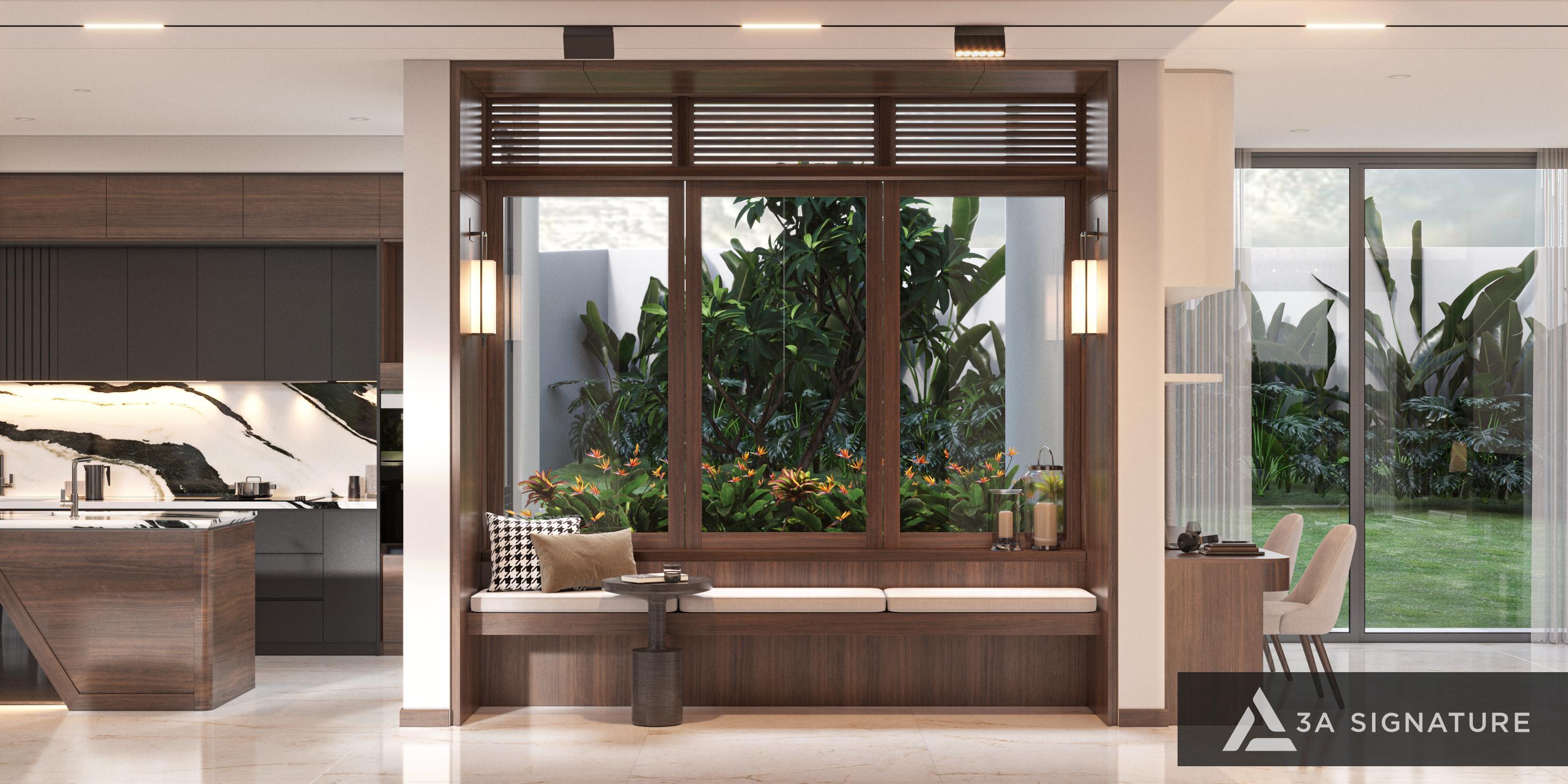
Distinguishing Between the Main Entrance Hall and the Entrance Hall in a Villa
Many people often confuse the entrance hall and the main hall of a villa; however, these two spaces are completely different in location and function.
The Entrance Hall as a Buffer Space
The entrance hall is usually located right behind the main door and acts as a buffer between the exterior and interior. This space is small in area and mainly serves a functional purpose such as placing shoe cabinets, seating, or decorative mirrors.
The Main Hall as a Connecting Center
Meanwhile, the main hall of a villa is located deeper inside the house and is usually positioned in the center. This is where traffic flows and connects the main spaces such as the living room, dining room, or staircase.
In terms of scale, the main hall is usually much more spacious than the entrance hall and is designed with high ceilings, high-end materials, or prominent decorative details.
Modern Villa Entrance Hall Design Principles
A beautiful villa entrance hall relies not only on aesthetics but also on a scientific approach to spatial organization. Architects typically follow three key design principles: clear traffic flow, visual focal points, and spatial emotion.
Establishing Visual Stops
When entering a villa, the viewer’s gaze should always find a stopping point. This helps create a sense of balance and spatial orientation.
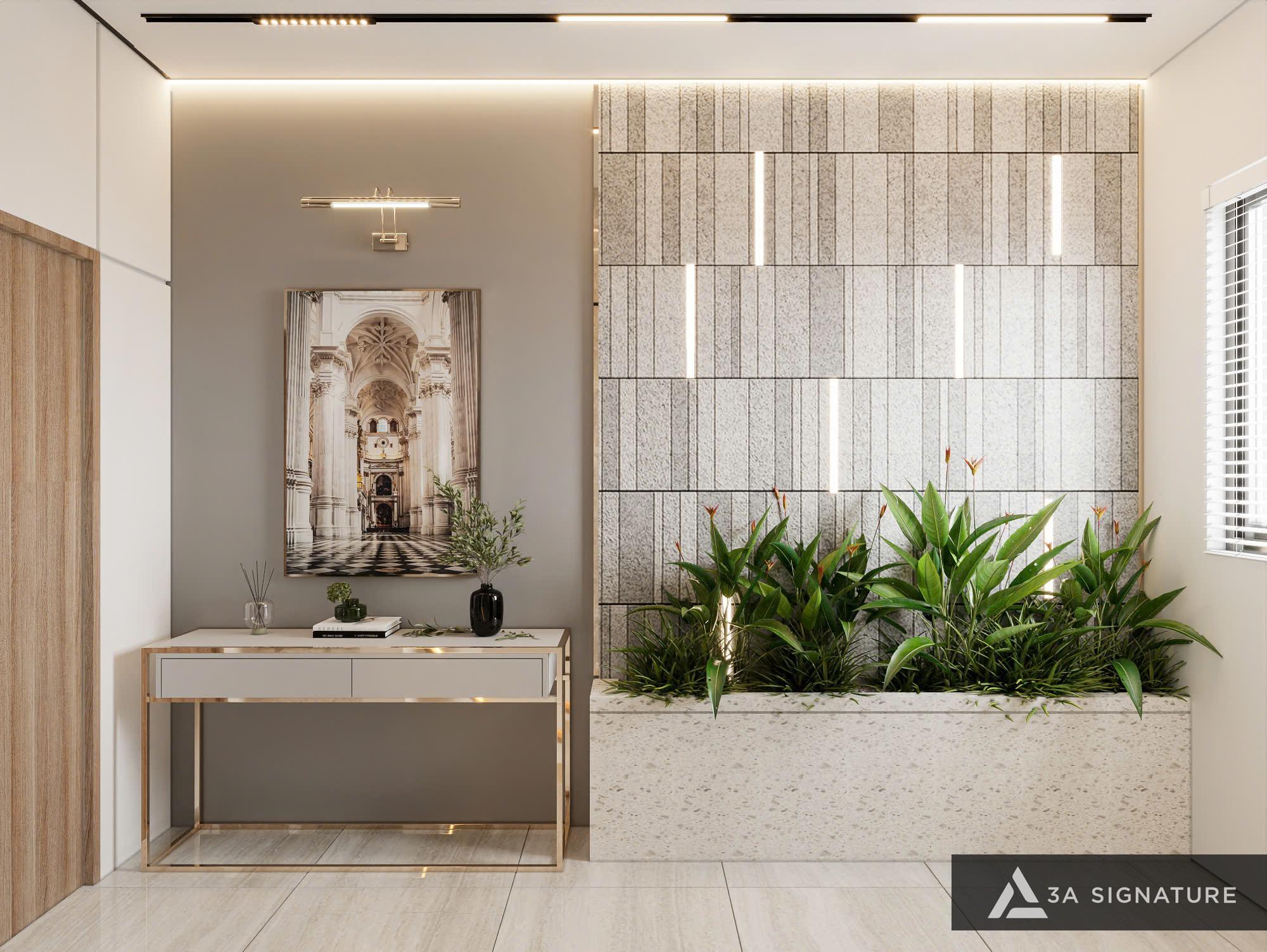
Some elements commonly used to create focal points in a villa entrance hall include:
- Console tables combined with artwork
- Decorative statues or large vases
- Stone or natural wood cladding
These details help make the hall luxurious and create visual depth.
Optimizing Interior Traffic Flow
In a villa with multiple functional spaces, traffic organization plays a crucial role. The villa’s main entrance hall needs to be designed so that pathways are clear and do not conflict between areas.
Some commonly applied solutions include:
- Arranging a direct pathway to the living room
- Creating a secondary pathway leading to the staircase or dining room
- Using decorative partitions to guide movement
This makes the space more coherent and easier to use..
Creating Spatial Depth with High Ceilings
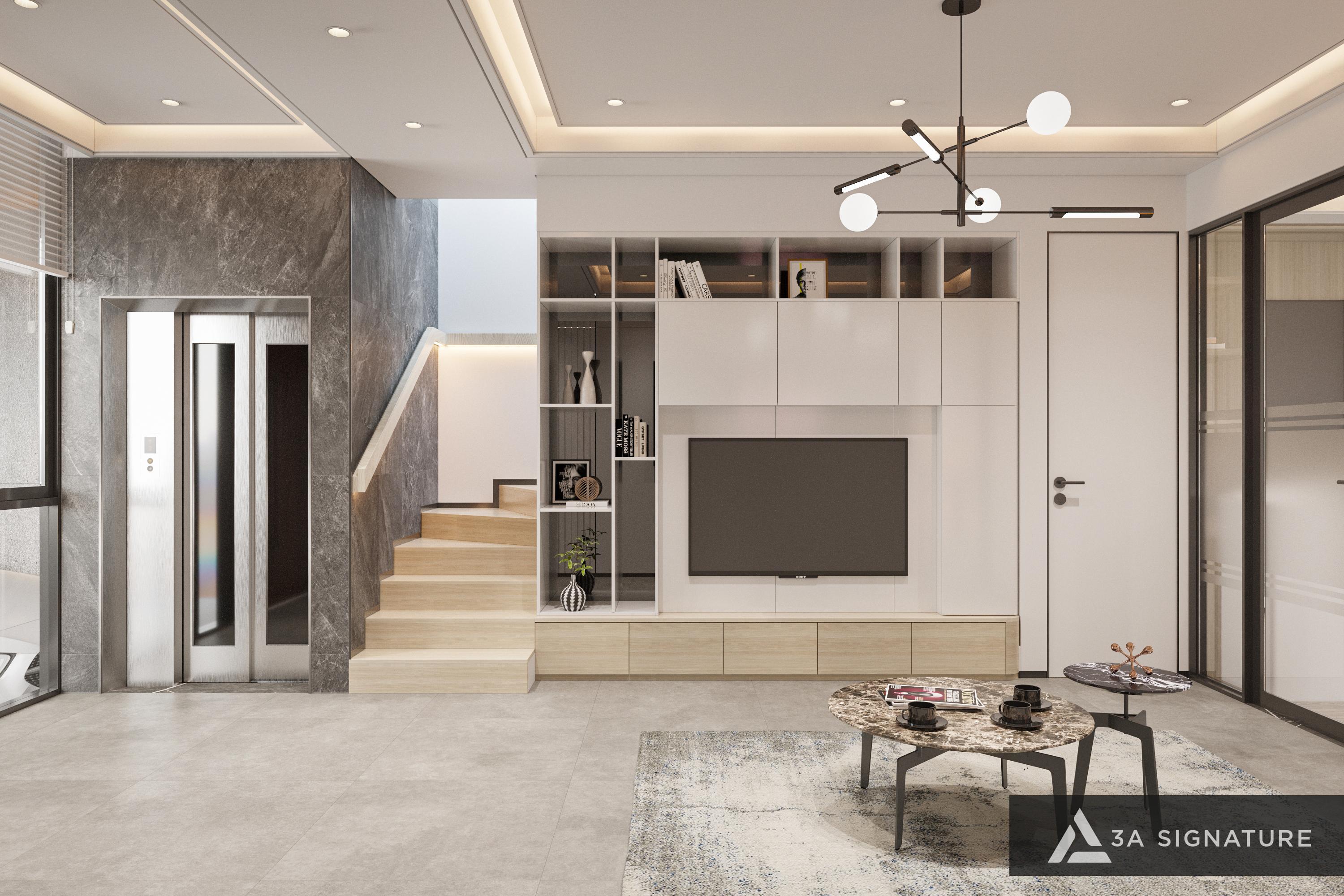
One of the standout features of a villa’s main entrance hall is its high ceiling. High ceilings not only create a sense of grandeur but also allow for better light distribution.
Common solutions include:
- Step-down ceilings combined with recessed lighting
- Decorative chandeliers as a central focal point
- Mirrors or glass doors to reflect light
The combination of ceiling height and lighting creates a luxurious feel upon entering the space.
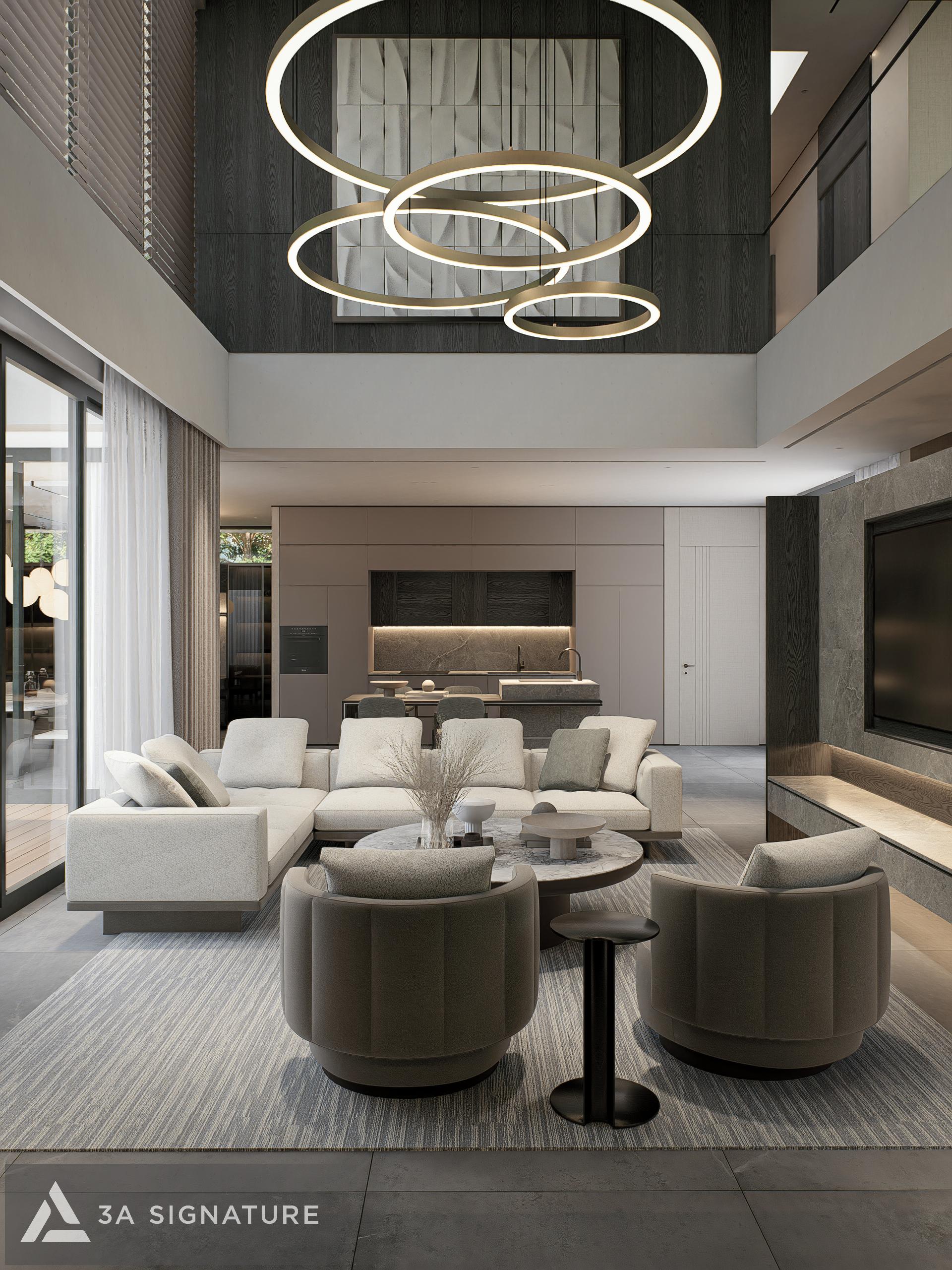
Combining Materials and Lighting in the Villa’s Main Entrance Hall
An impressive villa main entrance hall is always a harmonious combination of materials, lighting, and color. This is what makes the space vibrant and welcoming.
Materials That Create Architectural Depth
In high-end villa design, materials commonly used in the entrance hall include:
- Large slabs of marble or granite
- Natural wood or decorative wood slats
- Gold-plated or copper-plated metal
These materials not only bring a luxurious look but also help the space remain durable over time.
Lighting to Guide the Space
Lighting plays a crucial role in shaping the mood of the villa’s main entrance hall. A good lighting system usually includes several layers of light:
- General lighting from recessed ceiling lights
- Accent lighting from picture lights
- Decorative lighting from chandeliers
This combination makes the space warm and adds depth.
Popular Design Trends for Villa Entrance Halls
In modern villa constructions, the entrance hall is often designed in various styles to suit the homeowner’s personality.
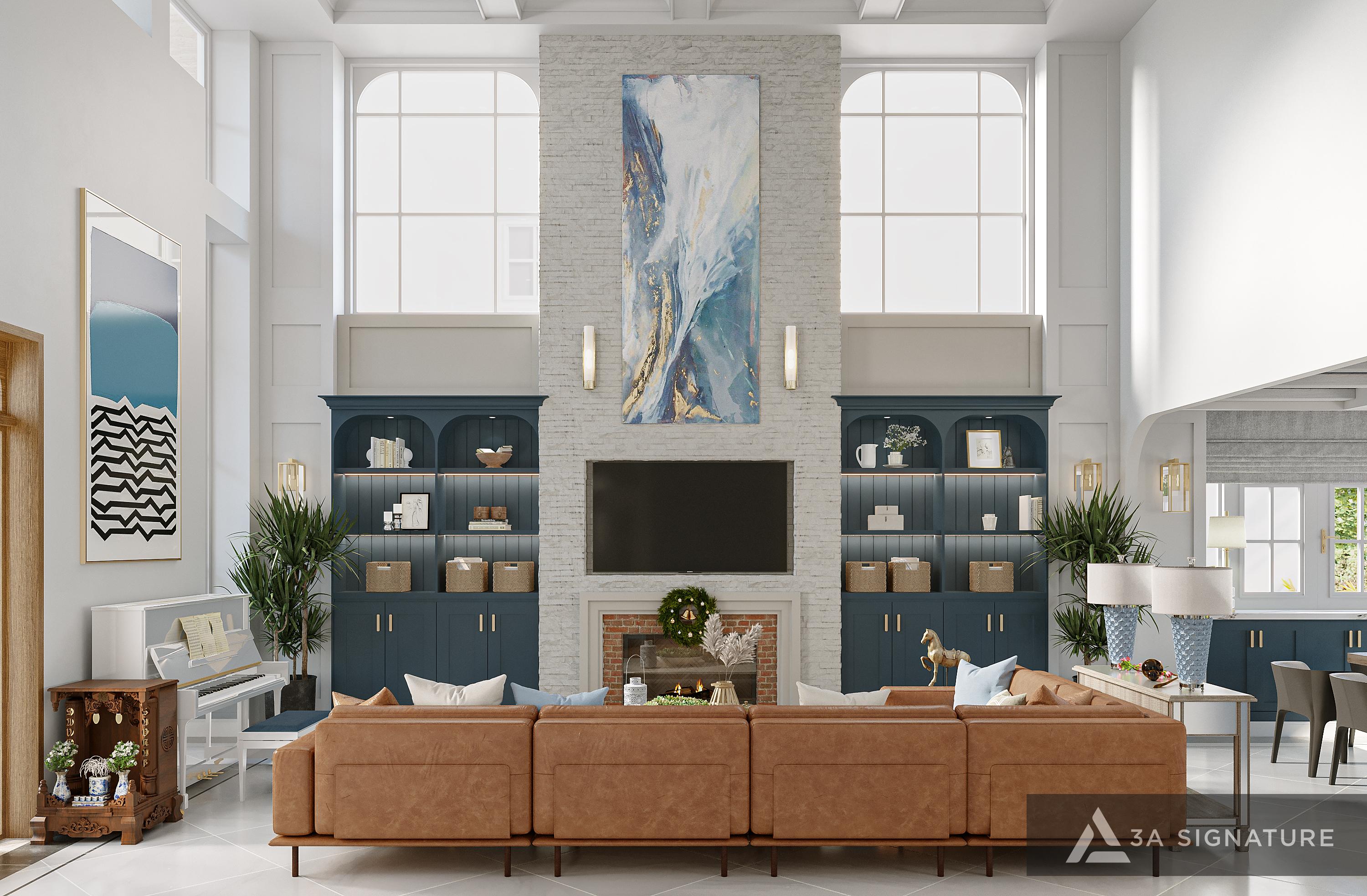
Neoclassical Style
The neoclassical style offers a luxurious aesthetic with its moldings, crystal chandeliers, and high-quality materials. The entrance hall becomes grand and clearly reflects the homeowner’s status.
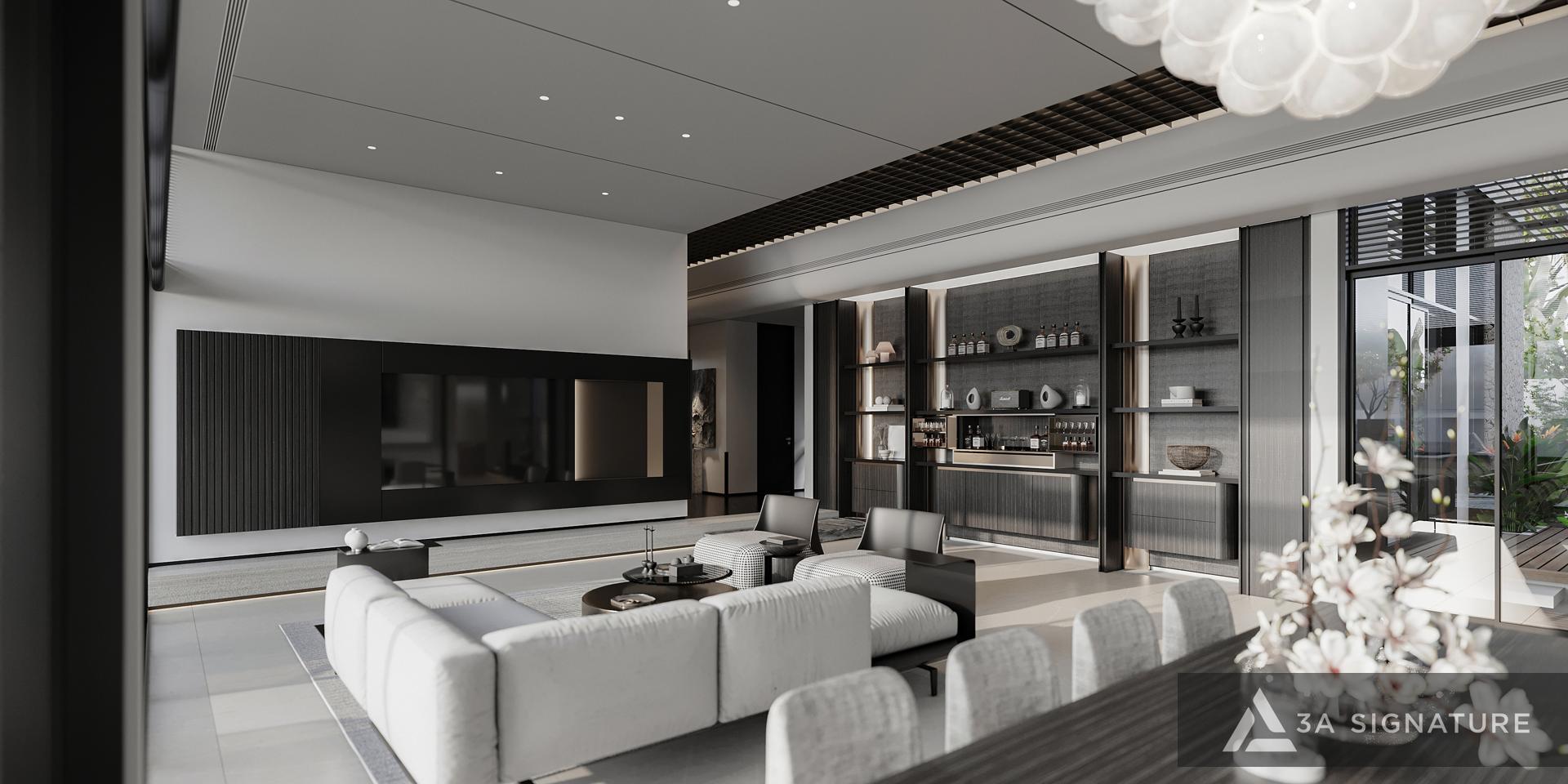
Modern Style
The modern style prioritizes clean lines, simple materials, and subtle lighting. The main entrance hall of a villa in this style often uses natural stone, glass, and metal to create an elegant look.
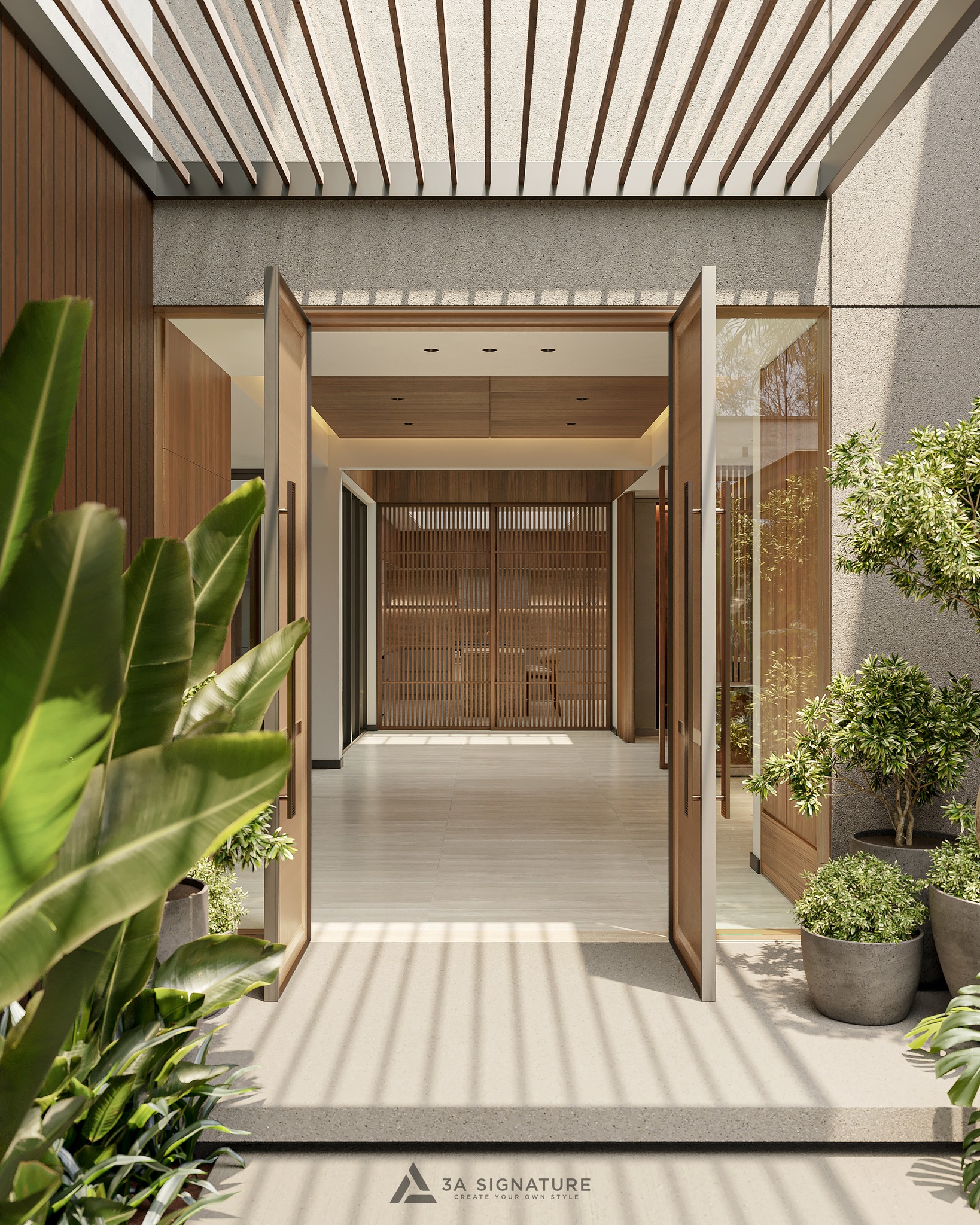
Japandi Style
Japandi is a blend of Japanese and Scandinavian styles. The lobby space is designed in a minimalist style with light-colored wood, soft lighting, and natural materials.
Luxurious Indochine Style
The Indochine style brings an East Asian beauty with wooden slats, decorative motifs, and artwork. The main entrance hall of a villa in this style is both luxurious and deeply rooted in cultural identity.
Villa Main Entrance Hall and Feng Shui Elements
In feng shui, the villa’s main entrance hall is considered the place that receives and distributes energy for the entire house. Therefore, a well-designed hall will help create a balance between aesthetics and feng shui.
Some commonly applied feng shui principles include:
- The hall space needs to be airy and well-lit.
- Avoid placing large obstacles directly along the main movement axis.
- Use natural materials to create balance.
In addition, using artwork, greenery, or soft lighting also helps create a harmonious feeling in the space.
Conclusion
In modern villa architecture, the villa’s main entrance hall is not only a reception area but also a space that connects the entire living experience within the house. When properly designed, the lobby naturally guides light, traffic, and emotion, creating an impression of luxury from the very first step.
At 3A Signature, each lobby space is considered a starting point for an architectural experience.