


In the Vietnamese mindset, the dining room is not only a place to enjoy food but also a “recharging station” of love, a place that preserves the warm flame of family. At 3A Signature, we believe that a sophisticated dining space must originate from the harmony between human and earth energy. Understanding how to scientifically arrange a dining room layout according to feng shui principles not only elevates the experience of luxurious living but also lays the foundation for generating wealth, health, and sustainable prosperity for the homeowner.
1. Dining Table Location and Orientation: The Coordinate of Peace
The location of the dining table is a crucial factor in dining room layout to ensure the flow of positive energy throughout the house. An ideal location must encompass elements of light, ventilation, and privacy.
Utilizing Natural Light and Ventilation
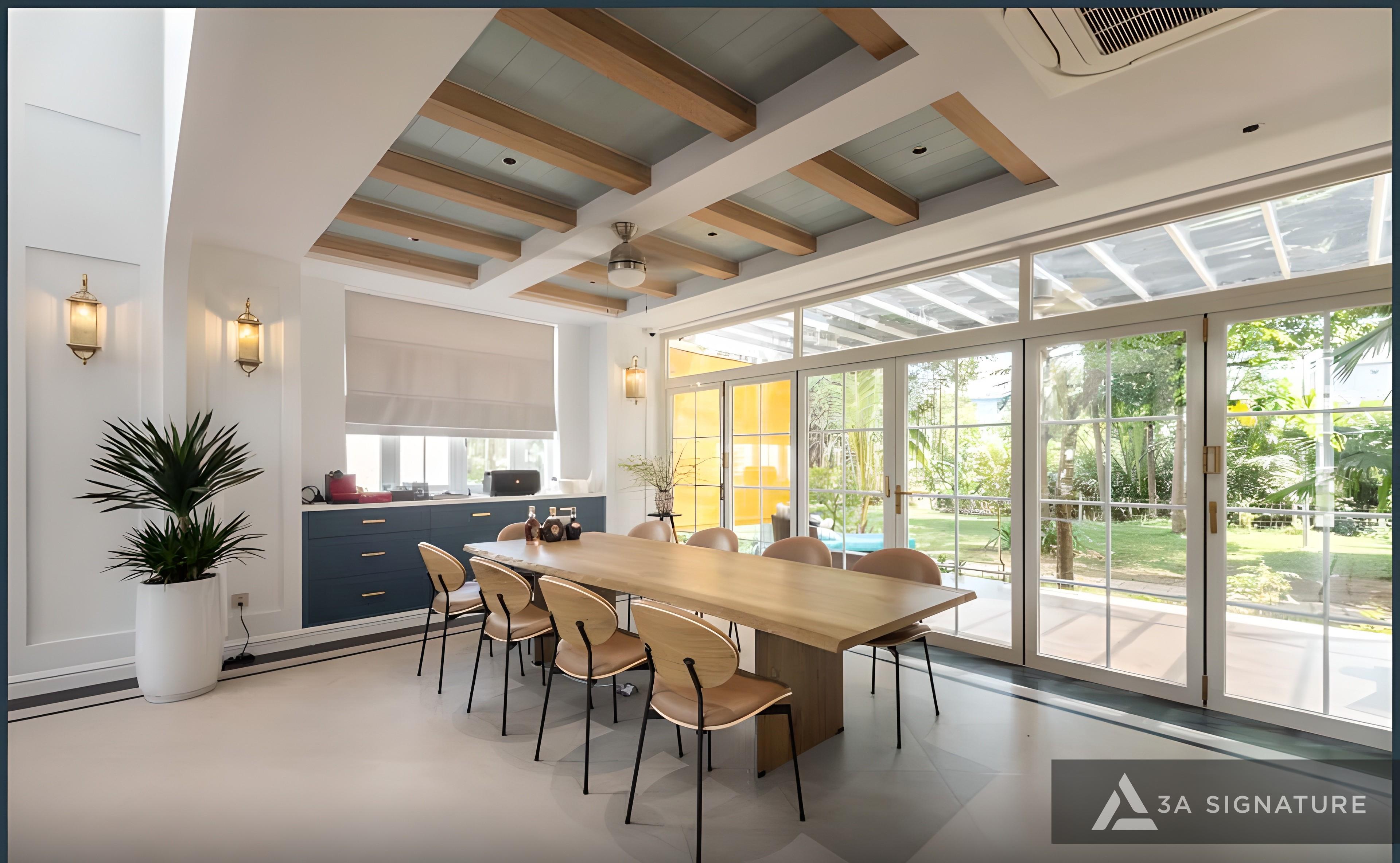
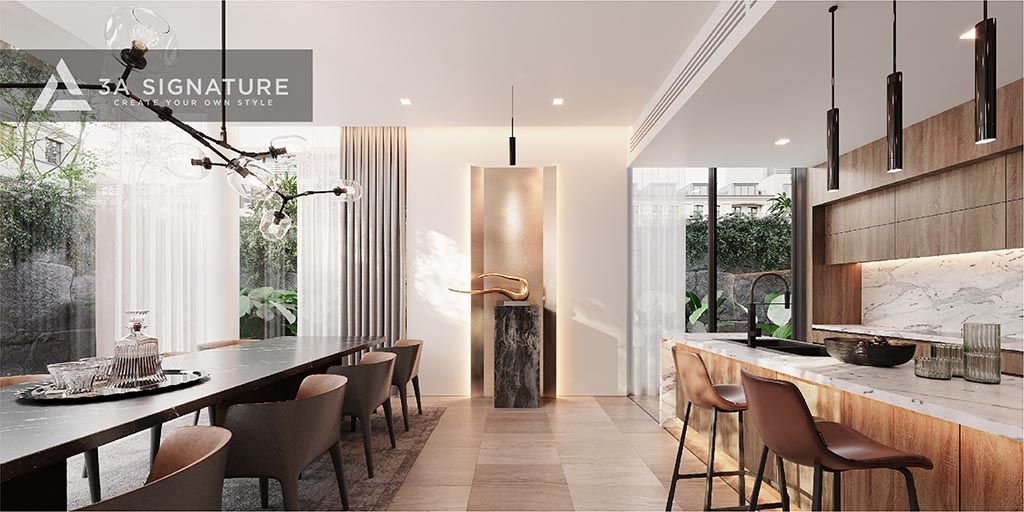
In modern dining room layouts, the space should be prioritized in areas with large glass windows or near skylights to maximize natural light. Sunlight not only helps kill bacteria and clean the space but also brings vitality, keeping the spirits of the members high. According to 3A Signature’s distinctive architectural philosophy, ventilation in the dining area is key to dispelling lingering food odors, keeping the space fresh and clean.
Major Taboos to Avoid in Dining Room Layout
In feng shui, the dining table is considered the “rice granary” of the family. Therefore, a proper dining room layout should avoid placing the table directly facing the main door. Having the dining table prominently displayed at the entrance can easily lead to financial losses and a lack of privacy for the family. Furthermore, homeowners should absolutely avoid placing the dining table opposite the bathroom door – a place where negative energy accumulates, affecting the quality of meals and health.
If the villa’s size doesn’t allow for changing the location, 3A Signature suggests using artistic screens, silk curtains, or lightweight CNC partition systems. These details not only help block negative energy but also create aesthetic accents, providing a sense of privacy and sophistication to the space.
2. The Art of Interior Design: Convenience for Humanity
A smart dining room layout involves arranging furniture to ensure a smooth flow of traffic, without hindering daily activities.
Scientific Arrangement of Dining Tables and Walkways
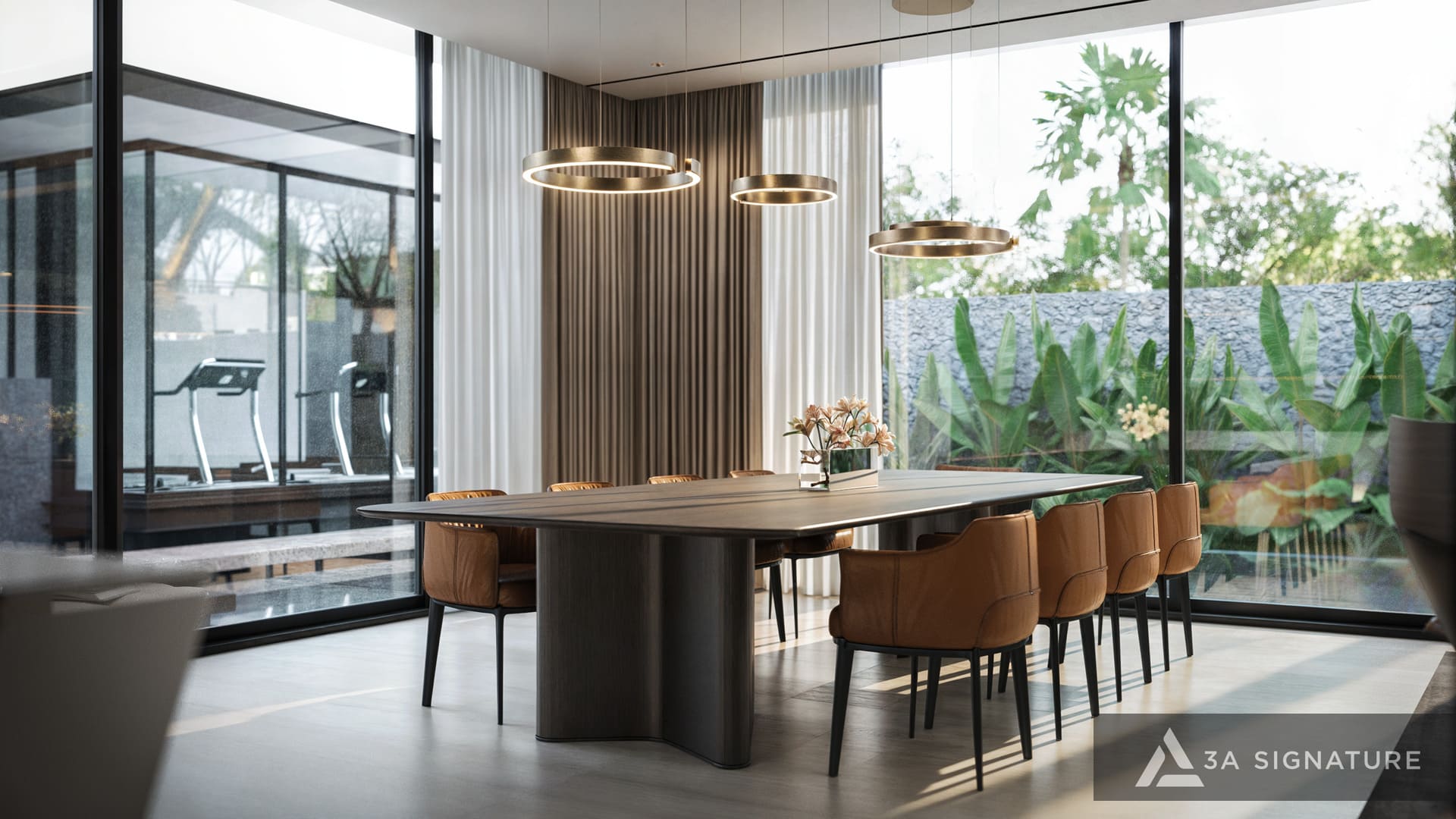
The size of the dining table should be proportional to the room’s area. A table that is too large in a small space will feel cramped, while a table that is too small in a large dining room will create an imbalance. The distance between the edge of the table and the wall or other objects should be maintained at a minimum of 90cm to 120cm to create a comfortable walkway for carrying and moving items.
Refrigerator and Appliance Placement
In the overall layout of the dining room and kitchen, the refrigerator should be placed in the most convenient location for food preparation but should not obstruct the main cooking area. Proper placement of appliances optimizes the workflow for the homemaker, thereby improving daily efficiency.
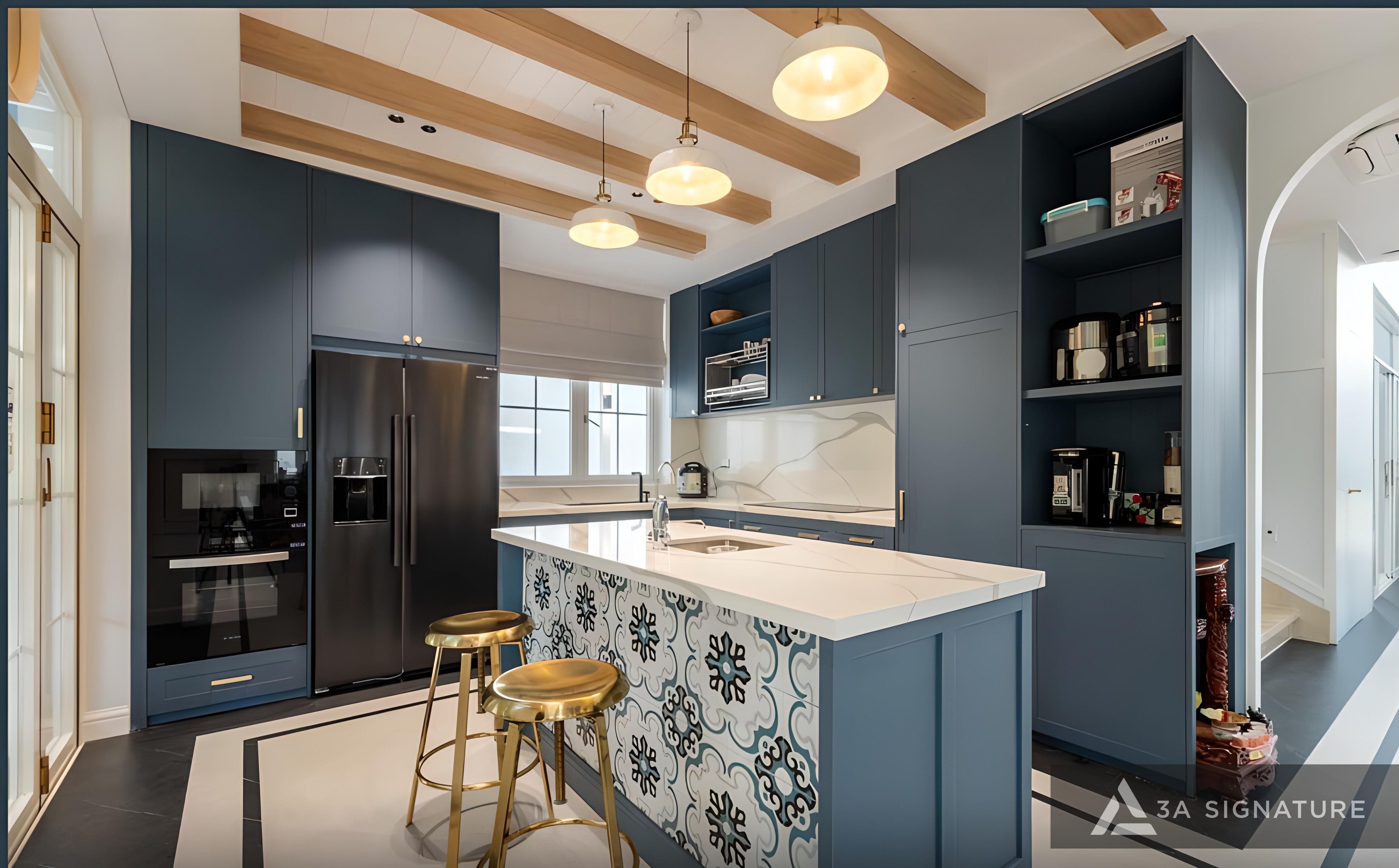
As Michael Liu, a design expert at the Asian Institute of Architecture, once stated: “A well-designed dining room is not only physically convenient but also creates a relaxing space, making each meal a joyful moment and fostering strong bonds between family members.”
3. Color and Lighting: Evoking Taste and Emotion
Color and lighting in dining room design act as invisible “spices” that enhance the flavor of food and create a more intimate atmosphere.
The Power of Warm Colors
Experts at 3A Signature often prioritize warm tones such as light yellow, light orange, or natural wood colors for dining spaces. These shades can stimulate the digestive system, increase appetite, and create intimacy. Conversely, when considering dining room layout, homeowners should avoid colors that are too dark, too cold, or too vibrant (such as deep red) as they can create a heavy, cramped feeling or increase tension during daily conversations.
Sophisticated Multi-Layered Lighting
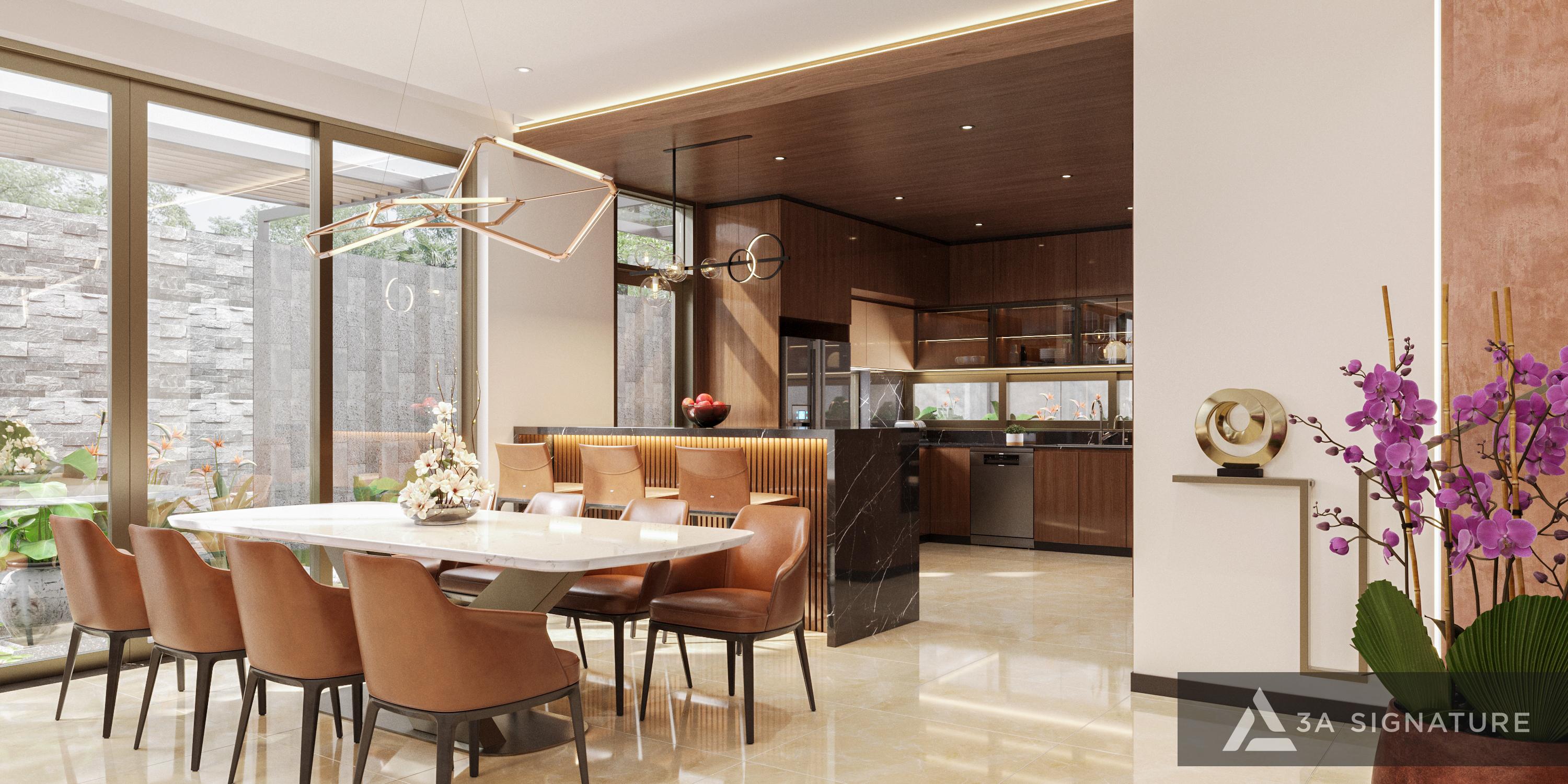
The lighting system in a dining room layout needs to be soft and evenly distributed throughout the room without causing glare. A sophisticated pendant light placed in the center of the dining table is not only a luxurious focal point but also helps protect the eyesight of family members. The combination of warm yellow light and natural light will create a truly relaxing atmosphere right at the family dining table.
Important Considerations for Safety and Prosperity
Besides aesthetics, the layout of the dining room should prioritize safety and absolute comfort for the homeowner.
- Avoid sharp corners: Sharp decorative items or furniture corners should not be directly facing the dining area. This not only poses a safety hazard during use (especially for families with young children) but, in feng shui, creates a “poisonous arrow” that causes unease for those seated.
- Table shape: Prioritize round or rectangular tables with rounded corners. Round shapes symbolize completeness and unity, allowing for smoother energy flow.
- Adding vitality: A vase of fresh flowers or a small potted plant on the dining table not only enhances beauty and vitality but also purifies the air, bringing freshness to each meal.
Conclusion
The journey of creating a dining space that adheres to feng shui principles is a journey of nurturing family happiness from the simplest things. A scientifically and subtly arranged dining room will make every meal complete, a place where each family member feels relaxed and deeply connected after a long day of work.
At 3A Signature, we don’t just stop at creating beautiful spaces; we also provide architectural solutions that are distinctive, sustainable, and full of vitality. Every small detail in the dining room layout is carefully considered to bring prosperity and peace to our esteemed clients.