

During the structural and surface treatment phases, 3A Signature strictly oversees every technical step of the wall plastering at Lumina Retreat Villa. From cross-referencing documentation and inspecting masonry work to applying bonding layers, leveling, and final surface finishing, each stage lays the foundation for the quality of subsequent construction work.
Plastering Work at Lumina Retreat Villa: A Critical Control Step Following the Structural Phase
Following the demolition, reinforcement, and structural supplementation phases, Lumina Retreat Villa has entered the stage of masonry and plastering work. This phase establishes a foundation that directly impacts subsequent finishing tasks, such as painting, tiling, interior partitioning, in-wall MEP systems, and installation details.
For the plastering work at Lumina Retreat Villa, 3A Signature exercises strict control over technical specifications, centerlines, elevations, mortar joints, adhesion layers, and the plastering sequence. Each area undergoes review before proceeding to the next stage to prevent positional errors, elevation inaccuracies, uneven surfaces, or poor bonding with the existing structure.
Cross-Referencing Technical Documentation Prior to Construction
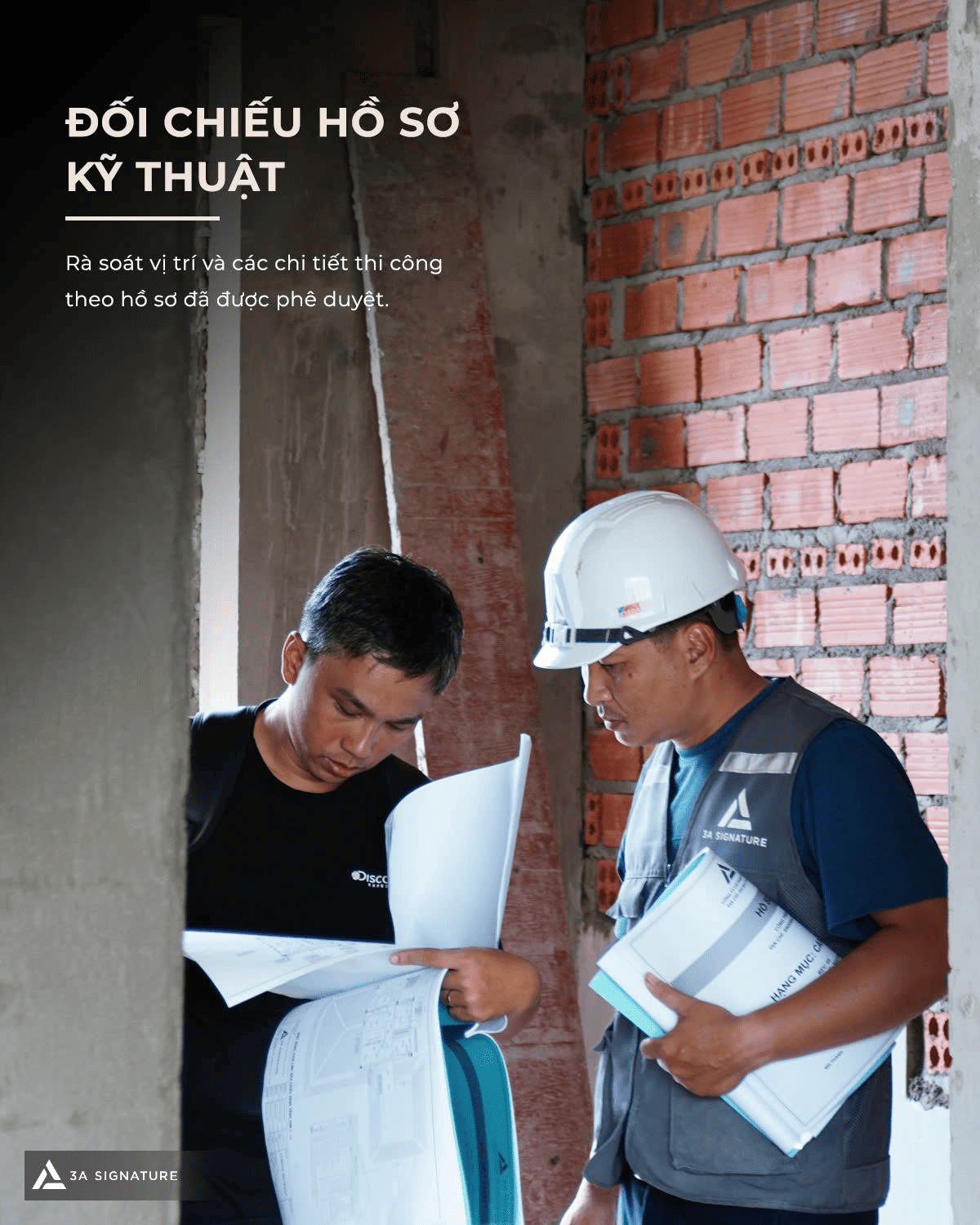
The initial step in the plastering process at Lumina Retreat Villa involves cross-referencing technical documentation with actual site conditions. The 3A Signature team reviews approved drawings to verify wall locations, plastering zones, interfaces with existing structures, and areas involving MEP systems.
This verification ensures that every wall section is constructed according to the correct centerline, elevation, thickness, and finishing scope. For a renovation project like Lumina Retreat Villa, this cross-referencing step minimizes discrepancies between drawings and reality, ensuring the plastering work aligns with the design and reducing potential issues during the finishing phase.
Quality Control for Wall Construction and Mortar Joints
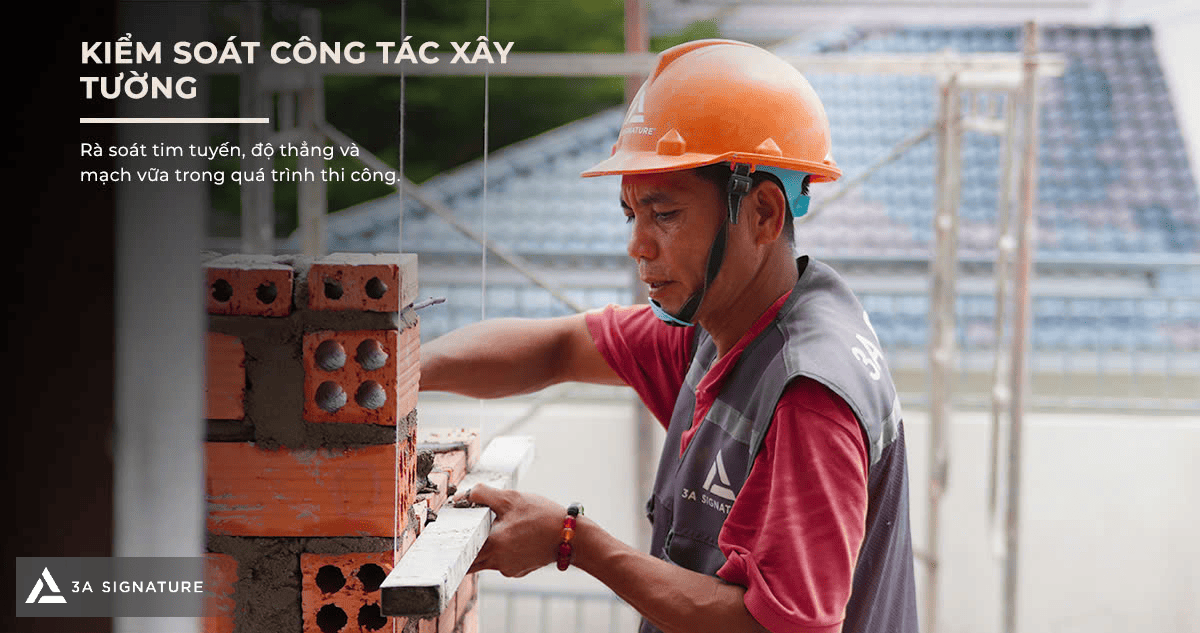
Before plastering begins, the masonry work must be inspected for alignment, straightness, verticality, and the quality of mortar joints. This is a crucial foundation for the wall construction and plastering at Lumina Retreat Villa, as the plaster finish relies on a stable, well-constructed underlying wall surface.
During construction, the team monitors every course of brickwork to ensure mortar joints are fully, evenly, and continuously filled. Critical areas such as wall ends, corners, door/window openings, and junctions with existing structures require extra care to prevent cracking, joint gaps, or poor bonding.
Inspecting the masonry also helps identify areas requiring remedial work prior to plastering. If the wall surface is excessively uneven, mortar joints are irregular, or the wall positioning is incorrect, the technical team must mandate corrections before proceeding to the next stage. For 3A Signature, the wall construction and plastering process at Lumina Retreat Villa does not begin with the application of plaster, but rather with ensuring the quality of the underlying masonry.
Treating the Bonding Layer Before Wall Plastering
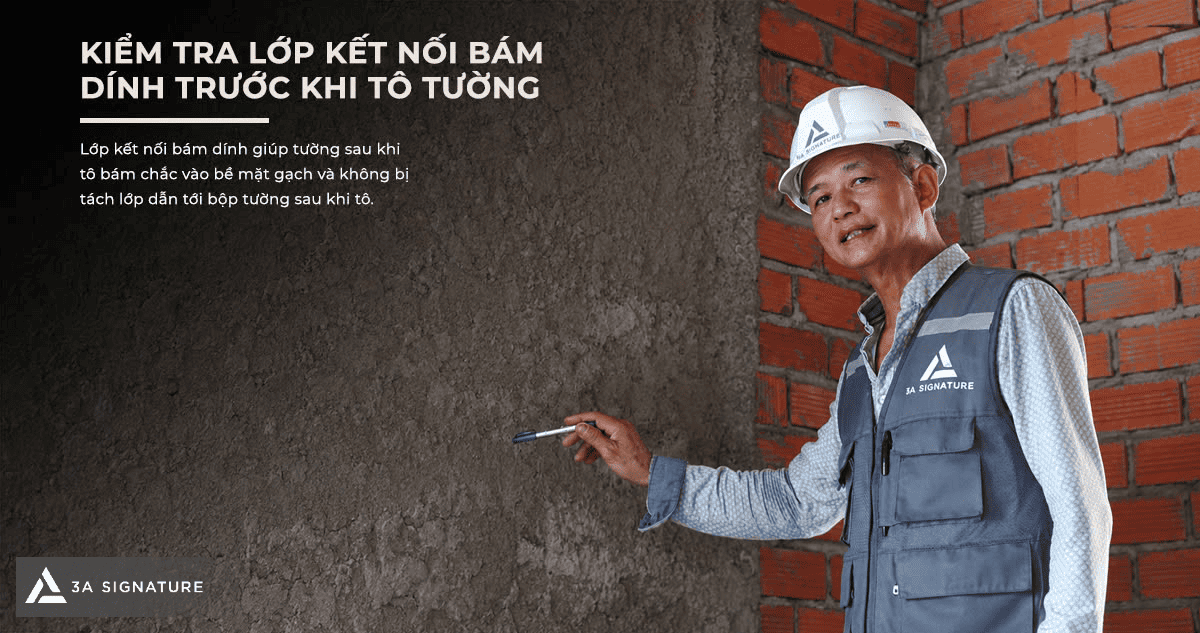
A crucial step in the plastering process at Lumina Retreat Villa is inspecting the bonding interface between the existing brickwork or concrete and the plaster layer. In renovation projects, surfaces are often non-uniform due to a mix of new construction, existing structural elements, and previously treated areas.
The 3A Signature team inspects, cleans, and moistens the surface prior to plastering, while also carefully treating the junctions between new masonry and existing structures. This step ensures a more stable bond for the plaster, minimizes the risk of delamination and hairline cracking, and contributes to the overall quality of the wall plastering work at Lumina Retreat Villa.
Leveling the Plaster Layer Using Control Guides
Following the preparation of the bonding layer, the plastering process is carried out using control guides. This stage establishes the flatness, thickness, and surface quality of the wall before proceeding to subsequent finishing layers.
During the plastering of the Lumina Retreat Villa walls, workers use a straightedge to level the mortar against the control guides. The process ensures an even distribution of mortar, preventing localized excessive thickness or the formation of voids beneath the surface. Wall edges, door frames, intersections, and areas housing technical fixtures require meticulous attention to ensure a seamless finish.
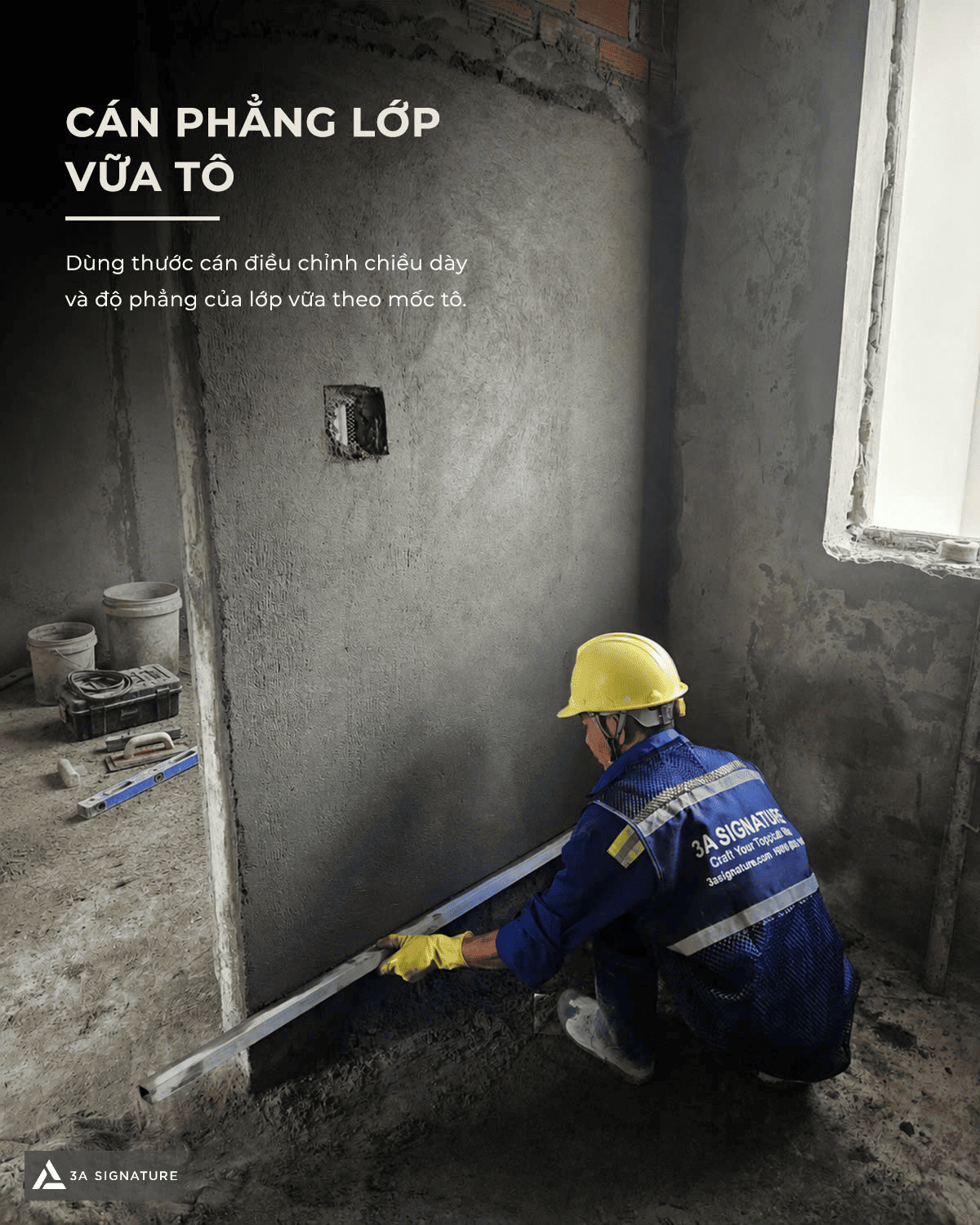
Achieving a flat, smooth finish serves more than just aesthetic purposes. A level wall surface facilitates subsequent tasks such as painting, cladding, partition installation, cabinetry mounting, and the placement of cove lighting. If the plastering layer is uneven, remedial work may be required later, thereby extending construction time and disrupting the overall schedule.
Final Troweling and Post-Plastering Surface Inspection
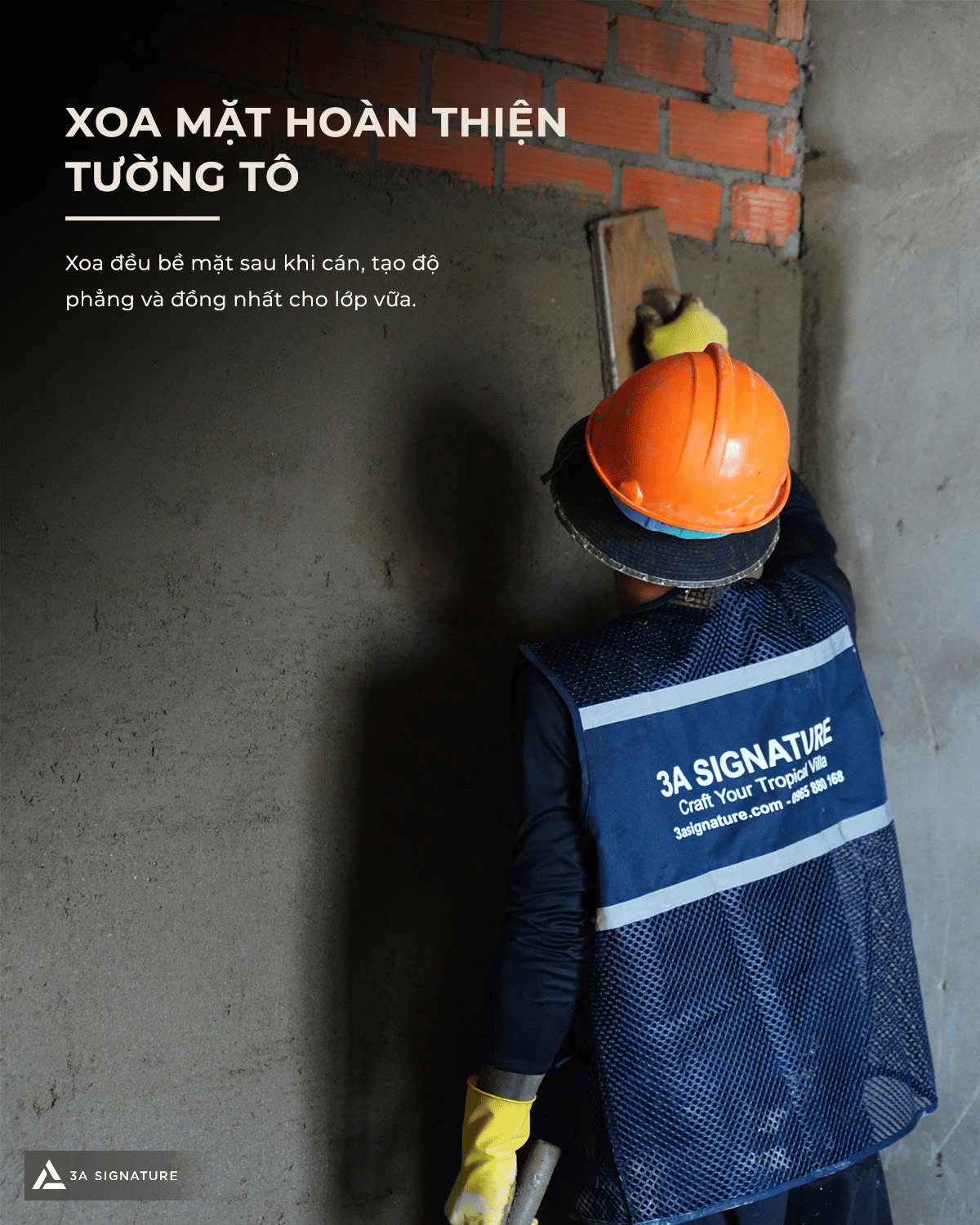
Following the leveling process, the wall surface undergoes final troweling to ensure the uniformity of the plaster layer. This step refines the surface before proceeding to the curing stage or subsequent finishing treatments.
During the plastering of Lumina Retreat Villa’s walls, the technical team inspects for flatness, seamlessness, joint integrity, and areas prone to irregularities. The plastered surface is examined under various lighting angles to identify any ripples, bumps, depressions, or uneven sections.
Inspection is particularly rigorous around door openings, structural junctions, and areas containing utility lines, as these are common points for defects if not handled correctly from the outset. For 3A Signature, the plaster layer is not merely a technical coating but a crucial foundation for the overall spatial experience.
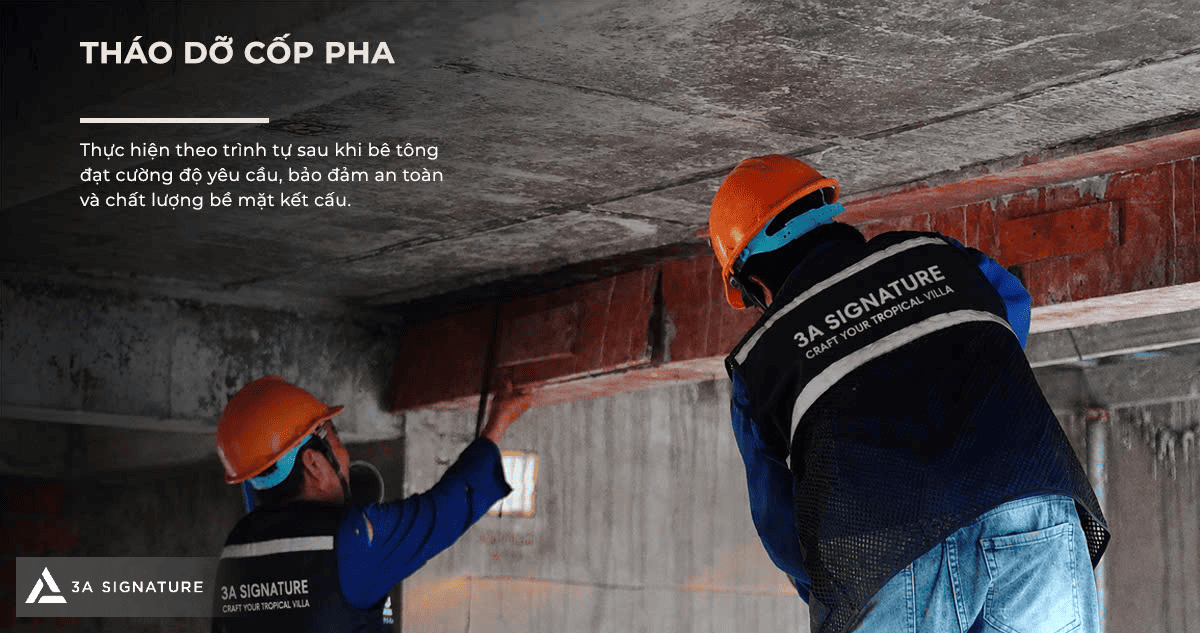
Formwork Removal and Structural Surface Inspection
Concurrently with wall plastering operations, formwork in certain structural areas must be removed following the appropriate sequence. This process is carried out once the concrete has met the necessary strength requirements, while ensuring the safety of the workforce and the integrity of the structural surfaces.
During the wall plastering phase at Lumina Retreat Villa, structural surfaces are inspected after formwork removal to assess stability, joint conditions, and readiness for subsequent construction stages. Any areas requiring remedial work are documented to prevent issues with the final finish.
Coordinating the inspection of wall plastering with structural checks ensures consistency across the project. This is how 3A Signature manages the structural phase: rather than treating tasks in isolation, the company considers the interrelationships between masonry, plastering, structural work, MEP systems, and interior finishing.
Conclusion
The wall plastering phase is a critical stage in the renovation and finishing of Lumina Retreat Villa. From verifying technical specifications and overseeing wall construction to preparing the bonding surface, leveling the mortar, finishing the surface, and removing formwork, every step requires inspection according to a clear, systematic process.
For 3A Signature, finishing quality does not begin with the final coat of paint or decorative materials; it starts with the wall substrate, the mortar layer, and the meticulous on-site control of every detail. This ensures a solid technical foundation for Lumina Retreat Villa to proceed to subsequent finishing stages, remaining true to the design and meeting 3A Signature’s rigorous standards for villa construction.