

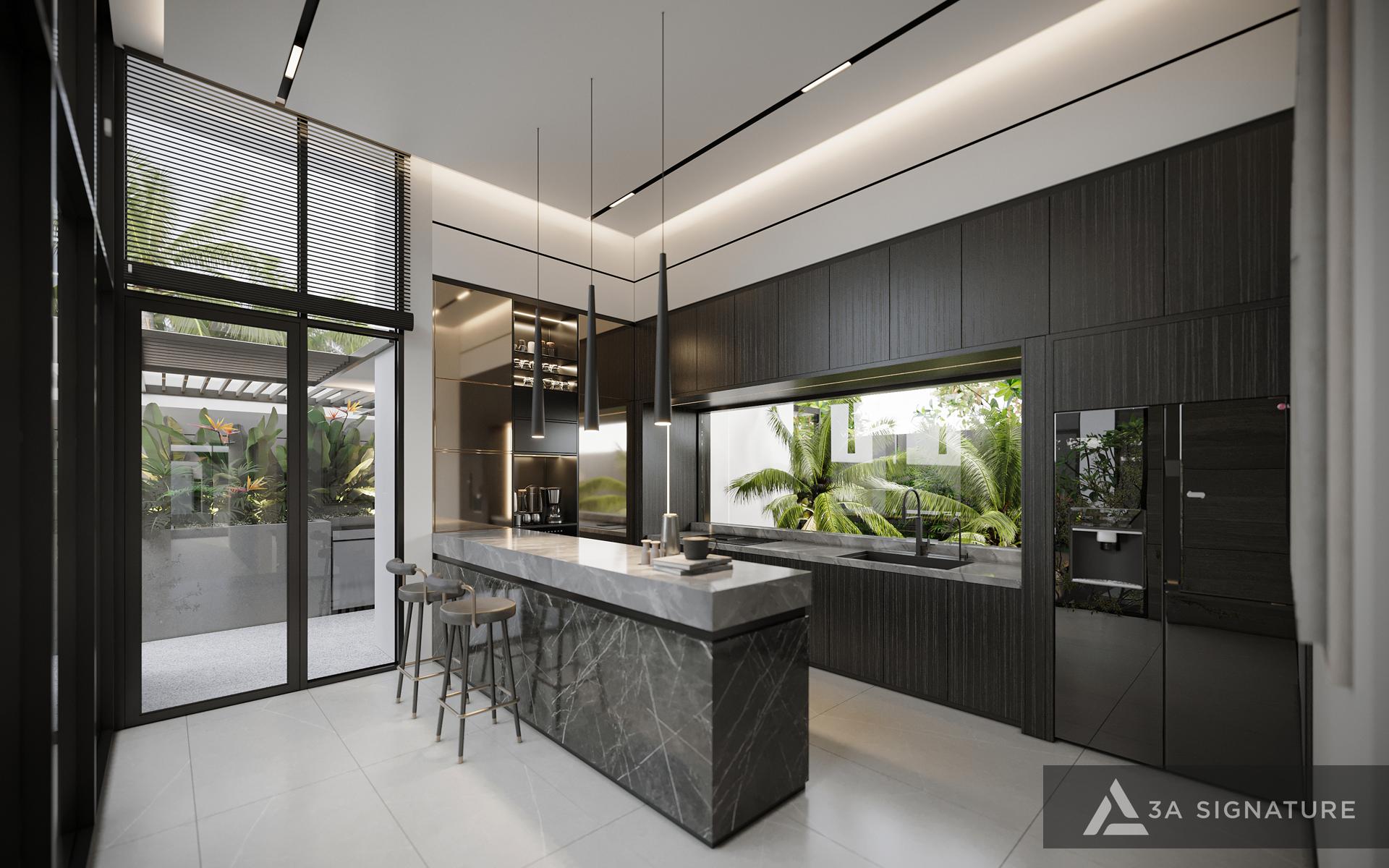
In modern interior design, the kitchen’s golden triangle is considered a fundamental principle for optimizing functionality and creating a convenient cooking experience. When the three key areas stove, sink, and refrigerator are arranged logically, the kitchen space becomes efficient, easy to use, and saves movement time.
At 3A Signature, the kitchen’s golden triangle principle is meticulously studied during the design process of villas and high-end homes, aiming to provide a sophisticated, convenient living space that suits the lifestyle of each family.
What is the Kitchen’s Golden Triangle?
The concept of the kitchen’s golden triangle originated from ergonomic research in home design. This principle focuses on arranging the three most important areas in the kitchen:
- Stove
- Sink
- Refrigerator
These three positions are arranged in an imaginary triangle to create a reasonable movement distance when cooking.
In daily life, homemakers often move back and forth between these three areas many times. If the distance is too far, cooking becomes inconvenient. Conversely, if they are too close, the kitchen space will easily feel cramped.
Therefore, the golden triangle of the kitchen area helps balance the distance between functional areas, ensuring convenience and saving time during use.

Why is the Golden Triangle of the Kitchen Area Important in Interior Design?
In a scientifically designed kitchen, users almost don’t realize the existence of this principle, but clearly feel the convenience it brings.
Optimizing the Cooking Process
A meal usually begins with taking food from the refrigerator, then washing it, and finally cooking it on the stove. When the golden triangle of the kitchen area is arranged logically, the entire process unfolds smoothly and naturally. The cook doesn’t need to move around too much but can still access all the functional areas.
Minimizing Unnecessary Movement
A disorganized kitchen will force the cook to move around to get things or prepare food. This not only causes fatigue but also reduces the user experience. When the golden triangle of the kitchen area is applied correctly, important areas are always within convenient reach.
Enhancing Safety During Use
The kitchen is a place where many heat and electrical appliances are used. If the space is too cramped or movement is inconvenient, the risk of collisions or accidents in the kitchen can occur. The golden triangle principle in the kitchen area helps maintain a safe distance between functional areas, thereby enhancing safety while cooking.
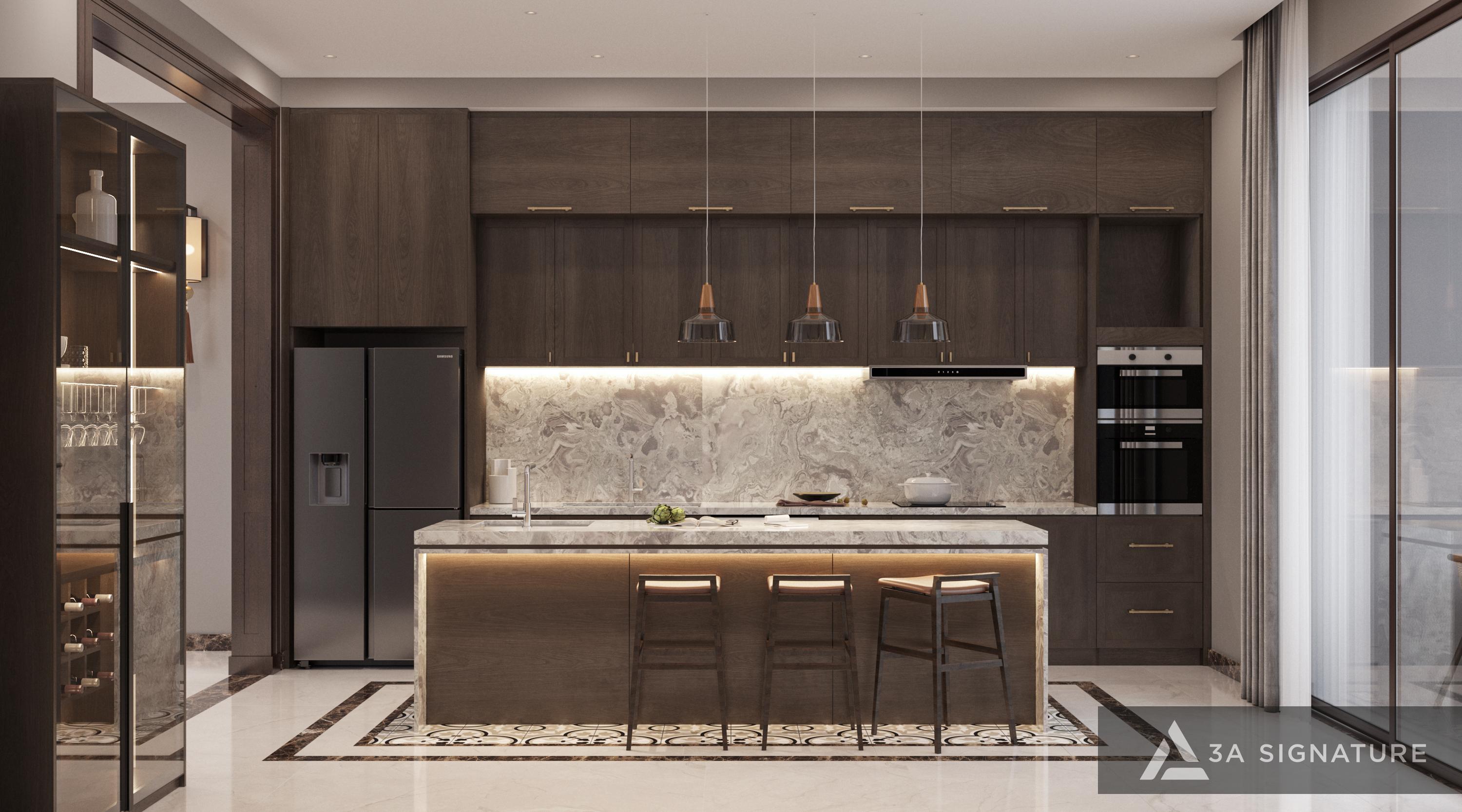
Ideal Spacing in the Kitchen Golden Triangle
In interior design, the kitchen’s golden triangle typically follows certain spacing principles to ensure a balance between functionality and space.
The distance between each point in the triangle is usually within the following range:
- From 1.2m to 2.7m for each side
- Total perimeter of the triangle from 4m to 7.5m
If the distance is too small, the kitchen will feel cramped. Conversely, if the distance is too large, movement will be time-consuming and less efficient.
Additionally, avoid placing obstacles such as kitchen islands or large cabinets blocking the sides of the kitchen’s golden triangle, as this will disrupt the natural flow of movement.
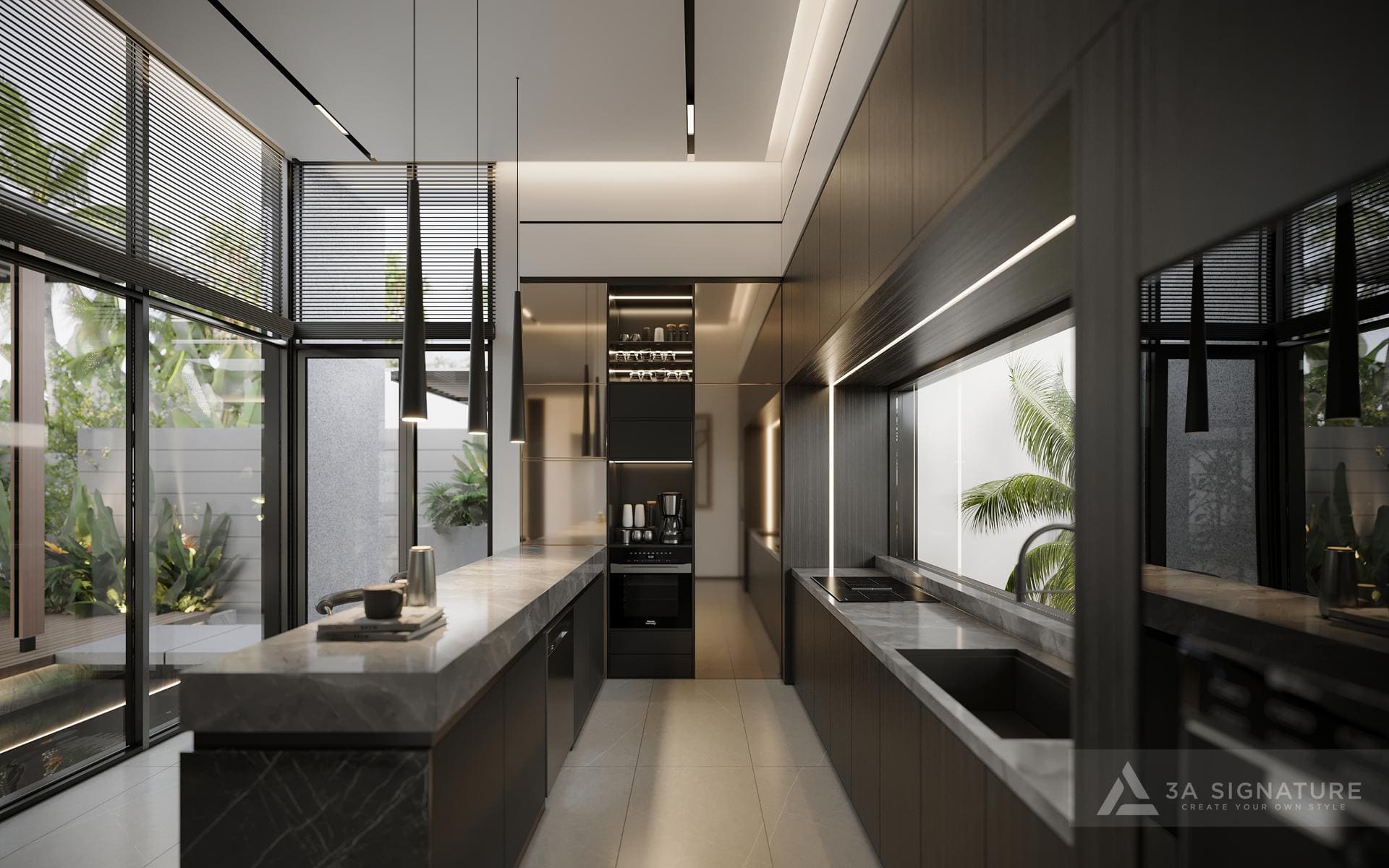
Applying the Golden Triangle in Kitchen Areas in Common Kitchen Styles
Each kitchen style has a different spatial structure. Therefore, the application of the golden triangle in the kitchen area also needs to be adjusted flexibly.
L-Shaped Kitchens
In an L-shaped kitchen, the two perpendicular walls facilitate the placement of the sink and stovetop. The refrigerator is usually placed at the other end of the triangle. This arrangement makes the golden triangle in the kitchen area clear and convenient for movement.

U-Shaped Kitchen
The U-shaped kitchen is considered one of the most ideal kitchen layouts for implementing the golden triangle concept. The three main functional areas can be located on three different sides of the kitchen, creating a very reasonable amount of space for movement. This layout is particularly suitable for families who cook frequently.
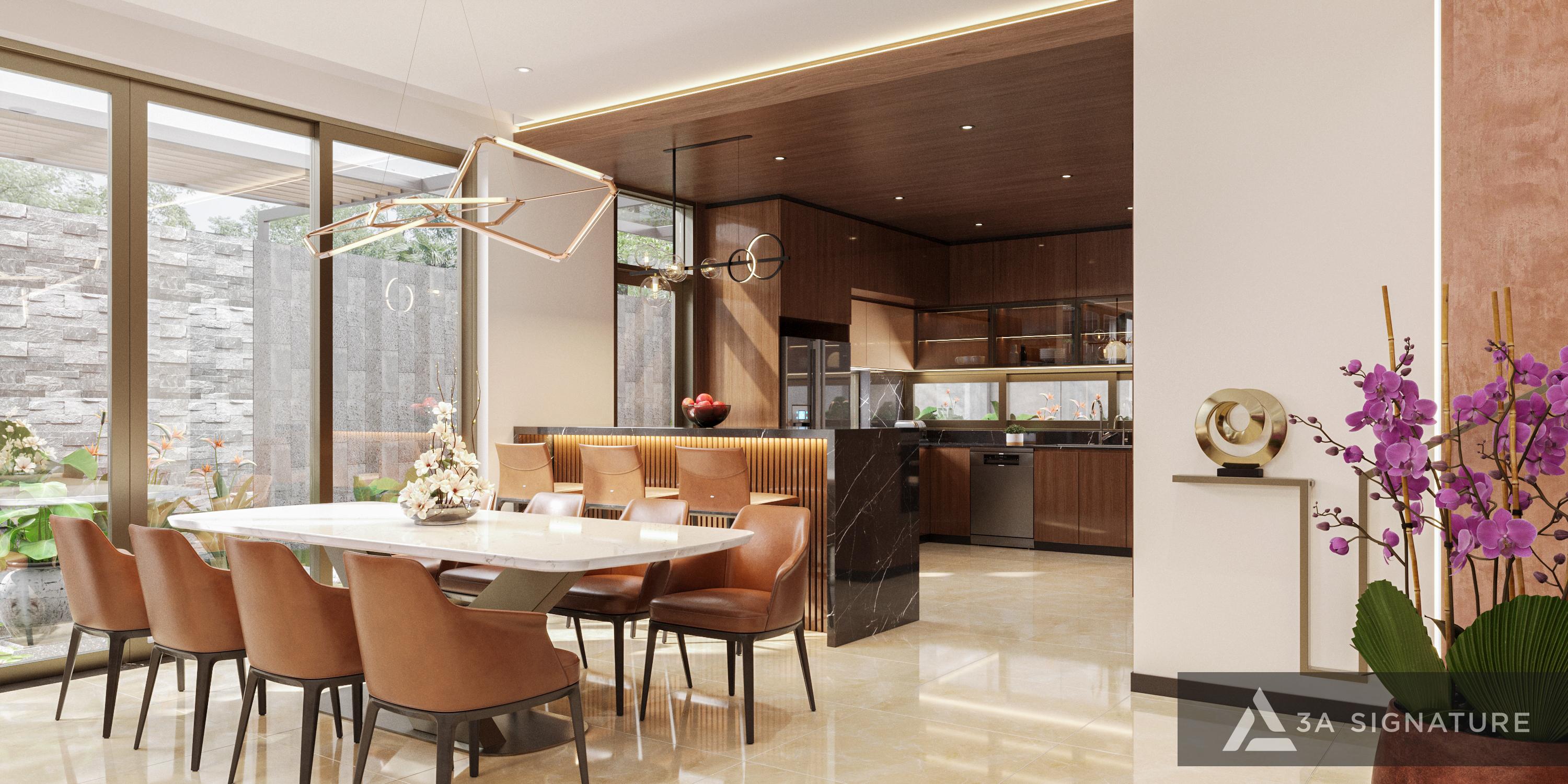
Kitchens with Island Designs
In villas or high-end homes, kitchen islands are often used as a design focal point. When properly positioned, a kitchen island can become a key element in the kitchen’s “golden triangle,” typically encompassing the cooking area or the sink. This arrangement enhances both aesthetics and user experience.

Common Mistakes When Designing the Golden Triangle in the Kitchen Area
Although this principle is quite common, many kitchens still make mistakes that prevent the golden triangle from being effective.
Too Much Distance
Some kitchens are large but poorly designed, resulting in excessively large distances between functional areas.
This increases travel time and reduces the usability of the space.
Fixtures Blocking the Triangle
A kitchen island or large cabinet placed in the wrong position can disrupt the flow of movement between points of the golden triangle in the kitchen area.
This forces users to walk around when cooking.
Not Suitable for Usage Habits
Each family has different cooking habits. If the golden triangle principle is applied mechanically without considering actual needs, the kitchen space may become inconvenient.
The Golden Triangle of the Kitchen Area in Modern Villa Design
In villa projects, the kitchen space is often designed as an open space, connecting to the dining room or living room.
Therefore, the golden triangle of the kitchen area is not only a principle of functionality but also influences the overall aesthetics of the house.
Architects often combine this principle with:
- Natural light
- Smart kitchen cabinets
- High-quality materials
- Multifunctional kitchen island design
As a result, the kitchen space is not only a place for cooking but also becomes the center of family life.
Conclusion:
A beautiful kitchen is not only about modern materials or equipment but also about how the space is organized. When applying the golden triangle of the kitchen area correctly, the entire cooking process becomes more convenient, safe, and time-saving.
In villa design projects, 3A Signature always focuses on studying the homeowner’s living habits to scientifically and subtly arrange the kitchen area in the “golden triangle” layout. As a result, the kitchen space not only ensures functionality but also becomes a place for emotional connection and moments of family togetherness.