

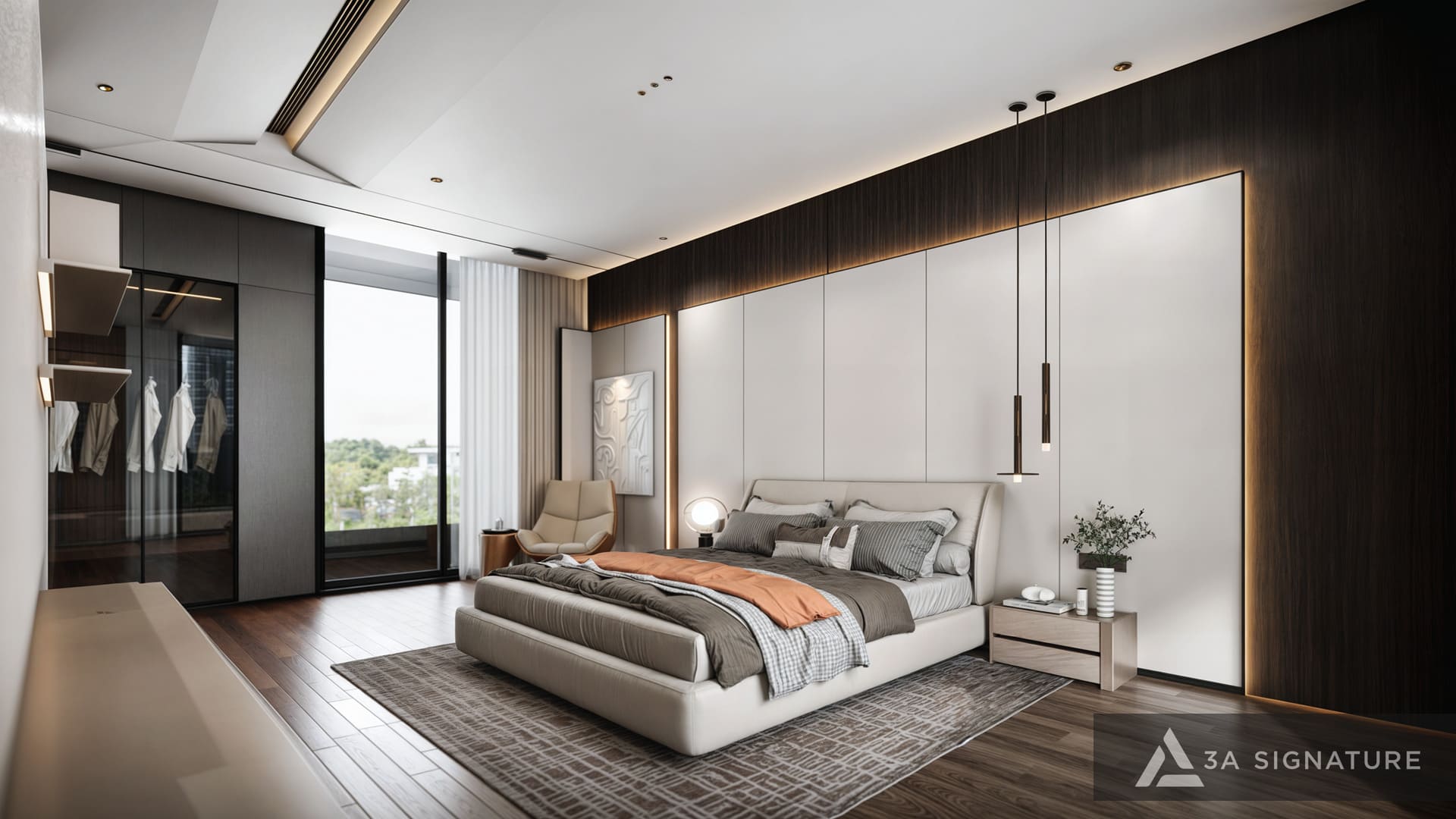
In modern home design, the size of the master bedroom is not just a technical figure on the blueprint, but a factor that directly affects the quality of rest, living emotions, and privacy of the homeowner. A master bedroom that is too small will feel cramped and uncomfortable; but if it is too large without proper proportions, the space will become cold and wasteful. At 3A Signature, the master bedroom is always approached as a complete personal living space – where size, light, and layout must harmonize to cherish sleep every day.
Why Does the Size of the Master Bedroom Determine the Living Experience?
Unlike ordinary bedrooms, the master bedroom is the most private space in the house. It’s not just a place for the bed, but also integrates many functions: dressing, relaxing, light work, even a reading nook or private balcony.
If the size of the master bedroom isn’t calculated from the beginning, homeowners can easily feel unsatisfied, even if the house has a large total area. The master bedroom needs to be spacious enough for comfortable movement, deep enough to create a sense of tranquility, and proportionate enough for light and materials to enhance its aesthetic value.
What is a Reasonable Size for a Master Bedroom?
Minimum Recommended Master Bedroom Size
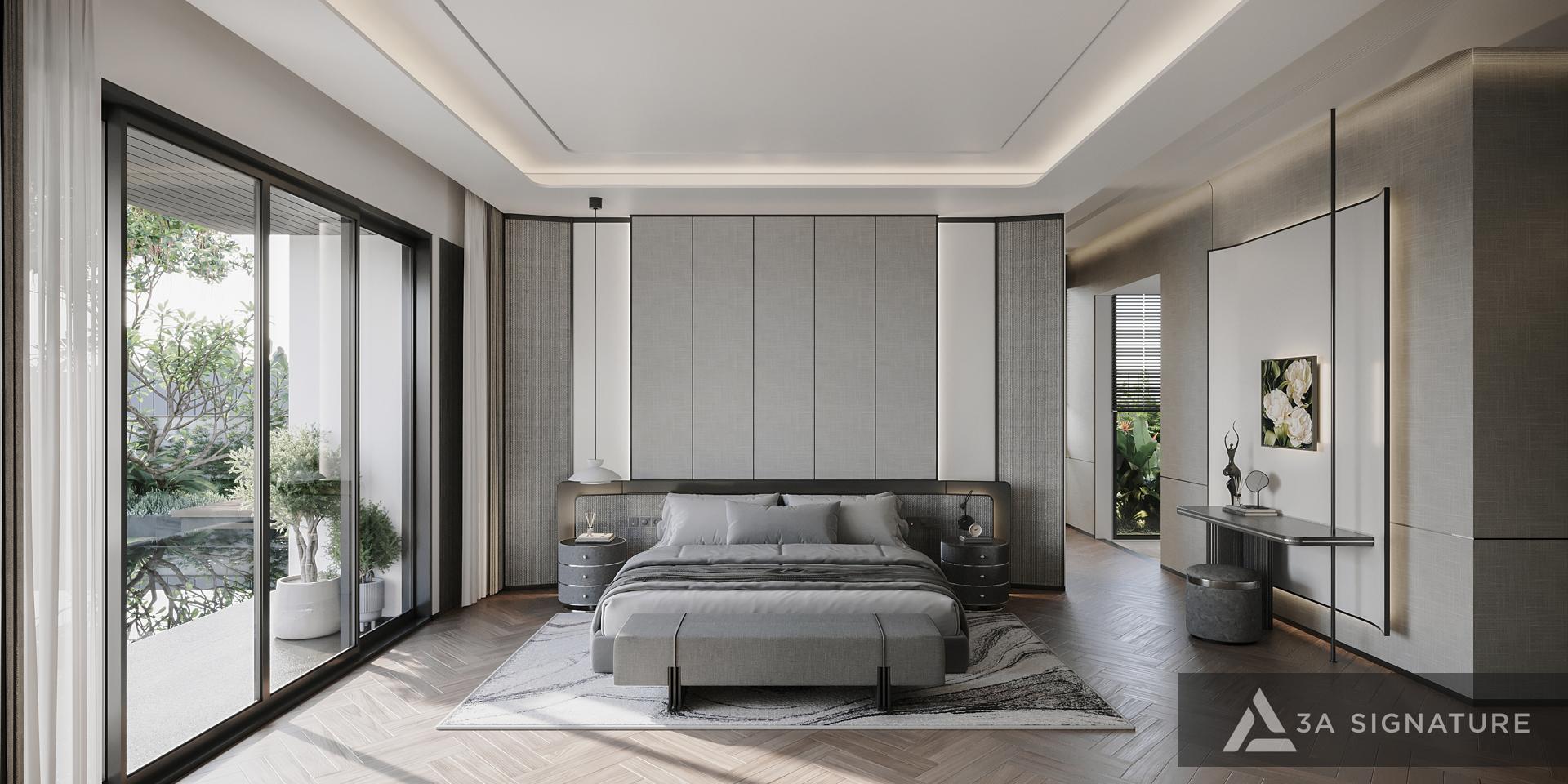
Based on experience in designing townhouses and urban villas, the minimum size for a master bedroom should be around 18–20m². This is the basic threshold for establishing a reasonable bedroom area, allowing for convenient placement of a double bed, wardrobe, and walkways around the bed without feeling cramped.
With this size, the bedroom still fulfills its function of resting, but the spatial feeling is only “adequate,” not truly relaxing.
Ideal Master Bedroom Size for Townhouses
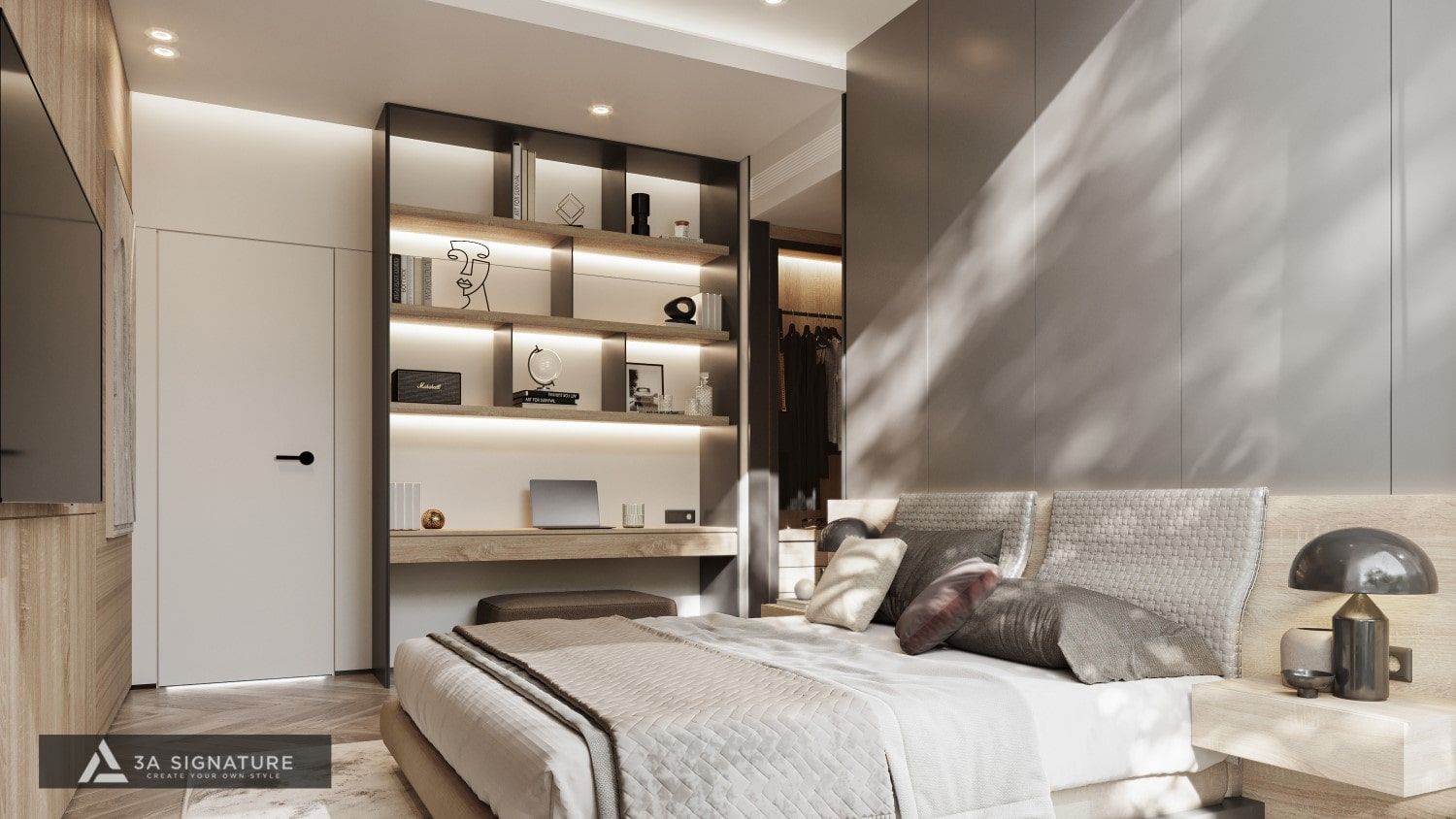
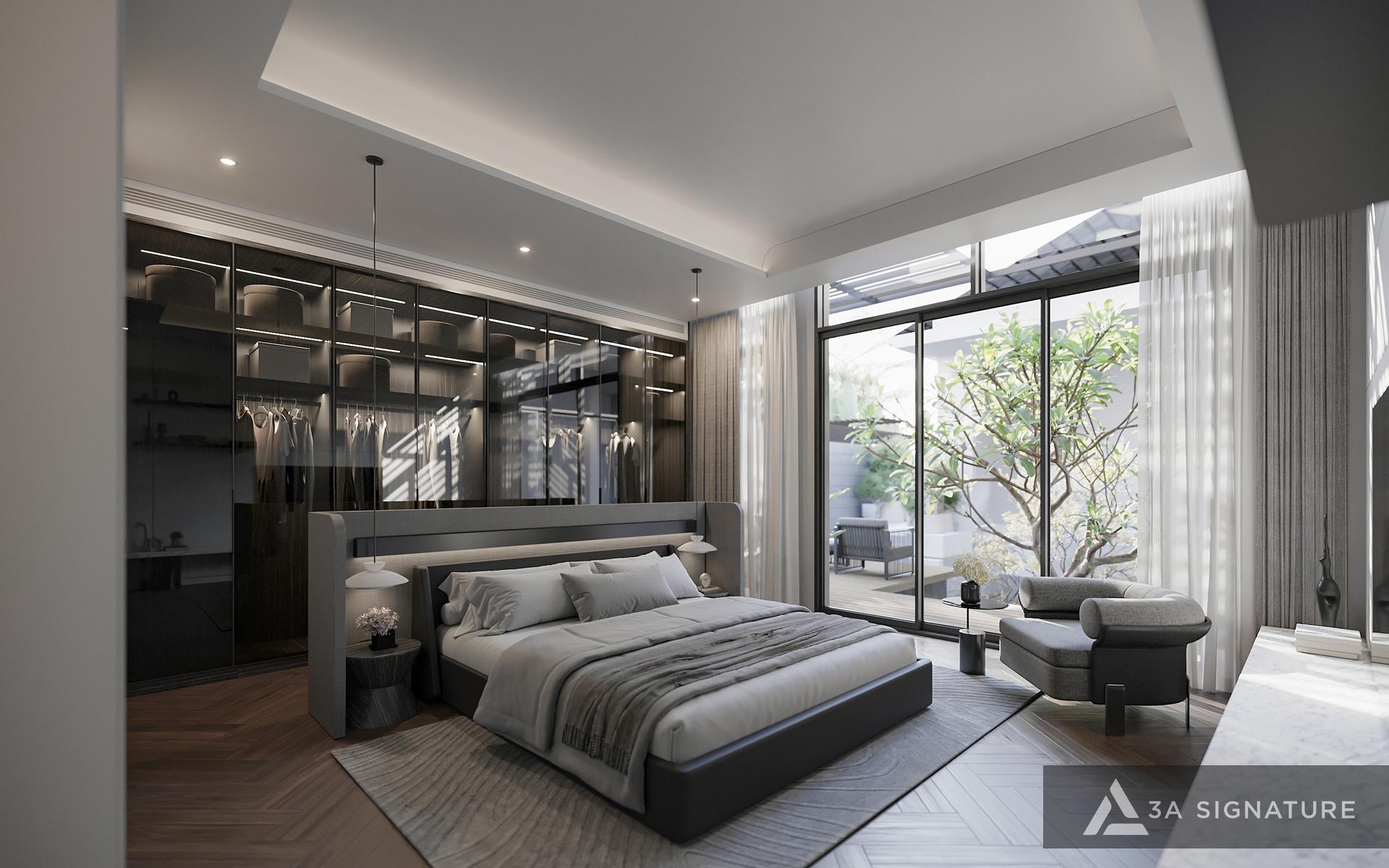
For modern townhouses, the ideal size for a master bedroom is typically between 22–28 m². At this size, the master bedroom allows for more flexible space organization: a small desk, a lounge chair, or a built-in wardrobe can be added without disrupting the overall balance.
This size is chosen by many homeowners because it ensures comfort while fitting within urban land constraints.
Master Bedroom Size in a Villa
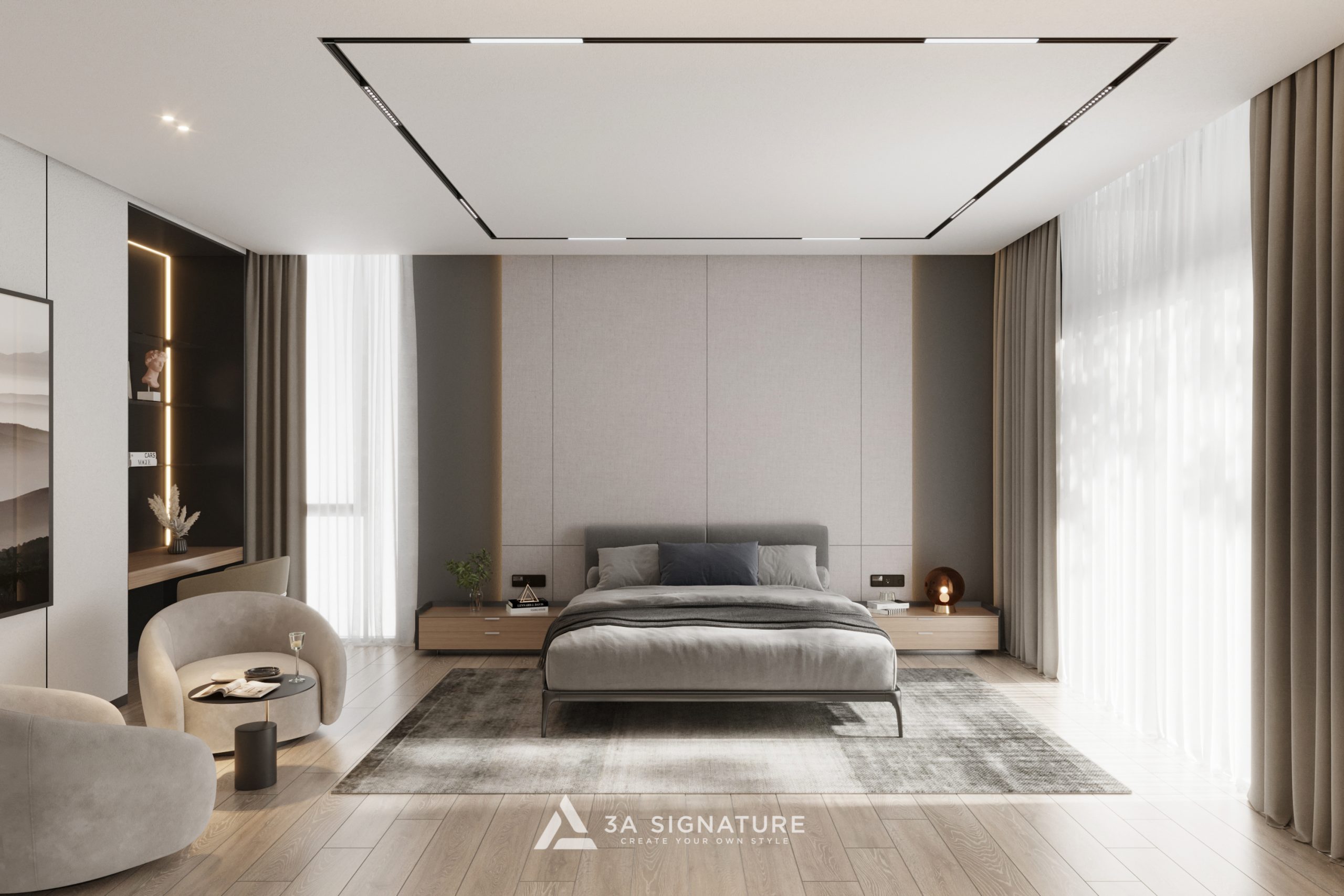
With the relatively large design area of a villa, the master bedroom typically ranges from 30–40m², or even larger. However, a large area doesn’t necessarily mean a good experience if the sleeping, dressing, and bathroom areas aren’t properly divided.
A large master bedroom lacking clear zoning can easily feel empty and unwelcoming – a major drawback for a restful space.
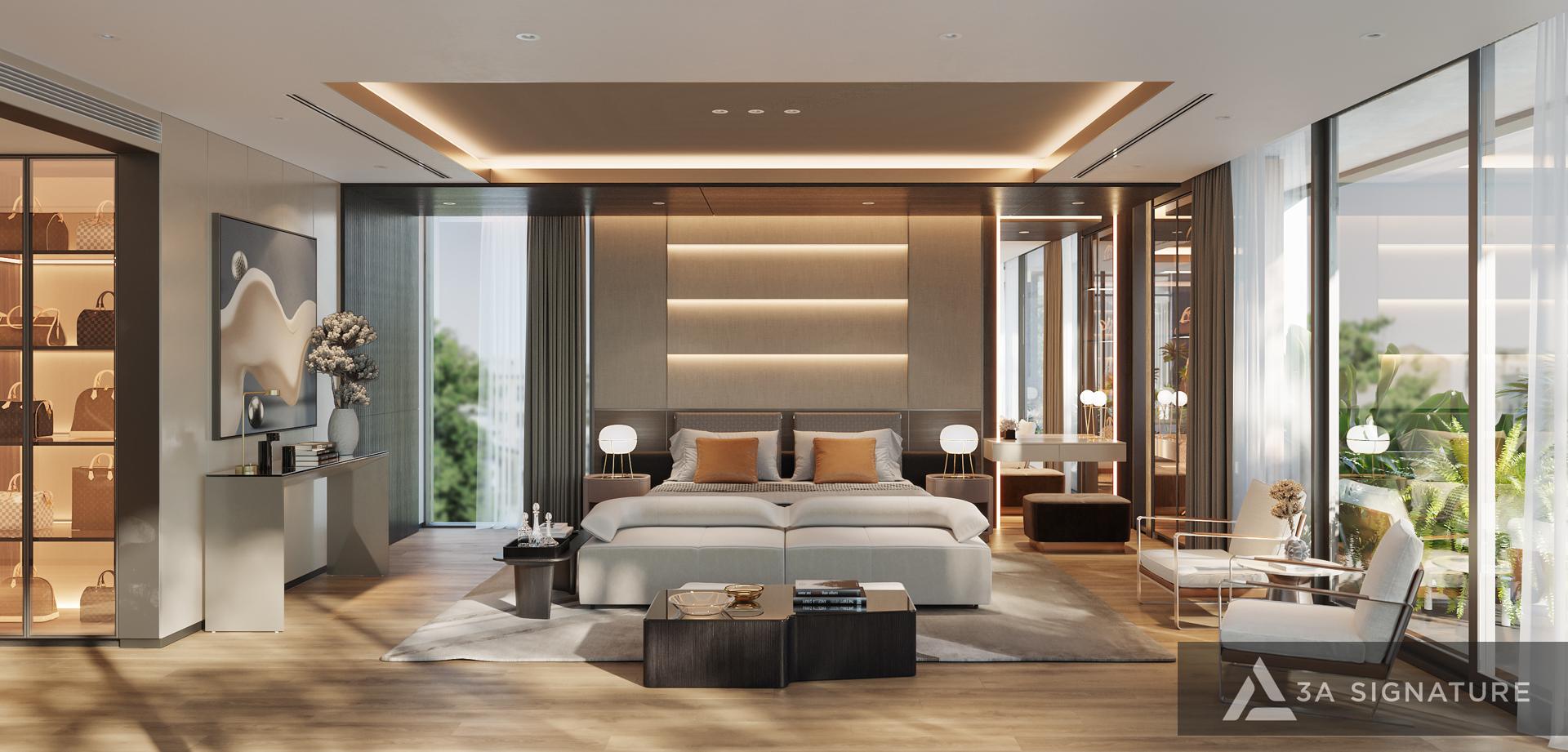
The Golden Ratio in Master Bedroom Design
The Ratio of Bed to Surrounding Space
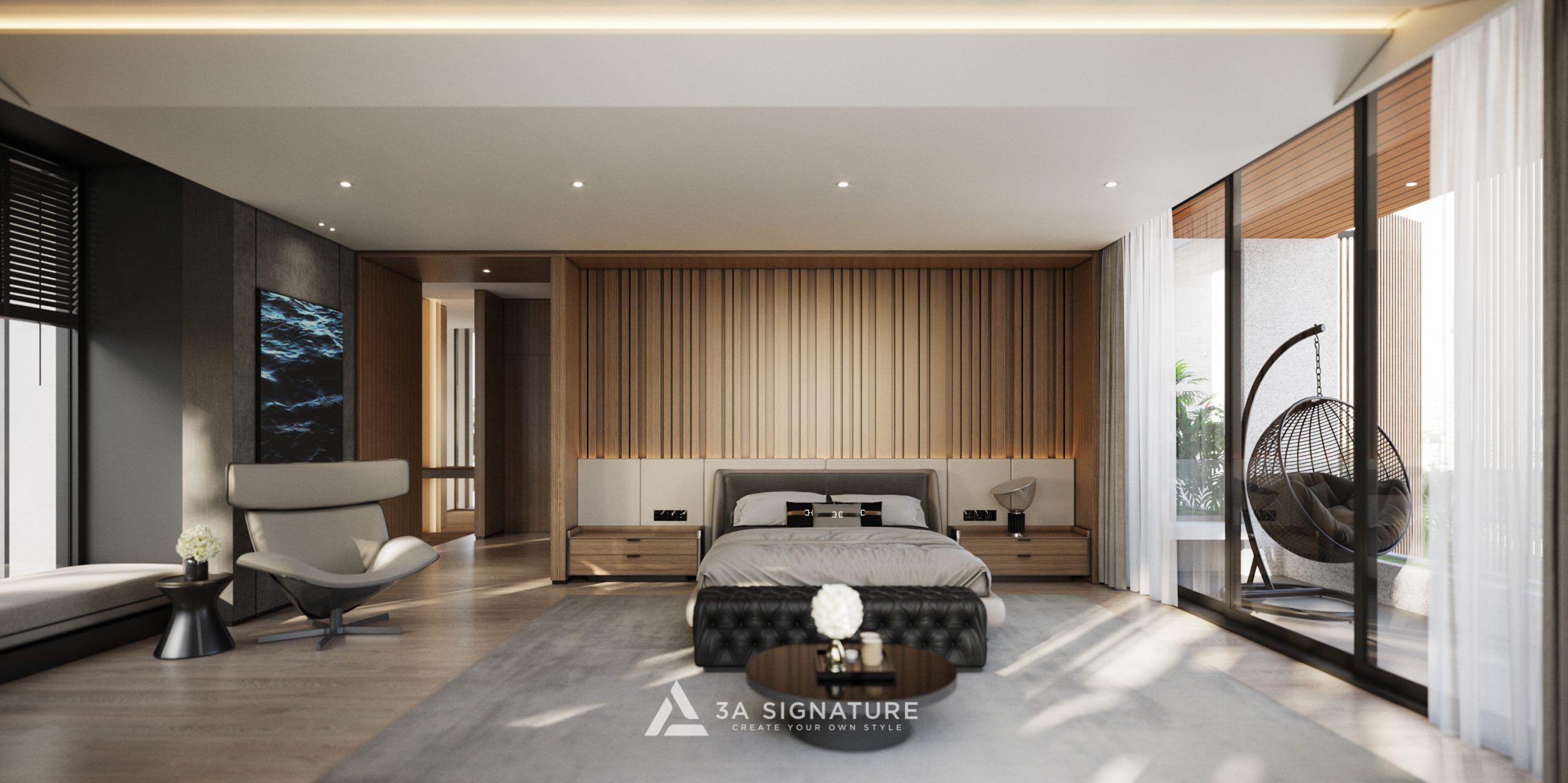
In all criteria regarding materials and interior design, the bed is always the centerpiece. The size of a master bedroom needs to ensure a minimum of 60-80cm of space on either side and at the foot of the bed for comfortable movement. If this space is reduced, a cramped feeling will appear even if the overall area of the room is not small.
See also: The Golden Ratio in Villa Design and its Aesthetic Significance
Ceiling Height Affects the Feeling of Space
Besides floor area, ceiling height plays a very important role. For a standard master bedroom, the ideal ceiling height should be between 2.8 and 3.2 meters. A ceiling that is too low will make the space feel heavy, while a ceiling that is too high will reduce the feeling of warmth and comfort for relaxation.
Master Bedroom Size and its Combination with Bathroom and Dressing Room
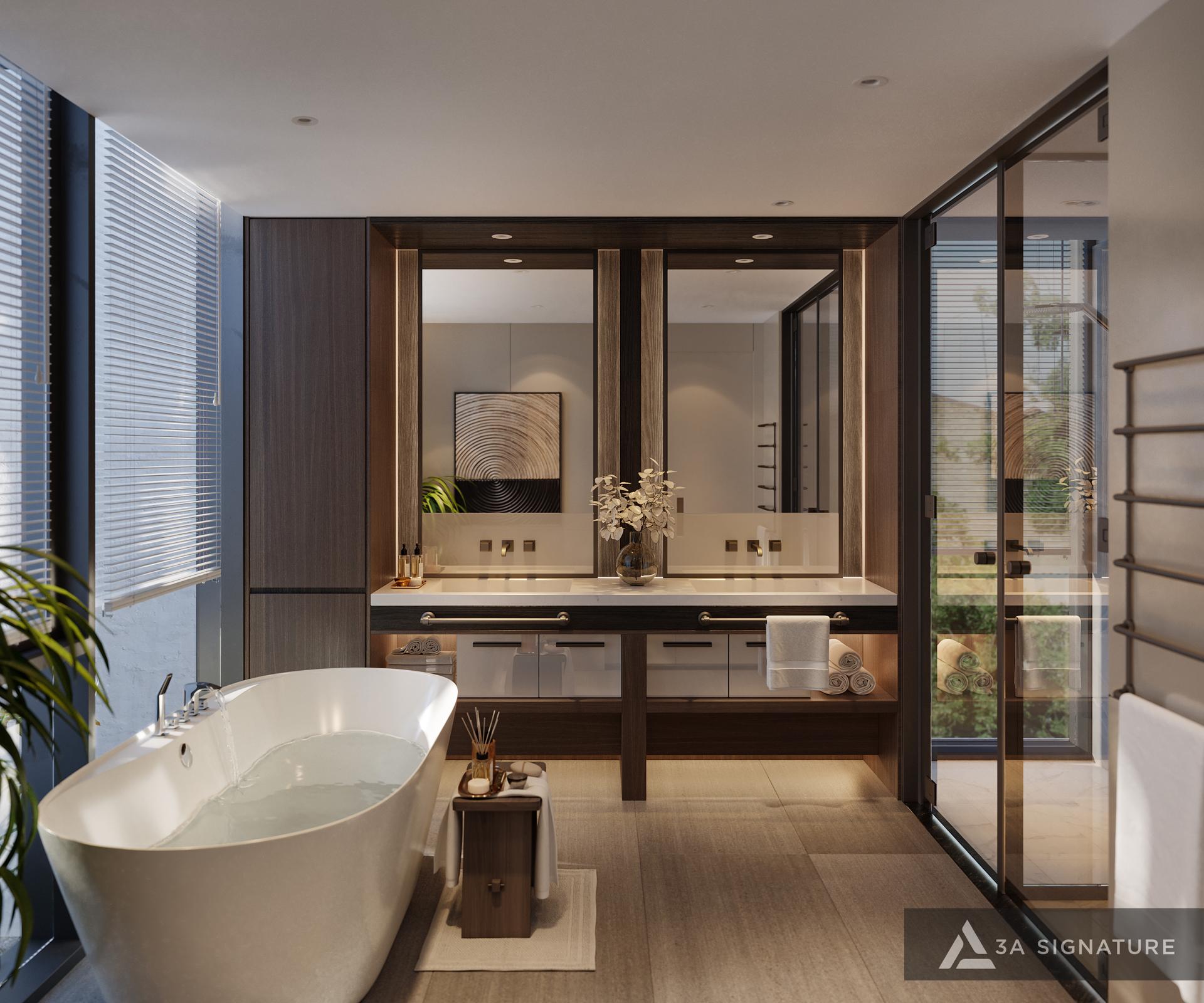
How Much Space Should a Master Bathroom Take Up?
A true master bedroom usually includes an en-suite bathroom. The ideal bathroom size should occupy approximately 20–30% of the total master bedroom area. Proper allocation ensures the sleeping area remains dry, quiet, and clean.
Dressing Area – An Elevating Experience
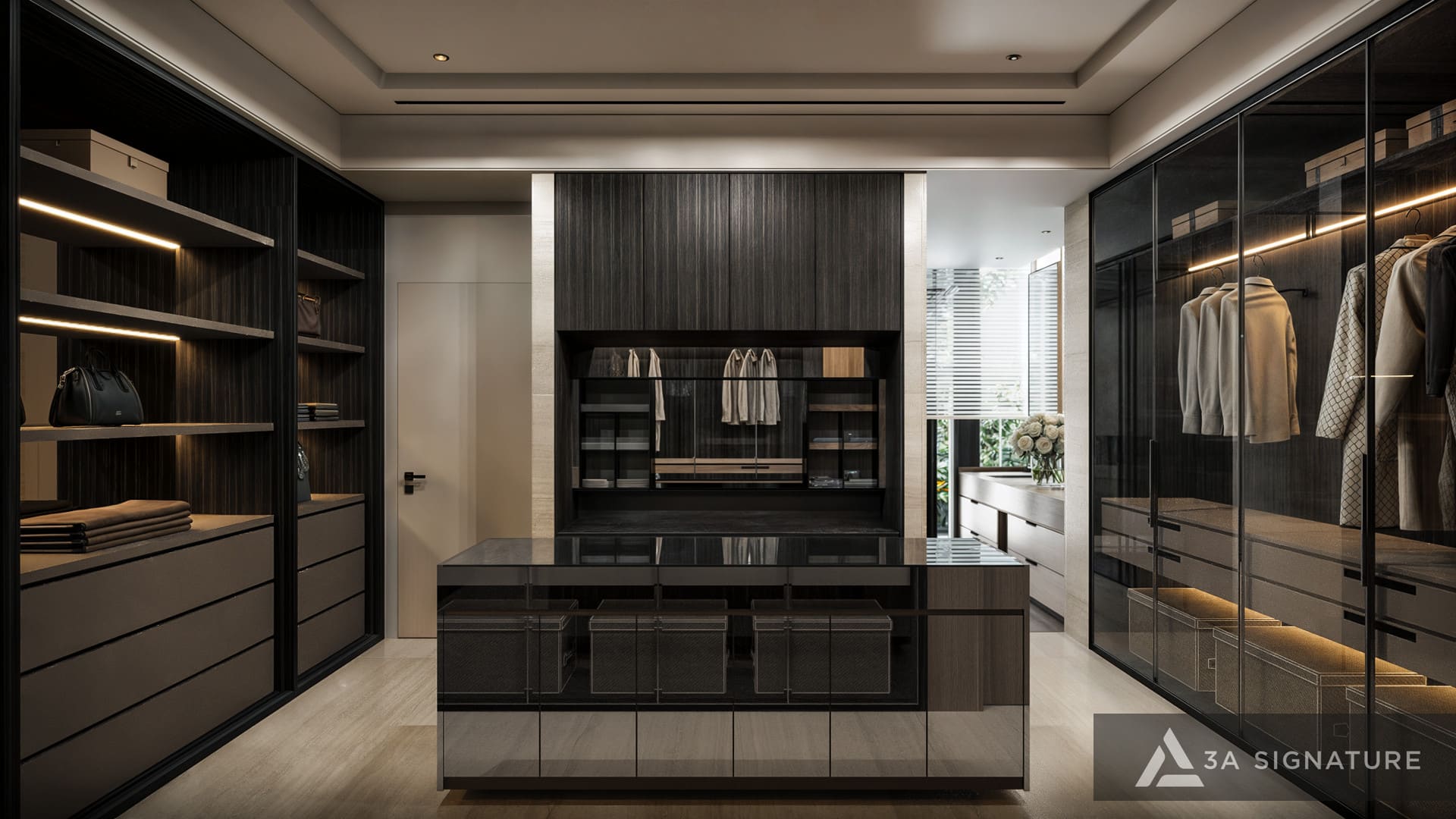
For homeowners who prioritize the living experience, a separate dressing area is a major plus. When the master bedroom size allows, subtly separating the dressing area with a partition or raised floor level will make the space more tidy and luxurious. This is considered a special highlight in a minimalist modern space compared to current interior design trends of 2026.
How Does Master Bedroom Size Affect Light and Ventilation?
A beautiful master bedroom cannot be without natural light. The size of the master bedroom needs to be deep enough for light from windows or balconies to spread evenly, avoiding the “bright at the front, dark at the back” effect.
Ventilation also depends greatly on the room’s proportions. A room that is too long but narrow will struggle to create effective airflow, leading to a stuffy and hot feeling, especially in townhouses with relatively small floor areas.
Common Mistakes When Determining Master Bedroom Size
Many homeowners make the mistake of prioritizing the living room or kitchen area while neglecting the master bedroom. Another mistake is making the bedroom too large without a clear layout plan.
In reality, the size of a master bedroom shouldn’t be measured in square meters, but rather designed according to the homeowner’s lifestyle, age, and needs.
Conclusion: Master Bedroom Size is the Foundation for Quality Sleep
Ultimately, the size of a master bedroom is not just about space, but the foundation for long-term health, emotions, and quality of life. A master bedroom designed with the right proportions will provide a sense of relaxation, privacy, and peace every day.
With a philosophy of putting people at the center, 3A Signature always considers determining the size of the master bedroom a crucial step in creating a complete resting space – where every sleep is a rejuvenation of energy for modern life.