


Before a home begins to take shape even before the very first blueprint is drawn or decisions regarding materials and styles are made the single element that must be most clearly established is the legal framework prior to construction. This is not merely a mandatory compliance requirement under the law; it is the vital foundation that allows the project to proceed smoothly, mitigates unforeseen risks, and provides comprehensive protection for the homeowner’s interests.
At 3A Signature, we always view thorough legal preparation as the critical first step to ensuring your journey of crafting a living space is peaceful, transparent, and legally sound.
1. Why Legal Preparation Prior to Construction is a Non-Negotiable Step
A sobering reality in the construction industry shows that many homeowners only begin to frantically figure out legal requirements when their project has already been hit with a work suspension order or entangled in disputes with neighboring properties. At 3A Signature, we believe that legal paperwork is not just a collection of dry documents, but the structural “backbone” that protects the entire creation process.
Completing a comprehensive legal dossier prior to construction delivers tangible, real-world value:
- Eliminating Administrative Risks: It completely prevents abrupt work stoppages, heavy financial penalties, or in more severe cases, forced demolition of components built outside of permitted guidelines.
- Protecting Ownership Rights: It secures long-term property ownership and land-use rights, paving the way for seamless future transfers, inheritances, or bank financing.
- Optimizing the Architectural Design: When the planning parameters are crystal clear from the start, architects can develop design solutions that align perfectly with reality, avoiding costly and time-consuming blueprint revisions.

Checking the Legal Status of the Land Plot Prior to Construction
Before putting pen to paper on a design contract, verifying the legal “health” of your land plot is a prerequisite task. A plot that looks perfectly level and beautiful on-site is not necessarily ready for groundbreaking if the underlying legal knots have not yet been untied.
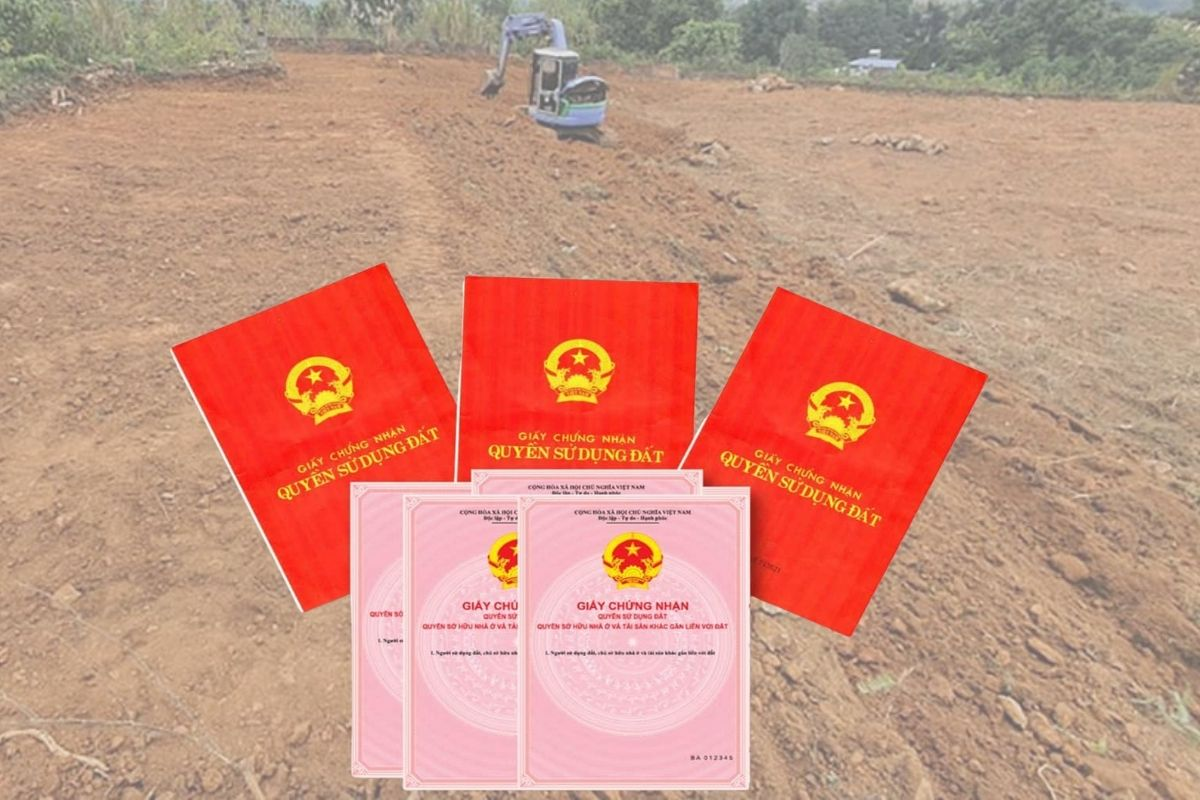
Verifying the Land Use Right Certificate (Red Book / Pink Book)
This is the most powerful document in your legal dossier. Homeowners need to conduct the following practical checks:
- Land Use Purpose: The land must be officially registered as residential land (đất ở/thổ cư). If it is currently listed as perennial crop land (đất trồng cây lâu năm) or agricultural land, you must complete the procedures to convert the land use purpose before applying for a construction permit.
- Legal Identity: The owner information printed on the certificate must match current ID cards or citizen identity cards (CMND/CCCD) exactly. If the plot is joint marital property or inherited land, written consensus from all related parties is strictly required.
- Dispute Status: Coordinate with the local ward/commune land registry office to confirm that the land is not currently mortgaged at a bank, distrained for judgment enforcement, or involved in any quiet boundary disputes with neighbors.
Checking Planning Information and Detailed Construction Parameters
A common mistake is purchasing land based entirely on intuition without knowing that the plot is currently within a planned zone. During the legal preparation phase, make sure to clarify the following key parameters:
- Road Clearance Lines and Setback Boundaries: Identify any land area earmarked for future road widening or public utility projects to ensure no construction permanently encroaches upon it.
- Building Density and Setback Distances: These rules dictate the maximum allowable percentage of built area relative to the total land plot size, as well as the minimum clearance distance required from the sidewalk or adjacent neighboring properties.
- Maximum Height and Number of Floors: Every urban zone enforces specific limits on maximum building height and floor count to maintain overall architectural harmony. At 3A Signature, we always prioritize conducting planning checks concurrently with early consultations to ensure your project remains completely lawful.
Applying for a Construction Permit: A Mandatory Procedure
A construction permit is the official document confirming that your project meets all safety and urban planning standards. This is the most critical link in the legal chain, ensuring your home is fully protected by the law throughout the entire process—from digging the foundation to final completion.
Key Considerations Regarding Construction Permits
- Mandatory Cases: The vast majority of detached houses in urban areas and established residential zones strictly require a construction permit before any work begins. Proceeding without one will result in an immediate work suspension and substantial financial penalties.
- Required Documentation: The dossier generally includes an application form for the construction permit, notarized copies of land-use right certificates, and technical design blueprints that clearly illustrate the floor plans, cross-sections, elevations, and technical infrastructure systems.
- Processing Timeline: The statutory processing time typically takes around 15 to 20 working days. However, organizing this legal paperwork well in advance allows homeowners to confidently stick to their scheduled groundbreaking date.
The Consequences of Unauthorized or Non-Permitted Construction
- Administrative Penalties: Financial fines for premium villas and luxury estates constructed without a permit or out of compliance can reach up to hundreds of millions of VND, depending on the severity of the violation.
- Forced Demolition: This represents the most severe financial and emotional blow, occurring when local authorities order the destruction of building areas that encroach upon road clearance lines or exceed regulated floor heights.
- Inability to Complete Ownership Registration (Hoàn công): Without a proper construction permit and compliant build, the house cannot be officially updated as an asset on the Pink Book (Sổ hồng), significantly reducing the real estate market value of the property.
Design and Construction Contracts from a Legal Perspective
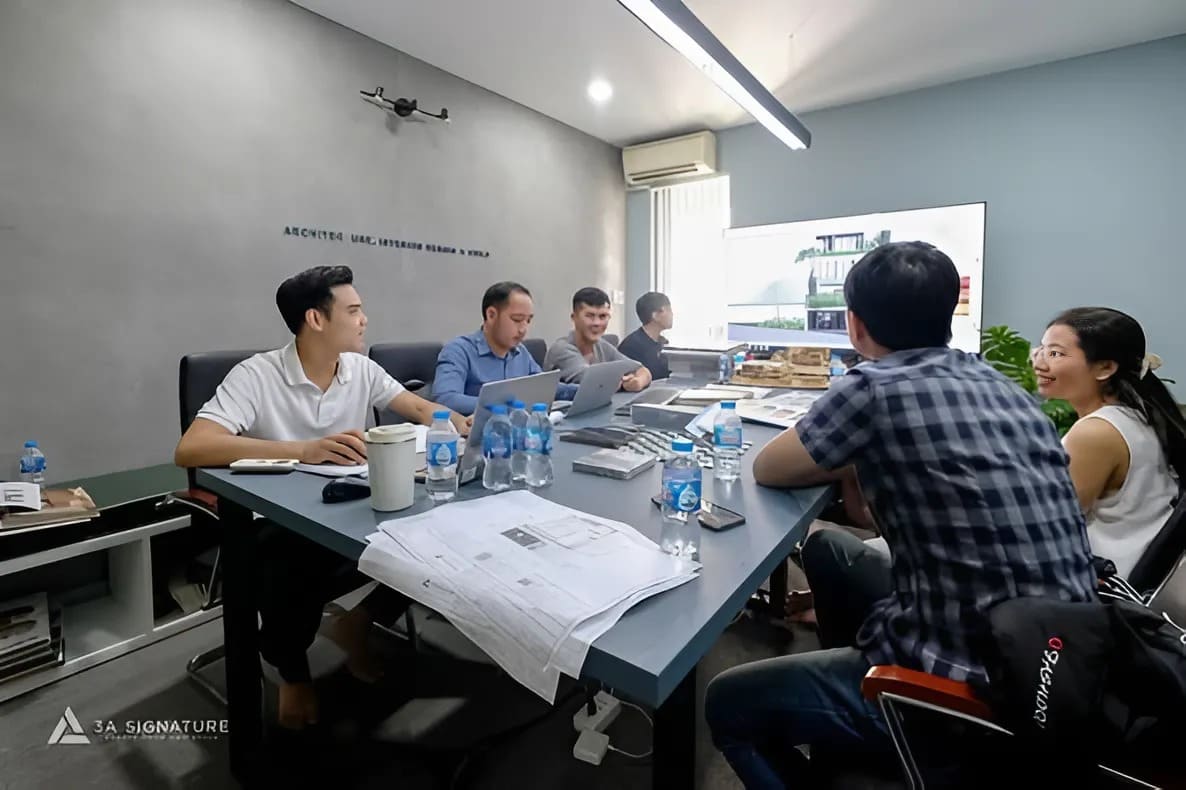
A contract is far more than a routine commercial agreement; it is your ultimate legal shield prior to construction, protecting your direct interests against contractors. A tightly drafted contract allows you to maintain strict control over quality, timelines, and financial transparency.
1. Essential Clauses in a Design Contract
- Scope of Work: Clearly list the exact breakdown of deliverables and blueprints required (architecture, structural, M&E, and 3D renderings).
- Intellectual Property Rights: Ensure that you retain full ownership of the design dossier to facilitate both the legal paperwork process and long-term property management.
- Regulatory Compliance Commitments: The design firm must guarantee that all parameters within the blueprints strictly adhere to the approved construction permit guidelines.
2. Transparency in Construction Contracts at 3A Signature
- Detailed Cost Estimate (BOQ): Explicitly itemize material types, specific brands, unit prices, and precise quantities to eliminate arbitrary budget blowouts.
- Milestones and Penalties for Violations: Establish concrete completion timelines for each phase. Clear financial compensation mechanisms must be enforced if delays occur due to contractor fault.
- Warranty and Maintenance: This stands as a crucial element of your legal preparation, granting you absolute peace of mind regarding the structural and functional durability of your villa for years following handover.
Occupational Safety and Environmental Responsibilities on the Construction Site
The law recognizes that residential construction is an activity that directly impacts the surrounding community. Therefore, legal preparation prior to construction always encompasses explicit commitments to social and environmental responsibility:
- Pre-Construction Condition Survey of Neighboring Properties: Before breaking ground, the homeowner and the contractor should collaboratively document the current structural condition (via photos and videos) of adjacent homes. This report serves as a vital legal shield to settle any future claims regarding potential cracks or structural settling.
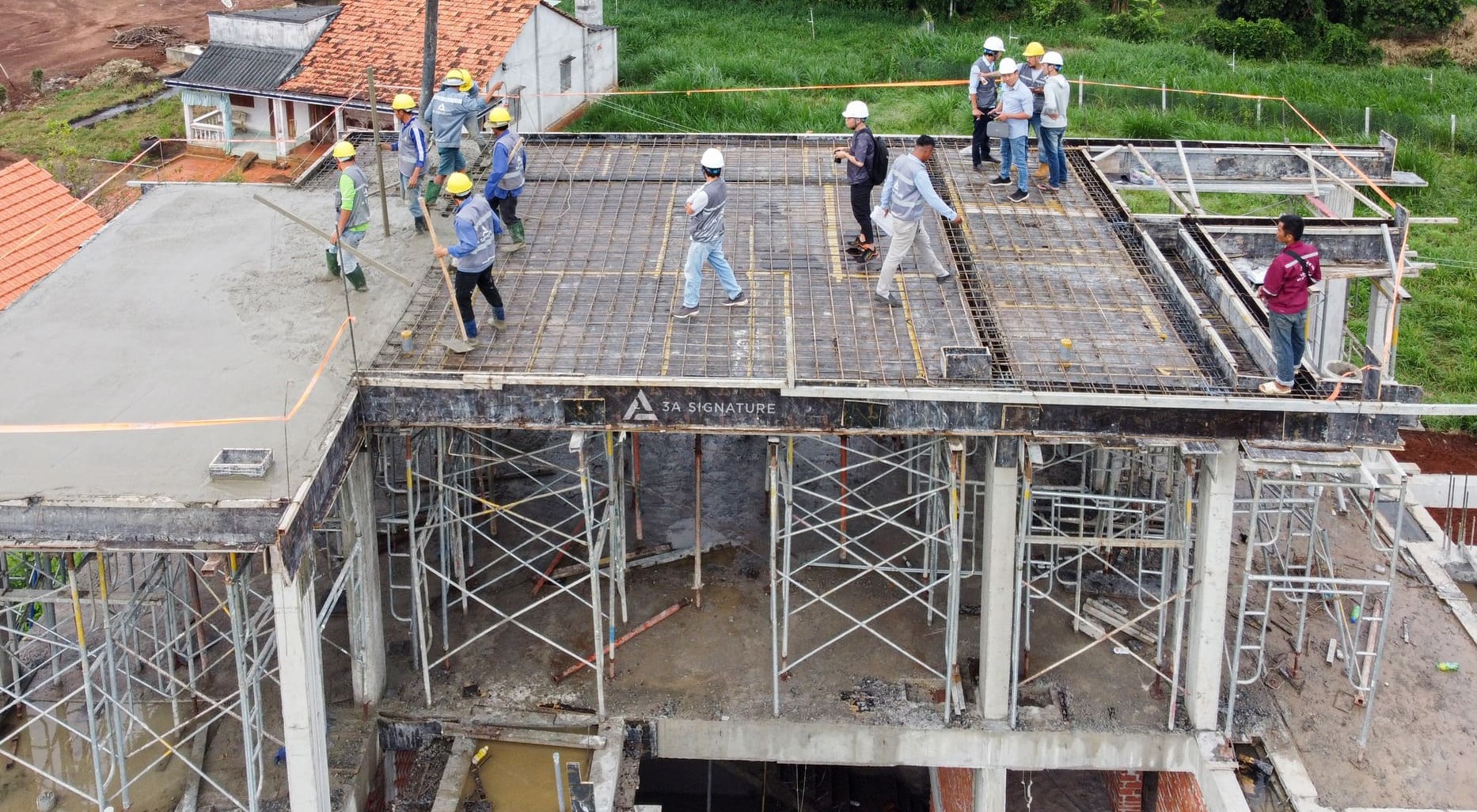
- Occupational Safety Measures: The site must be equipped with comprehensive personal protective equipment (PPE), dust-containment netting, and standardized scaffolding systems. This guarantees a safe environment and prevents unfortunate accidents that could halt construction or trigger legal complications.
- Local Financial Obligations: Homeowners must ensure the timely settlement of all regulated construction taxes, environmental protection fees, or utility connection charges in strict compliance with local municipal guidelines.
Common Mistakes and Expert Advice from 3A Signature
Throughout our years of consulting for high-end residential projects, 3A Signature has distilled invaluable lessons regarding legal preparation prior to construction—highlighting the missteps homeowners most frequently make:
- Relying Blindly on Verbal Promises: Many homeowners fall into the trap of believing a contractor’s casual promise that says, “Just go ahead and build, we’ll sort out the permit later.” This is a critical mistake that almost always leads to severe administrative penalties and work stoppages.
- Failing to Scrutinize Contract Details: Signing agreements that lack specific details regarding material specifications and brands inevitably leads to heated disputes over build quality during the final finishing stages.
- Skipping the Final Ownership Registration (Hoàn công): Assuming that once construction wraps up, the job is done. In reality, hoàn công is the final, essential step of your real estate legal journey, officially validating your home’s legal and financial value on your property certificates.
The 3A Signature Perspective: Legal Compliance is a Component of Sustainable Design
At 3A Signature, legal preparation prior to construction is never treated as an isolated administrative chore; it is an intrinsic part of our holistic architectural philosophy.
We walk alongside homeowners through every phase:
- Conducting thorough legal health checks on the land plot.
- Reviewing urban planning parameters and construction guidelines.
- Standardizing documentation for seamless permit applications.
- Bridging design and construction execution in strict accordance with the law.
Thanks to this meticulous approach, your project is not only visually stunning but also legally unassailable, securing its utility and appreciation value for the long term.
Conclusion: Legal Preparation is the Foundation of a Resilient Project
Ensuring your legal framework is perfectly in order prior to construction does more than just keep your project compliant with local regulations it delivers absolute peace of mind throughout the entire building journey and your subsequent years of occupancy. When the legal groundwork is handled correctly from day one, every ensuing design and construction decision becomes clearer, more transparent, and highly efficient.
Leveraging our deep expertise in designing and constructing bespoke premium villas in the Modern Tropical style, 3A Signature stands ready to support you from your very first legal step. We ensure that your home is not only an architectural masterpiece but also a secure, sustainable, and legally flawless legacy that retains its full value over time.