

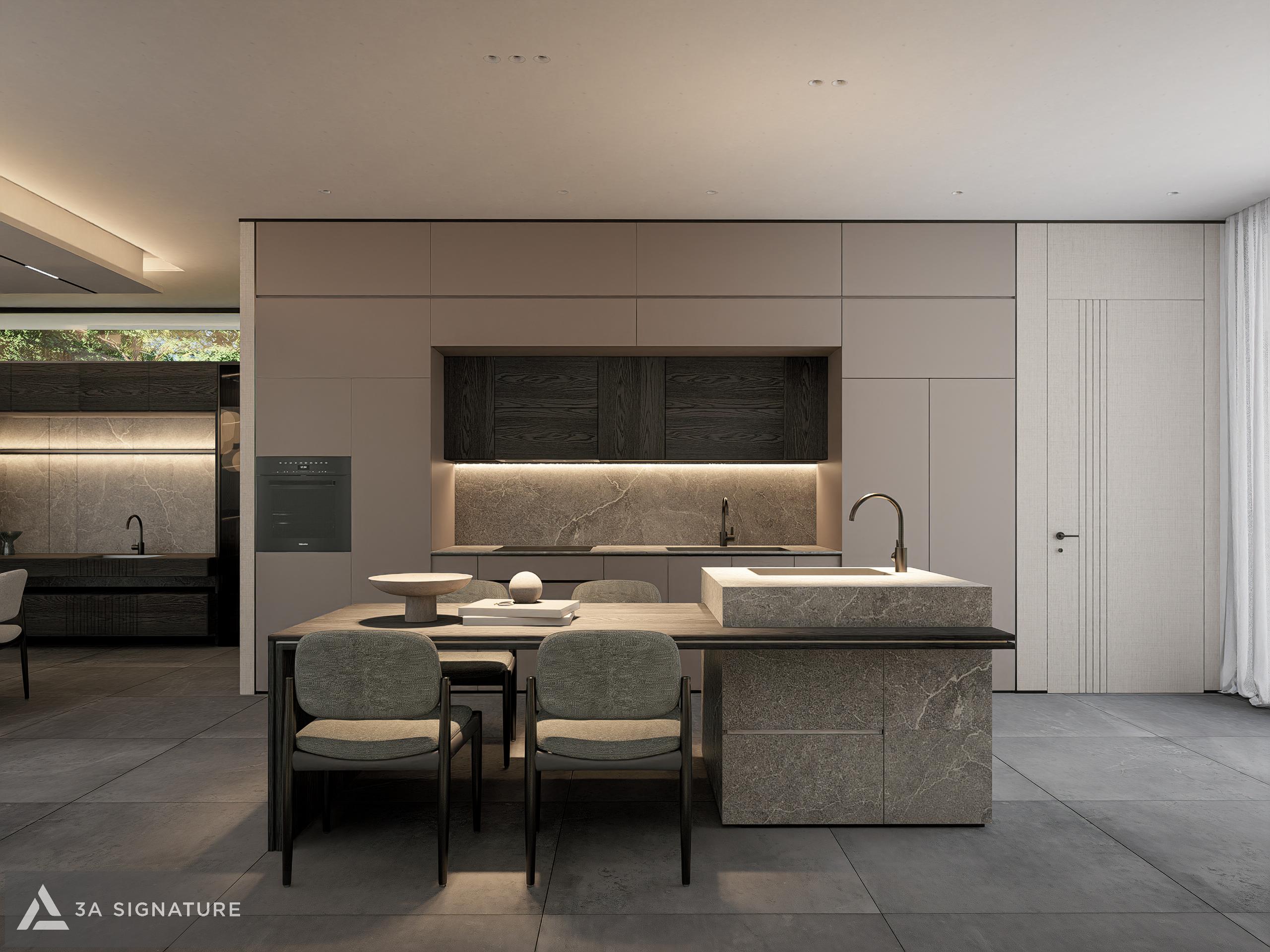
In modern living trends, paying attention to living spaces for the elderly is becoming increasingly important. In particular, designing a kitchen for the elderly is not just about aesthetics, but also about safety, functionality, and comfort in daily use. A suitable kitchen will help the elderly maintain their cooking habits and independent living, while contributing to improved physical and mental health over time.
Why is it important to consider kitchen design for the elderly?
The kitchen is a frequently used space, closely linked to the daily lives of the elderly. However, over time, problems with bones and joints, eyesight, and mobility make using the kitchen difficult and pose many risks if it is not designed appropriately.
Designing a kitchen for the elderly not only aims to reduce the risk of falls and accidents but also creates conditions for them to maintain independence in their daily lives, feel respected, and comfortable in their own home. This is also an important factor in creating a harmonious living space that connects generations within the family.
Prioritizing Safety in Kitchen Design
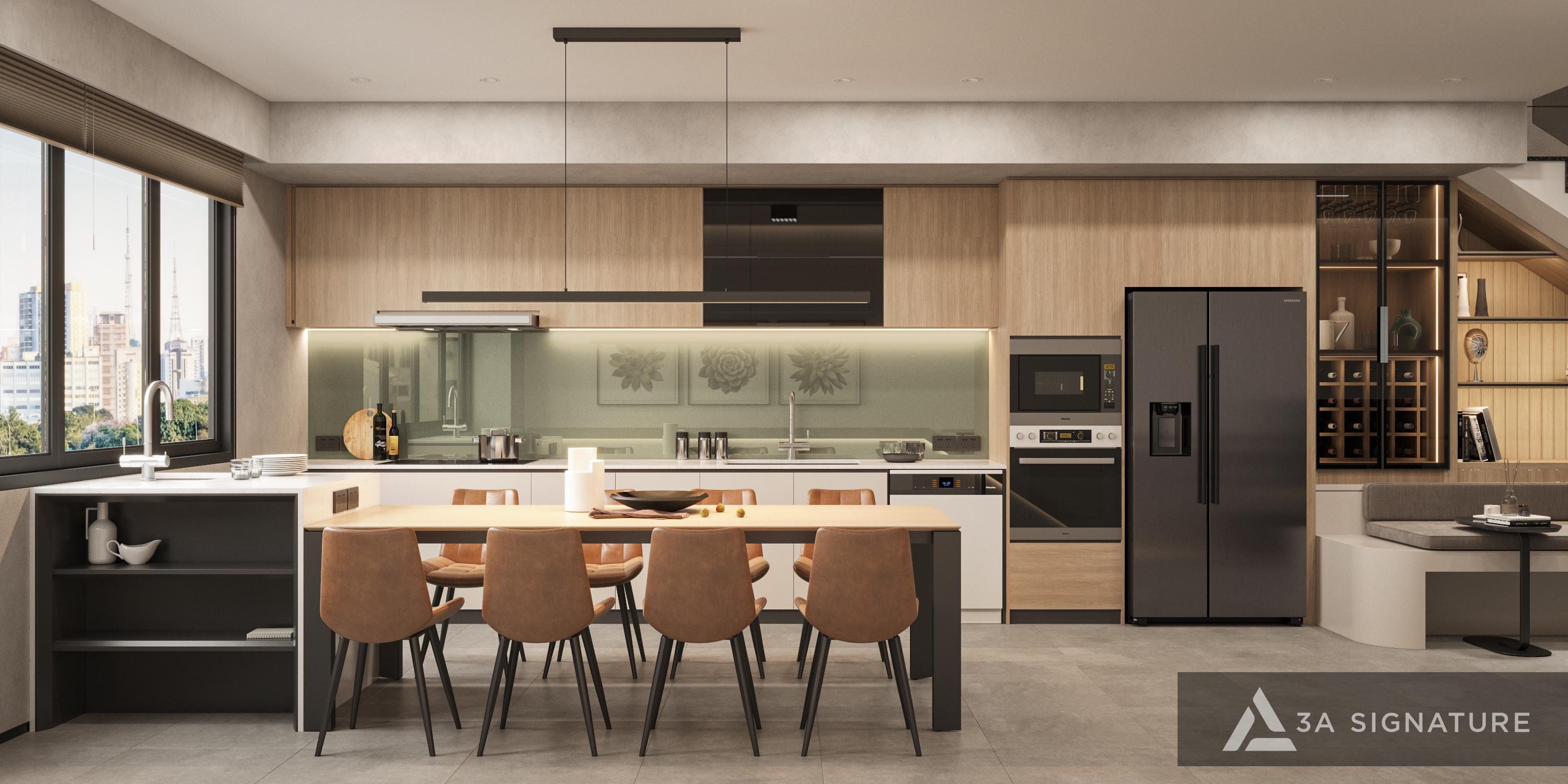
Safety is always a core principle in kitchen design for the elderly. Kitchen floors should use non-slip materials with a moderate roughness to minimize the risk of falls. Avoid overly glossy tiles or slippery surfaces that can easily cause slips, especially when the floor is wet.
Kitchen countertop edges and cabinet corners should be rounded to minimize injuries from collisions. Electrical and gas systems need to be arranged scientifically, easily visible, and controllable. Families should prioritize induction or electric cooktops over traditional gas stoves to reduce the risk of fire and explosions, while increasing safety in daily use.
A Rational Kitchen Layout
The kitchen layout directly affects convenience in movement and operation. For the elderly, movement needs to be simplified and clear. Homeowners can choose popular layouts such as L-shaped, U-shaped, or parallel kitchens, depending on the available space.
A key principle in designing a kitchen for the elderly is to ensure a reasonable distance between functional areas such as the stove, sink, and refrigerator—not too far, but not too cramped either—making movement easier and safer.

Functional Design Suitable for the Elderly
As age increases, spinal, knee, and strength issues become more apparent. Therefore, in kitchen design for the elderly, the height of the countertop, sink, and cabinets needs to be carefully considered. The countertop should be at a comfortable height for standing while cooking, reducing pressure on the back and joints.
Kitchen cabinets should prioritize drawers over traditional hinged doors, making it easier and more convenient to access items. Frequently used items such as pots, pans, and spices should be placed at a low or easily accessible level, minimizing the need to reach high or bend deeply, which can cause imbalance.
Adequate and Appropriate Lighting
The eyesight of the elderly often declines, so lighting plays a particularly important role in kitchen design for them. The kitchen space should maximize natural light through large windows, skylights, or an open-plan design.
In addition, artificial lighting should be evenly distributed, especially in the cooking and sink areas. White or neutral LED lights help older adults clearly see food, utensils, and appliance controls, thereby minimizing the risk of accidents while cooking.
Spacious Walkways and Airy Space
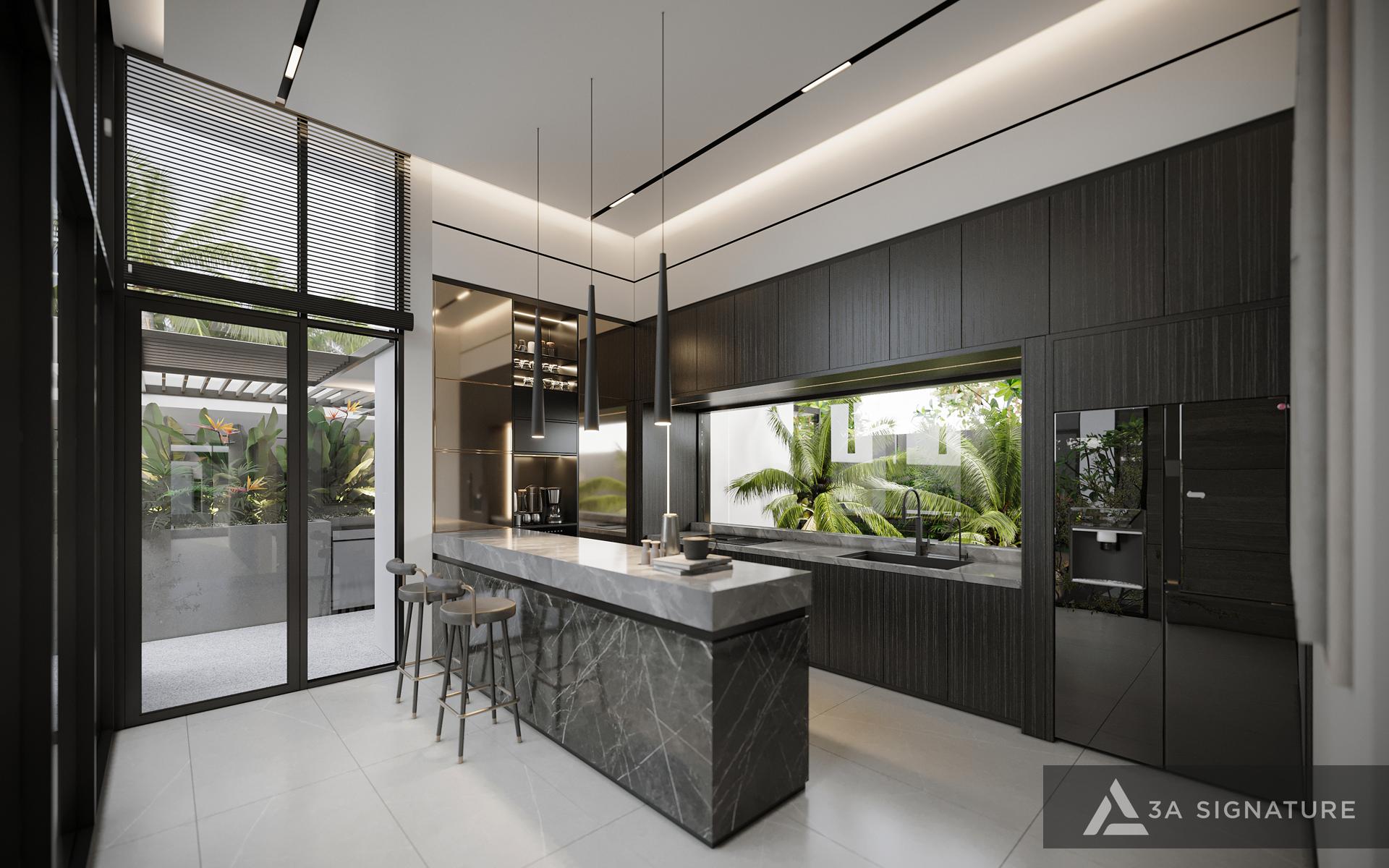
An indispensable element in kitchen design for the elderly is spacious and airy walkways. The kitchen space should minimize unnecessary items to avoid creating a cramped feeling and hindering movement.
The distance between functional areas needs to be wide enough for the elderly to move comfortably, even with the use of canes or mobility aids. An open-plan kitchen design, seamlessly connected to the dining room, also helps create a pleasant and convenient living environment.
Choosing User-Friendly Kitchen Appliances
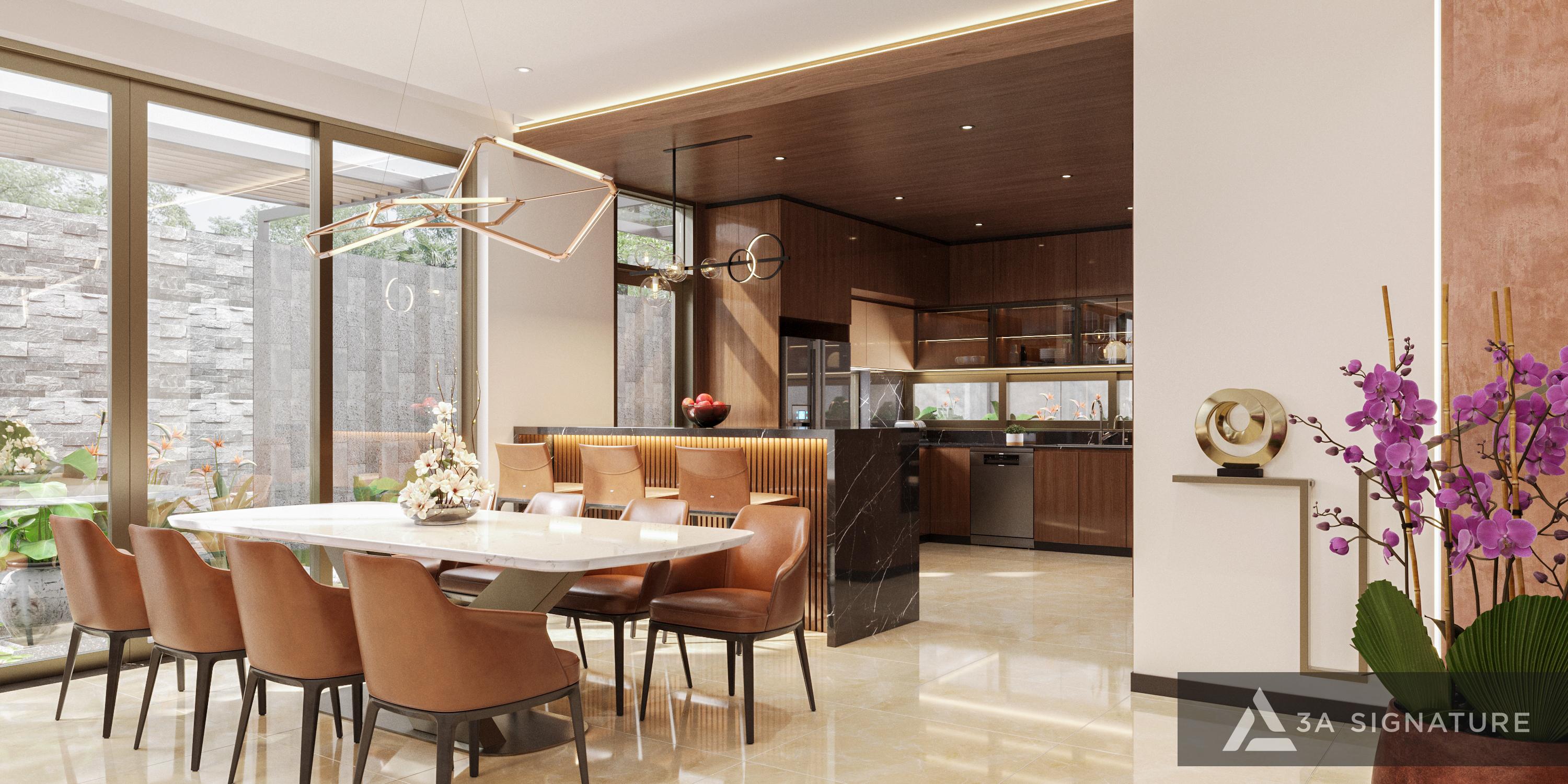
Kitchen designs for the elderly don’t need a lot of complex technological appliances. Instead, prioritize appliances with simple operation, clear buttons, large and easy-to-read numbers.
Some modern appliances have automatic shut-off features when overheating or when you forget to turn off the stove, increasing safety during use. At the same time, limiting the number of electronic devices in the kitchen helps keep the space tidy and easier to manage.
Conclusion
Designing a kitchen for the elderly is not just about functionality, but also about showing care, understanding, and respect for loved ones in the family. A safe, convenient, and user-friendly kitchen will help older adults maintain independence, stay positive, and improve their quality of life over time.
With a people-centered design philosophy, 3A Signature always focuses on creating kitchen spaces that are not only beautiful but also suitable for each stage of life, contributing to building a sustainable home for many generations.