

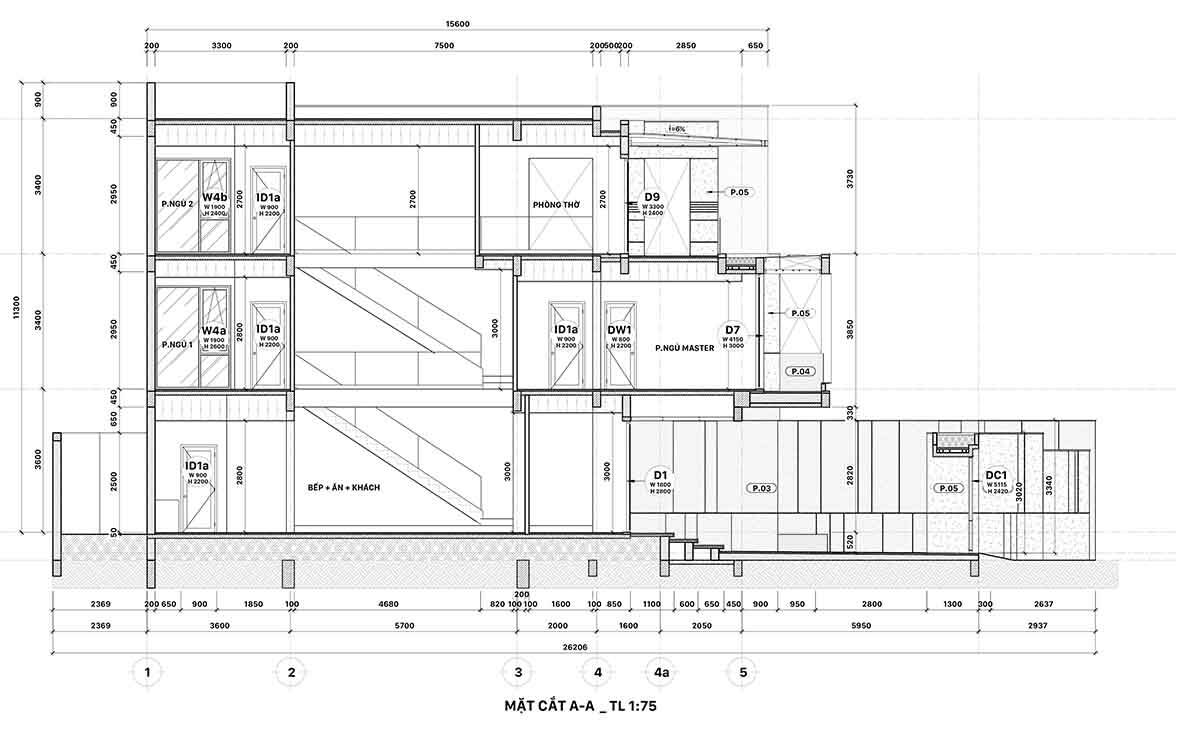
When preparing to build a house or villa, many homeowners start with a seemingly simple question: what is floor area and how to calculate it correctly? In reality, this is the most easily misunderstood concept, leading to a series of consequences related to legal documents, construction costs, and even the size of the living space later on. At 3A Signature, we always consider understanding the correct way to calculate floor area as a crucial first step, helping homeowners proactively and transparently control their construction project from the outset.
What is Floor Area?
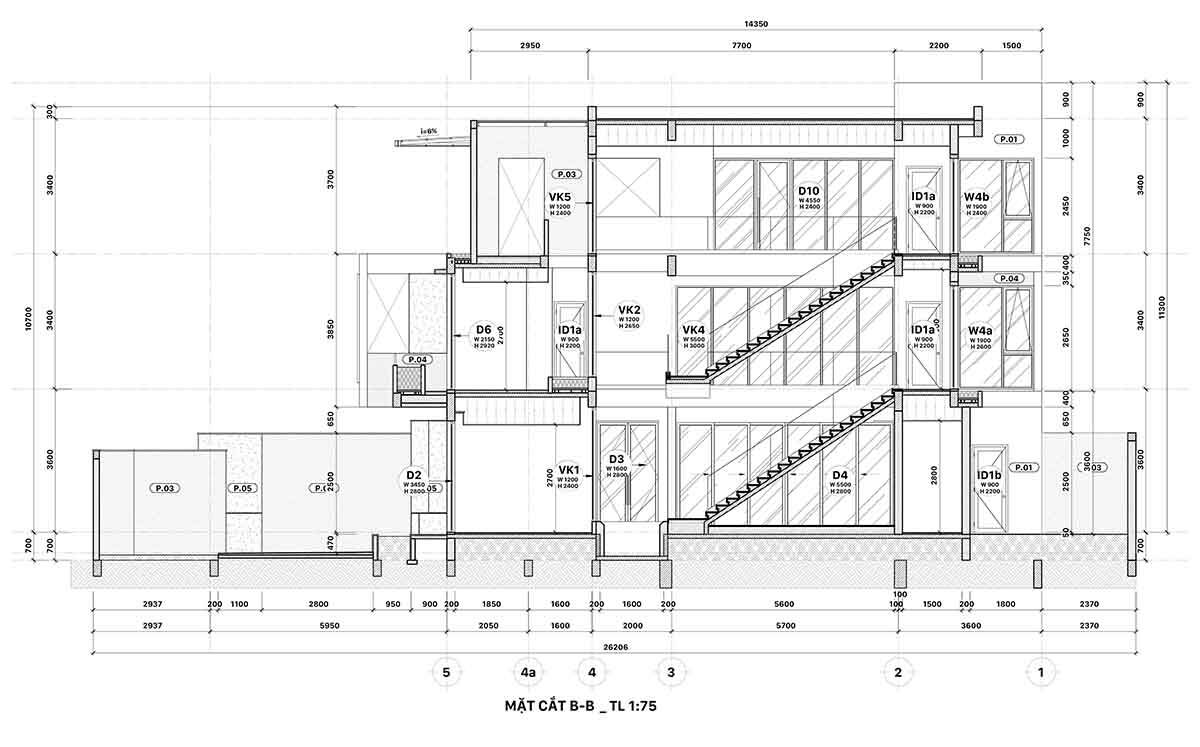
In the construction field, floor area (also known as building floor area) is understood as the total floor area of all floors in a building. This area is calculated from the outer edge of the surrounding walls and includes areas such as balconies, corridors, attics, technical floors, basements, or semi-basements if any.
Contrary to the popular belief that floor area only refers to the “living” space, in reality, floor area calculations always include technical and auxiliary spaces. This is why the actual floor area is often larger than the homeowner perceives.
The Role of Floor Area in Residential Construction
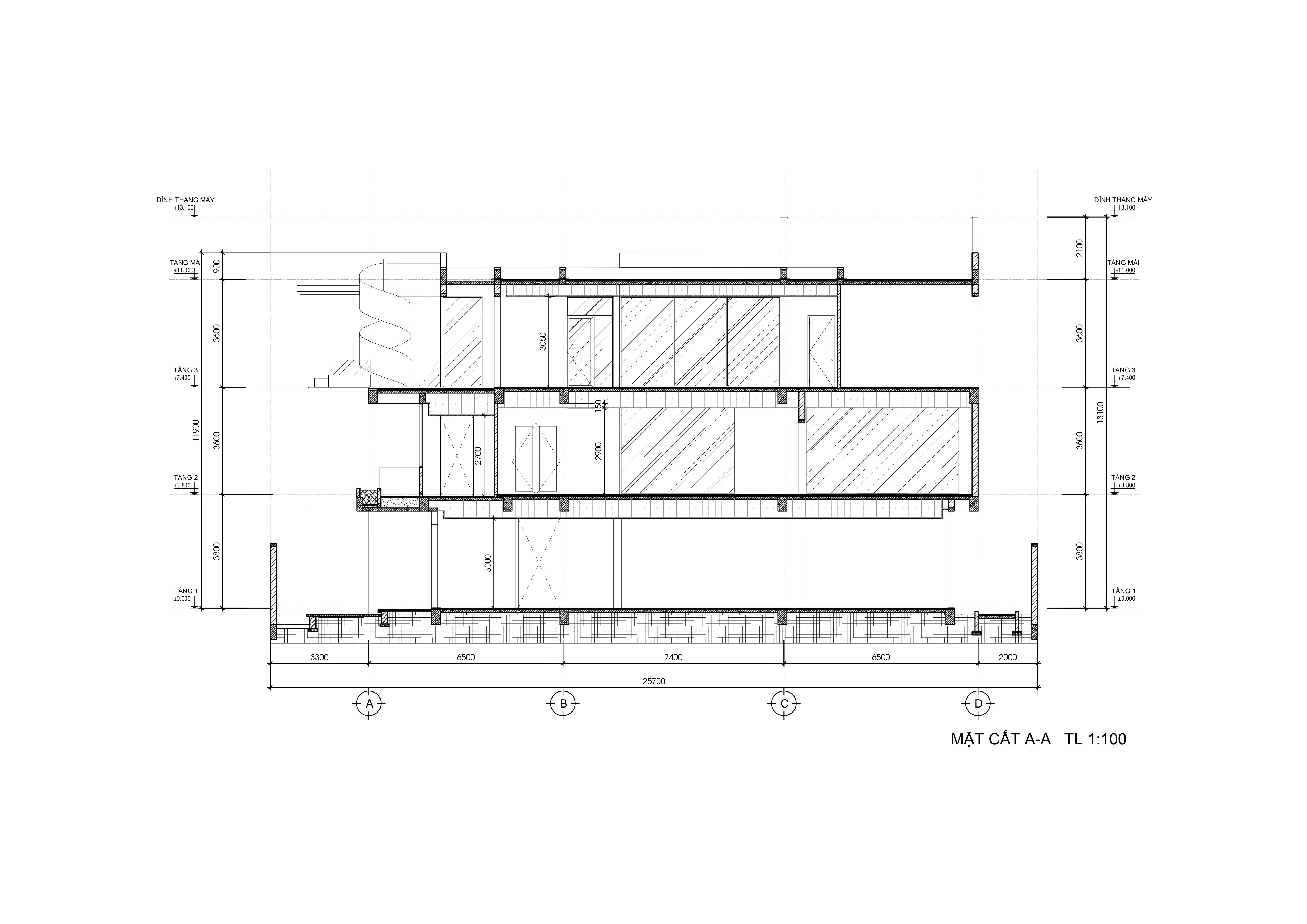
Floor area is more than just a technical number. It forms the basis for building permit applications, determining the scale of the project, and estimating construction costs. In many cases, even a small discrepancy in the calculation of floor area can lead to adjustments to the application or a significant increase in construction costs.
Furthermore, floor area is used as a basis in interior design, project handover, and property valuation. Therefore, understanding it correctly from the outset helps homeowners avoid unnecessary risks throughout the construction process.
Common Methods for Calculating Total Floor Area of a Building
Formula for Calculating Usable Floor Area
For the main usable floor area of a house, the calculation is relatively simple and clear:
Floor area = Floor length × Floor width (measured from the outer edge of the surrounding walls)
The total usable floor area will be equal to the sum of the floor areas of all floors, including the ground floor, upper floors, and attic (if any).
For example, a house has:
- Ground floor area: 100m²
- First floor area: 100m²
- Second floor area: 100m²
→ Total usable floor area = 300m²
This is the largest component in the floor area calculation and is usually calculated at 100% of the area.
How to Calculate Floor Area of Ancillary Spaces
In addition to the main usable area, floor area calculation also includes ancillary areas such as balconies, corridors, staircases, skylights, or loggias. These areas are usually calculated entirely or proportionally, depending on regulations and the specific design characteristics of each building.
Clearly defining the areas included in the floor area helps homeowners avoid confusion between “construction area” and “usable area”.
How to Calculate Floor Area of Foundation and Basement
Formula for Calculating Floor Area of Foundation
The foundation area is not calculated directly based on the actual area, but is converted as a percentage of the ground floor area.
Foundation floor area = Ground floor area × Foundation conversion ratio
Common conversion ratios:
- Single foundation: approximately 20 – 25%
- Strip foundation, pile foundation: approximately 30 – 60% (depending on structure and soil conditions)
Correctly identifying the type of foundation is crucial in calculating floor area, as it directly affects the total construction cost.
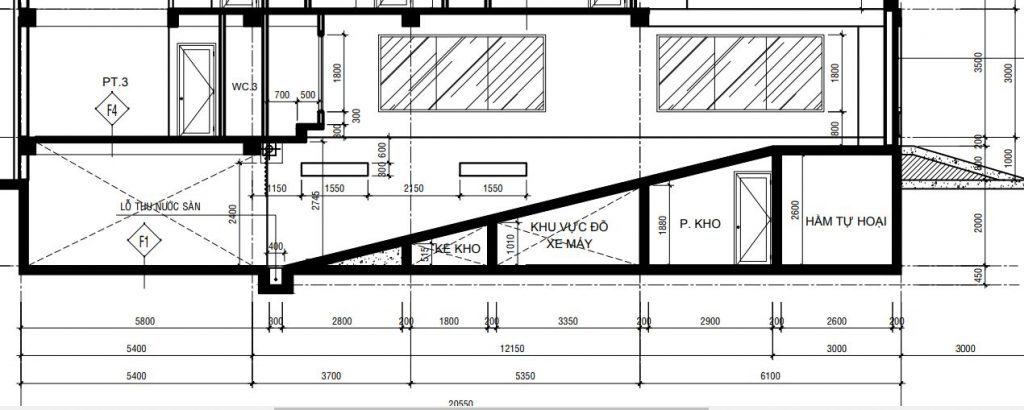
Formula for Calculating Floor Area of Basement
The basement area is calculated using a conversion factor, depending on the depth relative to the sidewalk level.
Basement floor area = Actual basement area × Conversion factor
Common conversion factors:
- Depth 1 – 1.5m: coefficient ~ 150%
- Depth 1.5 – 2m: coefficient ~ 170%
- Depth over 2m: coefficient ~ 200%
In practice, this is the most complex part of calculating floor area, often requiring confirmation from the design unit and the local construction management agency.
Formulas for Calculating Roof and Terrace Floor Area
Formula for Calculating Roof Floor Area
Roof floor area = Actual roof area × Conversion ratio according to roof type
The conversion ratio varies depending on the material and usage:
- Reinforced concrete roof: approximately 50%
- Concrete roof with tiles: approximately 85 – 100%
- Metal roof: approximately 30%
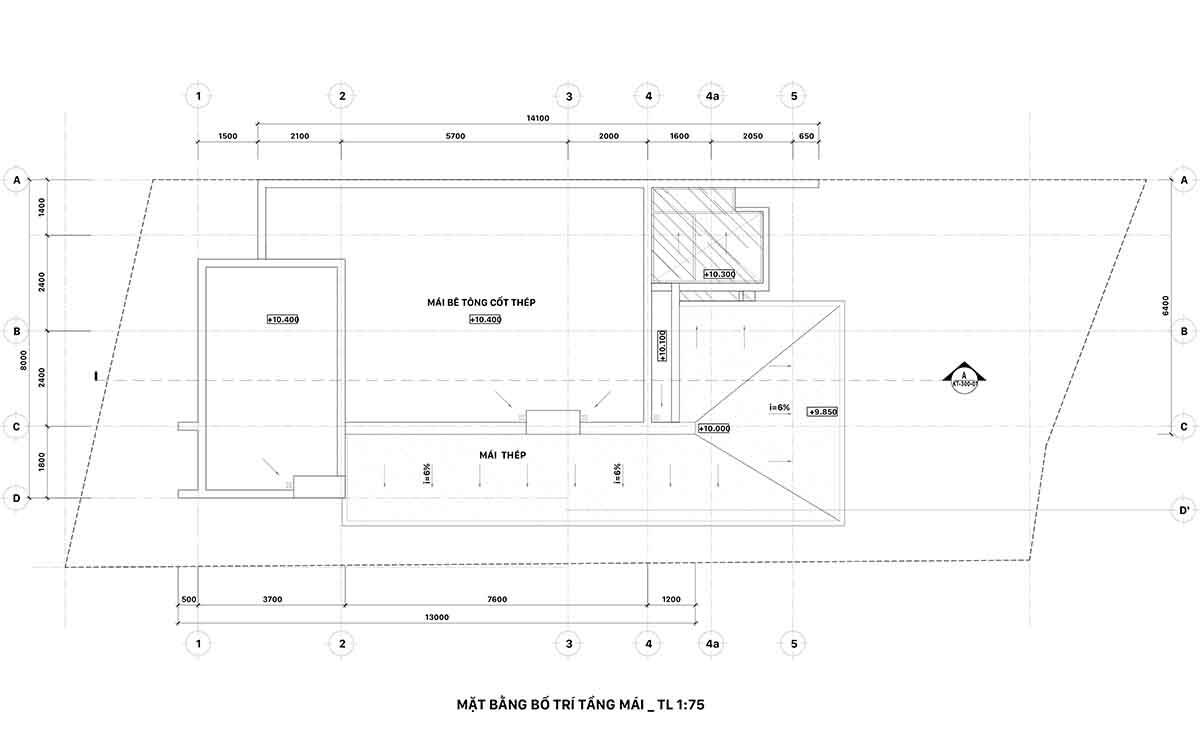
Formula for Calculating Rooftop Area
Rooftop area = Ground floor area × Conversion ratio
- No roof: approximately 50%
- With roof: approximately 75%
- With roof + enclosing walls or fixed louvers: can be calculated as 100%
These ratios need to be applied consistently when calculating floor area for documentation and cost estimates.
Distinguishing Between Floor Area and Construction Area
Many homeowners confuse these two concepts. Floor area is the total surface area of all floors, while construction area is usually used to calculate building density and construction costs, including both floor area and converted parts such as foundations, roofs, and basements.
Understanding this difference helps homeowners apply the correct floor area calculation method, avoiding confusion when working with regulatory agencies or contractors.
Conclusion
Understanding how to correctly calculate floor area is a fundamental step in building a standard, transparent, and sustainable structure. When floor area is accurately determined from the outset, homeowners will be more proactive regarding costs, legal matters, and the quality of their living space later on.
With 3A Signature, every project starts not only with beautiful blueprints, but also with accurately calculated, complete, and clear figures. If you are planning to build a house or villa, let 3A Signature accompany you and advise you on how to calculate the most suitable floor area for your needs and long-term value.