


In residential projects featuring large land plots and abundant greenery, site analysis is always the decisive starting step. For Harmony Villa in Tan Uyen – Binh Duong, this process enables 3A Signature to read and understand the topography, greenery, sun-wind directions, and the family’s living needs. From there, we shape a modern minimalist architectural solution that harmonizes with nature and remains sustainable over time.
Overview Of The Current State Of Harmony Villa Tan Uyen Land
- Number of Members: 4 – 5 people
- Location: Tan Uyen – Binh Duong
- Land Area: 1,431m²
- Expected Construction Area: 250m²
- Project Scale: 1 ground floor – 1 upper floor
- Architectural Style: Modern, Minimalist
- House Direction: South
- Intended Use: Residential
Site Analysis Of The Land Plot – A Crucial Starting Step
Assessing Topography And Land Boundaries
One of the key aspects of site analysis is accurately identifying the topography of the land. Harmony Villa possesses a relatively flat terrain and a stable elevation, which is highly favorable for organizing the building and the landscape without requiring excessive grading interventions.
The boundaries of the land plot are clearly enclosed, creating convenient conditions for arranging the gates and vehicular access, as well as controlling views and privacy levels elements that are particularly vital for a large-scale villa.
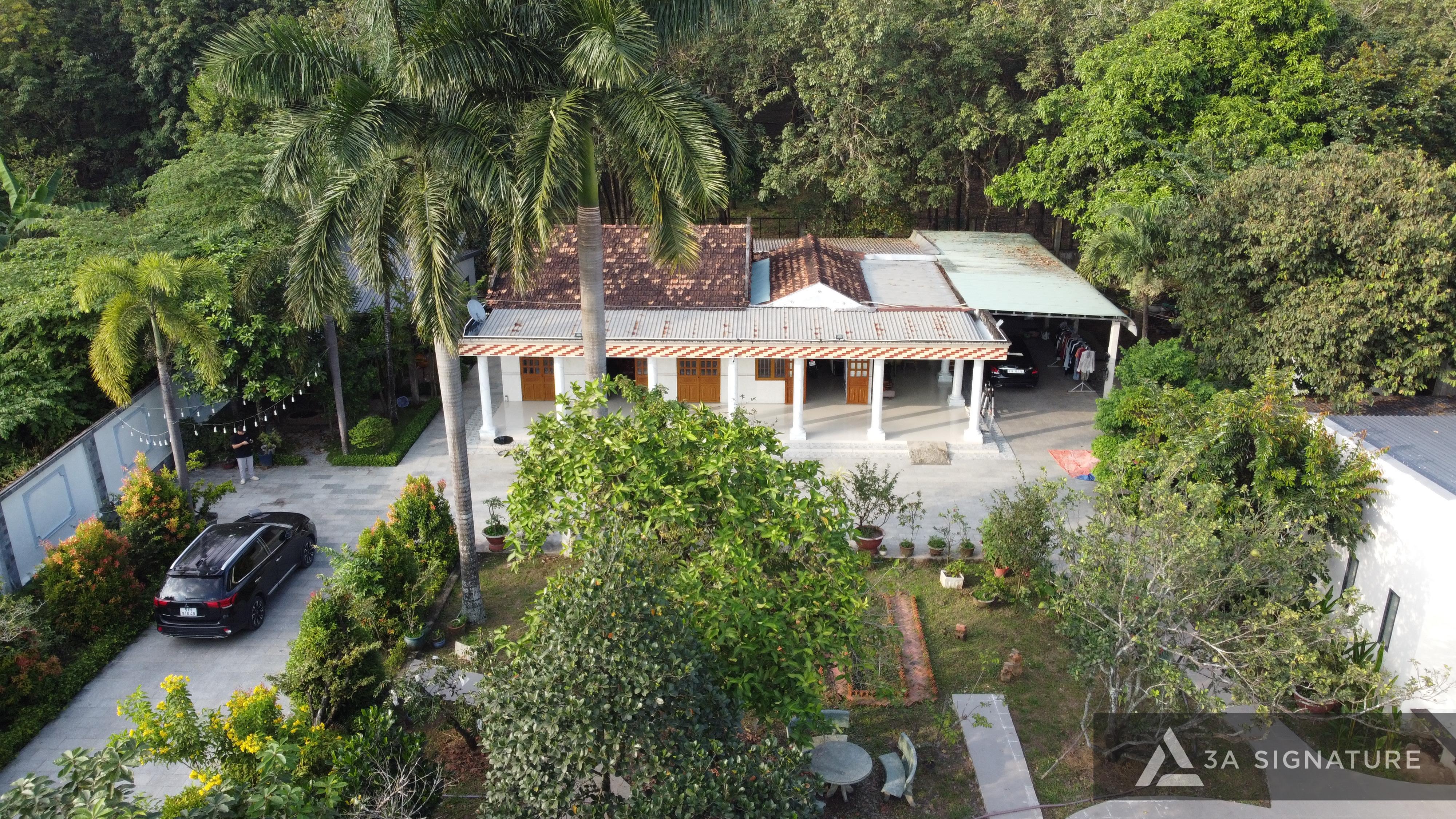
Current State Of Existing Structures And Greenery
The land plot currently features numerous mature trees, including large-canopy trees that act as a “natural lung” for the entire property. This provides substantial landscape value and serves as vital data for the architect to selectively decide whether to preserve, remove, or relocate elements.
Conducting a thorough site analysis helps pinpoint the exact location, species, and canopy size of each tree. This information forms the basis for organizing the architectural space around the greenery instead of destroying it. This reflects the consistent philosophy behind 3A Signature’s approach: architecture does not impose itself, but rather integrates into the pre-existing nature.
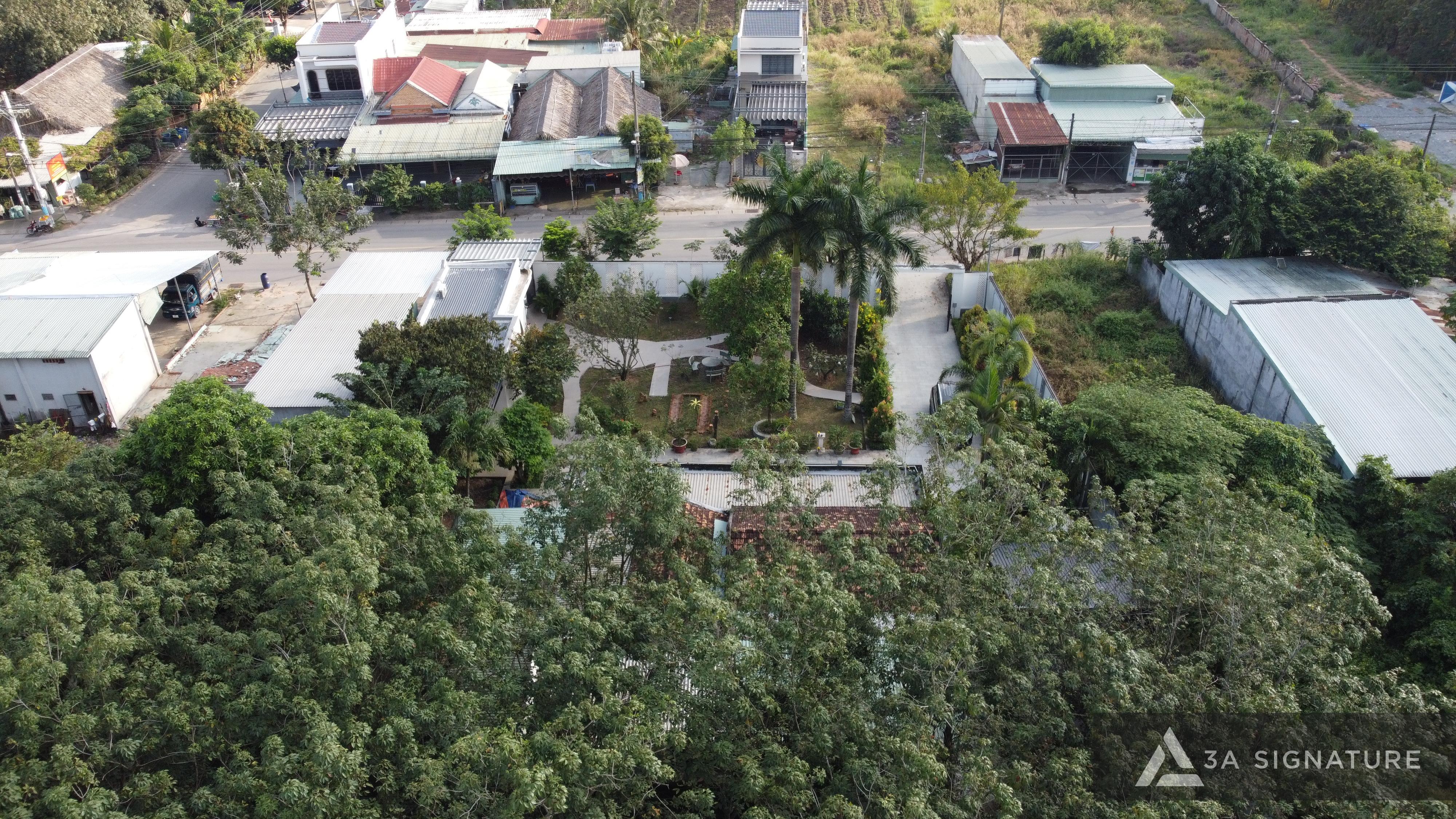
Analysis Of Sun-Wind Directions And Microclimate
Advantages Of A South-Facing House
Harmony Villa faces South, an orientation highly valued in residential design across Southern Vietnam. This orientation allows the building to capture a steady flow of cool breezes, restricts harsh afternoon sunlight, and creates excellent conditions for natural ventilation.
Through comprehensive site analysis, the architectural team evaluates the solar trajectory and prevailing seasonal wind directions in detail. This information guides the layout organization, the positioning of window openings, the porch, and buffer zones.
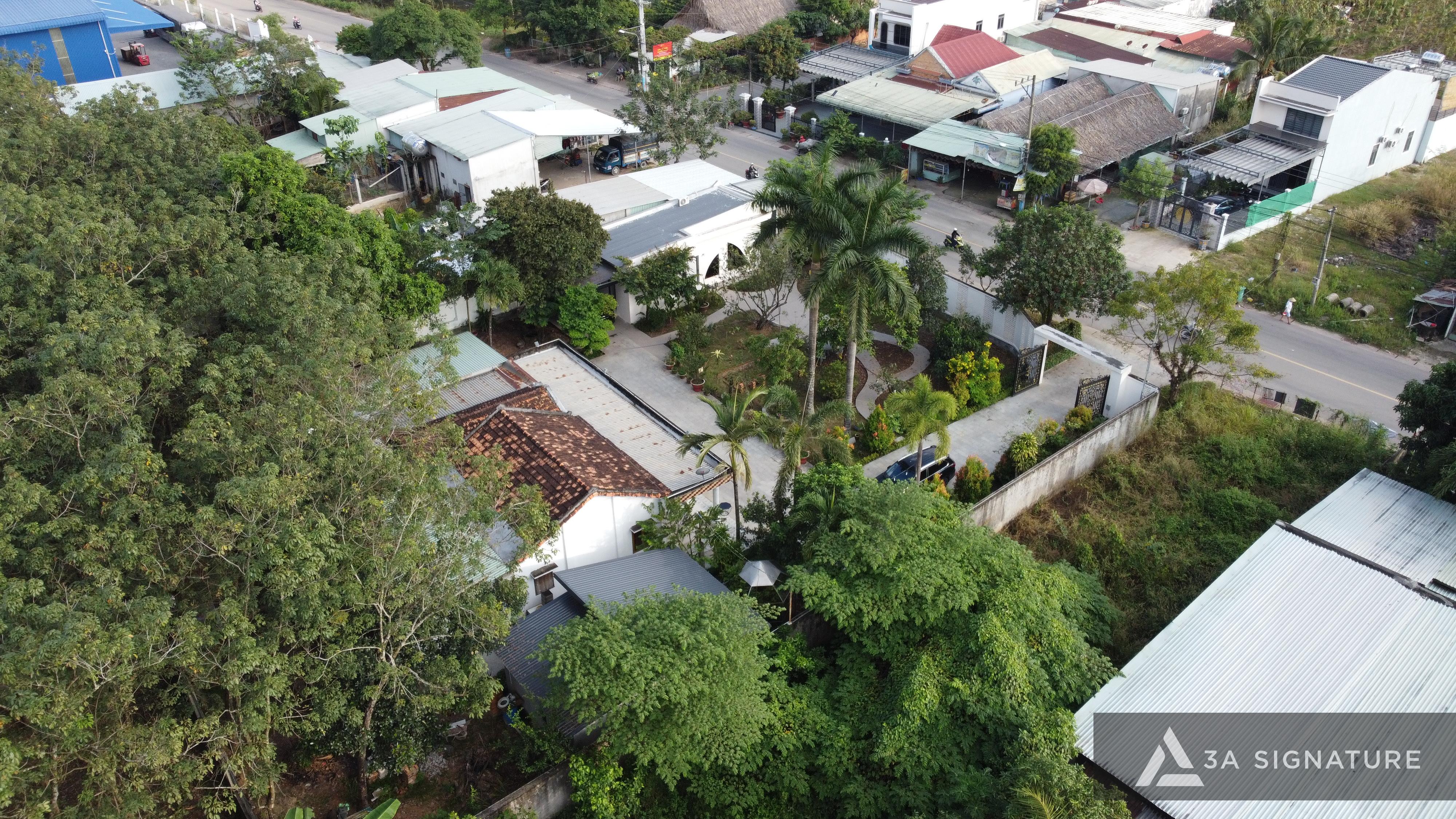
Understanding The Local Microclimate
The surrounding environment of Harmony Villa still contains significant natural greenery, and the building density remains low. This establishes a relatively pleasant microclimate with more stable temperatures compared to central urban zones.
Grasping this characteristic during the site analysis phase allows the architect to offer optimal design solutions: reducing dependence on air conditioning, enhancing cross-ventilation, and maximizing the shade provided by trees and water surfaces.
Surveying Traffic, Access, And Surrounding Spaces
Convenient Traffic Connections
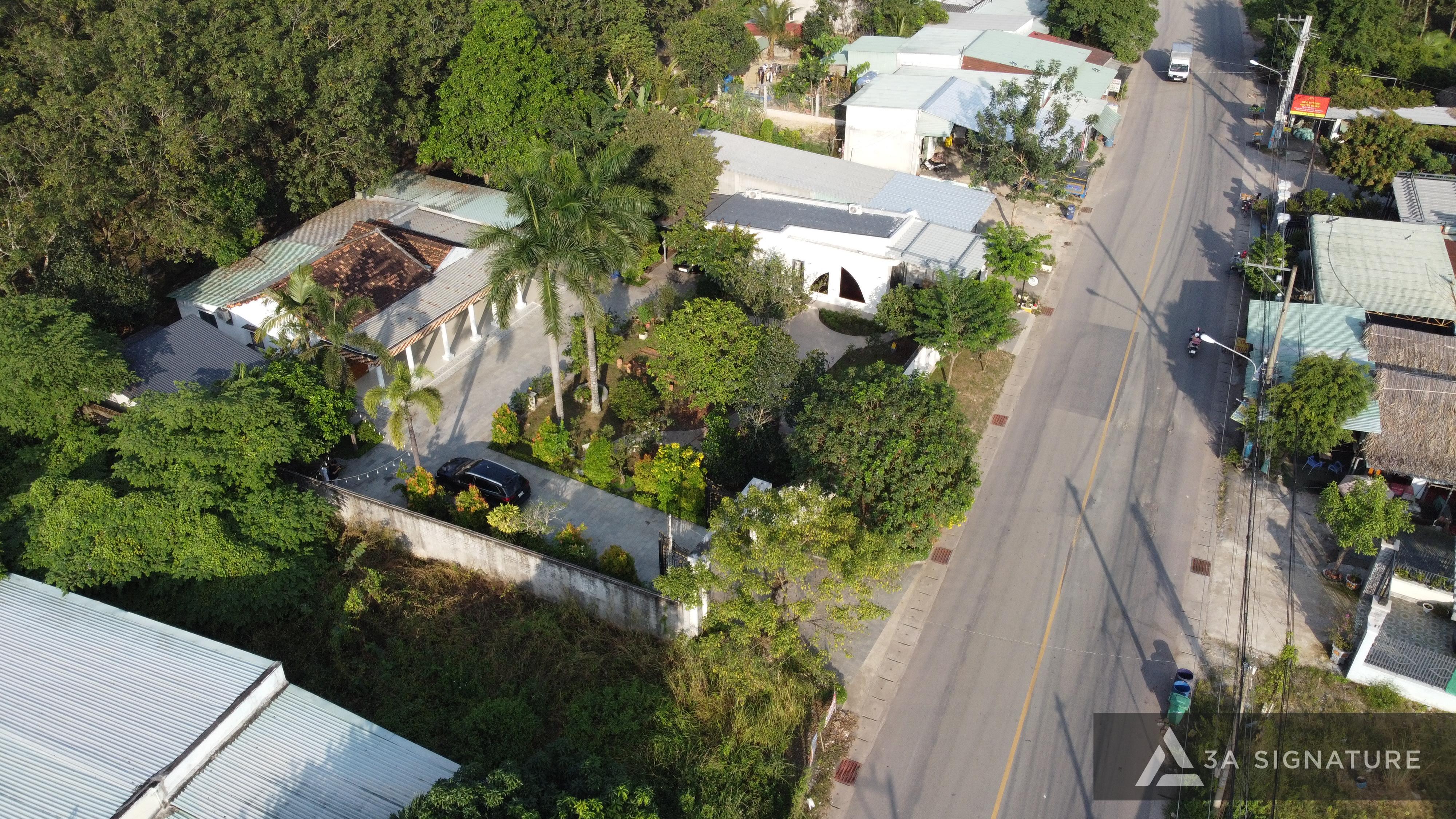
The land plot is adjacent to a major roadway, making commuting and entrance organization convenient. However, this also introduces the requirement to control noise and views from the outside looking into the interior living space.
Through the survey, the architect identifies the most reasonable position to arrange the gate and vehicular driveway while introducing a green buffer layer to minimize the impact of traffic.
Neighboring Construction Context
The surrounding buildings are primarily low-rise residences interspersed with greenery and vacant land. This opens up an opportunity for Harmony Villa to become a true “green oasis”—a place where the architecture does not need to flaunt its forms but instead focuses on the quality of the interior space.
The Foundation For Shaping Design Solutions From Site Analysis
Based on all the data gathered during the site analysis process, the design direction for Harmony Villa takes clear shape: a modern minimalist building that expands horizontally, prioritizing living spaces tightly integrated with the garden.
The functional layout is organized logically:
- Ground floor: Comprises the common living spaces, a bedroom for elderly family members, and a guest room, ensuring convenience and privacy.
- First floor: Functions as the main resting area featuring the master bedroom, children’s bedrooms, and a dignified ancestral worship space.
Everything revolves around the objective of creating a balanced living environment—where humans, nature, and architecture coexist in harmony.
Conclusion
For Harmony Villa in Binh Duong, the site analysis process is far more than a technical preparation step; it serves as the bedrock for the entire architectural design mindset. Deeply understanding the land, context, and microclimate allows the building to develop in the right direction, minimizing interventions and fully preserving the inherent values of nature.
With a human- and nature-centric approach, 3A Signature regards site analysis as an indispensable starting point to forge modern, refined, and sustainable living spaces where each house is not merely a place to live, but a peaceful sanctuary to return to over the years.
