

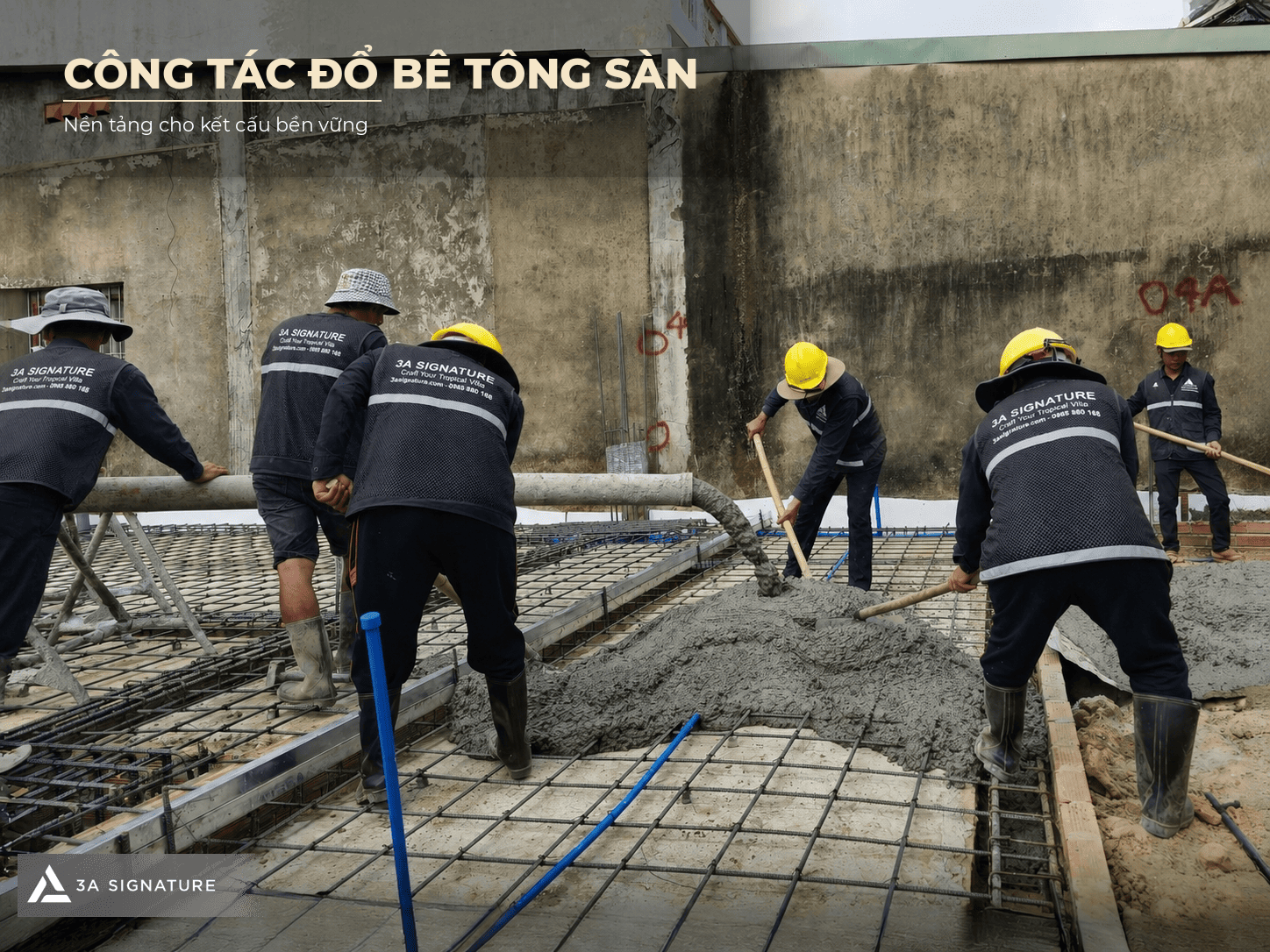
In the rough construction phase, concrete pouring is one of the crucial stages, directly affecting the structural integrity and the quality of subsequent finishing layers. A finished floor slab requires careful control from the reinforcement system, formwork, technical pipe joints, elevation, concrete density, to post-construction curing procedures. Therefore, at 3A Signature, this item is organized in clear steps, with pre-pouring inspection, supervision during concrete pumping, and final acceptance after completion.
Floor Slab Pouring is the Foundation Stage of the Structure
In a villa construction, the concrete floor slab is not only the usable surface of each floor but also a connecting element to beams, columns, walls, stairs, and underground technical systems. The quality of the floor slab pouring will affect the load-bearing capacity, surface stability, and the conditions for constructing subsequent items such as waterproofing, screeding, tiling, glass wall installation, or interior construction.
If the concrete pouring process is not carefully controlled, several problems can arise, such as surface voids, insufficient compaction in areas with thick steel reinforcement, localized elevation errors, water pooling on the floor surface, or cracking due to rapid water loss after pouring. These errors may not be immediately apparent on the construction day, but they will affect the overall quality when the project enters the finishing stage.
Therefore, floor concrete pouring should be considered a complete technical process, starting from pre-pouring inspection and ending with post-construction curing. Each step requires a designated person, inspection tools, and clear acceptance criteria.
Review of Steel Reinforcement, Formwork, and Technical Pipelines
Before concrete is poured into the floor, the technical team needs to review the entire steel reinforcement system, formwork, edge beams, technical pipelines, and structural junctions. This is a preliminary step in the floor slab concrete pouring process, helping to minimize deviations before the concrete completely covers the underlying system.
The reinforcement system needs to be checked for spacing, position of upper and lower layers of steel, and reinforcing steel in beam areas, slab edges, openings, staircases, and areas subject to concentrated loads. Spacers, the thickness of the steel cover, and the tying points also need to be reviewed to minimize steel displacement during the concrete pumping process.
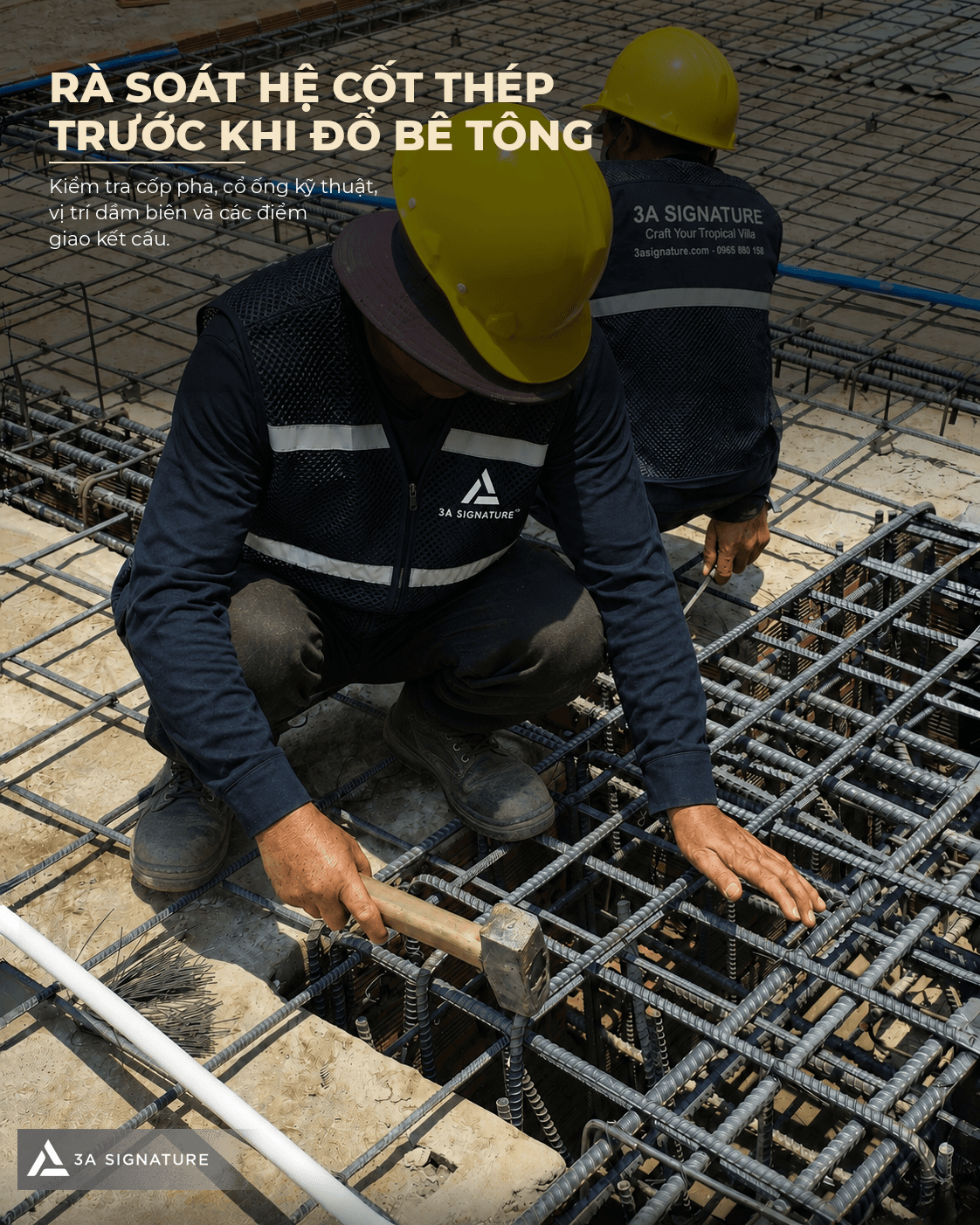
Simultaneously, the formwork must be inspected for tightness, stability, support capacity, and floor level. Drainage pipes, technical conduits, conduit boxes, or floor penetrations must be positioned correctly according to the drawings and securely fixed to prevent movement when concrete is pumped in. These are locations where misalignment will be difficult to address after the concrete has set.
Surface Cleaning Before Pouring Concrete
After the reinforcement and formwork have been inspected, the construction surface needs to be cleaned before pouring concrete. The floor surface often contains dust, steel shavings, wire, wood chips, soil, sand, or standing water from the reinforcement installation and formwork erection process.
If these impurities remain in the pouring area, they can affect the adhesion and surface quality of the concrete. Therefore, in floor concrete pouring, cleaning with pressurized water, a broom, or appropriate tools is a necessary step before pouring concrete into the structure.
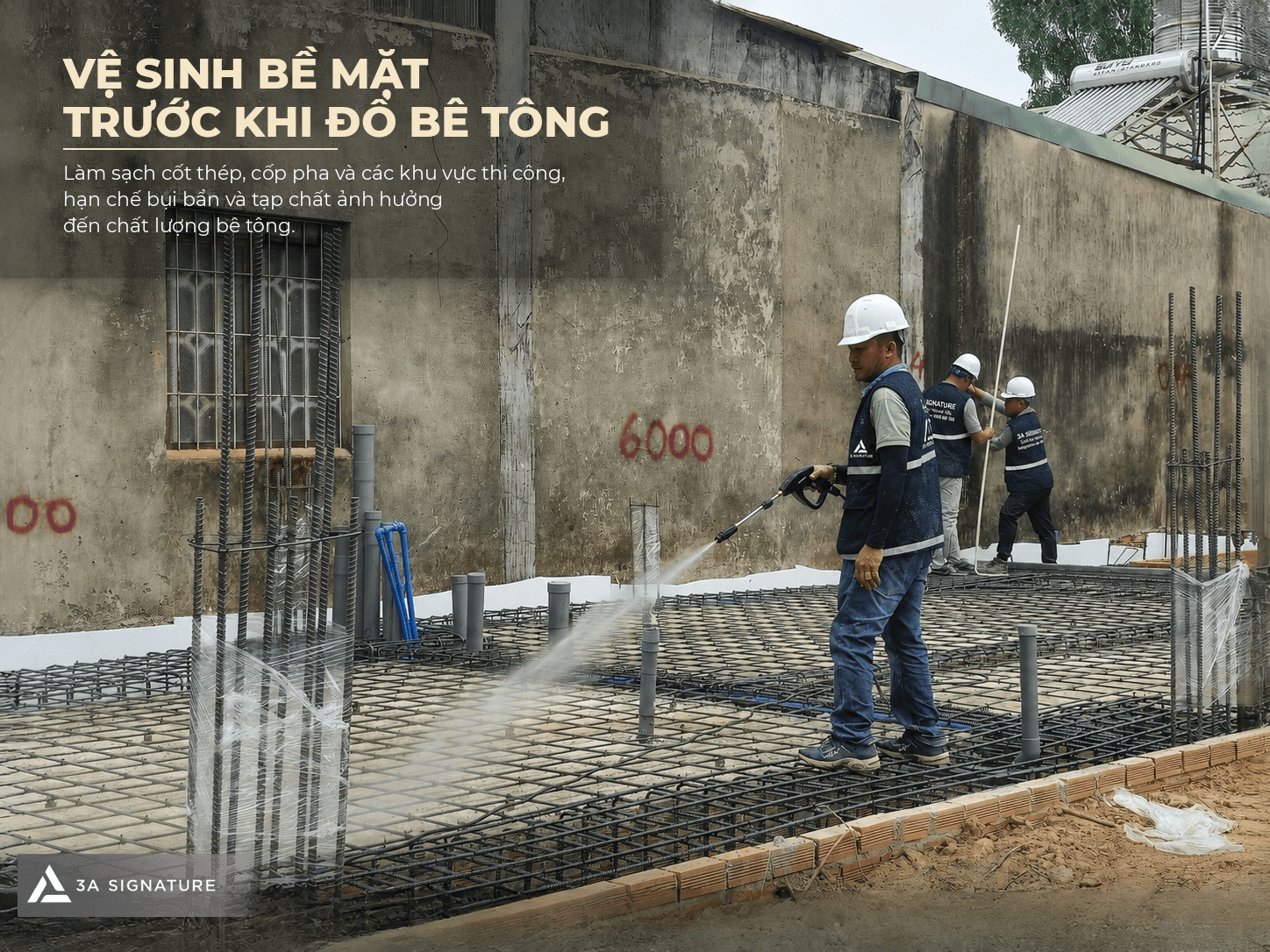
A clean surface allows engineers to more easily observe the details of the reinforcement, pipe collars, and beam-slab intersections. At the same time, maintaining the formwork surface at an appropriate level also aids the construction process, partially limiting localized water absorption from the fresh concrete.
Controlling Concrete During Slab Delivery
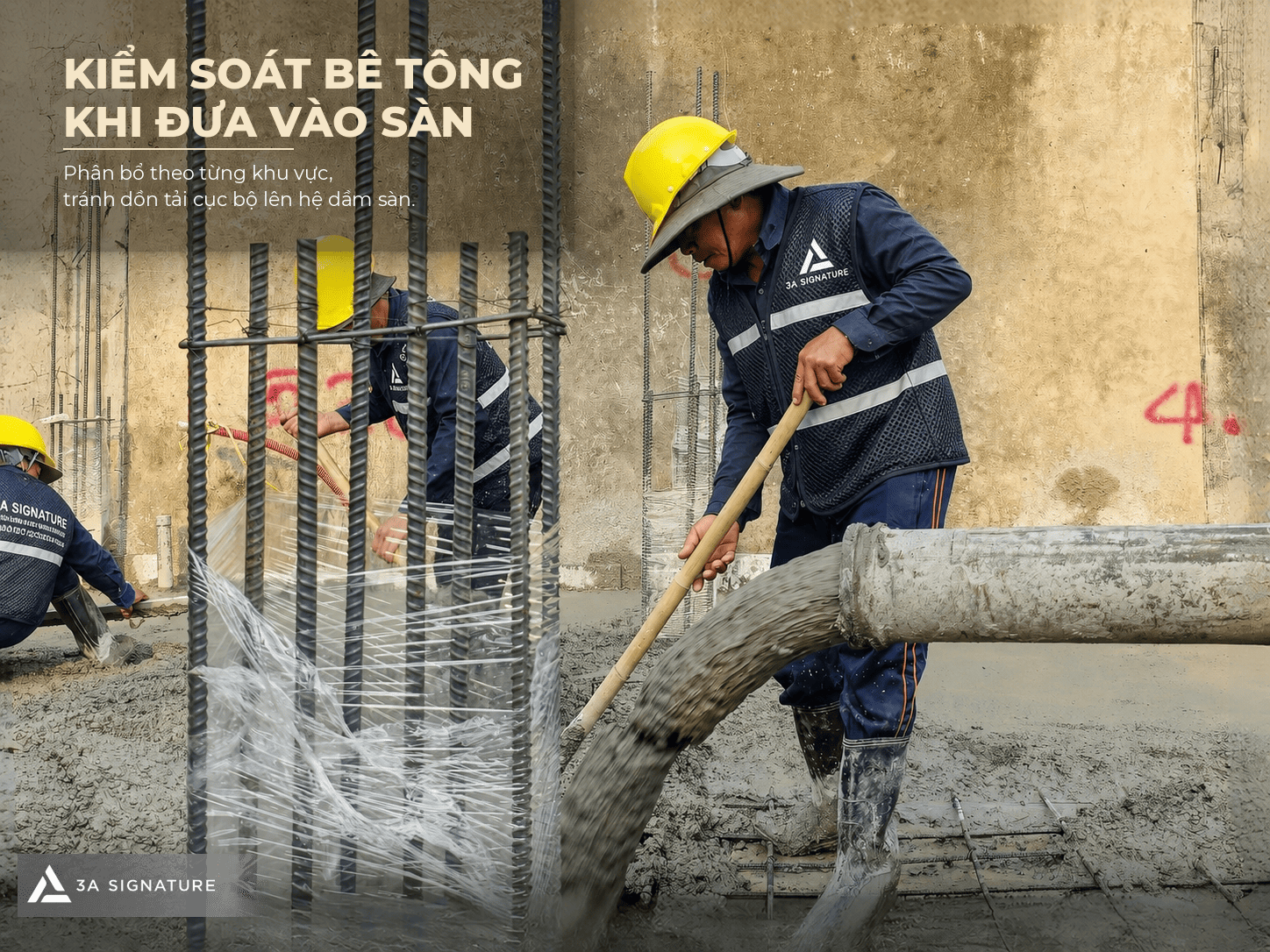
When concrete is delivered to the construction site, the construction team needs to control the receiving process, the pumping location, and the distribution of concrete on the slab. For slab pouring, concrete should not be concentrated in one area in a short time, especially in the middle of the span, near the slab edge, or in areas with large formwork spans.
Concrete should be spread in sections, moving in a controlled manner to avoid creating localized loads on the support system. Site engineers need to monitor the pumping speed, the direction of the pump nozzle, and the reaction of the formwork system throughout the pouring process.
In areas with high steel density, such as column tops, edge beams, beam-slab intersections, areas around pipe collars or technical openings, concrete needs to be carefully introduced so that the mixture can fill the gaps between the steel bars. This is an area prone to voids or lack of compaction if only surface leveling is done without proper compaction control.
Leveling, Compaction, and Surface Elevation Control
After the concrete is poured into the floor slab, the construction team proceeds with leveling to the determined elevation. This step helps to distribute the concrete surface evenly, creating a stable foundation for subsequent items. In floor slab concrete pouring, leveling must be done in conjunction with concrete compaction; it should not just be a surface treatment.
Concrete compaction helps the mixture fill gaps around the steel reinforcement, pipe collars, and structural junctions. At locations with thick steel reinforcement, floor edges, beam bases, or around utility boxes, compaction needs to be more thorough to minimize voids. However, compaction also needs to be controlled in terms of time and location to avoid segregation of the mixture or displacement of the reinforcement and conduits.
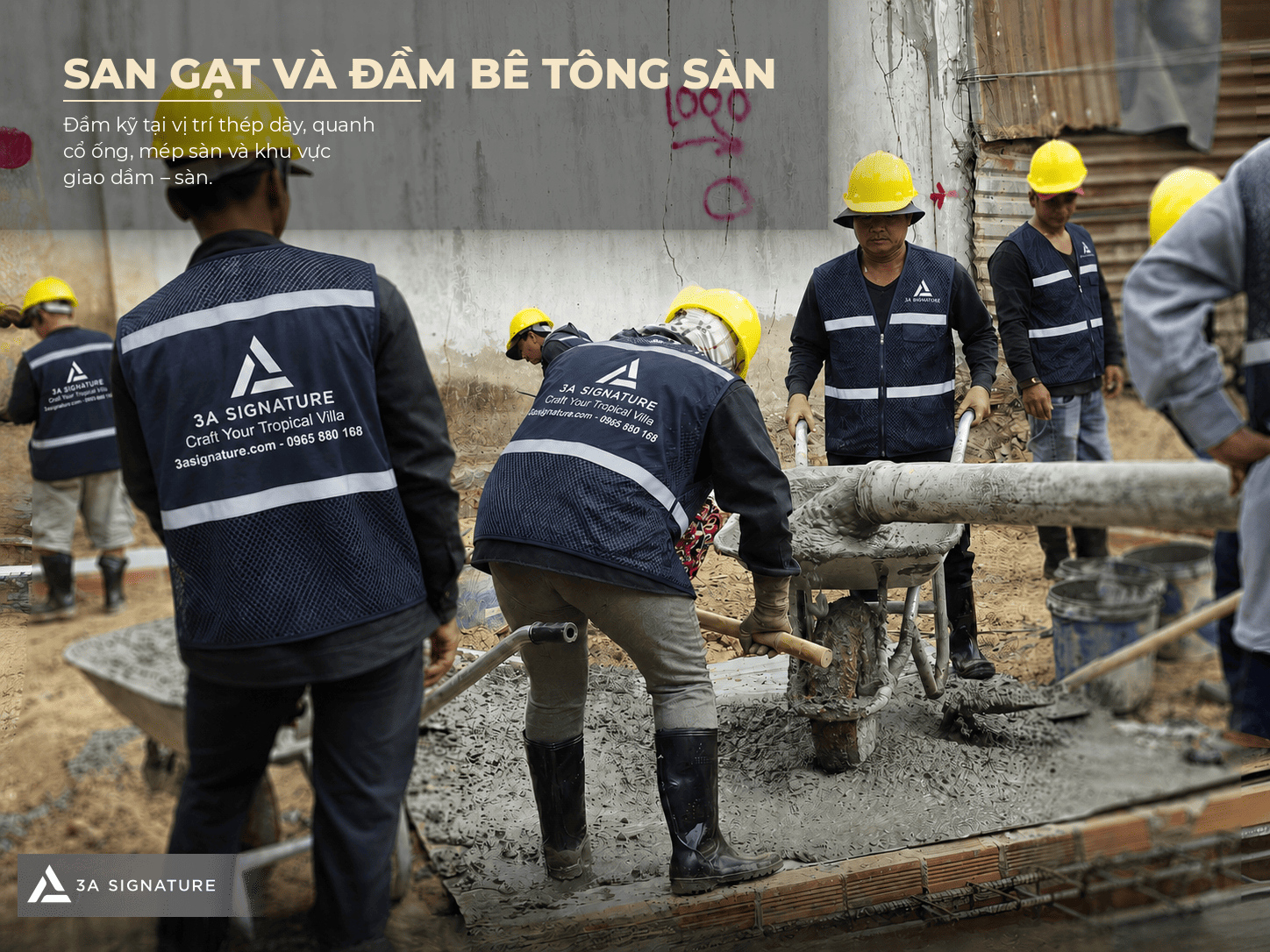
The floor level is monitored during the leveling process. Engineers need to compare it with the elevation benchmark, check areas prone to deviation, and make adjustments while the concrete is still in a workable state. A stable level will facilitate subsequent steps such as waterproofing, screeding, tiling, or installing doors and windows.
Post-Concrete Curing
After completing the concrete pouring, the concrete surface needs to be cured at the right time. This step is often overlooked, but it significantly affects strength development and limits cracking due to rapid water loss.
In sunny, windy, or high-temperature conditions, the top layer of concrete can dry out quickly. If not kept moist, small cracks are likely to appear on the surface. Therefore, after the concrete reaches the appropriate state, the construction team needs to water it, cover it with burlap, or other moisture-retaining materials according to the agreed-upon method.
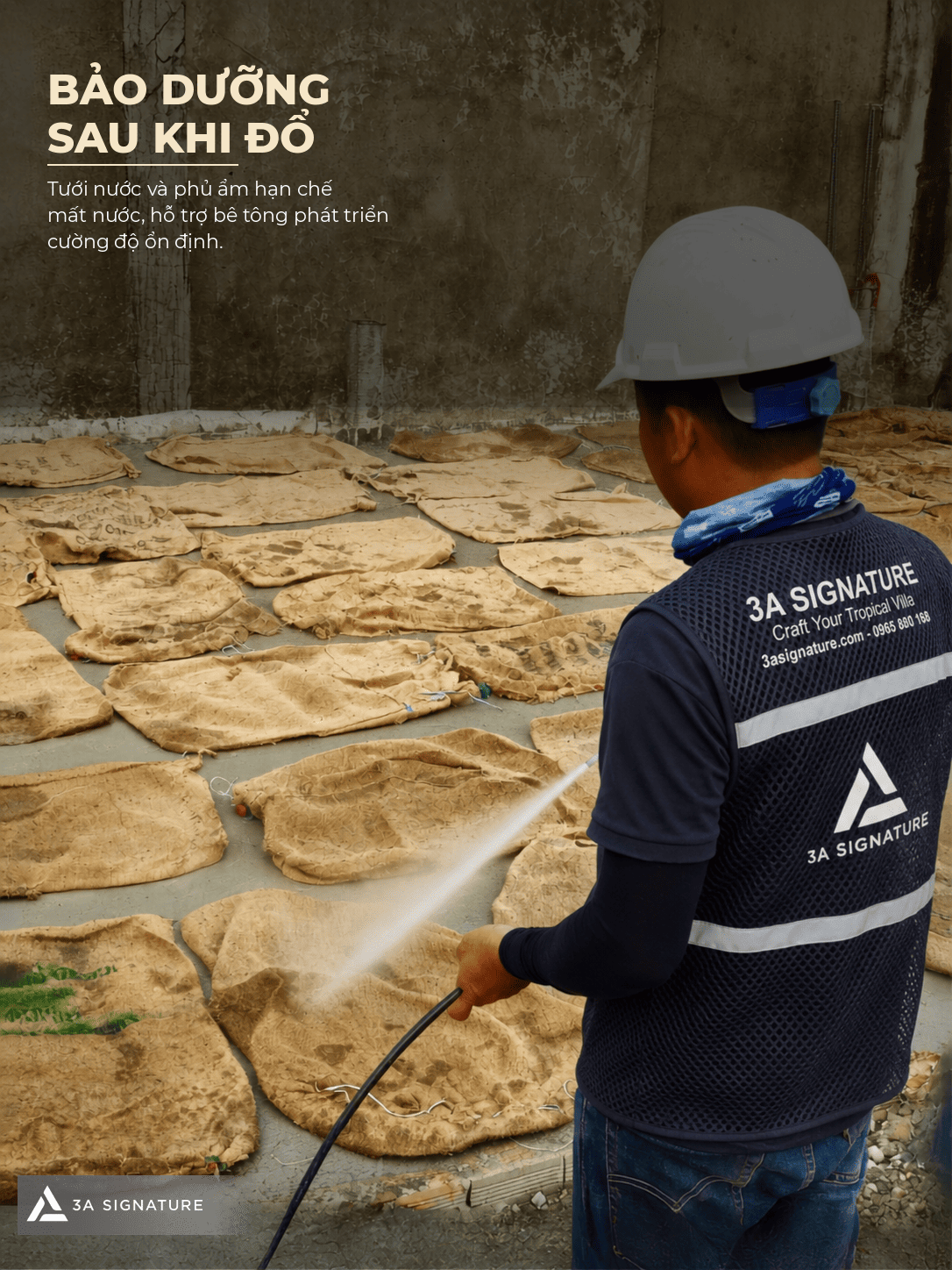
Maintenance should be carried out for a period appropriate to site conditions and technical requirements. The goal is to help the concrete maintain a more stable moisture environment in the initial stage, supporting the cement hydration process and reducing the risk of surface cracking.
Post-Pour Acceptance and Preparation for the Next Item
After the concrete has set and meets the inspection requirements, engineers need to inspect the floor surface, elevation, pipe joints, floor edges, and beam-floor intersections. This is the final step in the floor concrete pouring process and serves as the basis for moving on to the next items.
The surface after pouring needs to be observed for relative flatness, and for any signs of voids, cracks, water accumulation, or elevation deviations. Technical pipe joints need to be re-checked to ensure they are not covered or displaced by concrete. For areas where waterproofing, screeding, or tiling will be done later, recording the surface condition early will help the construction team proactively address issues before completion.
At 3A Signature, acceptance testing goes beyond simply checking individual items. Each layer of construction is considered the foundation for the next. When the concrete floor is well-controlled, subsequent stages such as wall construction, waterproofing, plastering, leveling, and interior finishing will be able to proceed more smoothly.
Conclusion: Controlling the Foundation to Protect Construction Quality
The concrete floor pouring is a crucial step in the rough construction phase, requiring coordination between the technical team, the rebar team, the formwork team, the concrete team, and site supervisors. From reviewing the rebar system, cleaning the surface, controlling the concrete when it is poured into the floor, leveling, compacting, checking the elevation, to post-pouring curing, each step affects the quality of the structure and subsequent finishing layers.
With 3A Signature, construction quality is built upon these foundational stages. A properly constructed concrete floor provides a solid foundation for architecture, interior design, and a long-lasting user experience for the homeowner. This is also the construction philosophy that 3A Signature pursues: clear procedures, meticulous attention to detail, and respect for the true quality of each project.