

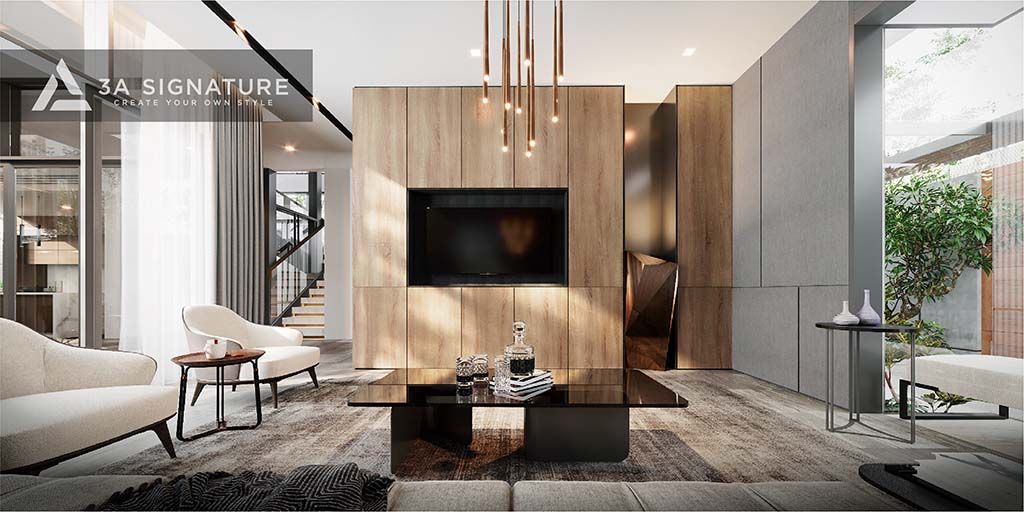
In interior design, color coordination for the living room is not just about aesthetics; it directly impacts the emotions, rhythm of life, and daily experiences of the homeowner. A suitable color palette can make a space feel more spacious, warm, or luxurious, even if the area isn’t very large.
In modern townhouses and villas, the living room is often the central hub of activity, where guests are received, and also the space that best reflects the homeowner’s aesthetic taste. Therefore, the selection and coordination of colors need careful consideration, harmonizing personality, functionality, and long-term usability.
Basic Principles When Coordinating Colors for a Modern Living Room
Prioritize Emotion Before Choosing Colors
In color coordination for a living room, each color has its own “personality.” Before deciding on a color palette, homeowners should determine the main emotion they desire: relaxation, luxury, warmth, or personality.
A modern living room doesn’t need too many colors, but the right shades are essential to create a comfortable atmosphere and suit the rhythm of daily life.
Maintaining a Balance Between Light and Dark
A key principle in color coordination for a modern living room is visual balance. If using dark colors as a background, lighter colors are needed to neutralize and avoid a heavy feeling. Conversely, if the space uses predominantly light tones, add darker accents to increase depth, ensuring overall harmony and preventing a bland look.
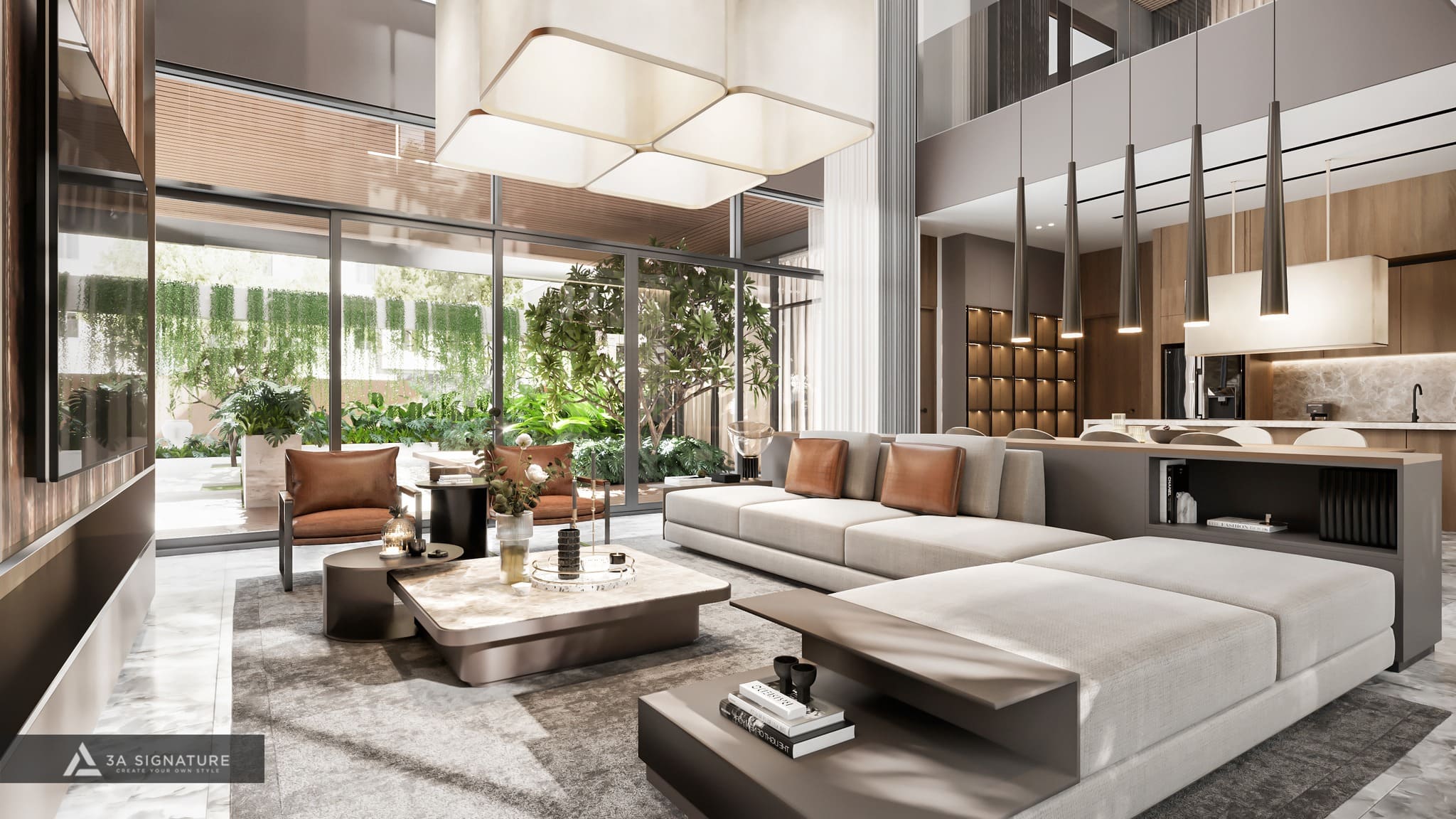
Elegant and Unique Living Room Color Schemes with Blue and Gray
Blue – A Sense of Peace and Art
Blue evokes a sense of tranquility, depth, and high artistic value. This color scheme is suitable for homeowners who appreciate calmness, sophistication, and a relaxing living space.
When used correctly, blue makes the living room visually soothing, reduces stress, and creates a pleasant feeling upon entering.
Gray – A Luxurious and Neutral Background
Gray is a modern, neutral color that is easy to combine and never goes out of style. When paired with blue, gray acts as a balance, making the space luxurious but not cold.
The blue-gray combination is often applied to walls, sofas, or rugs, creating a living room with depth, sophistication, and lasting appeal.
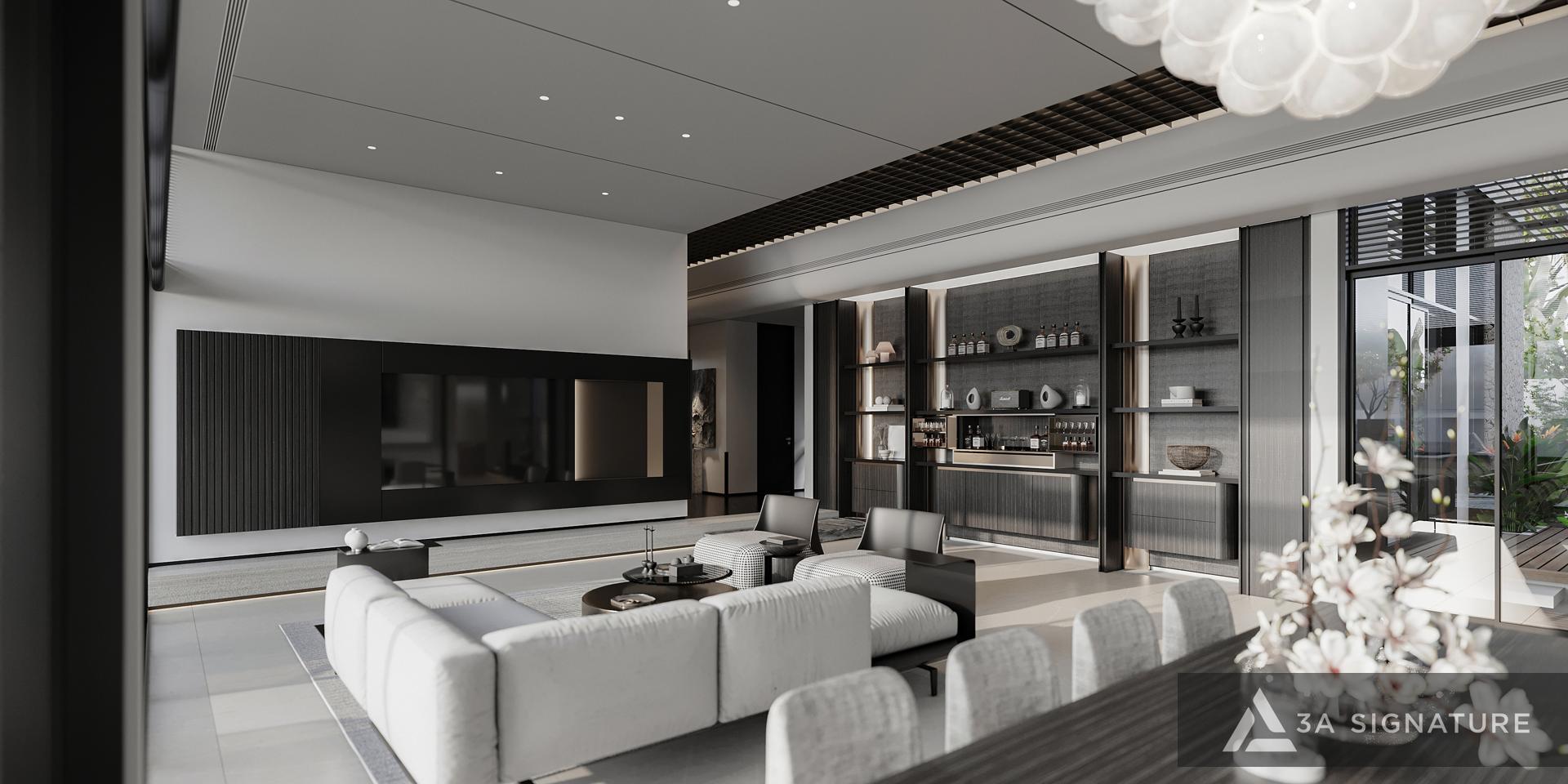
Color Combinations That Create a Premium Feel with Black and Light Tones
Black – Elegant But Requires Restraint
Black is a symbol of modernity, strength, and luxury. However, in the living room, black needs to be used in moderation to avoid a heavy or oppressive feeling.
Instead of using it on large surfaces, black should appear in accent areas such as TV stands, door frames, decorative lamps, or interior details.
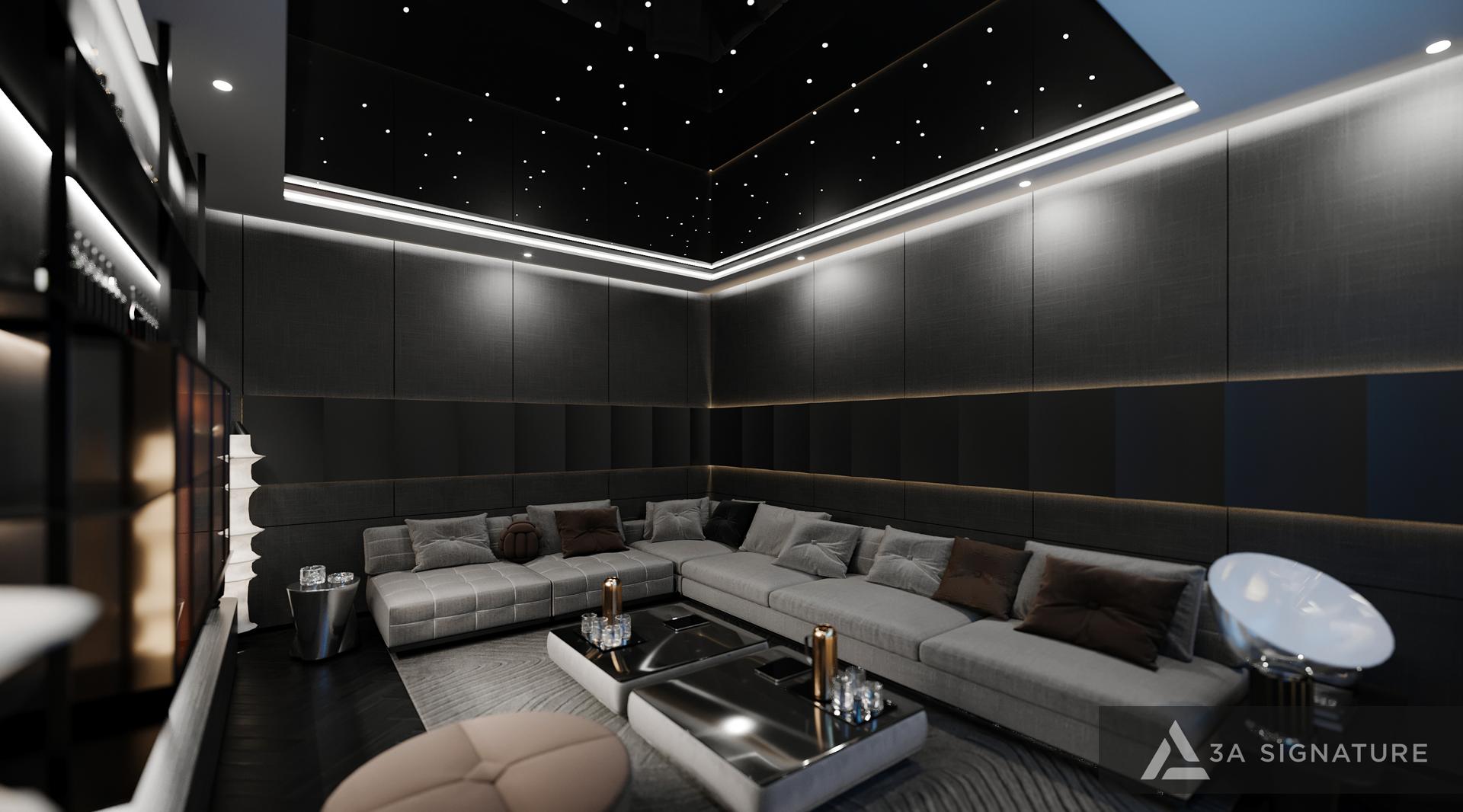
Balancing Light Colors and Natural Materials
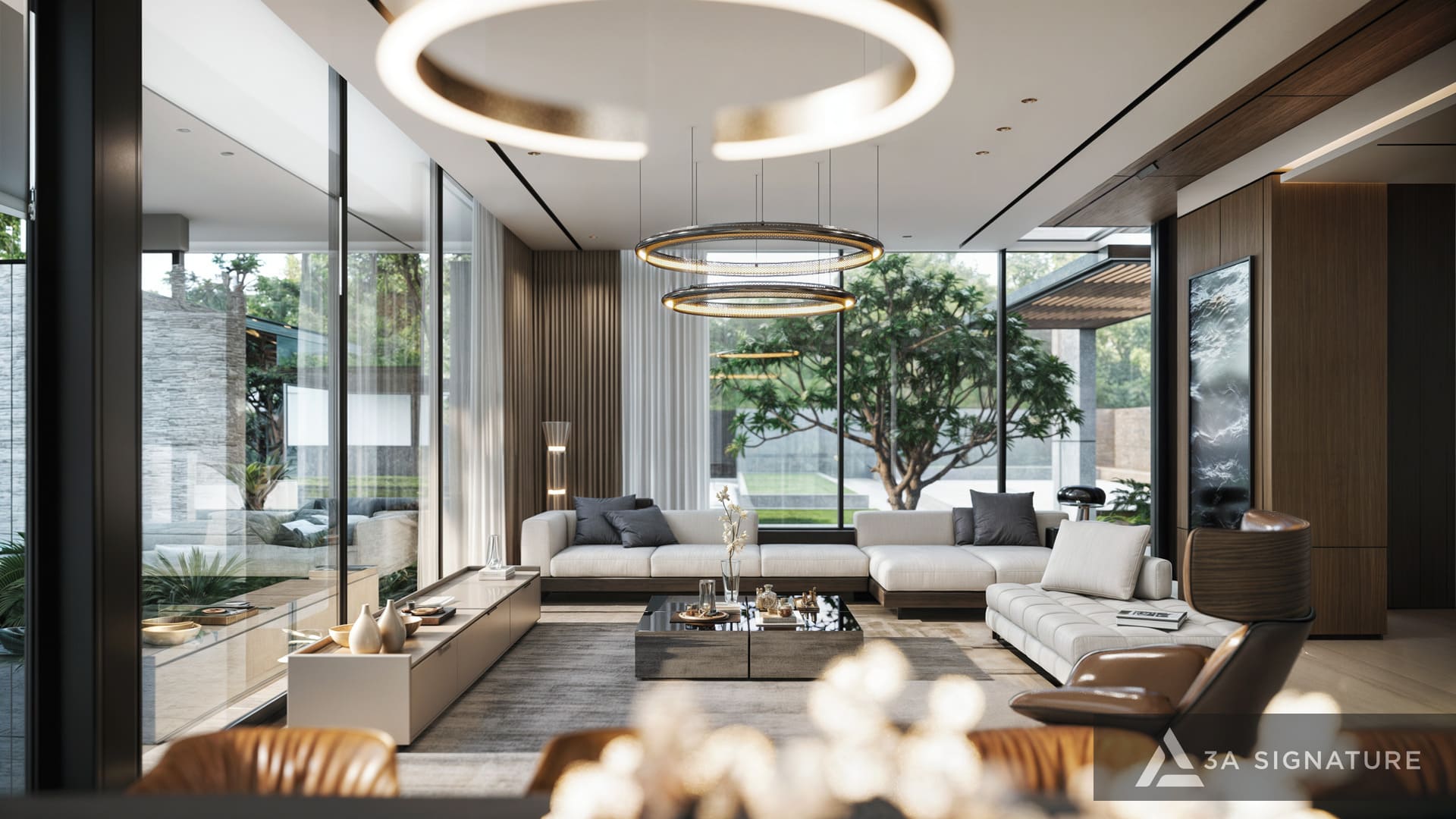
To neutralize the black, homeowners should combine it with light-colored sofas, light-colored walls, or neutral rugs. Natural wood flooring is also an important element that helps make the space warmer and more comfortable.
This combination creates a living room with a high-end, modern yet inviting feel, suitable for contemporary villas and townhouses.
Modern Classic Color Combination with Teal Blue
Teal Blue – The Interplay Between Blue and Green
Teal blue is a color that lies between blue and green, providing a soothing, fresh feeling while still having depth. This is an ideal choice for those who want a living room with a distinctive accent without being overly ostentatious.
Teal blue stands out more than white but is softer than darker shades, helping the space to be both individualistic and elegant.
Combining with Wood and Neutral Tones
When coordinating a living room color scheme with teal, dark wood flooring, a light rug, and neutral-toned furniture, the space becomes harmonious and artistic. Matte metal details or natural stone can be added to increase depth and sophistication.
Warm Color Palette for a Modern and Livable Living Room
Brown – Evoking Nature
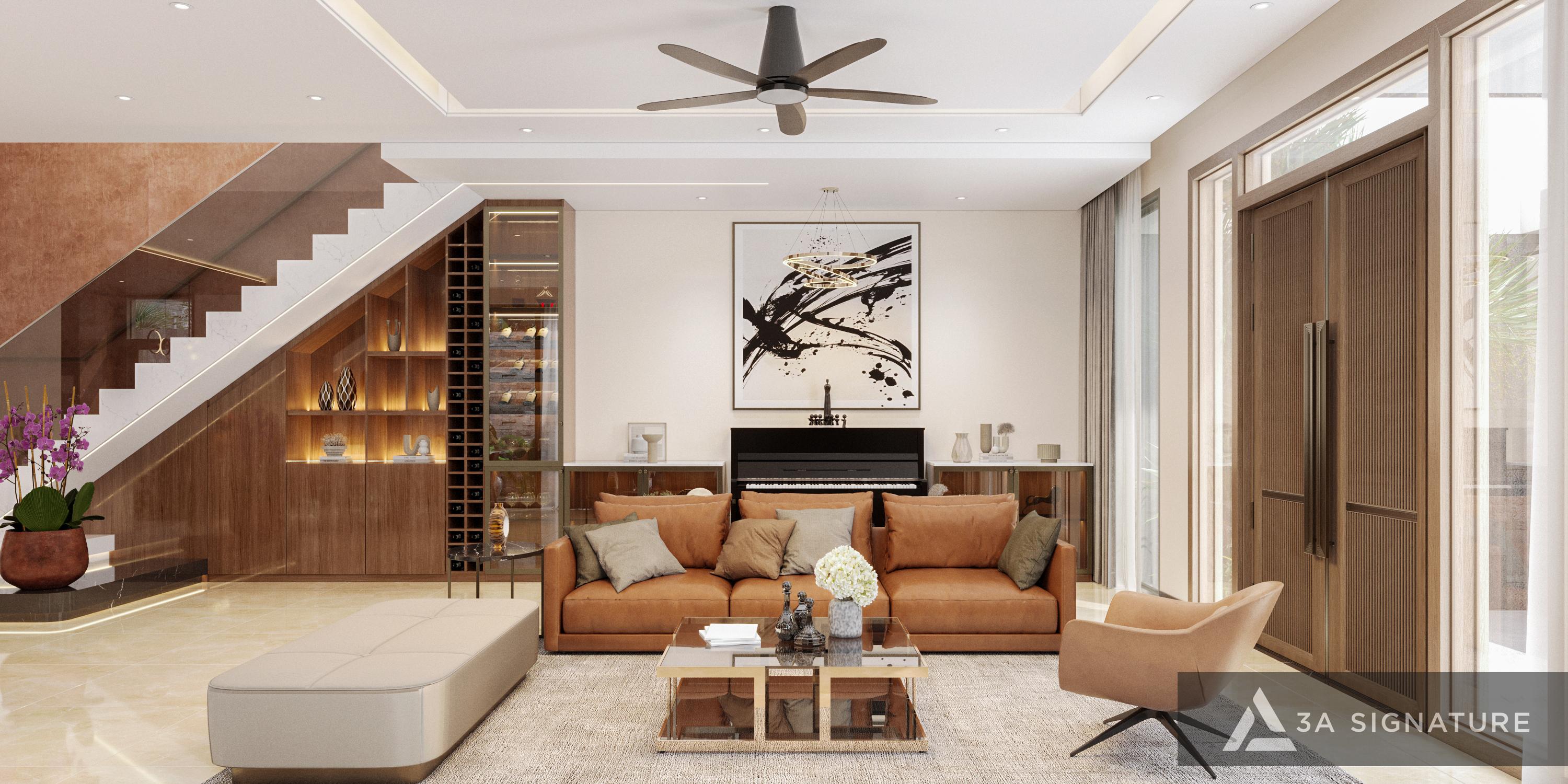
In a modern living room color scheme, brown evokes a sense of stability, warmth, and intimacy. This color palette is suitable for homeowners who prioritize relaxation and a true feeling of being “at home.” Brown often appears in leather sofas, wood flooring, or natural wood furniture details.
Brown, Gray, and Beige Color Scheme for Harmony
A brown sofa paired with gray cushions, a beige rug, and light gray walls creates a warm yet modern living room color scheme, avoiding a dated feel. This color palette is easy to apply and suitable for various sizes and architectural styles. This combination is particularly effective for modern villas or townhouses with plenty of natural light.
Color Scheme for a Living Room in a Sustainable Modern Style
Fewer Colors, But the Right Shades
A key principle in living room color schemes is to avoid using too many colors. A palette of 2-3 main shades, combined with the right shades and textures, will yield a much higher aesthetic effect than using too many colors.
Combining Colors with Light
Natural and artificial light play a crucial role in living room color schemes. The same color, when placed in a space with ample or insufficient light, will create completely different impressions. Therefore, color coordination should always be considered in parallel with lighting design to achieve sustainable and long-lasting effectiveness.
Conclusion:
Color coordination for the living room is an art of balancing aesthetics and emotion. Whether you choose blue-gray, black-light, teal, or warm brown tones, the most important thing is harmony and a pleasant feeling for long-term use.
At 3A Signature, each color scheme is carefully researched based on the area, lighting, lifestyle, and personality of the homeowner – so that the living room is not only beautiful to look at, but also provides relaxation and connection in every moment of daily life.