

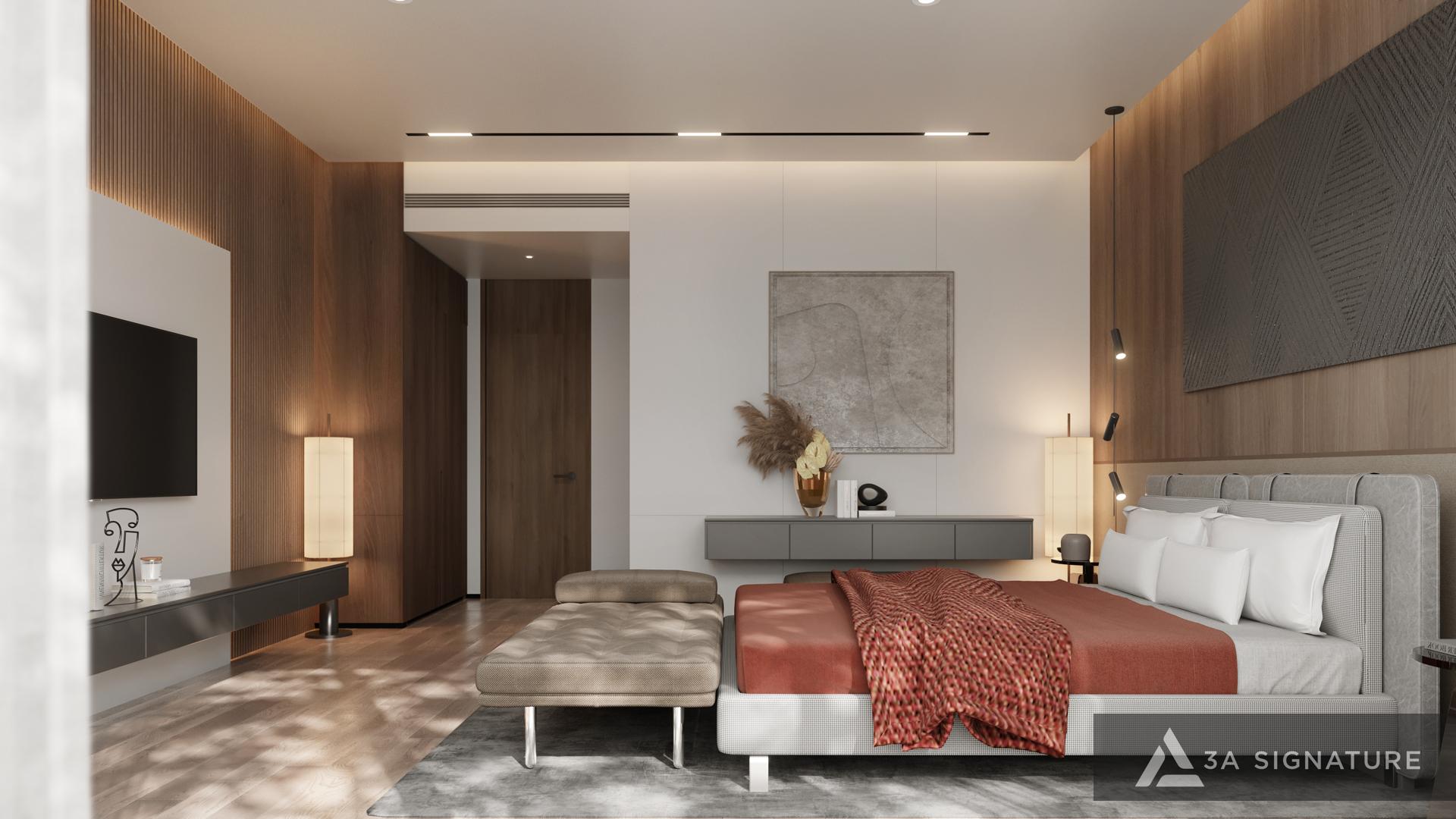
The bedroom is a space where the body and mind recover after each day. Choosing colors for your bedroom plays a crucial role, subtly impacting sleep, emotions, and long-term health. At 3A Signature, color is considered a form of spatial therapy, combined with light and materials to create a sense of tranquility.
How Do Bedroom Colors Affect Sleep?
The human brain reacts strongly to color, especially in a resting space. A suitable color scheme can help the body relax naturally, slowing heart rate and regulating breathing. Conversely, unsuitable colors keep the brain in a state of alertness, even when you’re already in bed.
When choosing colors for your bedroom, the important thing isn’t to follow trends, but to understand the emotions that color evokes in your body each night before bedtime.
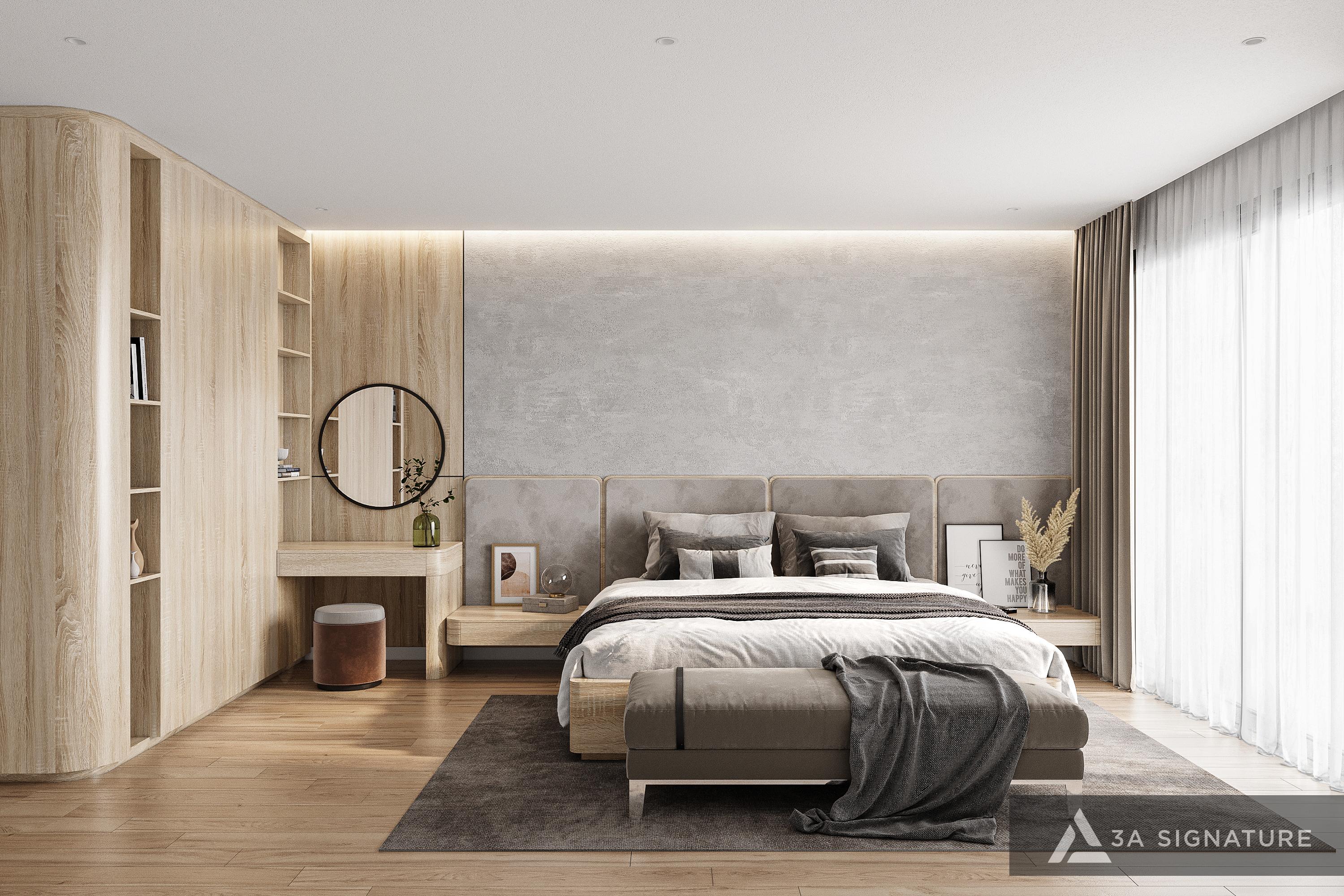
The Power of Blue in Sleep Therapy
Blue – The Serenity of the Sea and the Sky
Blue has long been considered an ideal color for bedrooms. The brain tends to associate blue with calm water and a tranquil night sky, thereby signaling relaxation throughout the body. Heart rate and blood pressure decrease, helping people fall into a deep sleep more easily.
Many studies in color psychology show that people who sleep in rooms with blue tones tend to have longer sleep times and more consistent sleep quality.
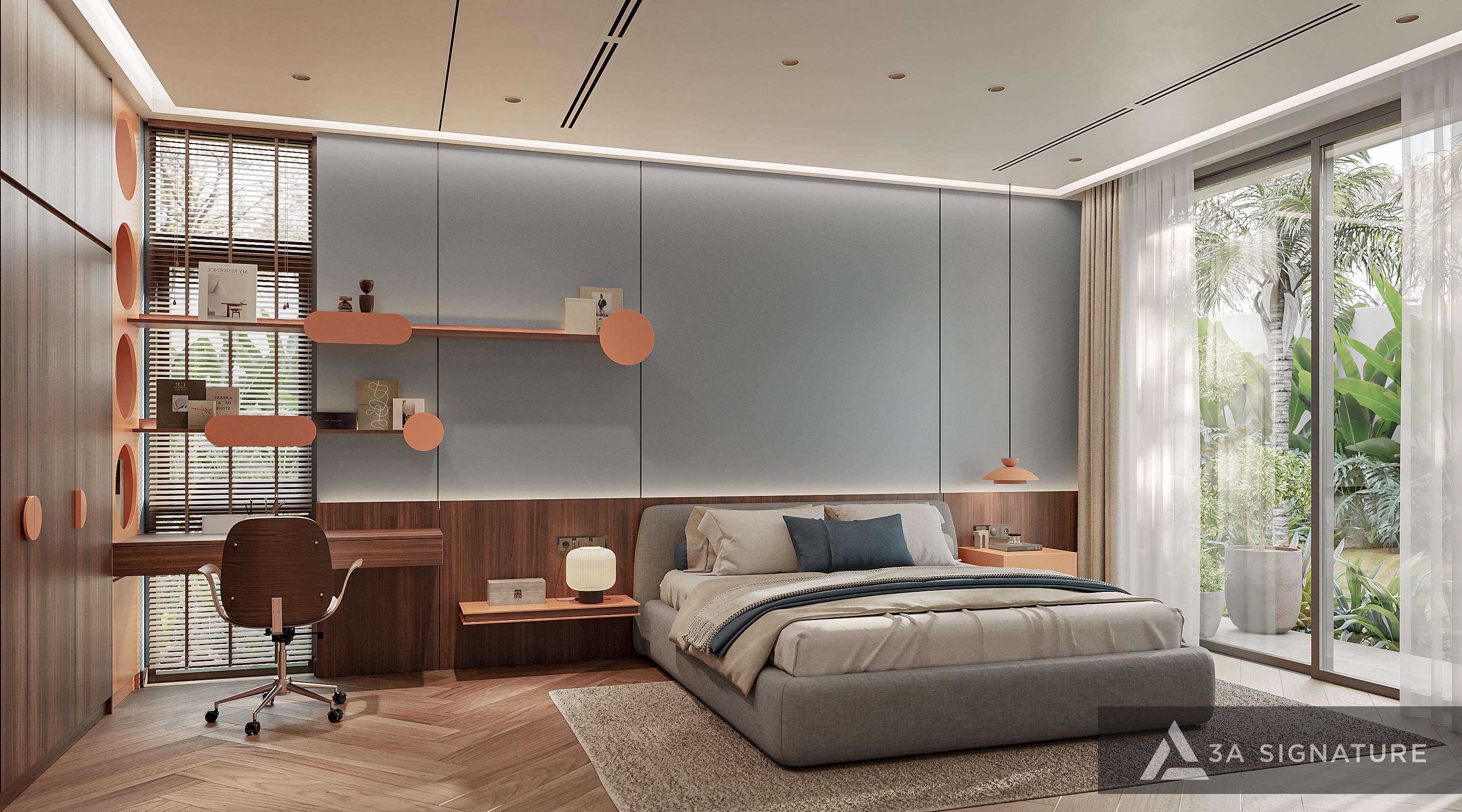
Green – A Sense of Serenity from Nature
Green carries the energy of plants and growth. It’s a color that creates a sense of balance, reduces anxiety and mental stress. For those who do a lot of intellectual work or are frequently stressed, green is an ideal choice for the bedroom.
In Tropical Modern architecture, green is often combined with natural materials such as wood, rough fabrics, and soft lighting to create a cozy, relaxing space like a resort at home.
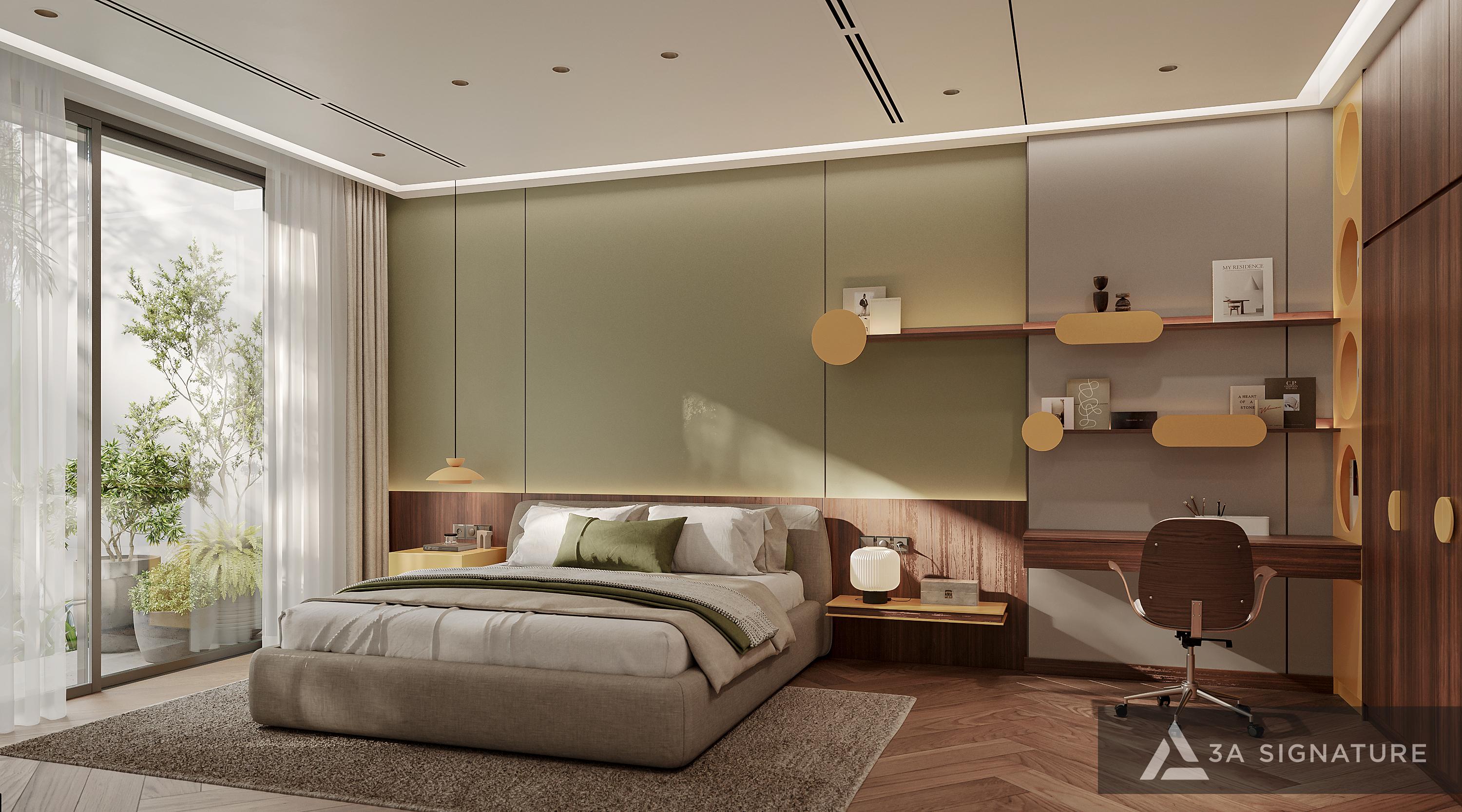
Smart Color Combinations – Effective Without Repainting
Changing the color of your bedroom doesn’t always mean expensive repainting. In fact, just a few subtle touches are enough to change the feel of the space.
Bedding – Direct Touchpoint for Sleep
Start with your bedding – the element that comes into direct contact with your body every night. Shades of sage green, pastel blue, and deep navy blue combined with soft cotton, linen, or silk will soothe your eyes the moment you enter the room. In a hot and humid climate, these colors also provide a cool and comfortable feeling.

Headboard Wall – Adding Depth to the Space
If you want a focal point in your bedroom, the headboard wall is the ideal location. Instead of painting it in bold colors, homeowners can use wallpaper with gentle nature-inspired patterns, or large-format paintings depicting the sea, forest, or abstract landscapes. This helps create depth while maintaining a relaxing atmosphere.
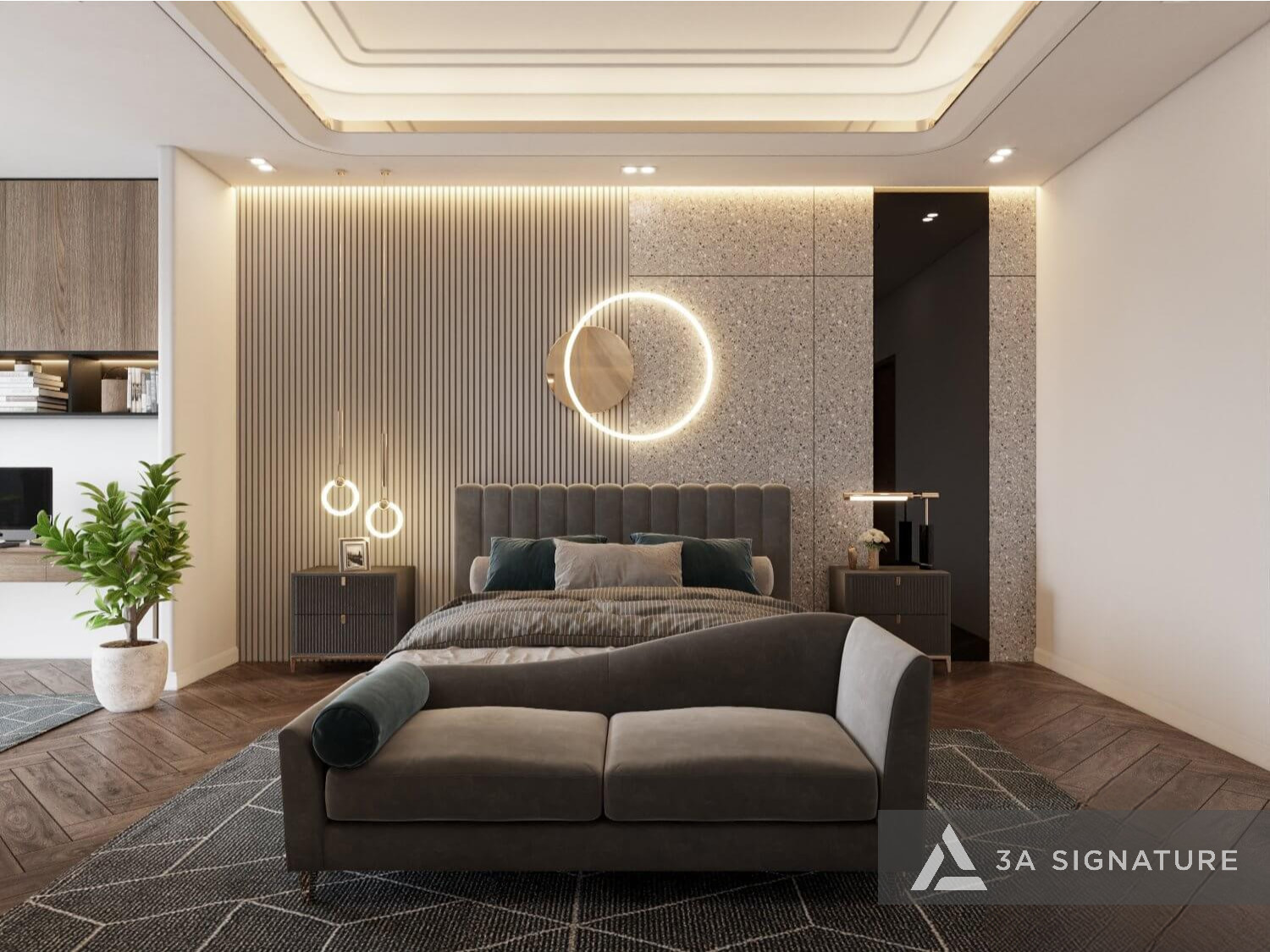
Curtains – A Subtle Light Filter
Light blue, beige, or light gray curtains not only block sunlight but also act as a “light filter,” making the bedroom space softer in the morning and quieter at night.

Safe Color Palettes for Minimalists
Cream White, Beige, and Light Gray – The Foundation of Serenity
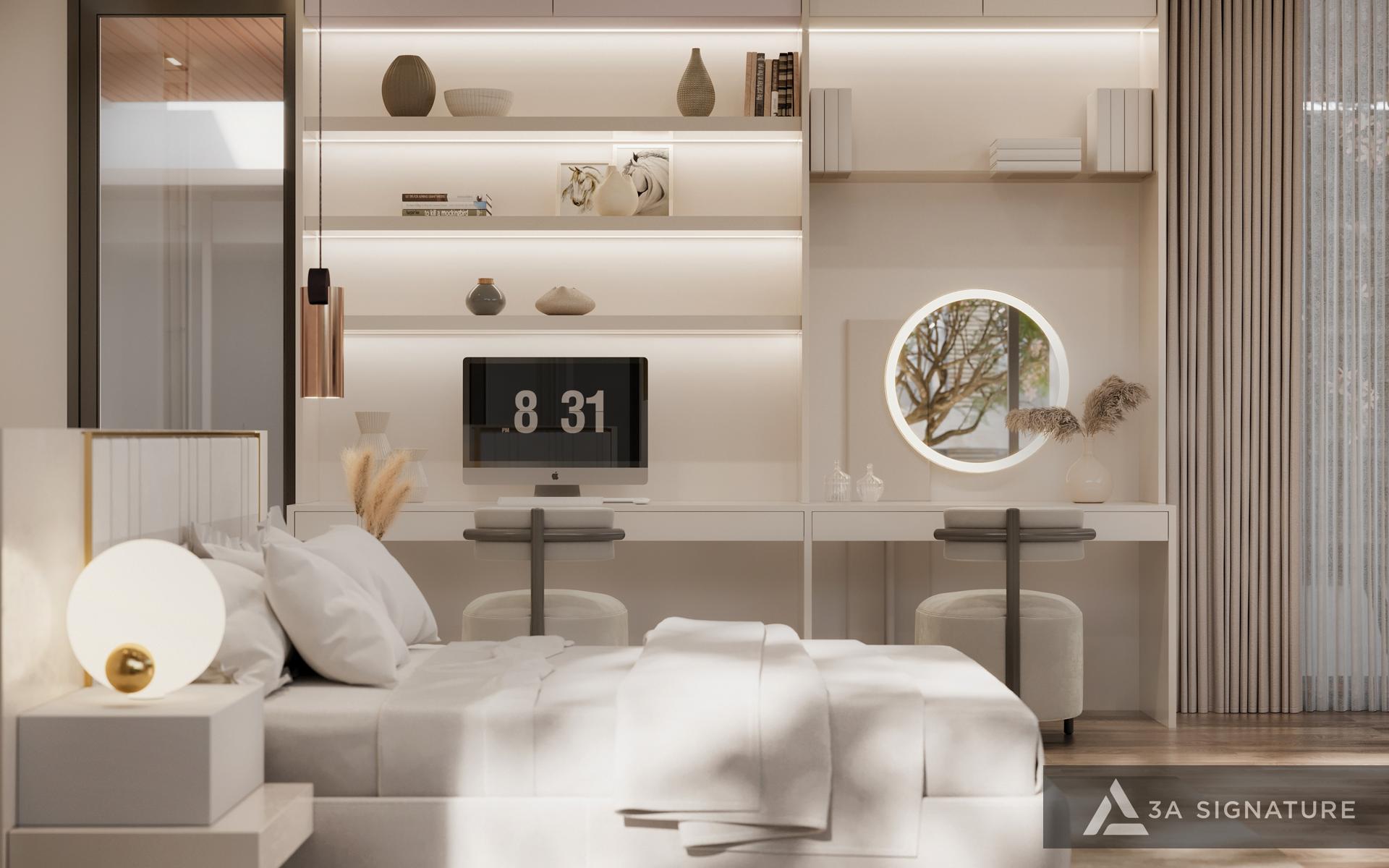
If you’re not a fan of blue, a neutral color palette remains a sustainable choice. Cream white, beige, and light gray make bedrooms look more spacious, tidy, and comfortable, especially suitable for apartments or townhouses with limited space.
These colors evoke a sense of cleanliness and simplicity, helping to free the mind from visual clutter after a long day.
Combining Light and Materials to Avoid a Cold and Uninviting Atmosphere
When choosing colors for a bedroom, if prioritizing neutral or minimalist tones, homeowners need to pay special attention to the lighting and accompanying materials. Warm yellow light, combined with natural wood furniture or soft textiles, will help create a more balanced space. A harmonious combination of color, light, and materials helps create a bedroom that, while minimalist, remains warm, deep, and comfortable for rest.
Beware of Colors That “Steal” Sleep
Besides choosing the right colors, avoiding stimulating colors is also crucial when selecting colors for a bedroom.
Red and Orange – Too Much Energy for Nighttime
Red and orange carry positive energy, often suitable for living rooms or common areas. However, when choosing colors for a bedroom, these shades can easily increase heart rate and stimulate the brain, making it difficult for the body to transition to a state of deep rest.
Dark Purple, Black, and Dark Brown – Easily Create a Suffocating Feeling
While dark purple exudes elegance, it stimulates the imagination and keeps the brain alert. Meanwhile, black and dark brown, if used extensively, create a heavy, suffocating feeling. When choosing colors for a bedroom, especially in small spaces or those lacking natural light, homeowners should limit these dark shades to avoid negatively impacting emotions and sleep quality.
Conclusion: Choosing Colors for Your Bedroom – The Art of Emotional Balance
Choosing colors for your bedroom isn’t a matter of emotion, but rather a combination of science, emotion, and personal lifestyle. The right color scheme not only helps you sleep better but also creates a private space for daily rejuvenation.
At 3A Signature, we believe the most beautiful bedroom is the one you want to return to, the one that makes you want to let go of stress and truly allow your body to rest.