

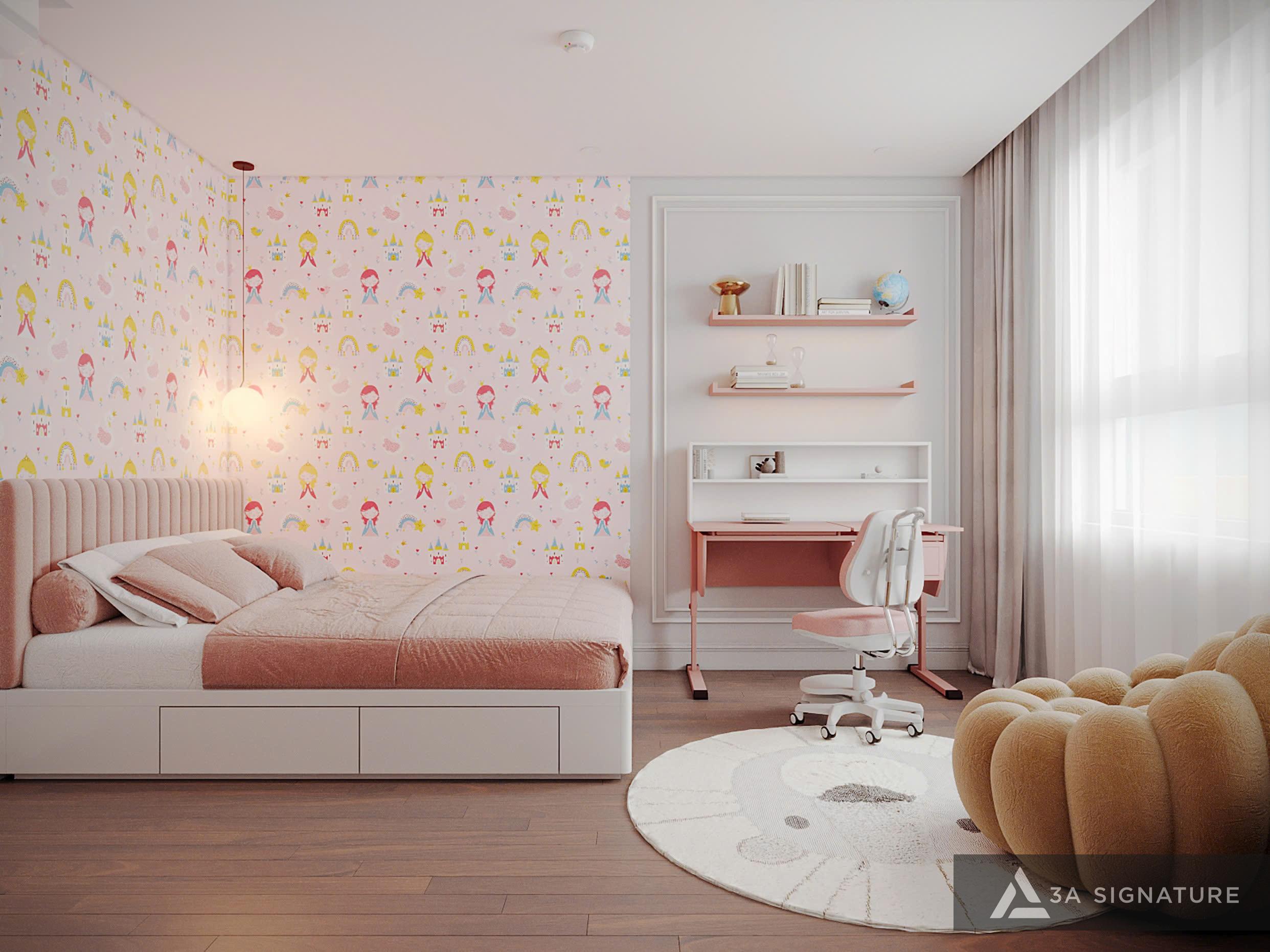
For children, a bedroom is a private kingdom, a place that wings their dreams and where they learn and develop their personality. Designing children’s bedroom furniture requires an understanding of age psychology, adherence to strict safety principles, and the ability to stimulate creativity. A smart bedroom not only helps children sleep well but also becomes a positive educational environment. 3A Signature understands this importance and shares golden principles to create a perfect and safe world for your child.
Absolute Safety Principles: The Core Factor Of Children’s Bedroom Furniture
Safety is the prerequisite and non-negotiable factor when designing children’s bedroom furniture. Children are naturally active, so risk prevention must be put first.
1. Selecting Friendly And Non-Toxic Materials
The health of young children is very sensitive, so interior materials need to be strictly censored.
- Industrial Wood: If using industrial wood, it is necessary to choose types that meet E0 or E1 standards (standards for low Formaldehyde content), avoiding the risk of allergies and long-term health issues. 3A Signature always commits to using bio-safe materials.
- Paint and Glue: Absolutely prioritize paints that do not contain lead and are VOC-free (volatile organic compounds) to ensure the air in the room is always clean and safe for the respiratory system.
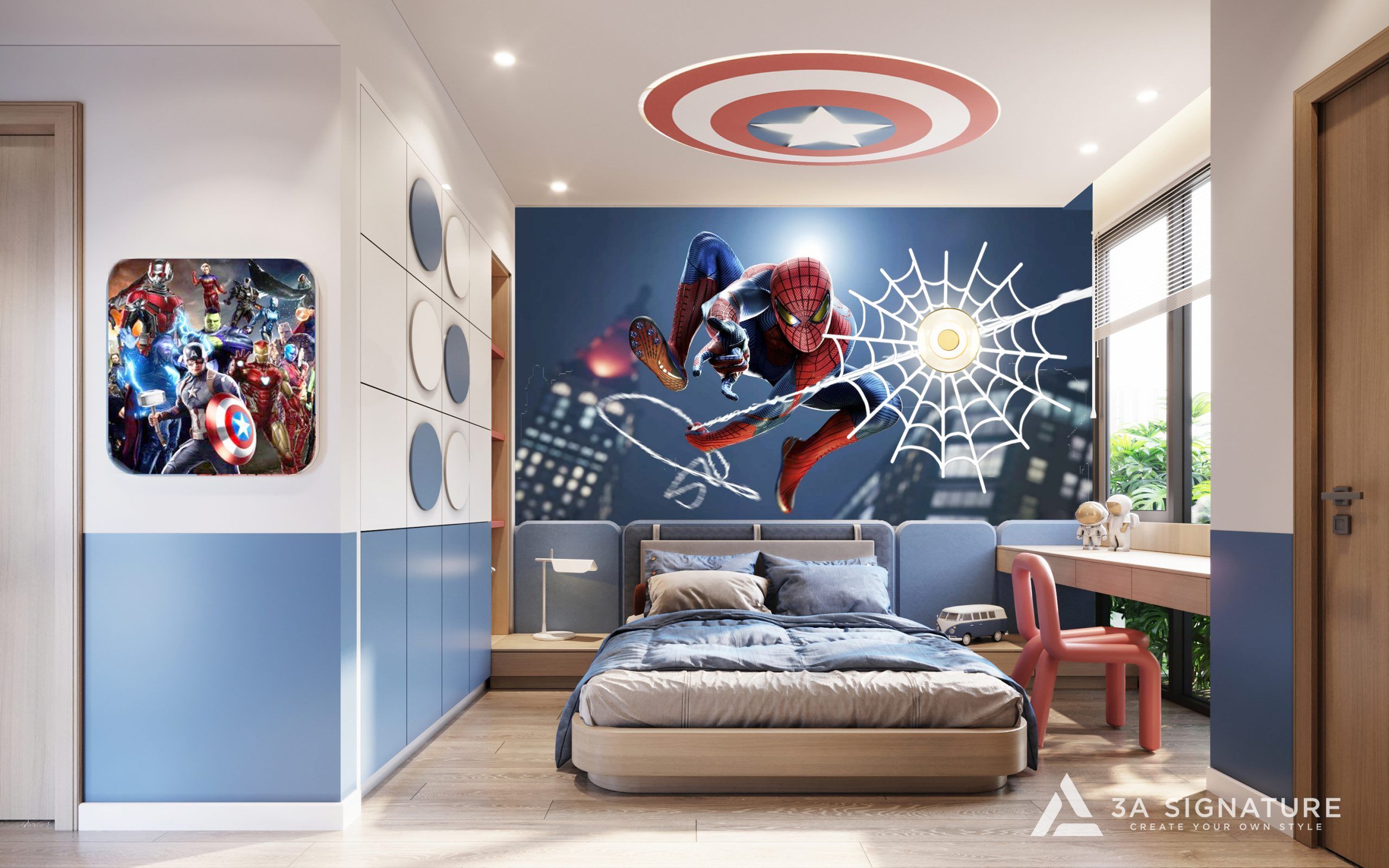
2. Design Avoiding Sharp Corners And Fixing Furniture
This is a golden principle to protect children from injuries when running, jumping, and playing among children’s bedroom furniture.
- Anti-Tip Fixing: Wardrobes and bookshelves, especially tall cabinets, must be firmly fixed to the wall. Children often have a tendency to climb, so anti-tip measures are a mandatory safety requirement.
- Rounding All Edges: All edges of desks, cabinet corners, and bed sides must be rounded or softly chamfered. If rounding is not possible, soft protective materials (such as silicone) must be used at sharp corners.
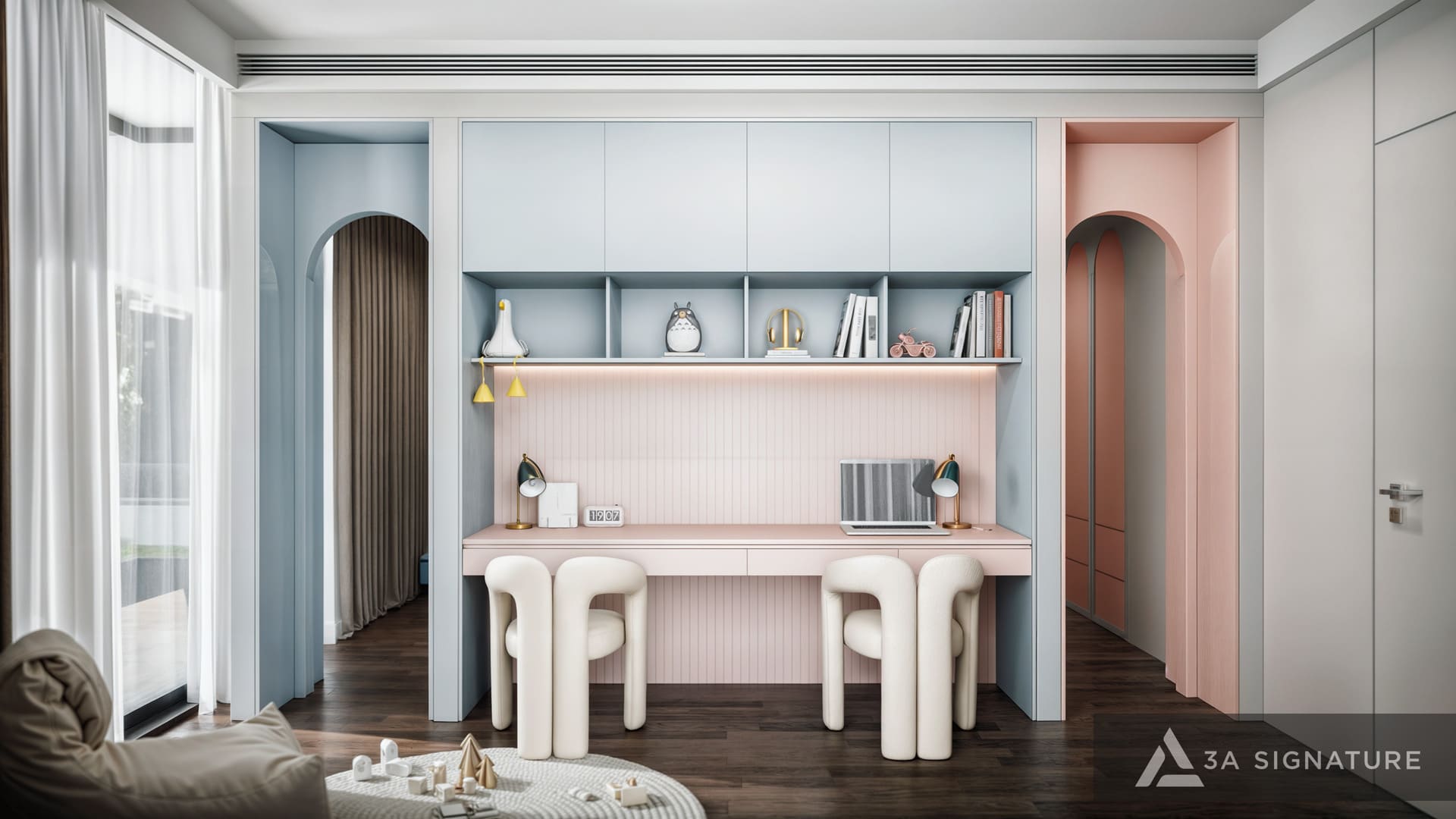
3. Safe Electrical And Lighting Systems
Electricity and lighting in children’s bedroom furniture need specialized handling.
- Eye-Friendly Lighting: Light needs to be sufficient (to avoid eye strain when studying) but not too dazzling. Study lamps should have natural yellow light or warm white light, without flickering. Dim night lights should be used to create a sense of security for the child when sleeping.
- Smart Sockets: Use sockets with safety covers or place sockets out of reach of young children (minimum 120cm or higher).
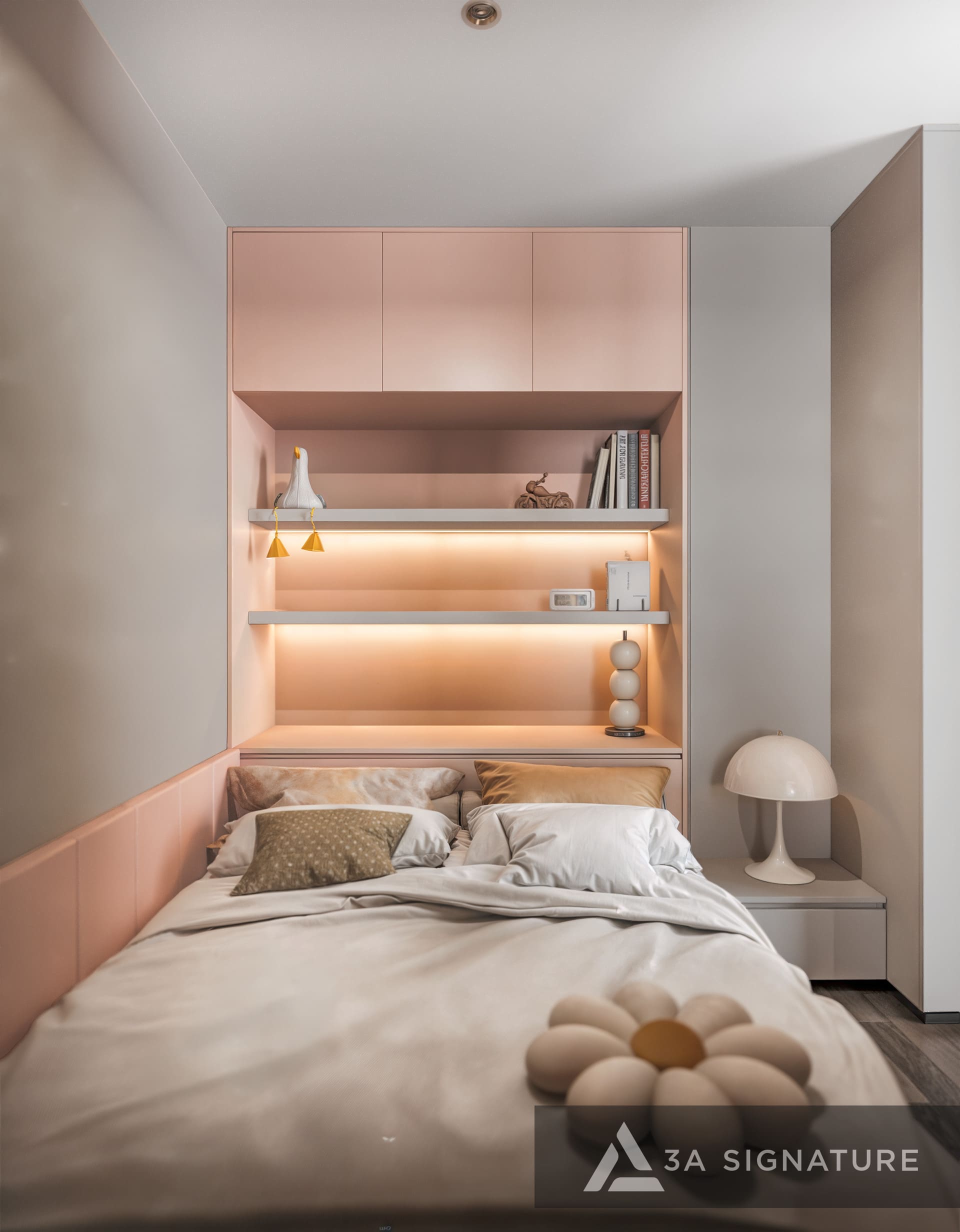
Functional Zoning: Stimulating Comprehensive Development
An ideal children’s bedroom furniture setup must be a combination of three main functional areas: resting, studying, and playing.
Sleeping Area: Where Dreams Are Nurtured
The bed is not just a place to lie down but also where children feel safest and most comfortable.
- Beds According To Age:
- Preschool: Low beds with safety rails to prevent falling.
- Elementary: Single beds or bunk beds (if there are two children). Ensure bunk bed stairs are sturdy with safe handrails.
- Teenagers: Larger beds, which can integrate storage drawers underneath to optimize space.
- Bed Position: The bed should be placed in a draft-free position, not directly facing the door or window. Avoid placing the bed under house beams or large chandeliers.
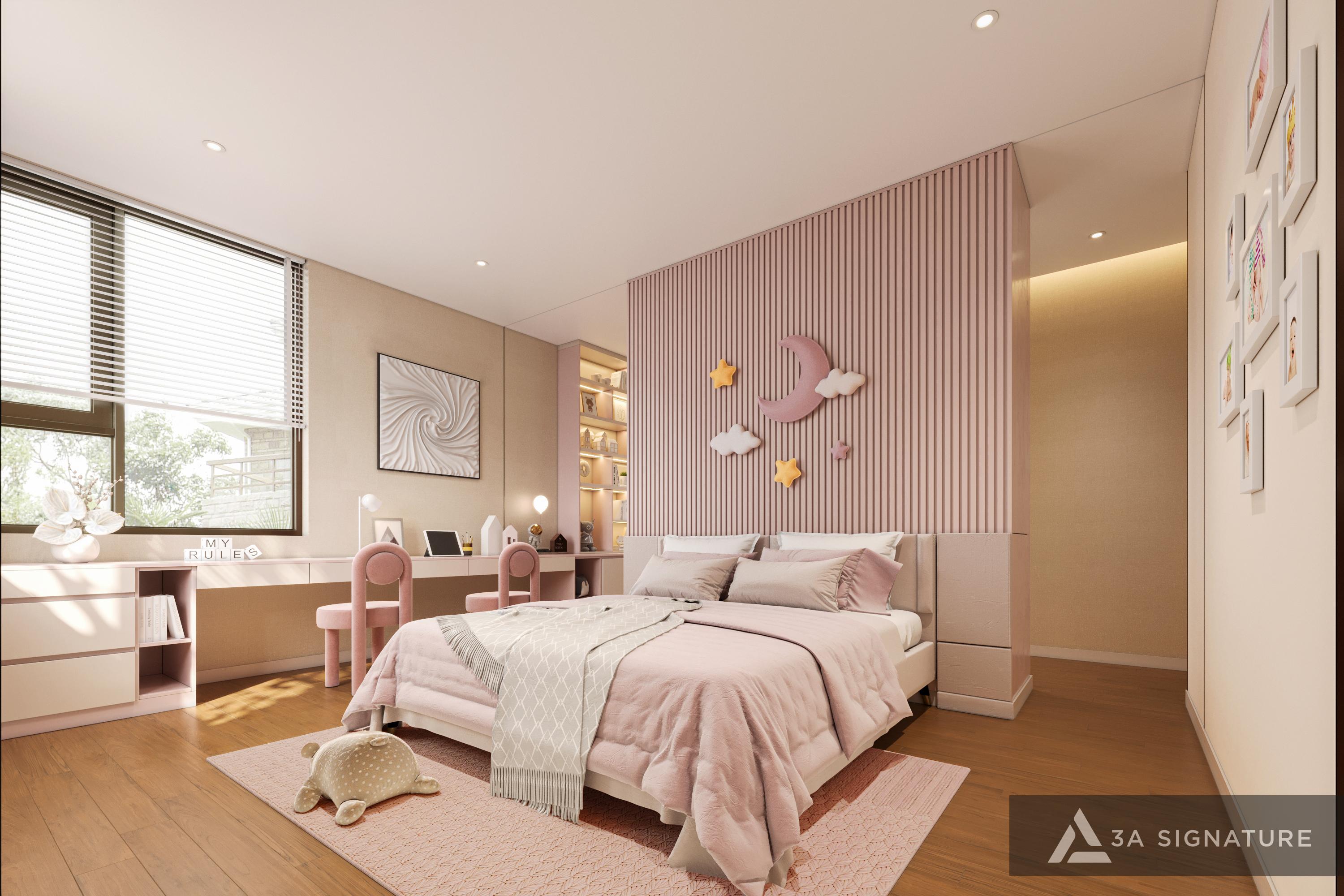
Study Area: Developing Thinking And Concentration
This area needs to be scientifically designed to encourage good study habits.
- Optimal Desk: The desk must have a height suitable for the child’s stature (preferably adjustable). The chair must have a backrest and support the spine.
- Ideal Lighting: The desk position should utilize natural light (windows), but curtains are needed to avoid glare. Artificial light must be arranged from the side opposite the writing hand to avoid creating shadows.
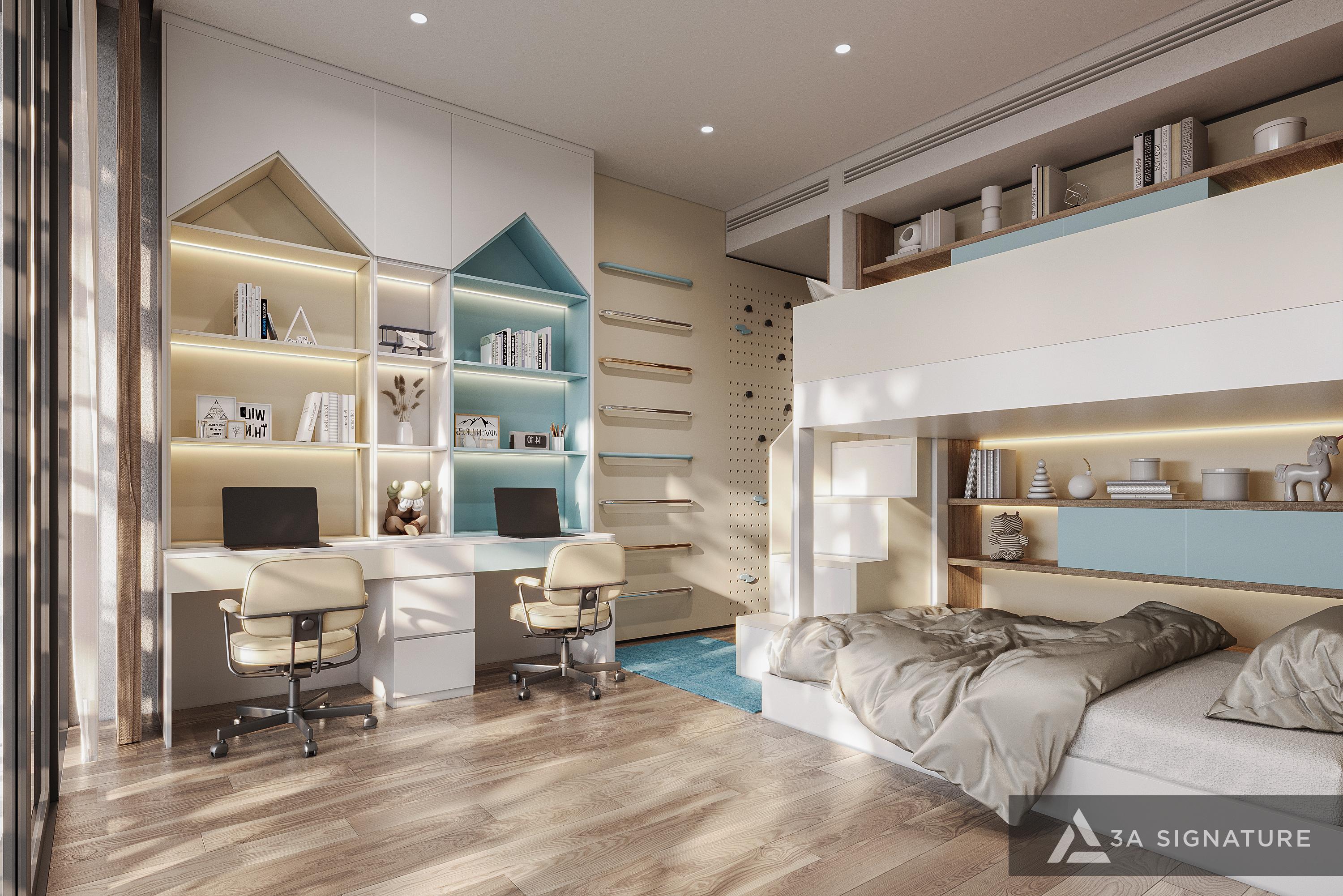
Play/Creative Area: Stimulating Imagination
This is an indispensable area in children’s bedroom furniture to promote creative thinking.
- Reading Corner: Create a cozy little corner with low, easy-to-reach bookshelves and a beanbag chair or soft mat.
- Creative Wall: A wall segment can be designed with a chalkboard or magnetic board for children to freely draw and create. This is a fun way to personalize children’s bedroom furniture.
Aesthetics And Feng Shui: Creating A Balanced Environment
Colors and layout directly affect a child’s mood and ability to concentrate.
Selecting Colors Suitable For Psychology
Colors in children’s bedroom furniture need to be carefully considered, avoiding the abuse of overly brilliant colors.
- Balance Principle: Use neutral colors (white, beige, light gray) as a background, then add bright colors (green, yellow, orange) through decorative objects and bedding.
- Psychological Impact: Green stimulates calmness and concentration. Pale yellow stimulates creativity and optimism. Avoid dark red or orange as they can cause over-excitation and difficulty sleeping.
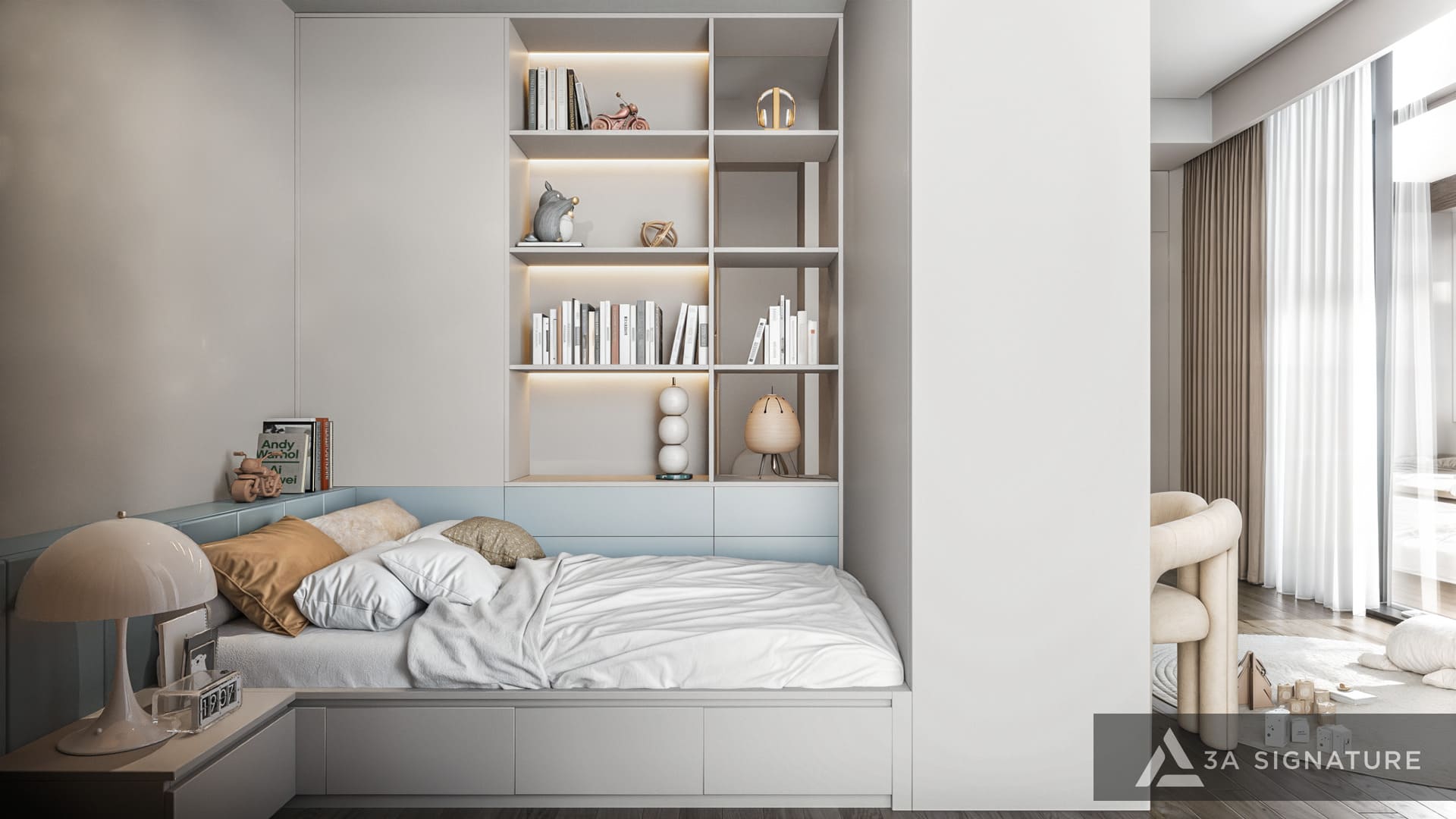
Design With “Grow-with-Me” Capability
Children grow very fast, and changing the entire set of children’s bedroom furniture after a few years is not economical.
- Neutral Style: Choose a design style and neutral background colors (e.g., Scandinavian or modern Minimalism) to easily change decorations according to the child’s preferences as they grow up. 3A Signature always prioritizes this sustainable and flexible solution.
- Multipurpose Furniture: Use beds that can be extended, height-adjustable desks, or modular cabinet systems that can be disassembled or repurposed.
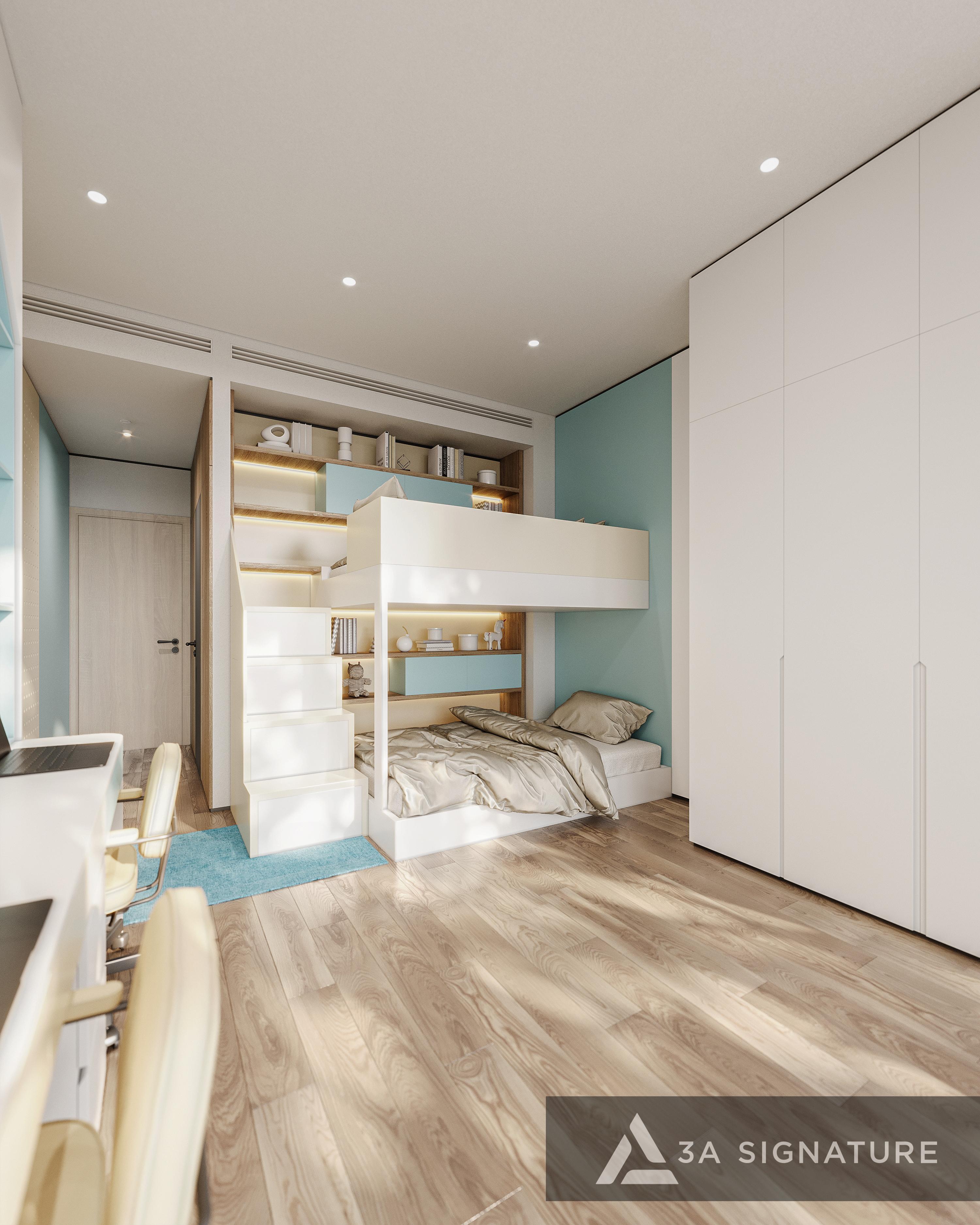
Principles Of Arranging Children’s Bedroom Furniture According To Feng Shui
Although feng shui for children’s rooms is not as strict as for an altar room, energy harmony is still needed.
- Bed Direction: Avoid placing the head of the bed directly facing the room door or opposite a mirror.
- Mirrors and Decorations: Limit the use of overly large or too many mirrors. Decorative items should be related to learning and positive hobbies, avoiding sharp or scary objects.
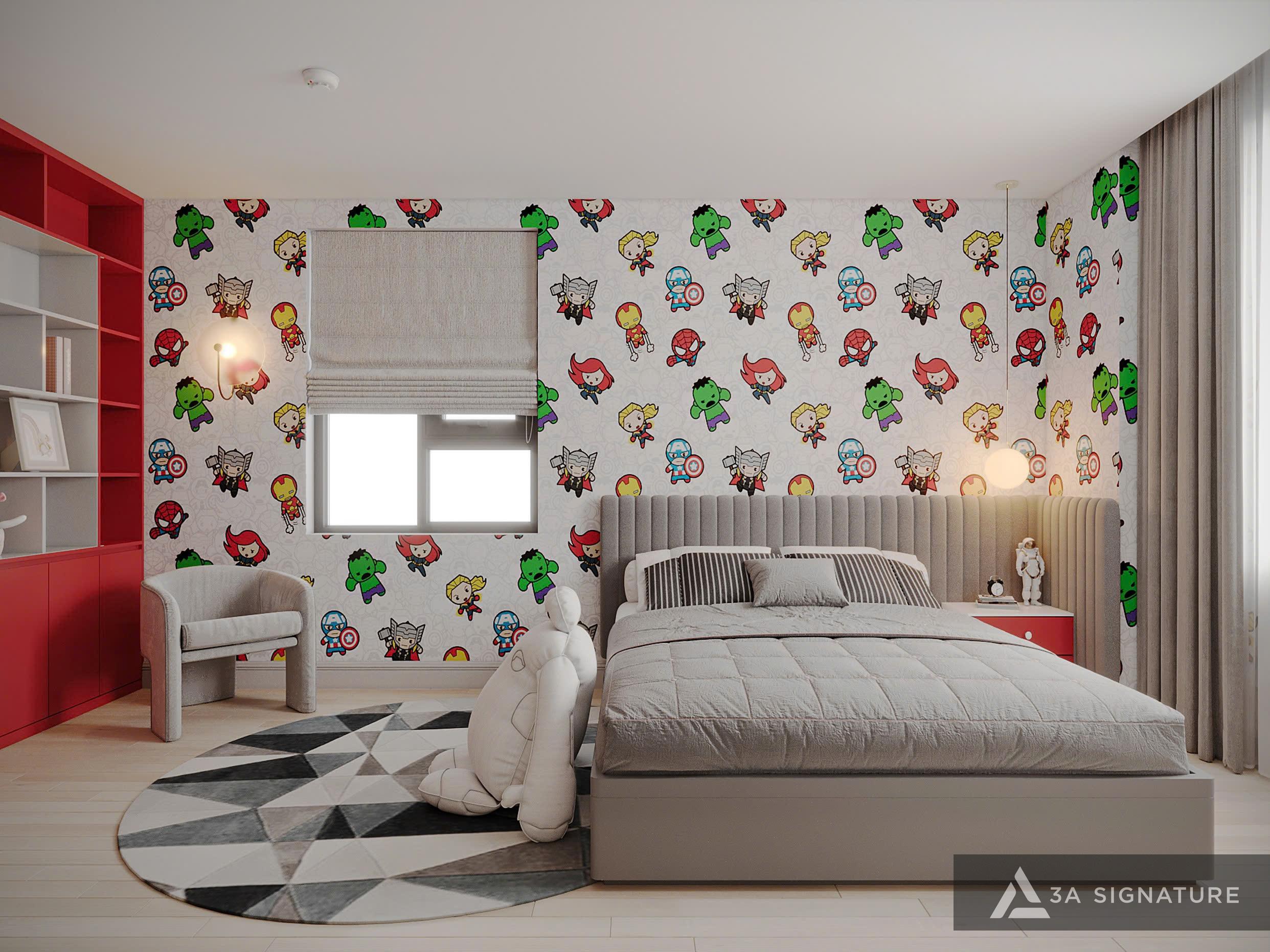
Storage Solutions: Helping Children Form Good Habits
An effective storage system is the key to keeping children’s bedroom furniture tidy and teaching children independence.
“Easy Access” Cabinet Systems
Cabinets need to be designed to suit the child’s height so they can take and put away items themselves.
- Open Shelves: Use open or low shelves so books and toys are displayed and easily taken. This encourages children to organize and clean up themselves.
- Low Drawers: Drawers should have easy-to-grip handles and smooth slide rails. Divide drawers by theme (building toys, drawing pens, etc.).
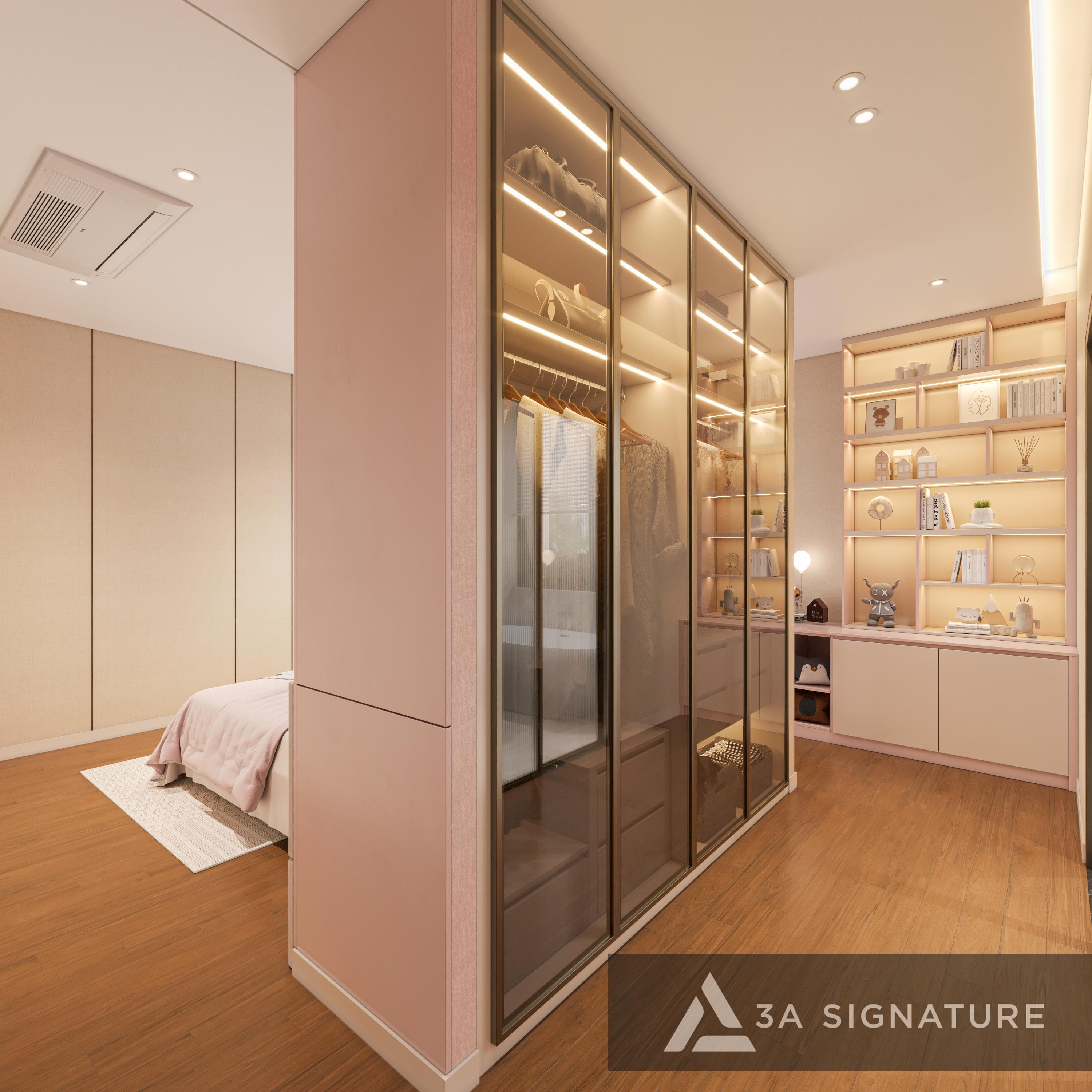
Integrating Multipurpose Solutions
Utilize every space for effective storage, especially in apartments with limited areas.
Under-Bed/Stair Cabinets: Beds with large drawers underneath, or bunk bed stairs designed as drawers/cabinets are optimal solutions for optimizing storage space in children’s bedroom furniture.
Conclusion
Designing children’s bedroom furniture is an investment in your child’s future. A perfect space must be a balance of absolute safety, creative stimulation, and long-term aesthetics. Sophistication in design comes from understanding a child’s psychology and applying sustainable, flexible architectural principles.
At 3A Signature, we are committed to creating living spaces that are not only beautiful but also optimal for the comprehensive development of future generations. To ensure your child grows up in a living environment that is safe, inspiring, and aesthetically perfect, trust and contact 3A Signature today!