

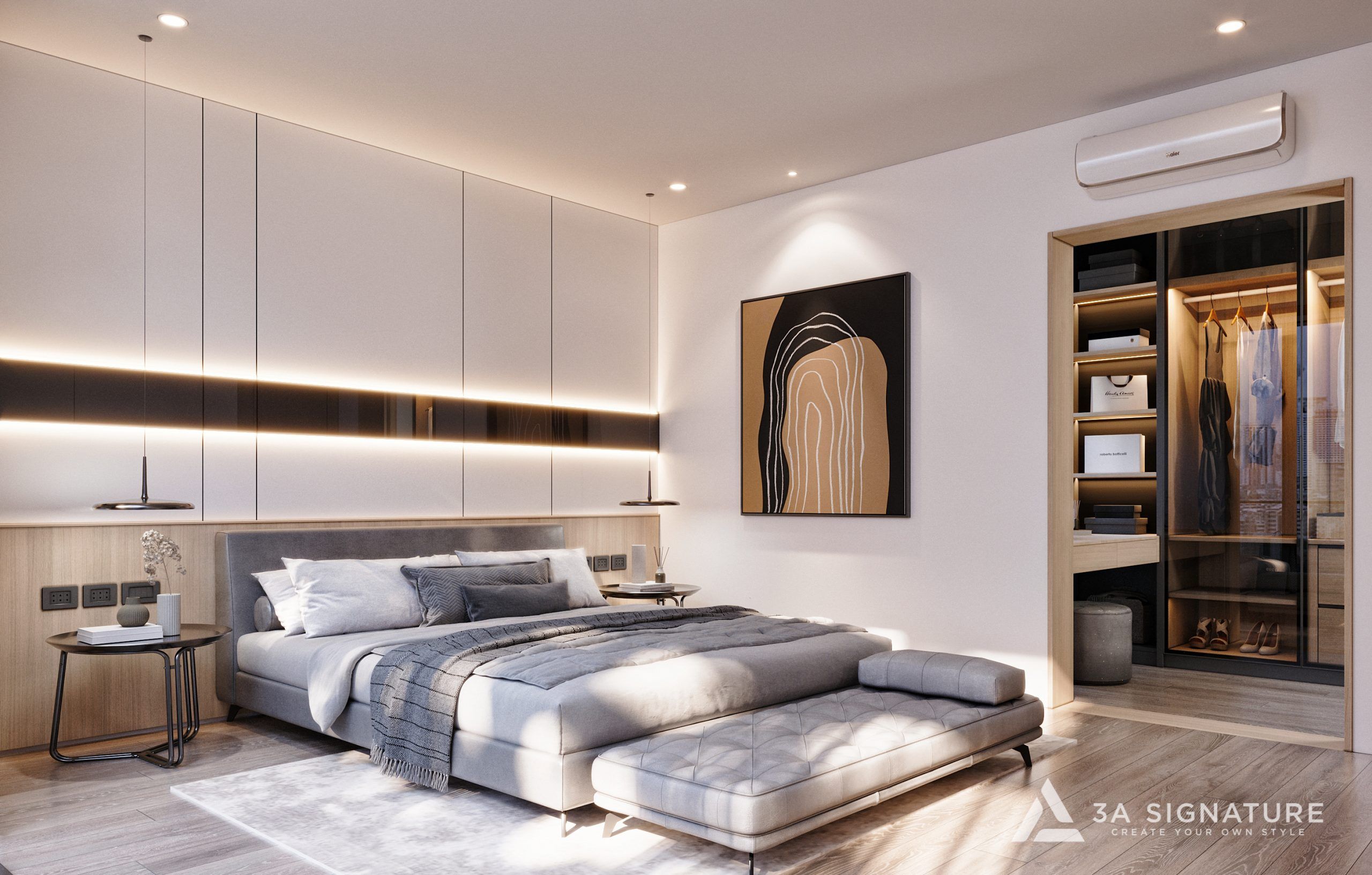
In townhouses, small apartments, or long, narrow houses, bedrooms without windows are a common problem. The lack of natural light and ventilation makes the space stuffy and damp, directly affecting sleep quality and long-term health.
However, a windowless bedroom doesn’t necessarily mean it’s stuffy or uncomfortable. With the right bedroom design, combining architectural solutions, materials, and techniques, the space can still be airy, bright, and comfortable, just like bedrooms with natural windows.
Why Does a Windowless Bedroom Need Careful Design?
The bedroom is a space for rest and rejuvenation after a long day. Without windows, the room is prone to problems such as lack of oxygen, high humidity, stagnant air, and poor lighting.
If not addressed properly from the design stage, these factors will subtly but long-term impact sleep, mental well-being, and overall health. Therefore, designing a windowless bedroom requires more careful planning than a regular bedroom.
1. Utilize Indirect Ventilation from Other Spaces
The most effective solution for a windowless bedroom is to create indirect ventilation through spaces with natural light and airflow, such as the living room, hallway, atrium, or open-plan area.
Instead of building completely solid walls, you can use:
- Half-height partitions
- Loud shutters, louvered doors
- Parallel glass partitions above
- High-ceiling ventilation openings
These details allow for continuous air circulation while ensuring necessary privacy. Especially in narrow houses, positioning the bedroom near an atrium helps to bring in indirect light and airflow, significantly reducing the feeling of stuffiness.
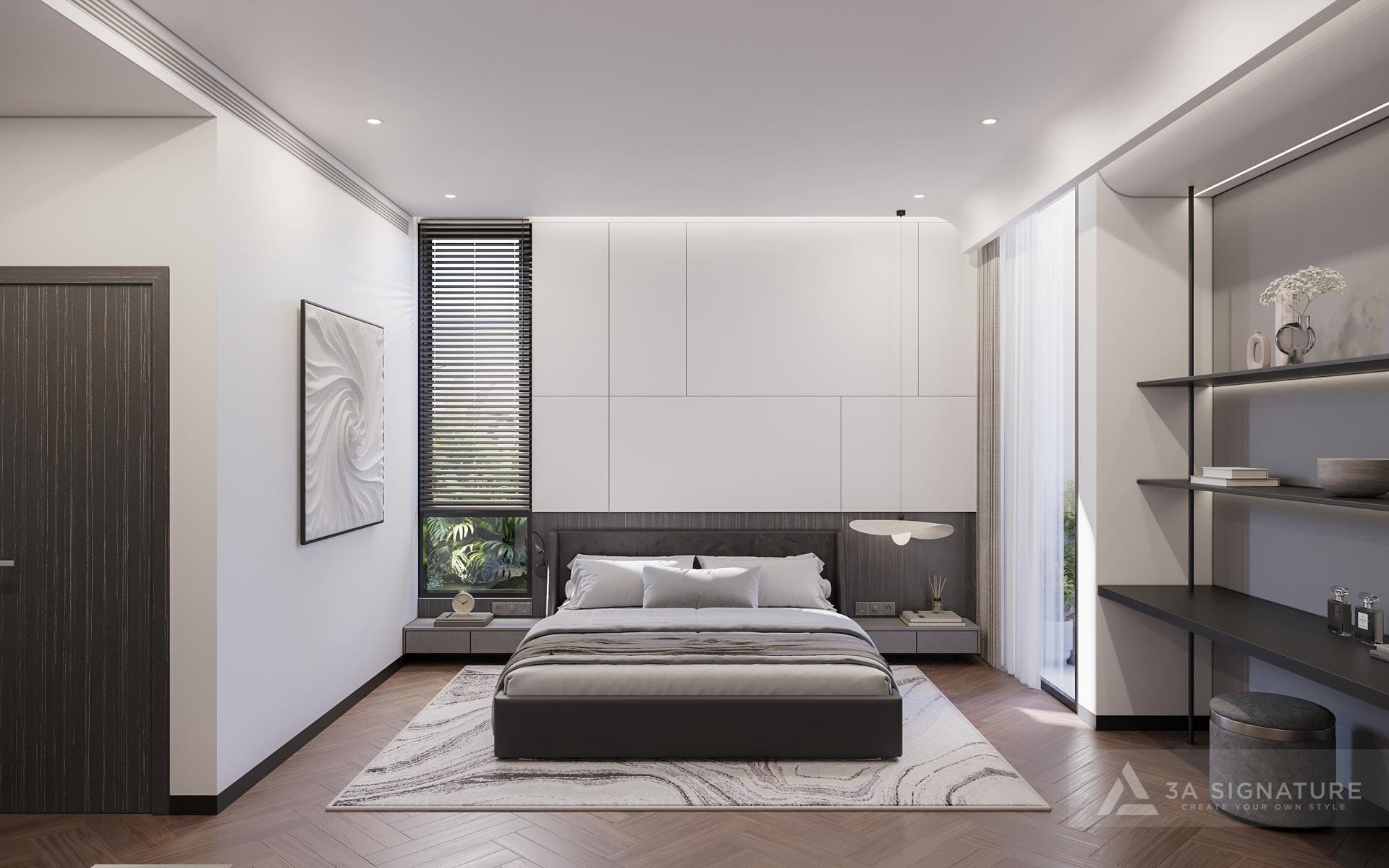
2. Choosing the Right Color to Make Your Space Feel Airier
Color plays a crucial role in designing a windowless bedroom. Light colors reflect light well, making the space appear larger and brighter visually.
- Suitable color tones include:
- White, cream, beige
- Light gray
- Soft pastels
Conversely, overly bold or strongly contrasting colors can create a heavy, cramped feeling and make the space feel more “closed.” For enclosed bedrooms, moderation in color always yields noticeable results.
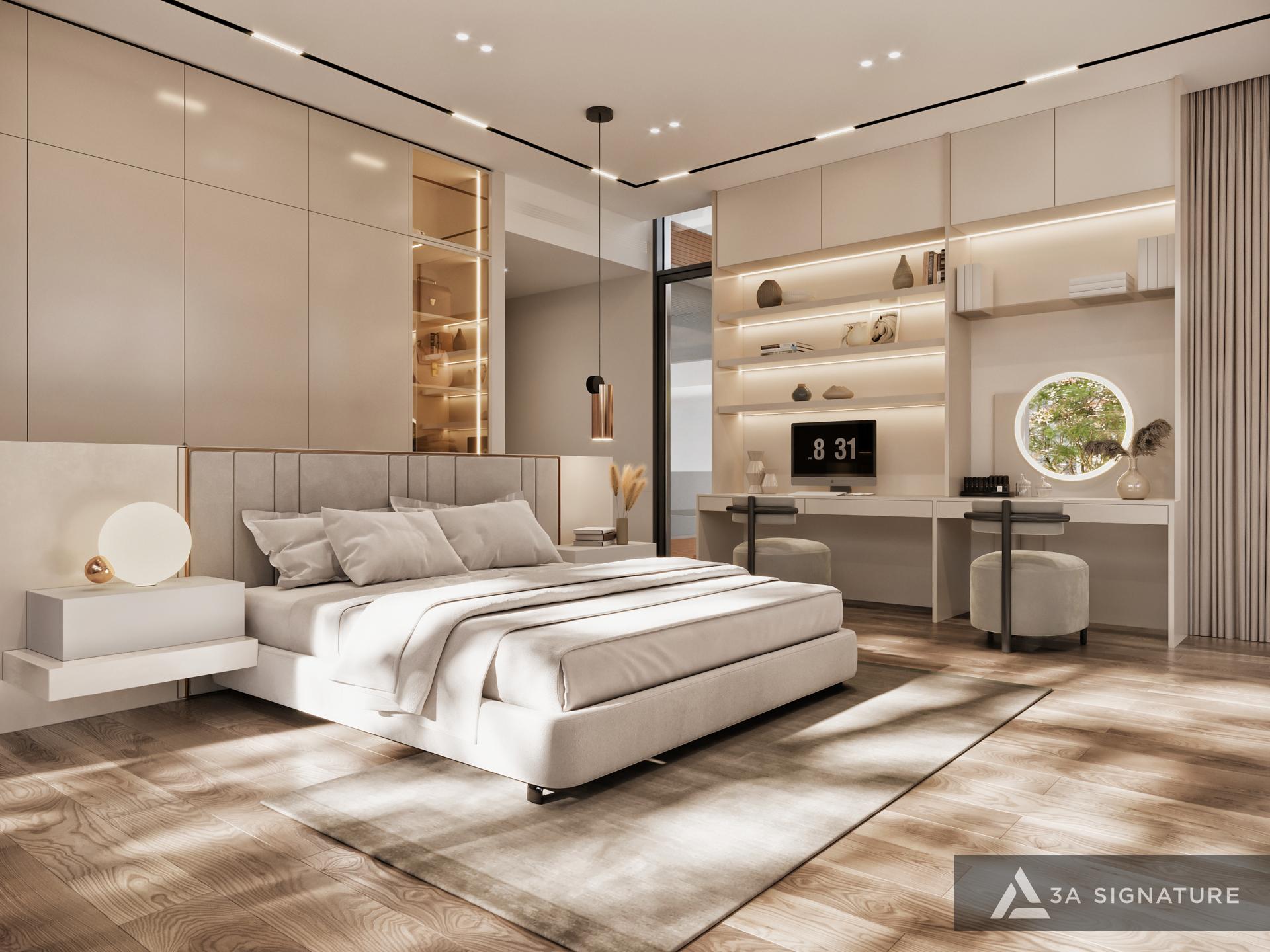
3. Utilize Mirrors and Reflective Surfaces
Mirrors are one of the simple yet effective solutions to make a windowless bedroom look larger and brighter. When placed correctly, mirrors can reflect artificial light or light-colored wall surfaces, creating the illusion of a doubled space.
Besides mirrors, surfaces such as:
- Frozen glass
- Lightweight metal finishes
- Matte paint
also help enhance the lighting effect and reduce the feeling of confinement. In bedroom design, reflective surfaces should always be used sparingly to avoid a cold or cluttered feeling.
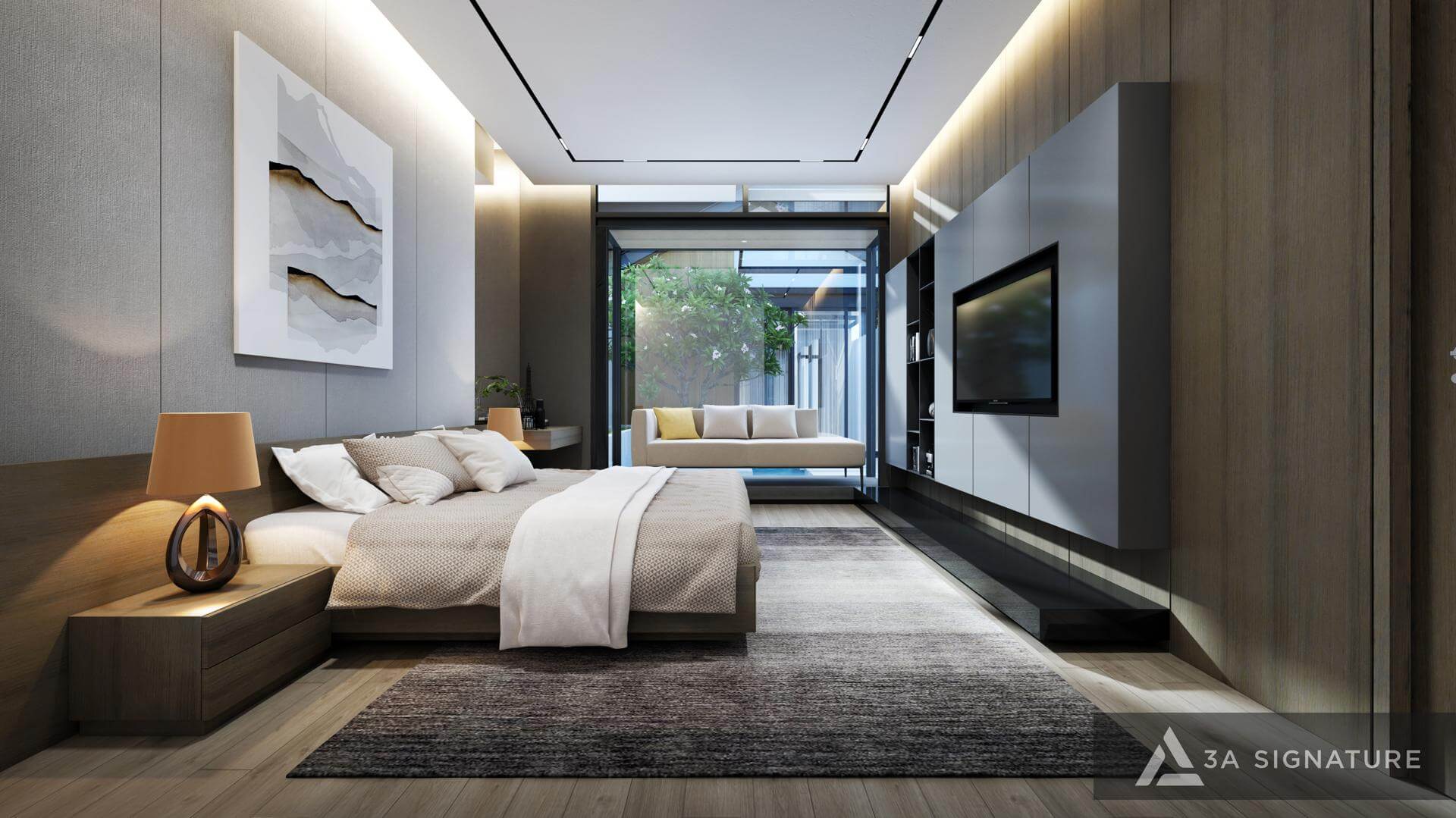
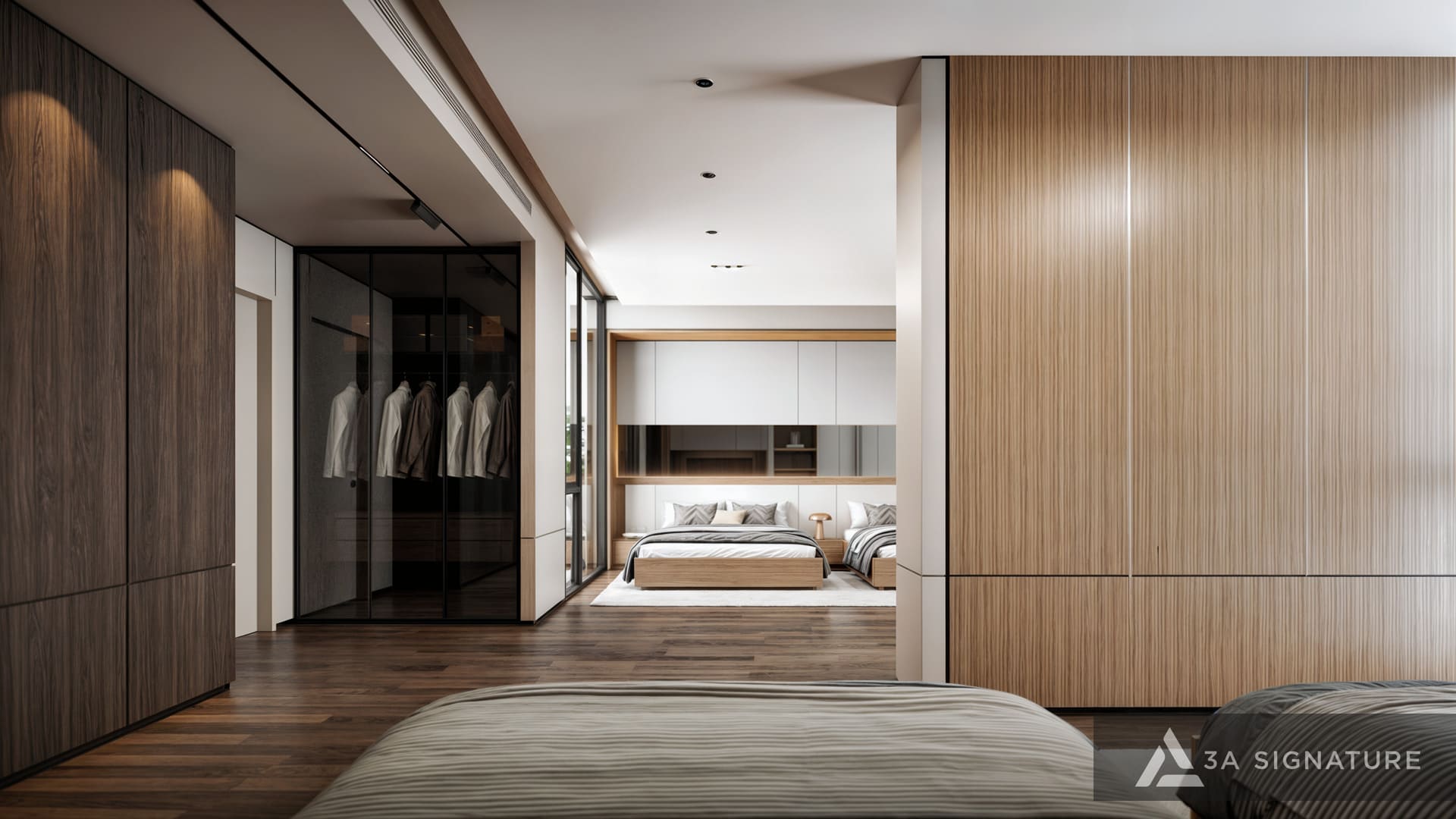
4. Choosing Suitable Tiles and Finishing Materials
Finishing materials greatly influence the feel of a space. For a windowless bedroom design, prioritize:
- Light, neutral-colored tiles or flooring
- Surfaces that harmonize with the wall paint and furniture
- Large-sized tiles to create a seamless floor
Large-format tiles minimize grout lines, reducing the feeling of spatial division and creating a more airy effect. Choosing matching materials makes the bedroom look much neater and more comfortable.
5. Adding Suitable Plants to Enclosed Spaces
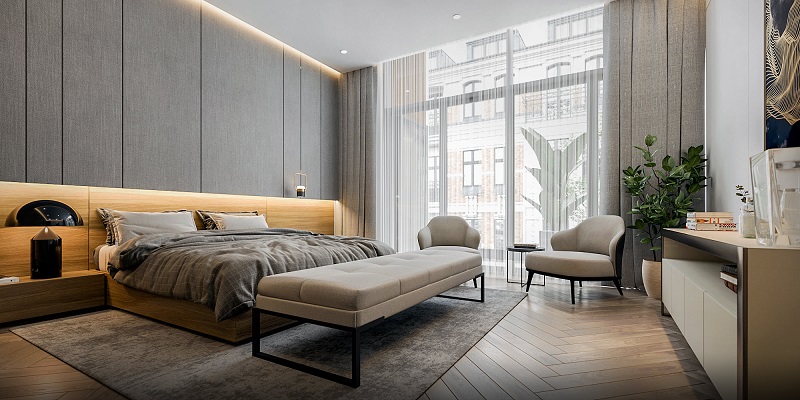
Plants are not only decorative but also help improve air quality. In windowless bedrooms, choose shade-tolerant, easy-to-care-for plants that effectively purify the air, such as:
- Snake Plants
- Pothos
- Spathiphyllum
These plants help increase humidity, reduce odors, and create a natural feel. However, a moderate number of plants is necessary; avoid placing too many, which can cause humidity or clutter the space.
6. Designing an Effective Mechanical Ventilation System
When natural ventilation is unavailable, mechanical ventilation is essential in the design of windowless bedrooms. Common solutions include ceiling or wall-mounted exhaust fans, fresh air supply systems, and air exchangers.
For bedrooms using air conditioning, supplementing with fresh air helps prevent a “sealed room,” oxygen deficiency, and stagnant air. Mechanical ventilation not only improves comfort but also protects the long-term health of the occupants.
Designing a Windowless Bedroom – A Challenge of Sophistication
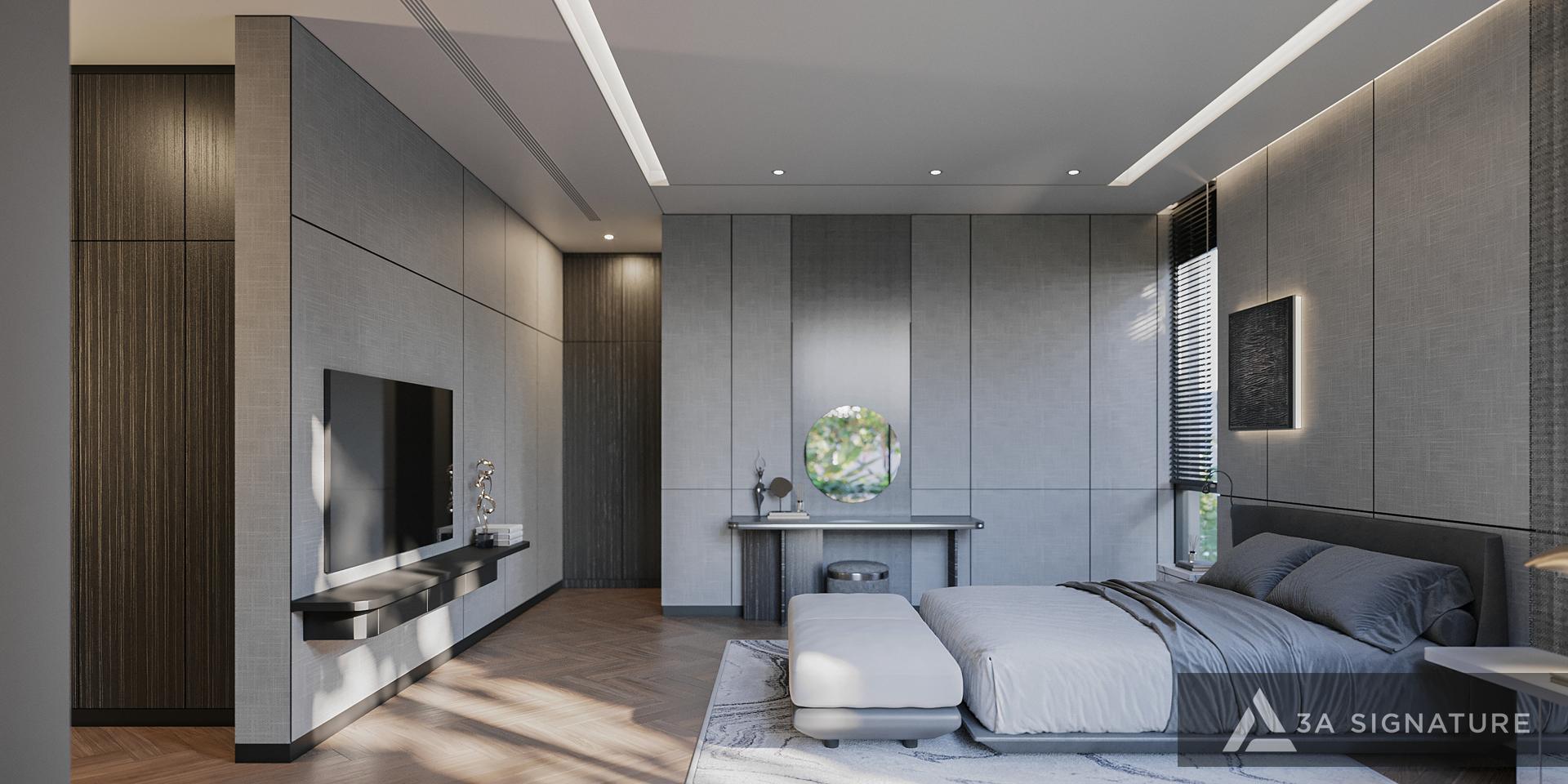
A bedroom without windows isn’t necessarily a limitation if handled correctly. By harmoniously combining ventilation, light, color, materials, and technical solutions, the space can still achieve the necessary airiness, comfort, and privacy.
At 3A Signature, every bedroom design solution is approached from a real-life experience – where the homeowner’s comfort, health, and emotions are always prioritized. A good sleeping space is not only aesthetically pleasing but also breathable and sustainable over time.