

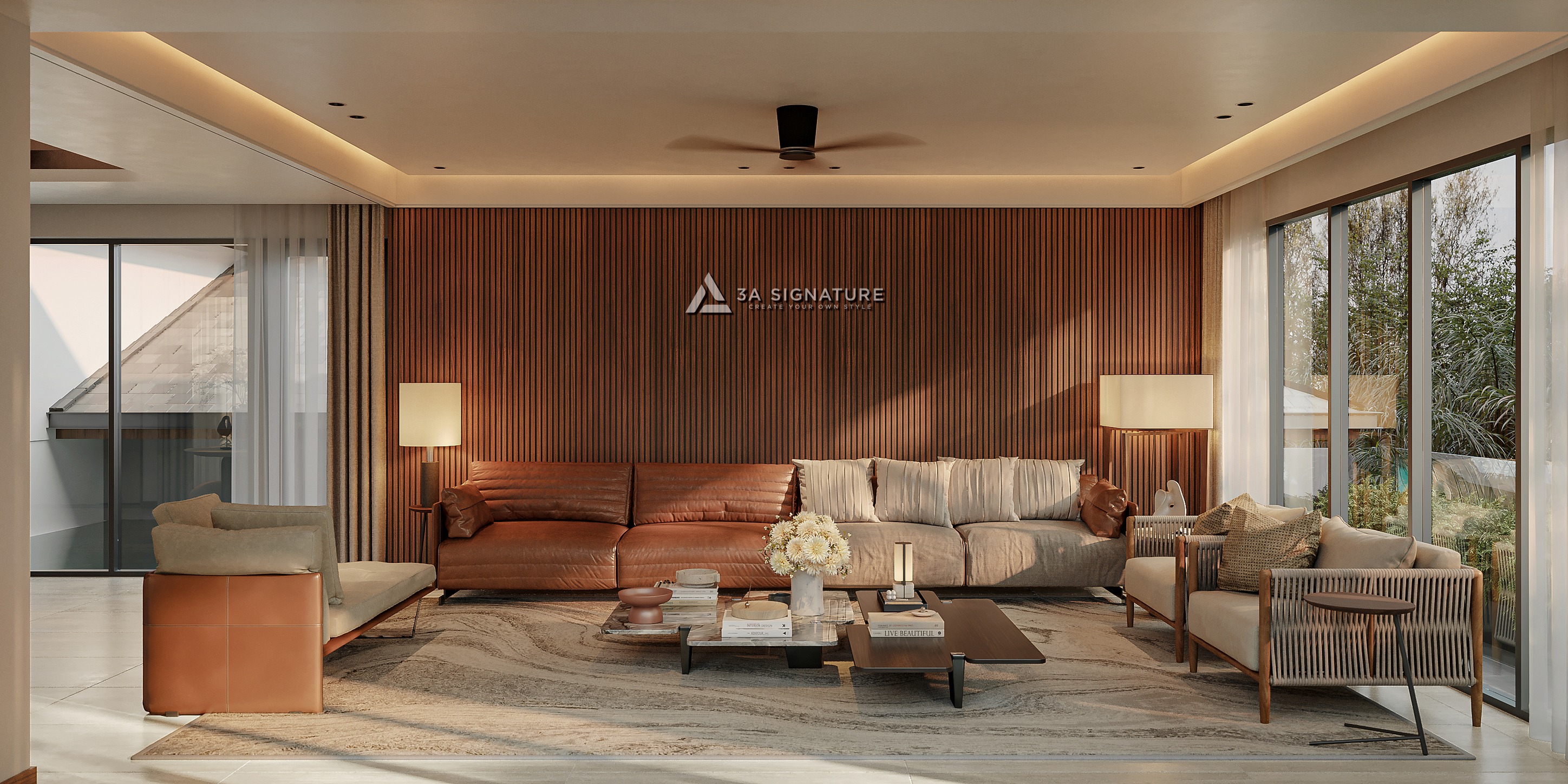
In the context of growing concern for sustainable living, the living room is not just a place for receiving guests or general activities, but also the space that best reflects the homeowner’s green living philosophy. An environmentally friendly living room doesn’t need major changes; it starts with the selection of materials, lighting, and furniture that are responsible towards nature. With 3A Signature, sustainable living room design is a harmonious blend of aesthetics, functionality, and long-lasting emotional well-being.
Why Are Environmentally Friendly Living Room Designs Becoming Increasingly Popular?
The living room is where people spend the most time at home. Every material, every light source, and every fabric directly impacts health, emotions, and daily quality of life.
Environmentally friendly living room design not only helps reduce negative impacts on nature but also creates a fresh, pleasant, and sustainable space over time. Instead of chasing short-term trends, green living solutions focus on long-term value: less waste, less toxicity, and harmony with nature.
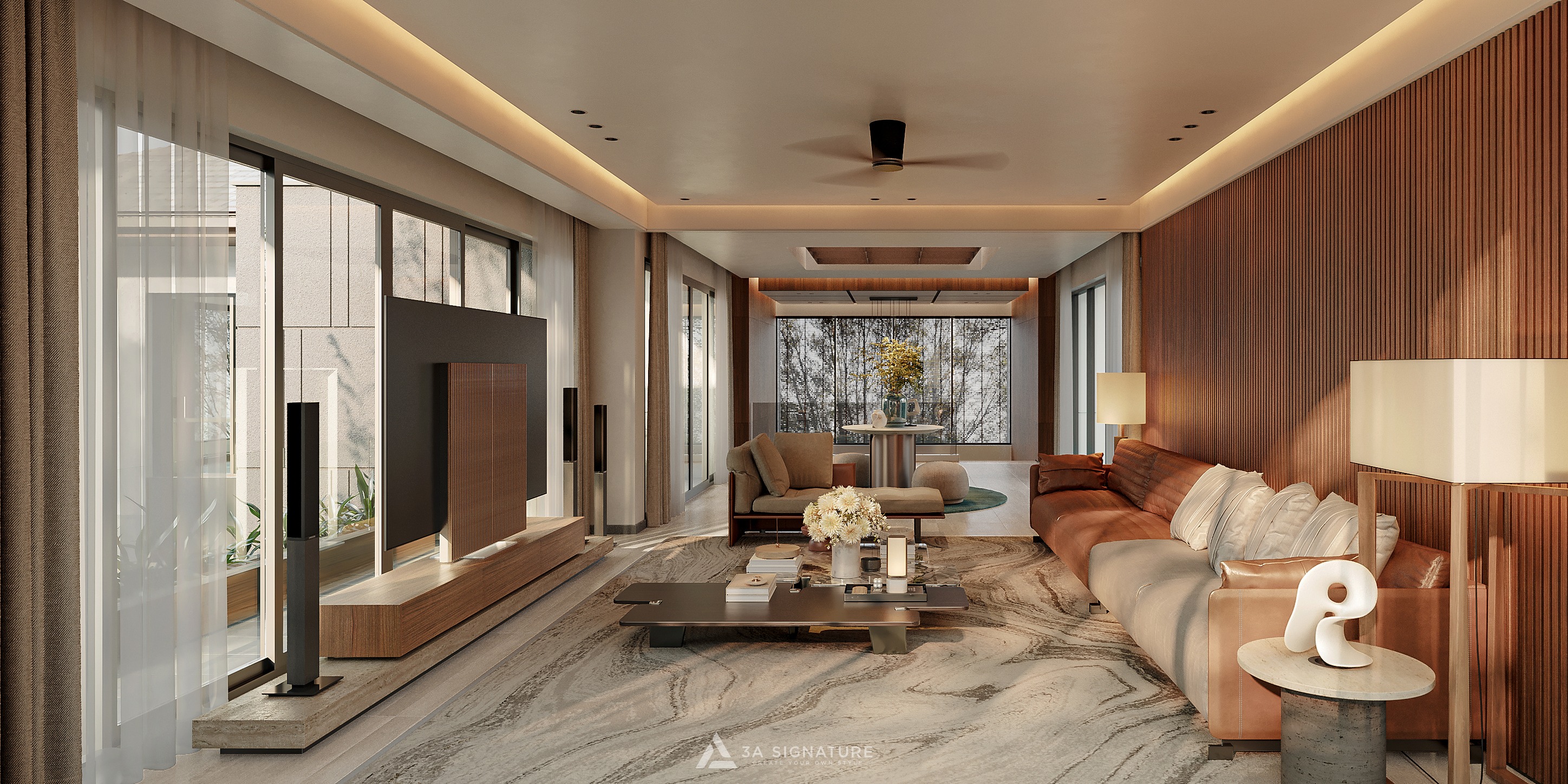
Design 1: Living Room Using Sustainable and Recycled Furniture
Recycled Wood – Rustic Beauty with Depth
In eco-friendly living room designs, recycled wood is increasingly favored for its aesthetic value and sustainability. Furniture made from recycled wood possesses a unique beauty, preserves the traces of time, and reduces the need for exploiting new resources.
When processed and designed with finesse, recycled wood coffee tables, bookshelves, or cabinets are not rough at all; on the contrary, they create a warm, authentic, and intimate feeling for the living room space.
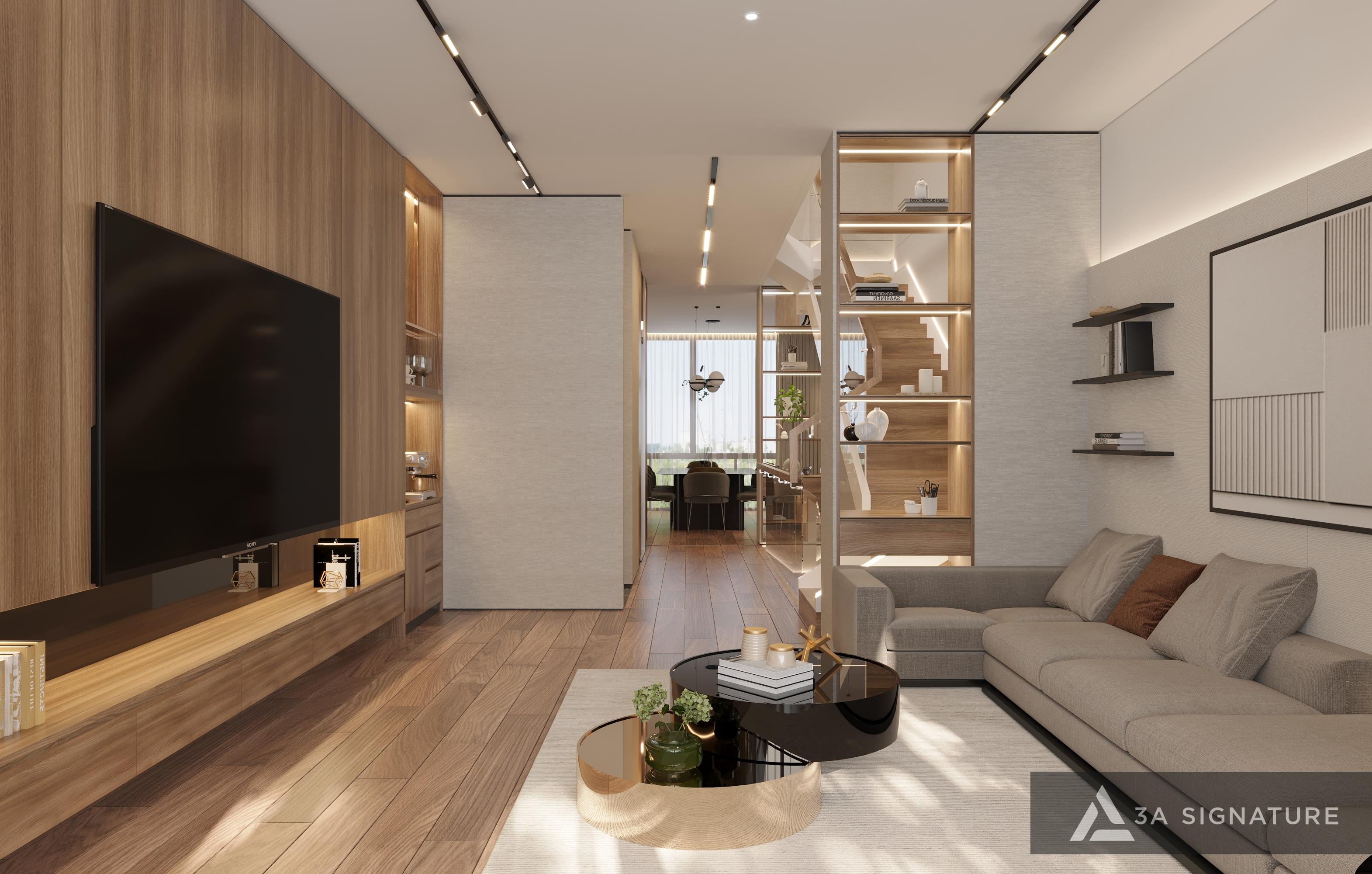
Bamboo – A Versatile and Modern Green Material
Bamboo is one of the most exemplary sustainable materials thanks to its rapid regeneration, high durability, and versatile applications. In shared living spaces, bamboo often appears in the form of coffee tables, chairs, decorative lamps, or lightweight shelving systems.
Bamboo material provides a light and airy feel, especially suitable for the Tropical Modern aesthetic or minimalist lifestyle. Bamboo is not ostentatious, but subtle enough to create a distinct natural impression and a lasting sense of tranquility.
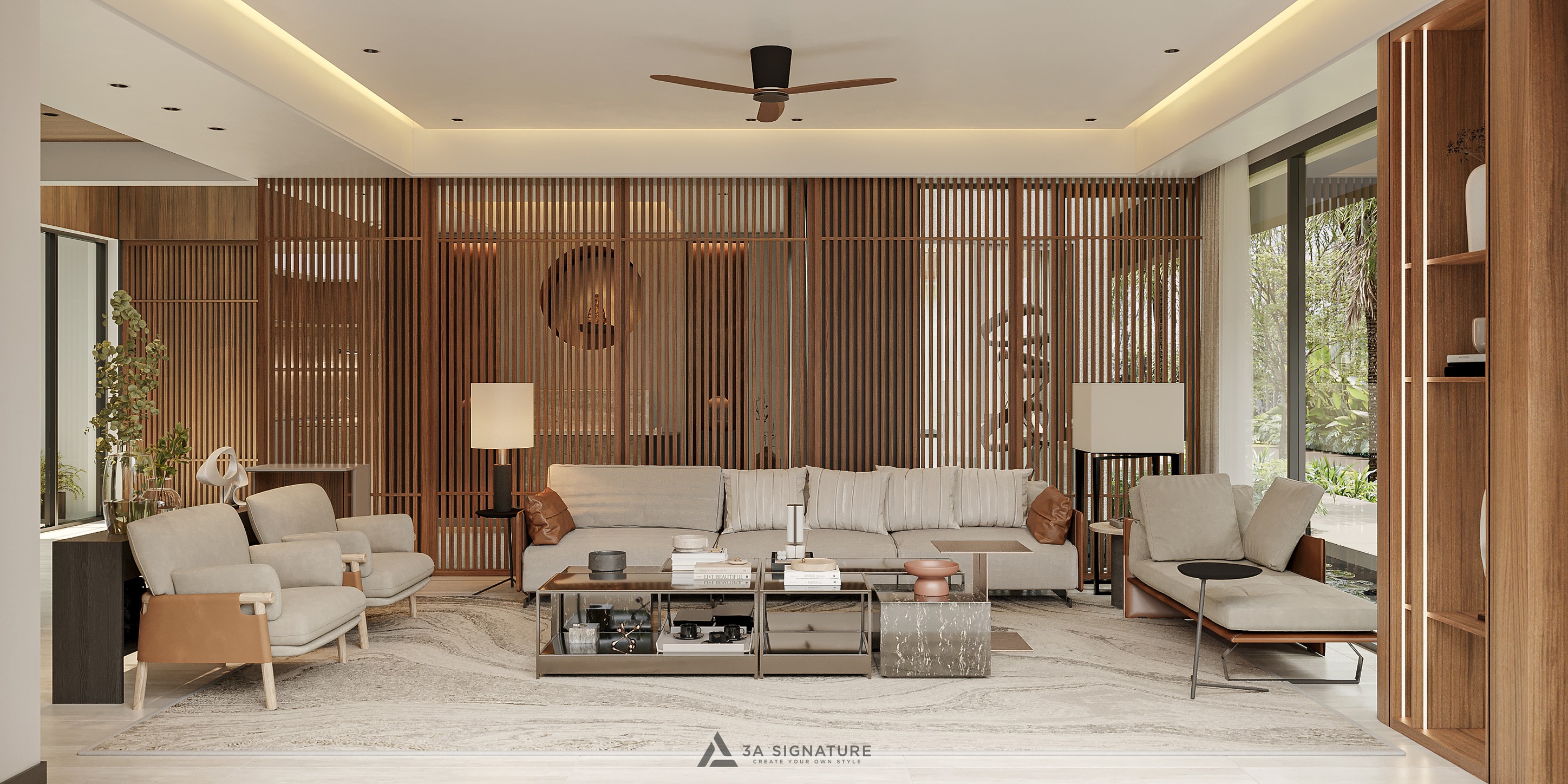
Design 2: Living Room with Organic Textiles and Natural Materials
Natural Fiber Rugs – A Soft Foundation for the Space
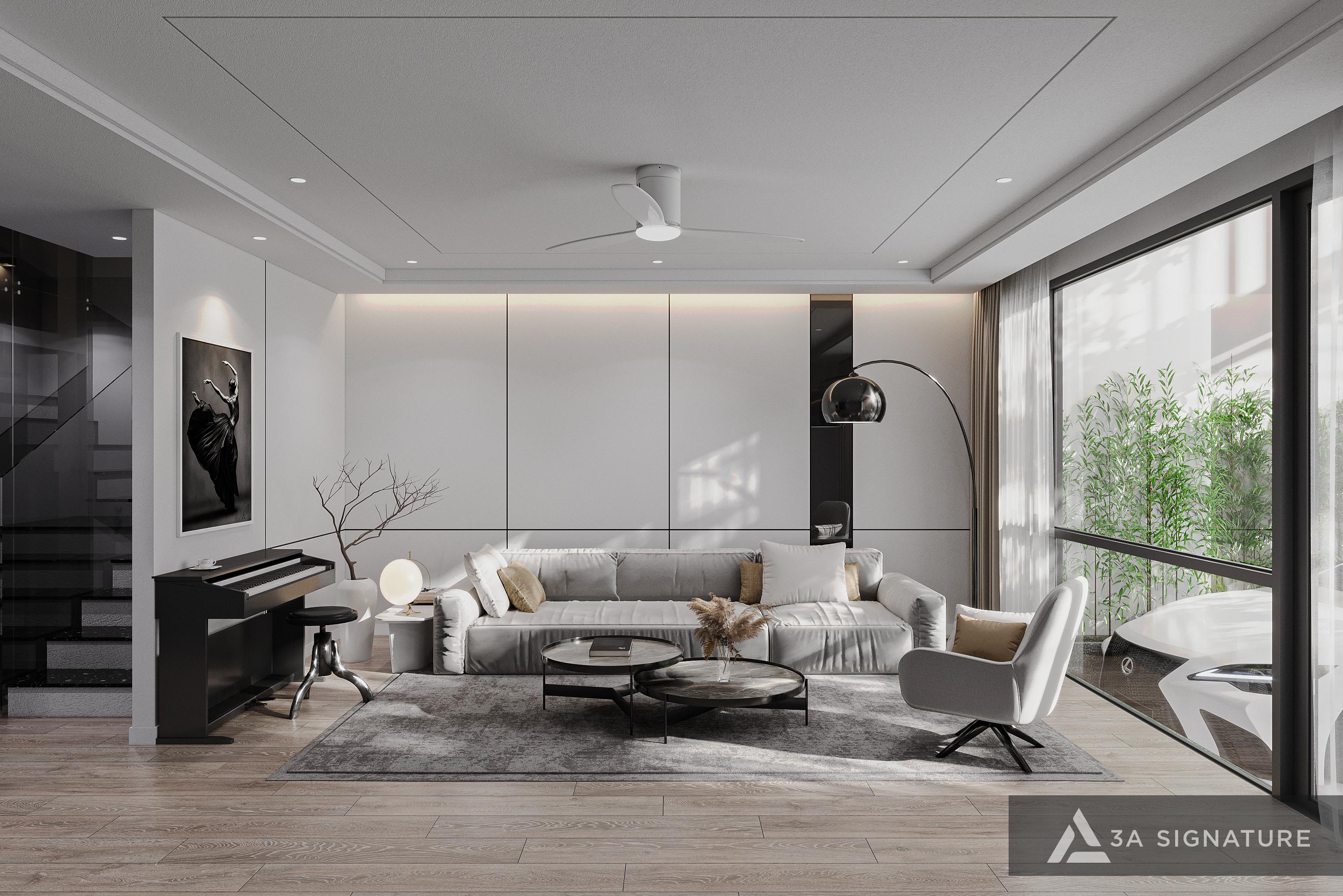
Rugs made from natural fibers such as jute, wool, coconut fiber, or organic cotton are ideal choices for a green living room. These rugs are biodegradable, their production process is less harmful to the environment, and they bring a cozy feel to the shared living space.
When combined with natural wood or stone flooring, natural fiber rugs make the living room feel softer, reduce the feeling of coldness and rigidity, and enhance the connection between people and their living space.
Organic Cotton and Linen – Soft and Safe
For throw pillows, curtains, or sofa upholstery, organic cotton and linen are highly regarded for their safety and sustainability. Without the use of harmful chemicals in their production, these fabrics are skin-friendly and good for long-term health.
Furthermore, the natural color palette of cotton and linen helps maintain an elegant, gentle, and stable aesthetic over time, avoiding the obsolescence of short-lived trends.
Design 3: Optimal Lighting and Energy Efficiency in the Living Room
Energy-Saving Lighting with LED Lights
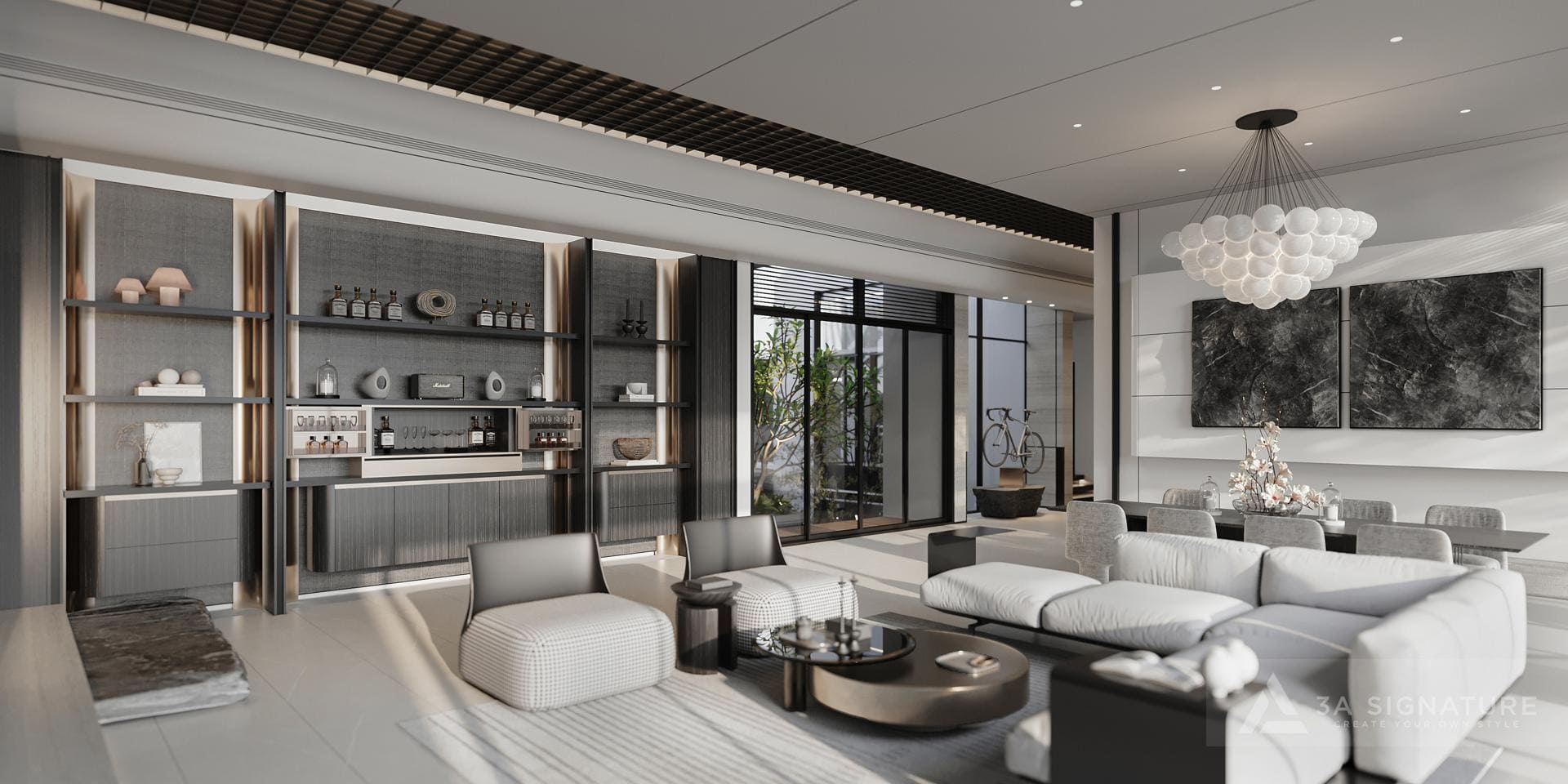
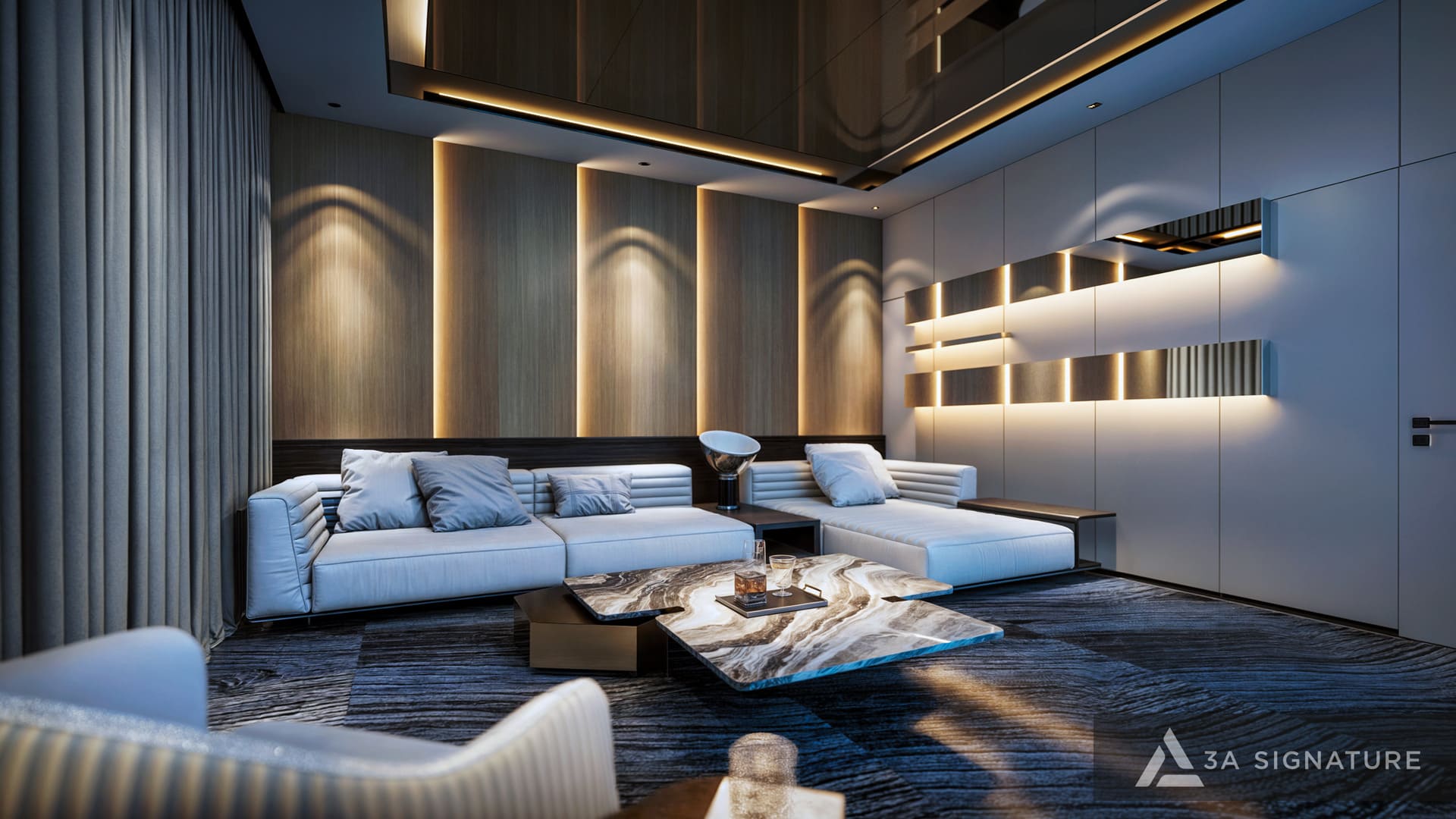
In an eco-friendly living room, the lighting system plays a crucial role. Using LED lights significantly reduces electricity consumption compared to traditional lights, while also offering a longer lifespan and minimizing electronic waste.
Modern LED lighting allows for adjustable intensity and color, ensuring a comfortable living room at any time of day without needing excessive light sources.
Utilizing Natural Light Smartly
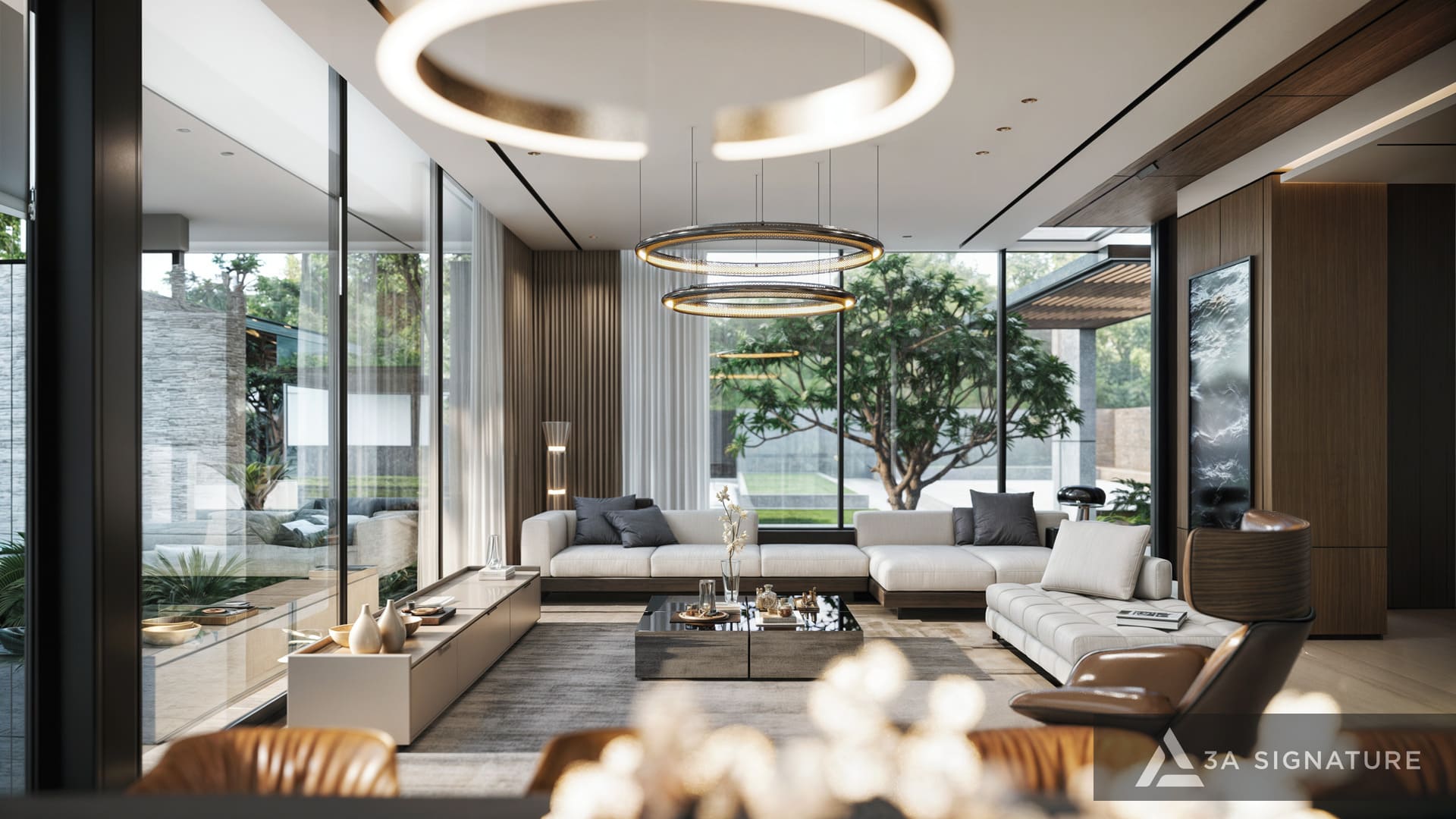
Natural light is always considered the most valuable “green energy source.” Using sheer curtains, strategically placed windows, or mirrors to reflect light helps keep spaces airy and reduces reliance on artificial daylight.
As a result, the overall atmosphere becomes warm, bright, and gently dynamic with the rhythm of the sunlight – a crucial element in design aimed at mental well-being and emotional balance.
An Eco-Friendly Living Room Doesn’t Mean Sacrificing Aesthetics
A common misconception is that sustainable design is often less sophisticated or has limited options. In reality, when properly guided, an eco-friendly living room can still achieve a luxurious, modern, and highly personalized aesthetic.
The issue isn’t about mechanically using “green” materials, but about harmoniously combining proportions, lighting, and the emotional impact. This is also the philosophy that 3A Signature always pursues in every living room space.
Conclusion:
Designing an eco-friendly living room is a shift from a decorative mindset to a sustainable living mindset. Through sustainable furniture, organic textiles, and energy-efficient lighting, the living room not only looks better but also becomes a place that nurtures the health and emotions of the family.
With 3A Signature, a green living room doesn’t need to be ostentatious, but sophisticated enough for people to feel peaceful every time they return home.